
A Tale of Two Cities at Jack Studio Theatre Review
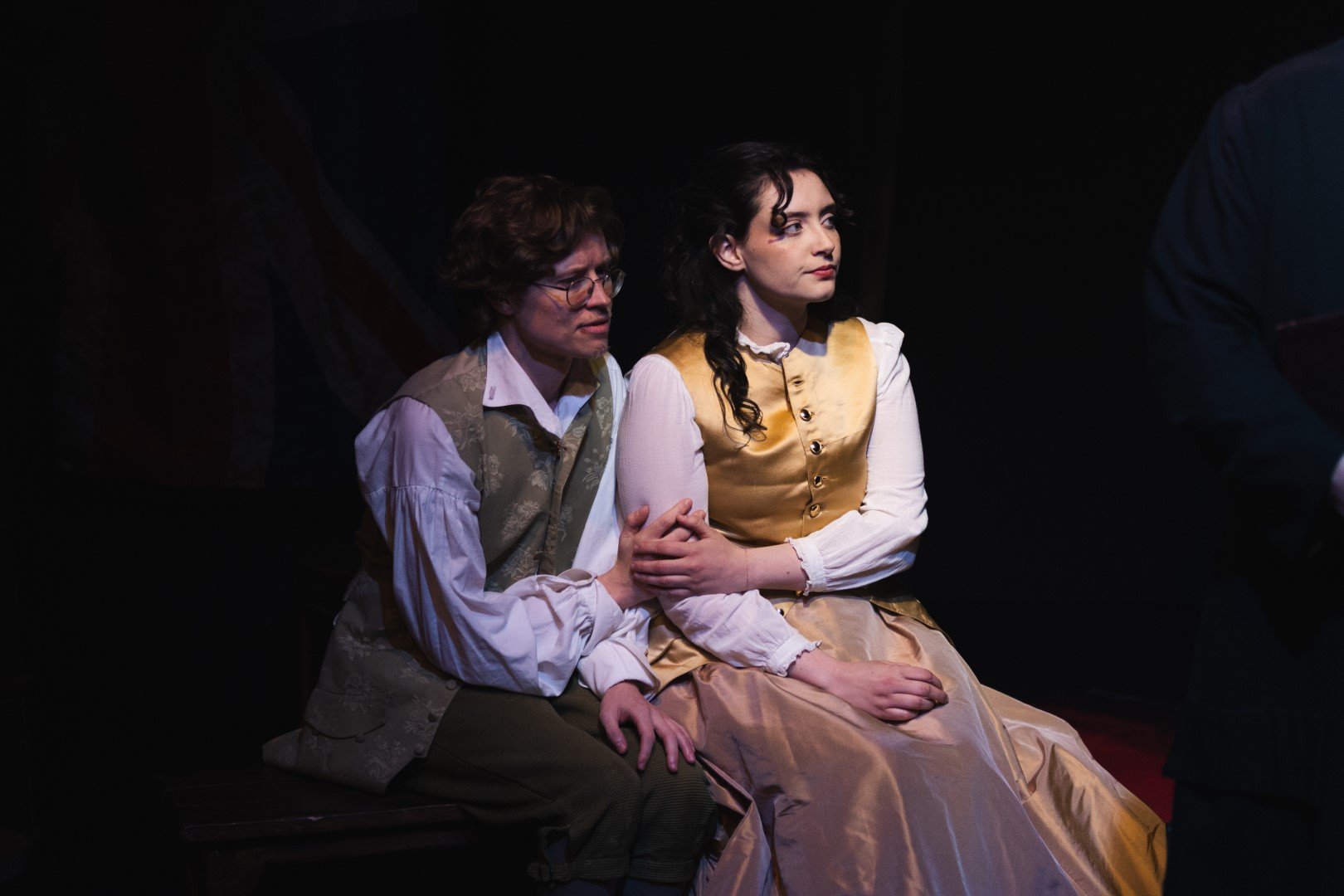
Joe Childs and Liv O’Connor in A Tale of Two Cities. Photo: Claire Greenan
Written by Penny for Theatre and Tonic
Disclaimer: Gifted tickets in exchange for an honest review. All views are our own
Set before and during the French Revolution, A Tale of Two Cities follows the fortunes of families in Paris and London whose lives are affected by the huge societal change going on around them. In these uncertain and turbulent times, it asks the question “what would you do for love”?
Adapted by Liz Love, who also directs, Charles Dickens’ weighty tome has been abridged to a manageable 95 minute one-act play by VandL Productions. The story is told by seven actors, focusing on the main protagonists. This approach is largely successful, although as the play jumps straight into action without introducing key characters, the basic synopsis in the digital programme is very helpful for anybody unfamiliar with the novel.
The play starts with the false imprisonment of Dr Manette in the Bastille, rather glossing over his suffering and mental distress before going forward 18 years to his release and reunion with daughter Lucie. The action takes us to London, where we meet young Frenchman, Charles Darnay who is in considerable legal jeopardy, defended by the brilliant young Sidney Carton. As the play progresses, we learn of Darnay’s family background against his growing friendship with Carton and love for Lucie.
After a rather disjointed start, the play finds its feet once we reach the courtroom. As we become familiar with the characters, heroes and villains are established and the story of love and revenge in the most turbulent of times is easy to follow and holds attention.
Throughout, the character of Miss Pross, childhood governess and friend to Lucie, takes on a Narrator role, filling in some of the gaps that are not played out on stage. In this role, Nikki Clare Durrant makes a strong first impression, opening the play with the iconic “Best of times, worst of times” speech, this one shared with Caroline Edwards as her French counterpart (and total opposite), Madame DeFarge. These narrated sections are not always as effective as they could be, needing a little more clarity in the narrative and more confidence in delivery.
The set is simple but effective, with tatty Union and French flags hanging to the rear of the stage and mismatched wooden furniture scattered around the set, used for the various scenes and giving the “barricade” vibe everyone associates with revolutionary France (thanks to a certain musical that will not be named). James Connor‘s lighting and sound design adds to the atmosphere whilst Helene Gustavsson’s costumes complement the aesthetic of the set, clearly establishing time and place, with actors playing multiple roles and transitioning between them with the simple addition of a hat, a coat, a meat cleaver …
The ensemble cast acquit themselves well. Initially, there are a few moments of hesitancy and a slight lack of conviction in places, but as the actors settle into the performance, characters are generally rounded and believable. Joe Childs is utterly sympathetic with his portrayal of the gentle, broken Dr Manette. Playing Darnay and Carton, Aryan Chavda and Reece Lewis give impressive and confident performances, both full of revolutionary passion but also convincing in expressing their fraternal and romantic feelings. As Darnay exchanges glances with Lucie in the courtroom, there’s a very clear chemistry between Chavda and Liv O’Connor who plays Lucie with an innocent charm but not hiding her character’s backbone. O’Connor also has a stand-out cameo at the end of the play, it’s a powerful and emotional interaction.
The villains of the piece, played by Vince Matthews (playing Marquis d’Evremonde and Earnest Defarge) and Caroline Edwards (Madame DeFarge and John Barsad) both give strong performances, but are slightly under-served with the material, not given enough opportunity to make the full impact you would expect from Dickens’ darker characters.
This new version of A Tale of Two Cities is well executed (pun intended). The story is a little hard to follow at the start but becomes engaging and gripping as the action unfolds. It puts emphasis firmly on human stories of love, revenge, loyalty and sacrifice. There is a lot packed into an hour and a half meaning that some detail and character development is missed, but it’s still entertaining, atmospheric and full of drama.
A Tale of Two Cities runs at the (Brockley) Jack Studio Theatre until Saturday 23rd May 2026.
★ ★ ★