Written by Laura for Theatre and Tonic
Disclaimer: Gifted tickets in exchange for an honest review. All views are our own
Carlota Subirós brings us Èdip & Antígona, a new version of Sophocles’s three Theban plays: Oedipus Rex, Oedipus at Colonus and Antigone. The lights dim and the people of Thebes start climbing down the stairs of the theatre, bringing olive branches to their king, Oedipus. This sombre opening sets the tone perfectly.
What stood out to me most was that it felt more like three different plays in one rather than one cohesive show. In Oedipus Rex, for example, there is a chorus made up from Oedipus’s children and a narrator that echo some of the dialogue. This completely disappears in later sections; I do wish they had either not done it at all or committed to it for the entirety of the play. Oedipus Rex felt especially different from the other two parts, which seemed more in tune with each other.
Oedipus Rex takes place in a very narrow space, black with only a reflective window to the outside. The action remains quite static in contrast with the rapid unfolding of events to their tragic conclusion. I found myself wishing that the show would play a bit more with the fact that the reveal at the end is well known by everyone; for example, by showing us a more loving relationship between Oedipus and Jocasta at first.
Oedipus at Colonus was the less familiar story to me but I loved its inclusion as it was the perfect bridge between Oedipus’s story and Antigone’s events. Moha Amazian was incredible as Theseus, with an imposing but kind presence and a beautiful voice. Babou Cham shone as Oedipus in this part, gaining momentum from a perhaps weaker first act.
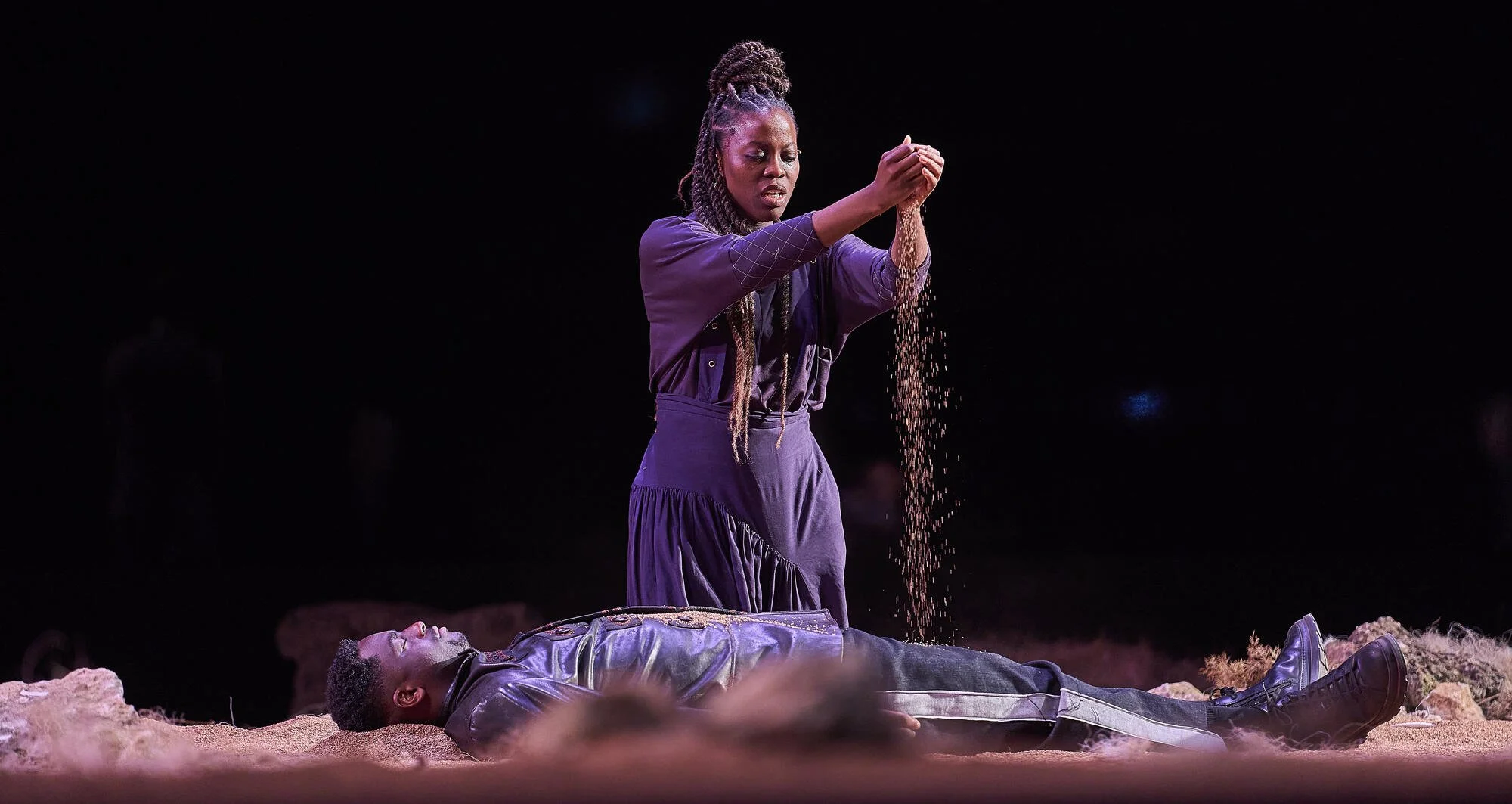
And finally, we come to Antigone, which was probably my favourite part of the play. Kathy Sey delivers a nuanced and powerful performance as Antigone, with the rest of the cast supporting her as she becomes the heart of the show. Her claim of love and compassion over hate is powerful and touching and becomes a highlight of the piece.
One character that did remain consistent throughout was Jordi Martínez as Creon. He delivered a flawless performance and had one of the most interesting character arcs. His chemistry with the rest of the cast was palpable.
I absolutely love the TNC’s stalls. The incline is perfect, allowing for every row to have perfect visibility, however tall the person in front of them is. There are no bad seats, only distant ones. From there, one could see the impressive stage, designed by Max Glaenzel and Josep Iglesias, that opens up during Oedipus at Colonus, a huge space that is used for the remaining two chapters of the story. I do wish they had stolen just a tiny bit more of this area for Oedipus Rex to have some more room.
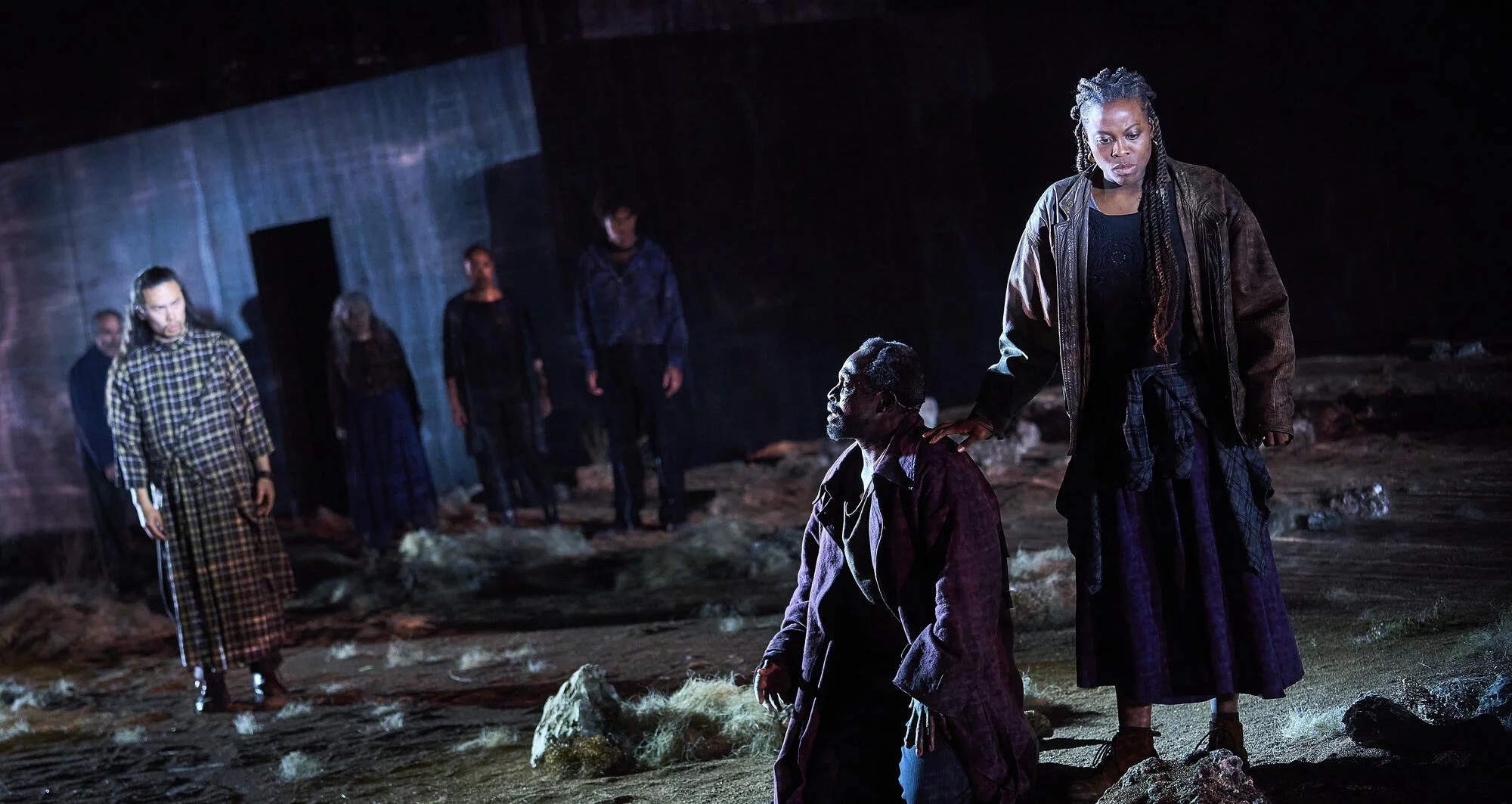
There were a couple of dance sequences, beautifully performed by Junyi Sun, but unfortunately didn’t feel like they matched the rest of the show. It felt a little like watching the ballet scene in Oklahoma: beautiful, but kind of pointless. Alternatively, some of the actors’ movements also felt a bit aimless at times, as if the director didn’t know what to do with them but wanted them to be onstage; I found myself getting distracted by the placement of the olive branches around Antigone and not listening to the characters’ monologues at times.
I’d like to take a moment to talk about the music of the show, created by Clara Aguilar. It does not have lyrics per se, but it is haunting and a beautiful way to showcase the characters’ emotions, the loss, the cries and the despair. I would like to highlight the final piece performed by Yolanda Sey as Ismene as especially touching.
Carles Riba’s translation of Sophocles’s plays is elegant but accessible in a way that elevates the piece but makes sure it reaches its contemporary audience.
In terms of accessibility, there are several adaptations, such as subtitling, audiodescription, a hearing loop, or amplified sound. There is one accessible performance and two that are subtitled in English. I would have loved for the show to have subtitles (for every show to have subtitles, as a matter of fact!). During the first part, especially, there was a cacophony of sounds, plus the audio wasn’t very loud, which made it hard to follow some of the dialogue. The staging would have absolutely allowed this, as there was a lot of blank space at the top of the stage. Why have specific access performances, if every show could be adapted?
Despite some cohesion issues, Èdip & Antígona is an ambitious and visually striking production, and its quality is comparable to any National Theatre production.
You can catch the show at Teatre Nacional de Catalunya (TNC) until the 31st of May.
★★★★