
Fire Fire at Arcola Theatre Review
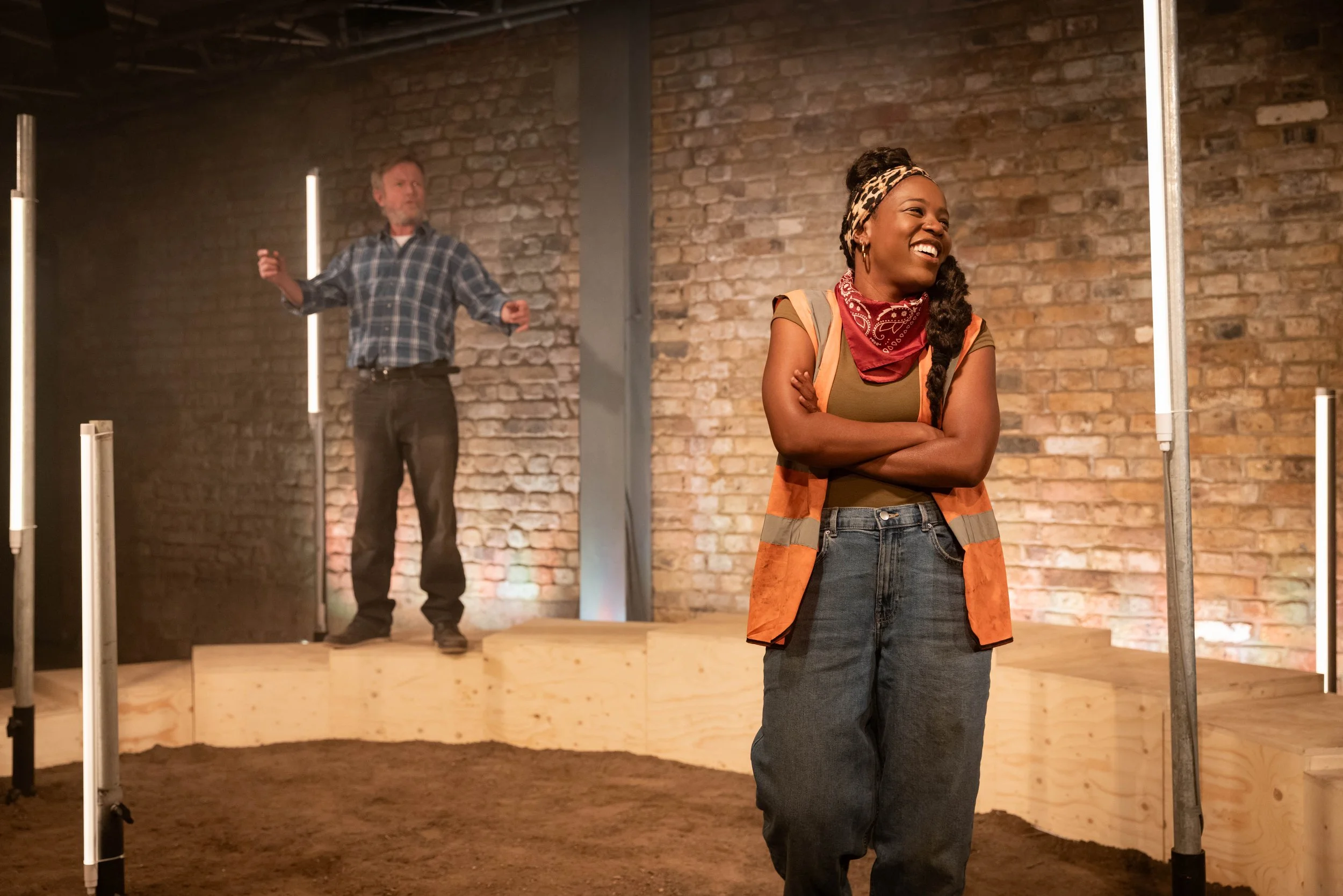
Chris Simmons and Gabrielle Brooks in Fire Fire. Photo: Mark Senior.
Eddie and Paige meet again and again and again in the same public park, as if called upon by fate itself. Meanwhile the summers are getting hotter, the parks are turning to dirt and the fires are getting closer to their houses.
Paige (Gabrielle Brooks) is a young activist, and Eddie (Chris Simmons) a retired manual labourer. Paige, alongside a climate change activist group, has blocked a road leading to a park delaying Eddie from holding a memorial for his brother. Paige apologises but responds with an almost media-trained excuse that the demonstration is important to protect the future of the park. Both performances are grounded and add to their characters’ likeability.
Peiyao Wang’s set is a circular, Ikea-pine-wood MC Escher-esque painting surrounding a patch of dirt. At times it felt that the actors found it hard to navigate, but it beautifully captured the cyclical nature of time binding them together as well as some of their arguments. Matched with Sound and Lighting design it made for a wholly atmospheric and tense mood. The play’s final act highlights all the individual elements perfectly with gorgeous poetic imagery and powerful performances. It’s an aesthetically pleasing production well directed but with an unexpected shift in focus for the narrative.
The news-worthy demonstrations of road-barricading and paint-throwing by climate activist groups like Extinction Rebellion and the general public's disdain for them is less so the heart of the play but its jumping off point.
The conversation immediately hits all the familiar territory. The protests are targeting the wrong people but if they weren't disruptive no one would pay attention etc. The crux of it all is that a majority of activists are middle class and that working-class people,
like Eddie and his family, are the ones both paying the price for the protests themselves and then also the knock-on changes implemented by them. Failure on both sides to unify against a common enemy leads to argumentative dysfunction. That’s where the debate stops, earlier than expected.
The play that highlights lack of learning from the past will lead to a despairing future, but it's structured not wholly as a debate play and more of a spiritual experience. Flashbacks, visions and dreams affect the pair, there's discussion of tribal warriors, earth gods and ancient burial grounds. The earth itself communing with them in the holy place that is nature.
Instead of using further sources of debate (i.e. activists feel arrogant and/or have god complexes) against Paige it explodes that very point to its literal height. Eddie has recurring dreams of Paige being revered as a saviour long after her death despite being overlooked in life and Paige does too, though it feels crass to admit. She believes that someone has to save the world so why shouldn’t it be her? The play does not refute this belief. At their lowest they call upon nature, gods and fate in a tribalistic ritual to seek ultimate retribution together.
I admire the play linking protest to ritual to add vitality and imagery to the piece but I feel there are versions of this play without it that could be as emotionally affecting. The initial sparks burnt brightly but quickly and could not fuel the fire for the full running time.
★★★
Written by Brad for Theatre and Tonic, September 2026.