Interview with James McDermott - Writer of “It Comes In Waves”.
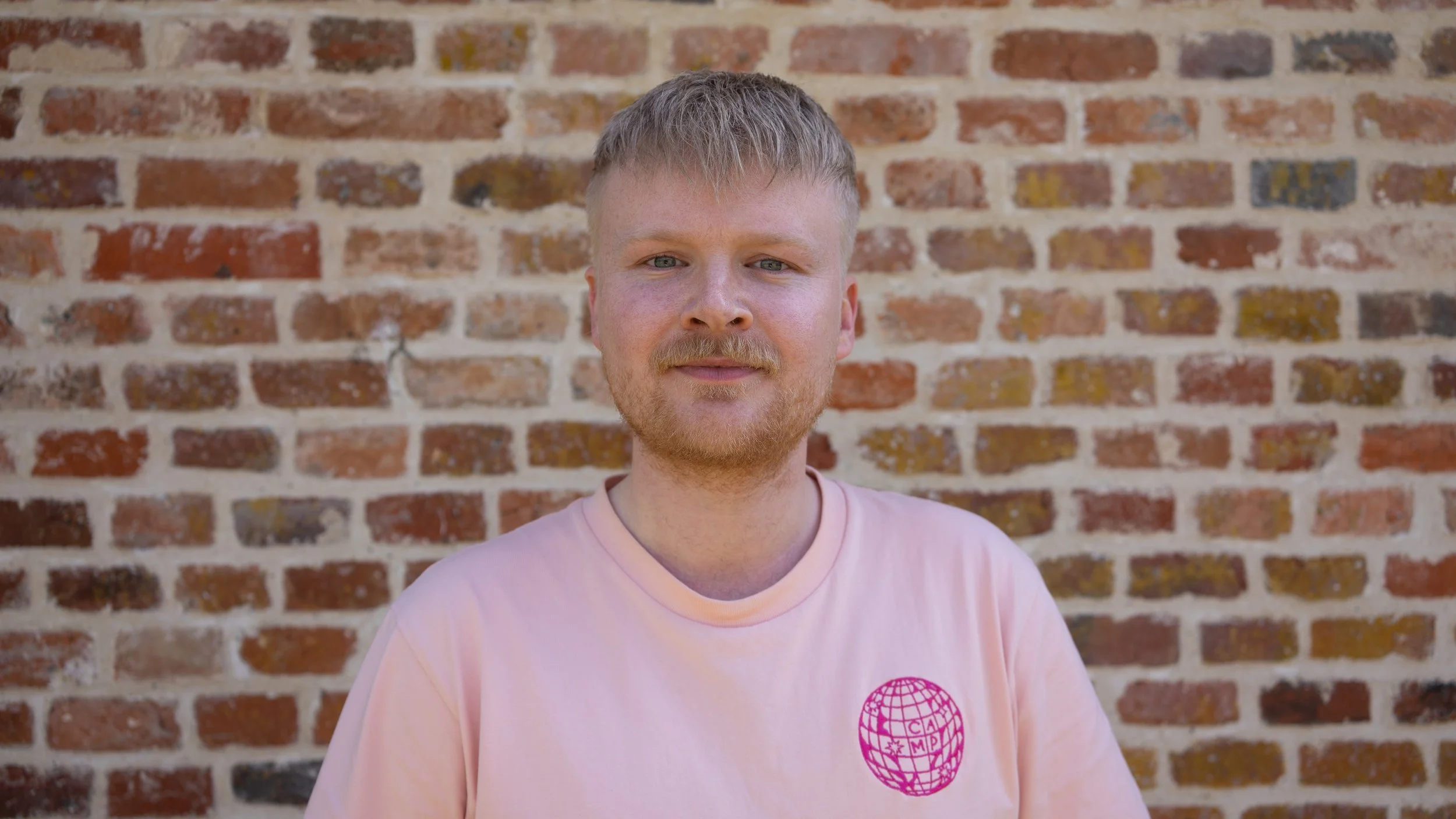
Image: Louis Catliff
Please introduce yourself and the play.
Hello, my name is James McDermott, and I am a Norwich-based scriptwriter and teacher at UEA. And it comes in waves, is a comedy drama about a fictional grief cafe. in Lowestoft. And I wanted to write that play because my dad died of COVID in 2022. And I found myself 1st attending grief cafes, grief groups, as a participant, which, if people aren't aware of them, is where a group of people might get together at a library, community space, a village hall, often with a facilitator who will guide them through conversational exercises about the refund. And so I started attending those, which really helped me in those initial stages of grief. And was always struck by how people use humour to cope with wheel drama in their lives, which is where that idea of all this could be a play then came from. Uh, and then I started teaching at some, teaching writing exercises, and there I met a person called Simon Arthur, who is a grief recovery specialist. Who I talk to in the research process for this, and lots of the scenes in the play are built around exercises in grief cafes. So Simon was invaluable there, and he and I delivered accompanying workshops that are happening alongside the tour, but in its shortest, it's about how we use humour and find community in overcoming or navigating, certainly, if not overcoming those phases of grief.
So the play is set in Lowestoft. Why did you choose to set it here rather than in a fictional town? And why is this important to you?
I know Karen Reid, who runs The Seagull Theatre, and she too had a bereavement in her life that we connected over. Uh, and so when I thought I wanted to develop a play set in the East of England, which is where I'm based, and so naturally just thought of telling stories here. When I knew I wanted to write a grief themed play, she came to mind straight away. So I spoke to her about it, and she was just so enthusiastic because of that personal investment. A more crass answer is, I've written several plays at Norfolk and Suffolk and never written one in Lowestoft, so it felt ripe for its time. But also, it feels like a very unique place in that its coast is crumbling a little bit. It feels like its mourning aspects of its natural self that is falling away, like many places its high street has changed. Lots of shops are closing, lots of younger people are grieving the lack of opportunity here. So it felt like an apt backdrop for a really personal story about a grief cafe set in a place that is navigating lots of griefs of its own.
So as high streets are changing, community spaces are disappearing. How important are places like local theatre in giving people space to come together?
Yeah, great question. I think from a performance point of view, well I love going to a play because I turn my phone off. Turn my social media off. And I sit with strangers and share an experience. And I think because of how the world is at the moment and how politics is at the moment. We very, very rarely feel comfortable sitting with strangers, getting offline, and just sharing breath with other people that we don't know. And I think that's the great thing about a play, being in a room with other people. So I think that gesture feels innately political. And innately powerful in the times we're in that we sit with other people and share a story. I think, when people are struggling in the times we're in, we often want to escape in or out of ourselves. I think theatre, as an audience member, or as an acting student, a writing student, or if you're doing tech. That investment in something bigger than yourself or becoming someone other than yourself through acting or writing. Incredibly transformative. So I think offering spaces where people can learn more about their inner life or become someone else externally through performance. That feels incredibly valuable as well. So many theatre spaces have cafes, bars, or there are places you can go that you don't have to pay for, like libraries.
If so many young people are losing the coffee shops or cafes or fast food restaurants that they might hang out in, it’s important to have spaces where you can go and play a game in a cafe, go and see a film cheaply if you want to, film nights, come and see a play relatively inexpensively. I think that feels so valuable. And part of where I love the Seagull Theatre, is that it exists on a housing estate. There's floors and floors of it, and there's always something going on every night or every day. So I think it feels like such an important place.
You've described it as a play that laughs in the face of loss. Was it important to you that audiences leave feeling uplifted rather than weighed down by the subject matter?
My family is a very working-class family and there's a phrase in my family, “if we can laugh at anything, you're bulletproof.” Laughing at something diminishes its power over you and makes you feel empowered. And I feel grief is gonna get us all in some form, death is gonna get us all. We can despair at that, or we can laugh at the absurdity of that and crack on making memories and living our life. So I want the audience to leave, having had a laugh, but also having, there's a lovely phrase from Playwrite, Simon Stevens, who wrote The Curious Incident of the Dog in the Nighttime, that plays are an empathy machine.
I love that thought that the audience might come along, feel empathy for the characters, either recognise their own grief or the grief of people they know, or try it on if they've never lost anyone and go on that experience with the characters of how it feels. So I want them to leave having had a laugh, but also to better understand what grief might look like, because it's so messy and personal and physical. And hope that they have some language, some jokes, some equipment to show people in their life or themselves when their time comes to grief.
Coastal towns are often talked about through a lens of decline or nostalgia. Did you want to challenge that? or lean into those kinds of feelings?
I think both. I think just writing truthfully about a place, you'll go nothing is just one thing. It can be both nostalgic and innovative and fresh and new. It can be declining and thriving in certain places as well, as we have this conversation, as much as it feels like aspects of Lowestoft have closed down or places can feel like they're lacking cultural presence because of lack of funding from government, the First Light Festival is happening on the beach, this fantastic weekend long free festival. I think just writing truthfully about a place you show it in all its multiplicity and richness.
I hope that the play addresses that there are aspects of loss and grief for the town. And certainly that is embodied in the character of Jordan, who's a young teenager who's desperate to try and find a job, and part of her grief is that she's really struggling. But also, within the play, this grief cafe exists where 3 strangers come together and have their life transformed. And that too happens in every little town that's losing things. It's gaining things, it's got community, it's got that social presence. So I'm conscious of what those cliches are about writing, rural twee, Midsomer Murders, kind of coast, coastalness, coastality. And I hope we avoid those cliches, but also represent a place in all its trueness.
Grief is often portrayed as something very private, but this feels very community focussed. Do you think we've become better or worse at speaking without grief collectively?
The first thing that comes to mind when you ask me that question is that we all lived through a pandemic where we all lost something and we never talk about it. We pretend it never happened. We all had this lockdown, and then pubs reopened and you could fly abroad, and because we'd all been cooped up naturally, we ran to that and pretended these 3 years hadn't happened. And yet, lots of my students at university had their grades decided for them by teachers. They didn't get to go to prompts. They lost grandparents, they lost self-confidence. And I don't think any of these things are being talked about. So I think as a nation, that macro grief we're still carrying, that macro trauma of the pandemic we haven't processed or talked about at all. I think, because of this rise in mental health conversations in the last five, 10 years, people might feel more equipped to talk about their feelings than they might have done 20, 30 years ago. But I'm aware that as a writer, working with young people at university, I might have been in a bit of a bubble where lots of older adults, rural communities, certainly male grievers as well might not feel that their gender allows them that openness. So maybe not, is the answer. I'm kind of landing on, as I talked about it.
I think there's more stories about grief. I think there's more podcasts about it. I think there's more representation of it in film and television. But I think people will turn to that so they can quietly have that private conversation with culture, more than talk to other people about it. I think death still feels like that taboo and it's the thing we all fear the most to some extent, so we avoid talking about it in case we might summon it. I think there's some superstition around those conversations.
Where did the title that comes from Waves come from? Does it mean something personally?
Well, it was originally called Grief Cafe, which felt very literal, and we thought if we put that on posters and in brochures, people might genuinely come to the theatre thinking we're running a real grief cafe. So we had a collective conversation about how, and also because we wanted it to feel like a comedy drama, we thought that total might put people off somewhat. So we pulled some ideas, uh, of other titles, other cliches, other phrases that are linked to grief, we might hear in real grief cafes, of which it comes in waves, as one of them, as a phrase around grief, that it comes in, it comes in waves, it can hit you whenever it wants. But also retreat as the tide does very, very quickly or very, very dramatically.
I remember running a writing group in Cromer Arts Space, a gallery on the prom, and with a group of older adults. As they were doing a writing exercise, I got an email saying, “we can't call it grief cafe”. So I said, have you got any ideas? There's a group for what a coastal grief cafe play might be. And I think collectively we pulled some, and when It Comes In Waves was said, everyone went, oh, that sounds nice. that it holds grief on the coast - it feels hopeful as well that it is going to retreat, whereas Grief Cafe or Death Cafe feels so certain and final and direct. There feels something apt about the humour, that coastal quality and the relevance if it comes in waves.
Why did you decide to tell this story on stage part of an on-screen?
I think theatre feels like a great form to write about death and grief through because it's so temporary. That the play happens at night and then it never happens in the same way again. It lives and it dies very, very quickly. So I'm really drawn to theatre to write about death and grief. Because it's got death built into it. Whereas a screen, something recorded for television will last forever. So that form really, really appeals right about grief. I think there's something more moving about being in the room and the audience in part playing the other people in that grief cafe. So being in the room with these 3 characters, going on their emotional journeys, feeling their sadness, their joy, that feels more evocative and powerful and personal, I think, than watching it privately on your phone or on a cinema screen. Another crass direct answer, television is so slow, it's quite scared of talking about death. It doesn't really want any COVID related work as far as I can tell in my conversations I'm having with it. Everything is joyful, optimistic, fast. Let's offer an antidote to how the world is, but there's lots of grief. Whereas I think theatre doesn't shy away from that. It's far easier in some ways to write about the world through theatre than on television. Because there's more immediacy to it. It's less driven by money and numbers and viewing figures. So it felt like the right place from a career point of view and a craft point of view to hold that story I wanted to tell quickly because I think the nation is living with its own unexpressed grief after the pandemic.