Interview with Joanna Hickman, The Secret Garden The Musical
This Spring, a UK revival of The Secret Garden heads to the York Theatre Royal for a limited season. Based on Frances Hodgson Burnett’s beloved classic and the Tony Award-winning Broadway musical, the story follows a lonely, spoiled girl named Mary Lennox who moves to her uncle’s gloomy estate in England after her parents die. When she discovers and restores a hidden garden, it transforms her life and helps heal those around her, including her sickly cousin, Colin Craven.
Directed by John Doyle and brought to life by a cast of actor-musicians, we caught up with Joanna Hickman to find out more about this production.

You are starring in the revival of The Secret Garden The Musical in York this month. What is it like to stage the Tony-winning musical and bring this beloved story to more audiences?
We’re doing the show straight through without an interval, which hopefully makes for quite an intense and moving experience. There is slightly more focus on the adult characters than there is in the book, but our staging also very much presents things through the eyes of Mary, the young girl at the centre of the story.
Had you read the book or seen the film before being involved in this musical adaptation? And has that enhanced your experience of working on the show so far?
I feel like I grew up with the book: I read it more than once, and very much identified with Mary. The idea of a secret garden hidden behind an ivy-covered door always really fascinated me as a child... I was constantly hoping to find one myself.
For those who don’t know about this story, can you share a quick synopsis of it?
Mary Lennox is sent to Yorkshire to live at Misselthwaite Manor with her Uncle Archibald after she becomes an orphan. Her uncle and the housekeeper Mrs Medlock are cold with her, and she, in turn, is very haughty and proud. But then she meets characters like the maid Martha, her brother Dickon and the gardener Ben, who encourage her to play outside, and tell her about a secret garden that belonged to Archibald’s wife Lily, who died. It’s been kept locked up since Lily’s death, and no one knows where it is, or where the key is hidden. Then there are other mysteries in the house – Mary keeps hearing someone crying. This turns out to be her cousin Colin, who is confined to his room and doesn’t get to see anyone, not even his father Archibald, who has been unable to deal with him since Lily died in childbirth. Mary is determined to find the garden and prove to Colin that he isn’t ill. Unlocking the garden has a magical effect on all of the key characters, including Mary herself. In the book, Lily is mentioned but doesn’t feature. In the musical she is a ghost, trapped in limbo because Archibald and Colin still need her.

Your character Lily is such a haunting presence in the story. How did you approach portraying a character like this and where have you drawn your influences to develop your portrayal of her?
In actor-musician productions you tend to be on stage all the time, which works beautifully for a ghost of course. Lily’s music also does a lot of the work. She sings much higher than most of the other characters, and in my case she plays the cello, which is a naturally melancholy instrument. She has a slower pace than everyone else on stage as well. At first, this felt very unnatural, but now it feels wrong if she speeds up even the tiniest amount. I find the lyrics of the song ‘I heard someone crying’ an interesting clue to Lily’s experience as if she can hear someone crying but can’t tell who it is. I think it suggests that she doesn’t have a clear vision of what is happening in the house, so when she wanders around the stage I like to hone in on the musical instruments as though she has a heightened awareness of sounds.
Is there a particular song in the show that you find especially challenging or particularly meaningful to perform?
The biggest challenges for me are playing and singing at the same time. You have to find exactly the right spot on the cello for each note and listen carefully in order to play in tune, which is very hard when you’re also singing and expressing the lyrics: your brain doesn’t know what to focus on. The hardest example of that is ‘How could I ever know’, Lily’s song to Archibald right at the end of the show. As well as the challenge of the simultaneous singing and playing, we are leaning into the exasperation in the lyrics: she’s asking him how she could possibly have known she was going to die. It’s tempting to just focus on the beauty and sadness of the music, but John rightly points out that it’s not a straightforward love song.
What has it been like working with John Doyle in the rehearsal room and seeing how he collaborates with the cast to shape the production?
This is my third production for John Doyle, so I recognise and admire his approach. He doesn’t come to rehearsals with a clear idea of how he will stage things. Instead, he creates images through where he places his actors, often dictated or inspired by the music we’re playing, and then he works out which images best tell the story. Often he creates something very literal at the beginning of the rehearsal process then gradually strips elements away so that the staging becomes more abstract, but the focus of the story is clear.
This production of The Secret Garden features a cast of actor-musicians. How do you think that approach has helped bring the show to life or added something new to the story?
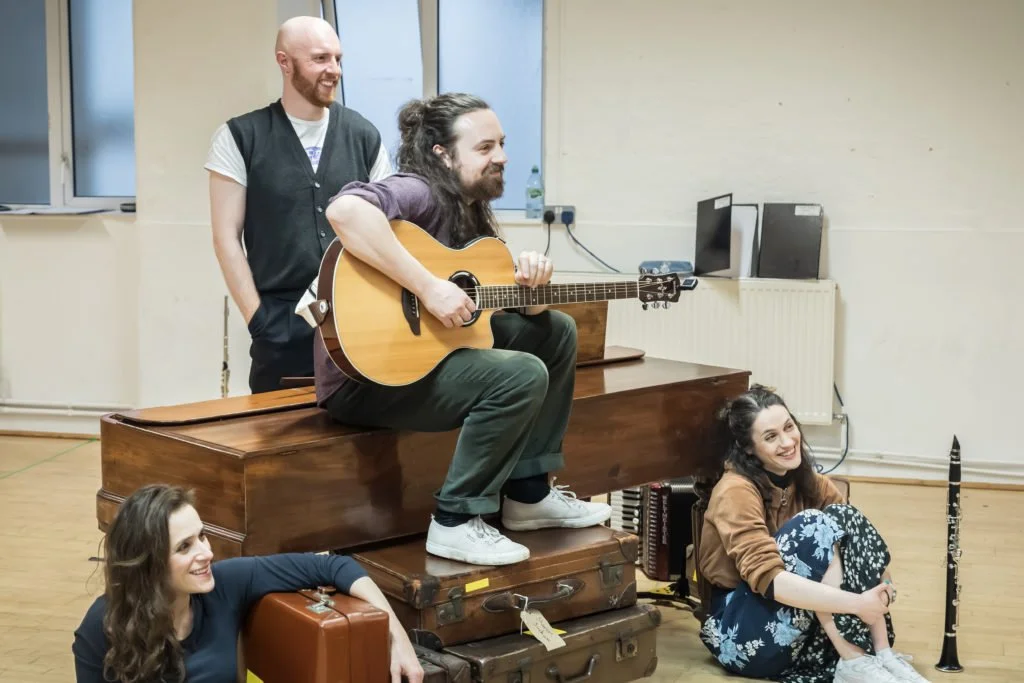
I love actor-musician work. There is something about playing music together that creates a really beautiful bond within a cast - we're all equal, each taking turns to play for each other, and listening to each other. It also necessitates a non-naturalistic approach to the staging (you can’t be naturalistic if an actor constantly has a cello in their hand!), which brings a unique quality to each production. Sometimes even the basic practicalities, such as someone having to cross the stage to put down a flute and pick up a clarinet creates something interesting. Also actually seeing the music being played (rather than having it hidden in an orchestra pit) really draws everyone’s attention to the music, which has been beautifully arranged by Cathy Jayes. It’s like seeing a musical come to life in front of your eyes, or a story being brought to life for and around Mary.
The Secret Garden the Musical deals with difficult topics like grief, healing and hope. How do you think audiences will connect with these and has that been difficult to explore in the rehearsal process?
Young people are likely to follow the story of Mary – the proud angry girl who becomes passionate about unlocking the garden and helping her uncle and cousin. However, the adults may connect more with Archie’s story: the way his grief is overpowering him and preventing him from being a father to Colin.
Finally, what do you hope audiences will take away from watching this musical?
I hope they will feel moved and uplifted. It’s undeniably sad that nothing can bring Lily back, but the garden represents hope and new life.
The Secret Garden the Musical plays at York Theatre Royal from 17 March to 04 April.