
Our Mothers’ Daughters at Riverside Studios Review
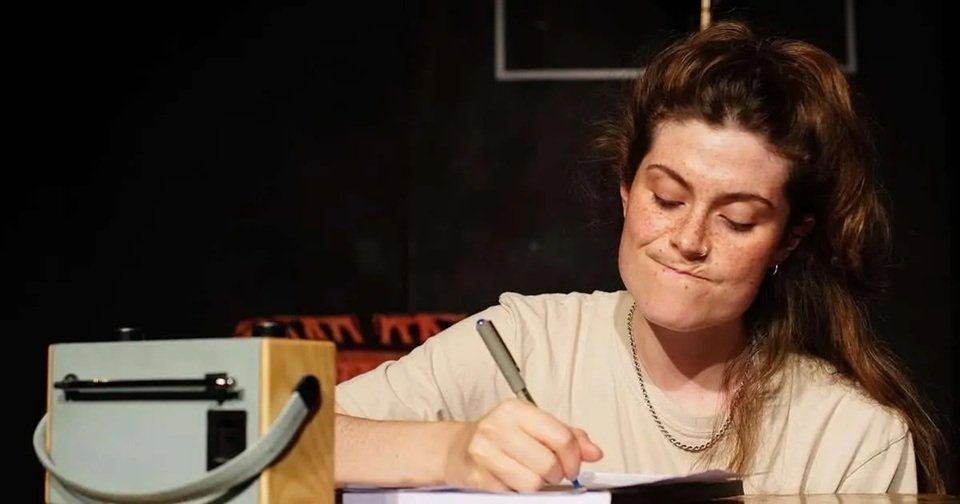
“Are we adults now?” Welcome to the world of Billy, Kat and ‘the Artist’, three childhood friends at the post-university watershed. And given the maze of choices they are navigating, the answer is yes.
The Artist is fresh from a breakup, working towards her first public exhibition and having a crush on Sophie- thus beginning to question her own sexuality. Kat is newly engaged and revealing surprisingly traditional life goals. Billy is worried this will all gallop away without her, and that she will be left behind. The three are honest mirrors to each other in ways only old friends are, dispensing hard truths, kindness and banter in equal measures. Theirs is a precious bond, but will it endure as their lives begin to diverge?
In sitcom style, boisterous everyday moments are punctuated by more dramatic ones. Just as the Artist and Sophie get close, the aftermath of her previous liaison comes knocking. The Artist is pregnant. Her relationship with Sophie, or its possibility, unravels.
The friends rally in support, each filtering it through their own lived experience. The Artist’s sister and mother are also at hand. The mum sets aside her own history of unplanned motherhood to let her daughter decide for herself. Emma — the golden child, 'good at life' — takes the opposite tack, landing on a disturbingly conservative stance.
This Riverside Studios performance is an abridged version of the original play by Sarah Tara Ray, and was further adapted due to a last-minute cast substitution. Neither detracts from its merits.
Our Mothers’ Daughters is a courageous play, that sensitively handles identity, female friendships and reproductive choices at a time when these are once again called into question. The text is not afraid to go there, and all perspectives, from ‘abortion as healthcare’ to an overtly pro-life stance are laid out with great care.
A portion of ticket sales goes to MSI Reproductive Choices, fitting for a play committed to non-judgemental debate on a fraught topic.
The writing is very accomplished, creating an agile script that effortlessly moves between funny lines and poignant reflections. Characters are well developed, peppered with details that make their stories not only credible but endearing in their messiness.
It is all brought to life by a brilliant cast, with Andi Bickers standing out as Sophie, though the whole cast brings skill and real chemistry to their roles. Director Hayley-Rose stepped in to play Kat — reportedly script in hand, though you'd never know it — bringing real panache, with only the occasional projection issue.
The directionis dynamic and in great service to the script. Comedic timing is impeccable, as is the rich variation in blocking. The very inventive use of space is, sadly, both an asset and a drawback. Moving the core of the performance away from the stage heightens the intimacy and allows for a very effective use of the side areas, resourcefully creating three different worlds. However this comes at the expense of visibility, and no amount of neck craning is enough to catch the full show, especially the numerous moments when the women are sitting down. It is a huge shame, as this is a play that deserves to be absorbed in its entirety.
Costumes (Nellie Lovelock-Smith) are well chosen, supportive of character without tipping into trope. The bridesmaid outfits are not only theatrical but a powerful signifier of the more traditional female roles these women are either pushing back against or, aspiring to.
The sound, designed by Ellen Pallant heightens the narrative. The most memorable of tracks, Running Up That Hill- is what these women are doing. Striving to live an authentic life in a system that is still (or even increasingly, given the Roe v Wade overturn) rigged against them. These women are fragile, strong, courageous, resourceful, flawed. Mostly, they are there for each other.
★★★★
Written by Chiara for Theatre and Tonic, August 2026.