
Some Woman at the National Theatre (Dorfman) Review
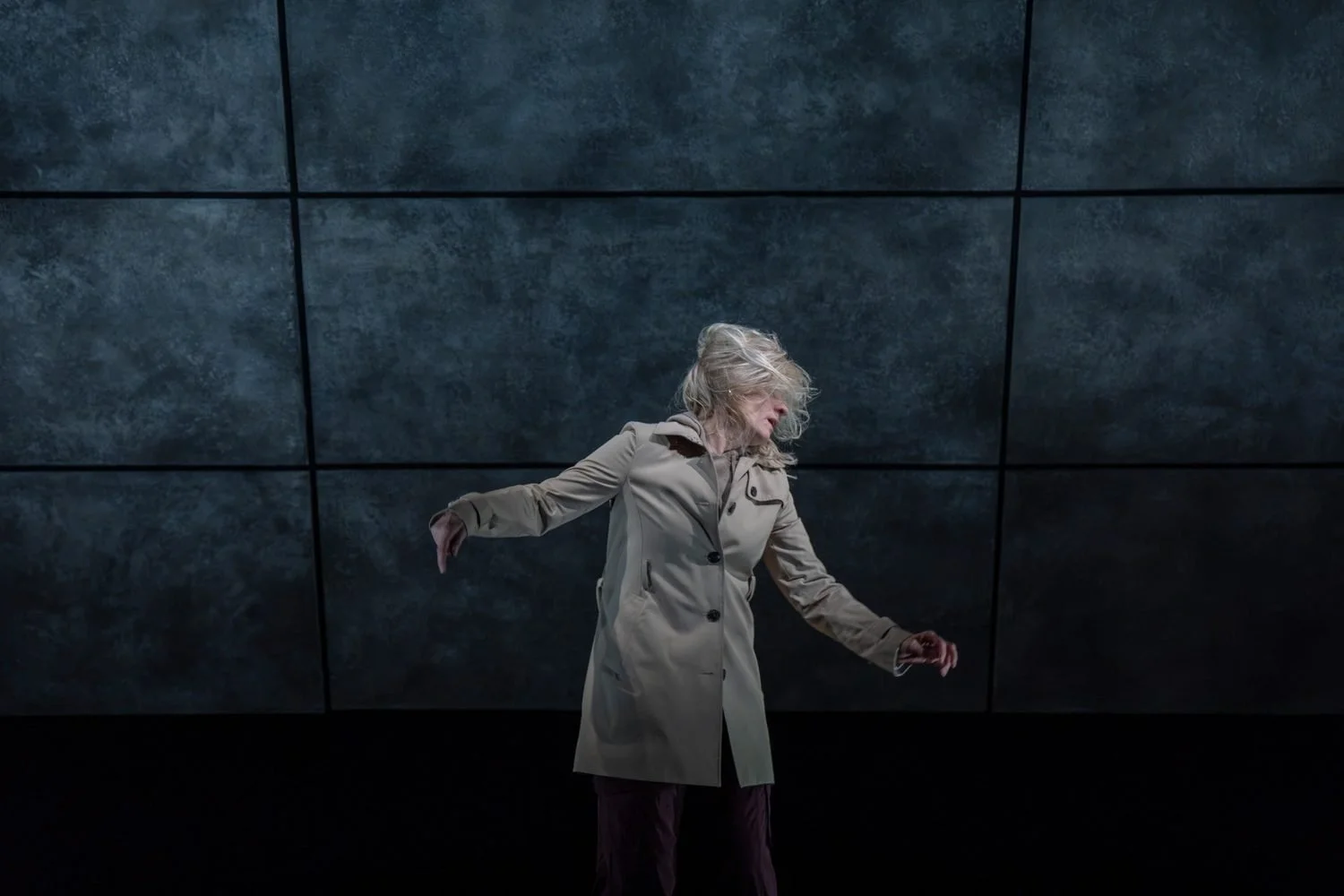
Anne-Marie Duff. Photo by Ellie Kurttz.
Not every play is an easy one to love, but some have a way of striking a deeply personal chord with certain audience members. Some Woman, a new play written by Helen Edmundson and directed by Blanche McIntyre, was exactly that kind of play for me.
The protagonist, Julie (Anne-Marie Duff), lives in a state of near-constant anxiety. Around ten years ago, after her husband (Geoffrey Streatfeild) had an affair, she struggled through several turbulent years before eventually divorcing him and raising their two daughters on her own. Now, her elder daughter, Kate (Hannah Onslow), has just accepted a new job and is preparing to move abroad with her boyfriend, Nathan (Tobi King-Bakare). Her younger daughter, Ginny (Grace Doherty), is still recovering from depression and has very little confidence in herself. With the family home up for sale and her job at a school leaving her no room to breathe, Julie is already stretched to her limits when another blow comes her way. One day, while waiting for a train at a station, she is suddenly and inexplicably subjected to verbal abuse by an eleven-year-old boy. The incident leaves her deeply shaken. When she tries to have a proper conversation with the boy, however, she finds herself facing legal action from his parents instead. In an instant, Julie's life seems on the verge of falling apart completely.
The cast bring their characters vividly to life through remarkably nuanced performances. Anne-Marie Duff is particularly compelling. Her body is almost always slightly hunched, her lips pursed, and her brows rarely unknitted. Even in her own home, she seems unable to relax, as though she never quite knows what to do with herself. Whenever her emotions begin to rise to the surface, there are signs that she is struggling to keep them in check. I found myself worrying that she might suddenly collapse to the floor under the weight of her anguish or break into an uncontrollable scream. After being served with two legal charges, she sits alone in the middle of the night, crying into her phone. When she notices Ginny standing behind her, she hurriedly ends the call and hides the phone, trying to act as though nothing has happened, even though she already seems on the verge of breaking down. Through Duff's meticulous portrayal of Julie, I could easily imagine how Kate and Ginny must see their mother.
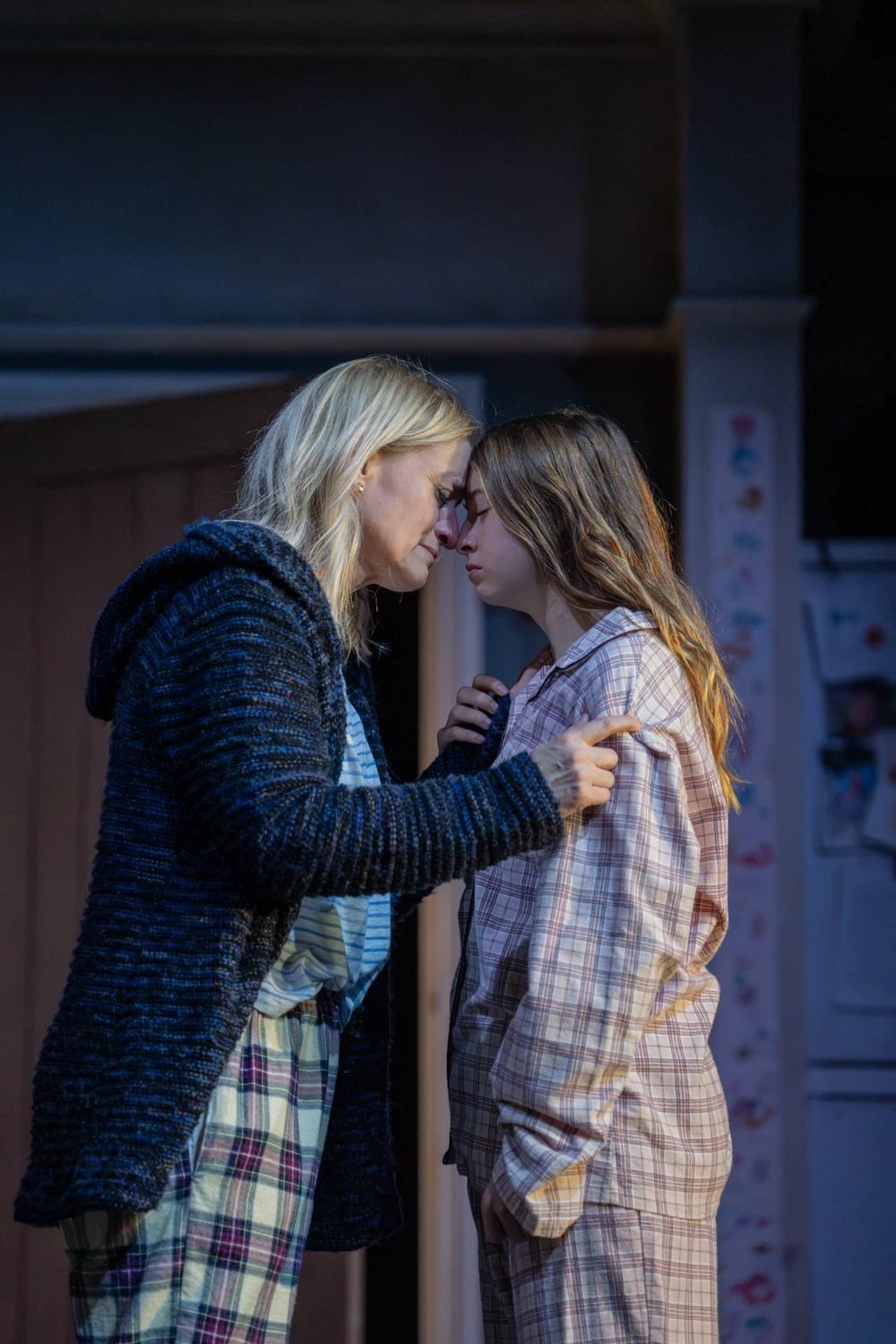

The play offers a deeply unsettling, at times even frightening, portrayal of the ways in which women can be oppressed by men. Yet what I loved most was its depiction of the mother-daughter relationship. All three women are trying as hard as they can not to become the women who raised them. Julie herself acknowledges this, and yet each bears an unmistakable resemblance to her own mother. Ginny shares Julie's quiet, gentle nature, but Kate is, at her core, the one who most closely resembles Julie. On the surface, she appears rational, assertive and more radical in her outlook. Yet whether she is shouting at Julie for failing to keep her emotions in check or throwing herself at Nathan, desperately pleading with him not to leave, I felt a pang of recognition, even as I marvelled at the play's psychological precision.
Some of my favourite moments are the conversations between Julie and Kate. Although they have both hurt each other in the past, Kate is ultimately the person best able to support Julie, just as Julie is the person who understands Kate best. Kate, in fact, needs her mother more than she realises. During one of their conversations, Julie says, “People always say that you come into this world alone, but you don’t. You come in with your mum.” Somehow, the line stayed with me long after the scene had ended. The dialogue in Some Woman is not particularly elaborate, yet it has a quiet emotional power.
By the end of the play, the warm, intimate space of the family home has vanished entirely. All that remains around Julie are slabs of dark grey stone, rising like prison walls, while a dome slowly descends overhead, seeming almost to press down upon her (Robert Jones, set design). Yet Julie stands in a sharply tailored suit, gazing calmly ahead. She appears more composed, more elegant and more resilient than at any other point in the play.
Julie’s final decision is not particularly difficult to anticipate, but that does nothing to diminish my admiration for this production. The decision itself is far less compelling than the complex emotions and accumulated pain that the story brings to the surface. Through Julie’s story, I was reminded of so many families, so many mothers and daughters. Some Woman is not an easy play to sit through. Some audience members may find it emotionally exhausting, even painful. Yet that, in itself, speaks to the power of the play. For those who see something of their own lives reflected in its characters and relationships, Some Woman can be deeply affecting.
Some Woman plays at The National Theatre until 21st November 2026.
★★★★★
Written by Ziwen for Theatre and Tonic, October 2026.