
The Pianist at Park Theatre Review
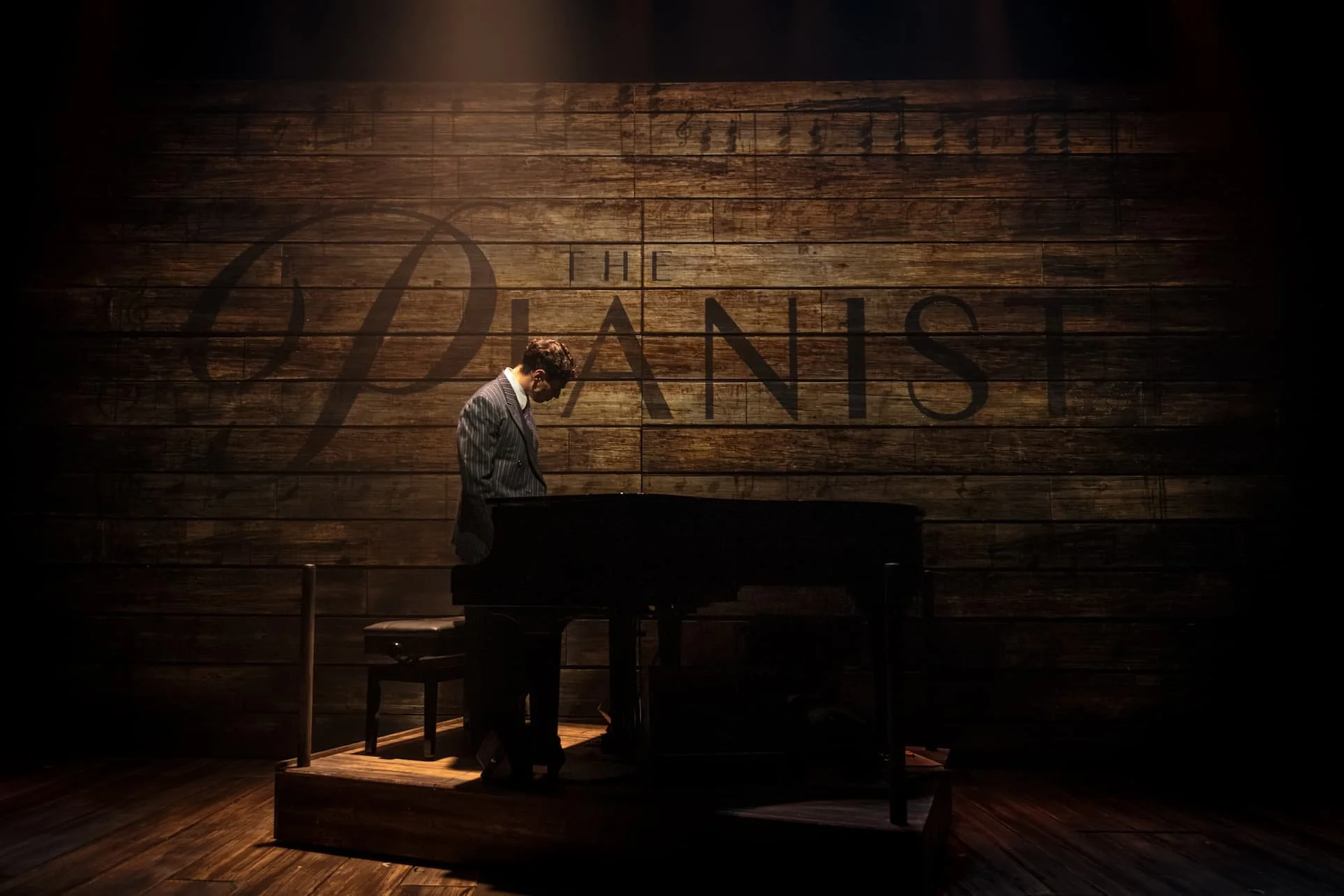
Photo: Rich Southgate
It felt as though I were watching a memoir unfold on stage, page by page, accompanied by some of the most moving music imaginable. Following the acclaimed film The Pianist, Wladyslaw Szpilman’s memoir has been adapted for the stage as a musical by Thom Southerland, who also directs the production, now playing at Park Theatre this autumn. Featuring Szpilman’s own music, newly arranged by Simon Lee, the production stays closer to the original memoir than the film does, giving it a distinctive texture of its own.
When I first read Szpilman’s memoir, I was struck, despite knowing what to expect, by the restraint and expressive power of his writing. I finished its eighteen chapters in remarkably little time. Yet it is these deceptively simple, beautifully crafted sentences that give the production its shape and drive the story forward. As Wladyslaw Szpilman, Dan Krikler narrates these words while also stepping into the action itself at key moments in the story.
Music is undoubtedly the soul of this production. With the exception of Dan Krikler, the cast also serve as musicians, moving through the story as they play. Unlike in most musicals, the protagonist rarely sings himself. Instead, Szpilman’s inner world is revealed largely through the music performed by the other actors. This feels entirely fitting, after all, the melodies are drawn from the music that flowed from within Szpilman himself.
At the beginning of the production, figures emerge from behind the brick walls, violins in hand and smiles on their faces (Andrzej Goudling, set design). Bathed in the warm, golden glow (Robbie Butler), they seem to stand in the afternoon sun. I found myself reflecting on how beautiful and romantic Warsaw must have been before the war, a city so rich in music and artistic life. Life here was once so full of joy. Knowing what was to come, I could not help feeling a quiet melancholy creeping in, even as the lilting melodies played on. At the end of Act One, Szpilman is separated from his family, and the two wooden walls close together once more. His family remain behind them, their half-visible figures fading almost into the smoke. The music now carries a deeper, more poignant sorrow. In this moment, Szpilman truly says goodbye to the life he once knew.
One particularly distinctive feature of this production is the way it represents Szpilman’s relationship with the piano. Malcolm Forbes-Peckham, playing the pianist, performs almost all the pieces associated with Szpilman, while Dan Krikler stands beside him, as though the notes flowing from Forbes-Peckham’s fingers were coming from Szpilman himself. It is an ingenious theatrical device, conveying how the war prevents Szpilman from fully expressing himself through his own music. If the connection between the two performers were more strongly established, particularly as the pianist begins to take Szpilman’s place, the moment when Szpilman finally reclaims the piano as his own could be all the more moving.
Szpilman’s music is simple and clear, imbued with a gentle melancholy, alongside the elegance, restraint and nostalgia of classical music. Much like his writing, it is understated yet deeply affecting. In one particularly moving moment, Dan Krikler portrays Szpilman in hiding as he suddenly hears someone next door playing his own music. He cautiously climbs onto the piano, presses his ear against the wall and closes his eyes, listening to the notes drifting through from the other side. The beauty of the music, combined with Krikler’s delicate performance, quietly moved me.
Szpilman’s memoir encompasses so much that adapting it into a musical is an immensely challenging undertaking. Yet this production finds a distinctive form of its own. More than a conventional musical, it feels like a piece of history carved into a work of art. Though deeply personal, the production is ultimately shaped less by individual characterisation than by the weight of the historical moment and the world in which these lives unfolded. Behind these words and melodies, I felt as though I could glimpse the shadows of those who lived through that time. As I write this review, I already find myself missing the melodies that lingered long after the performance ended. I would gladly return to this memoir unfolding on stage, if only for the music.
The Pianist plays at Park Theatre until 28th November 2026.
★★★★
Written by Ziwen for Theatre and Tonic, October 2026.