
We Had a World at Hampstead Theatre Review
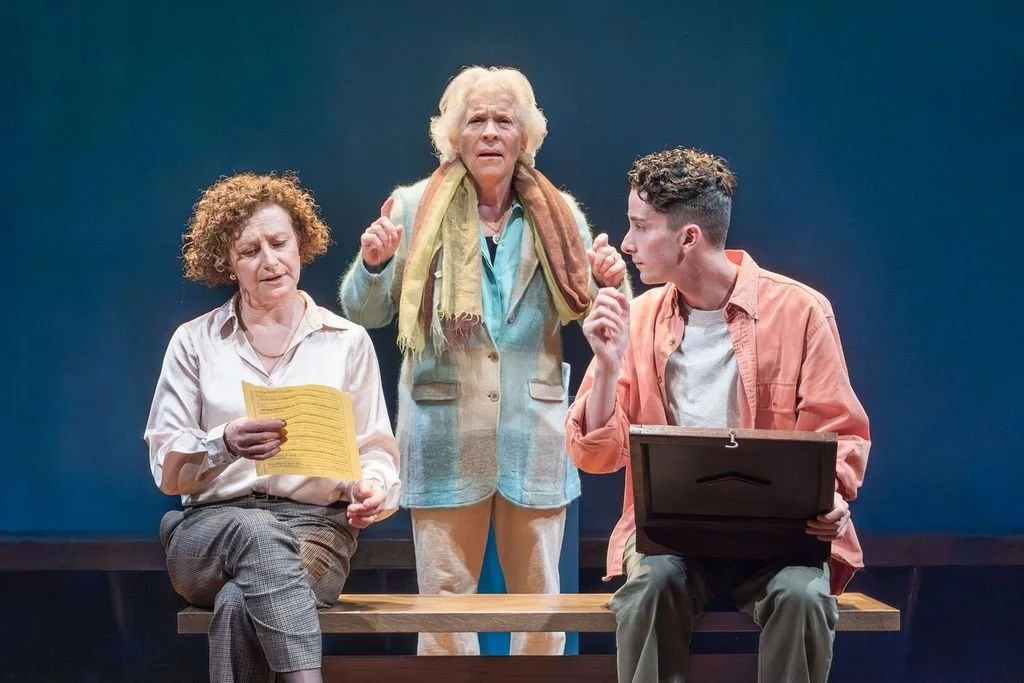
Anna Francolini (Ellen), Suzanne Bertish (Renee), Ryan Kopel (Joshua). Photo: Marc Brenner
Written by Ziwen for Theatre and Tonic
Disclaimer: Gifted tickets in exchange for an honest review. All views are our own
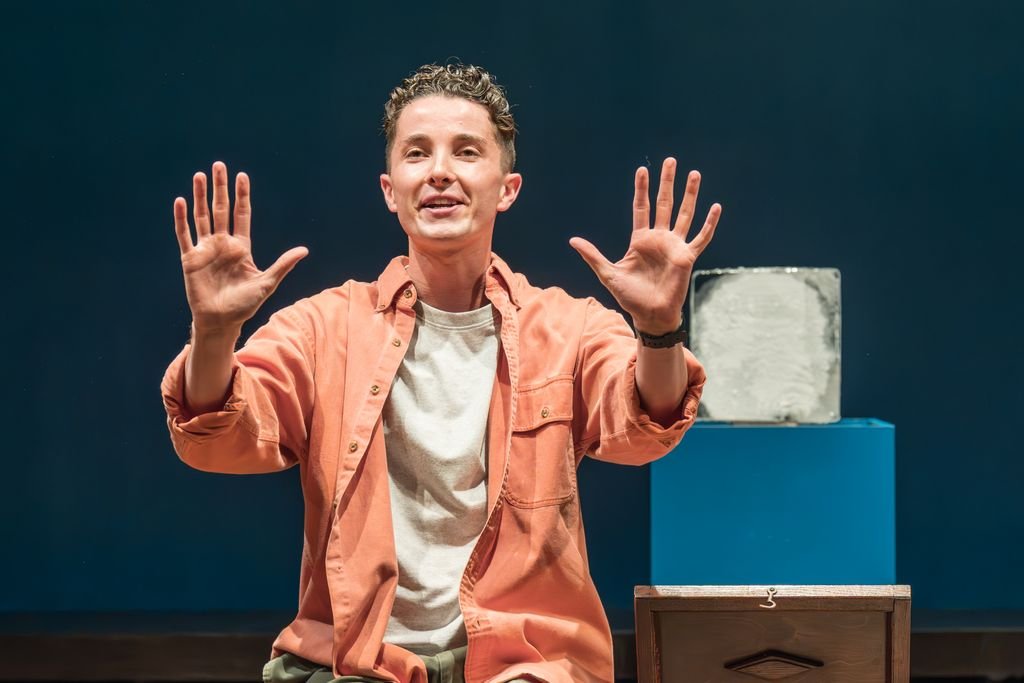
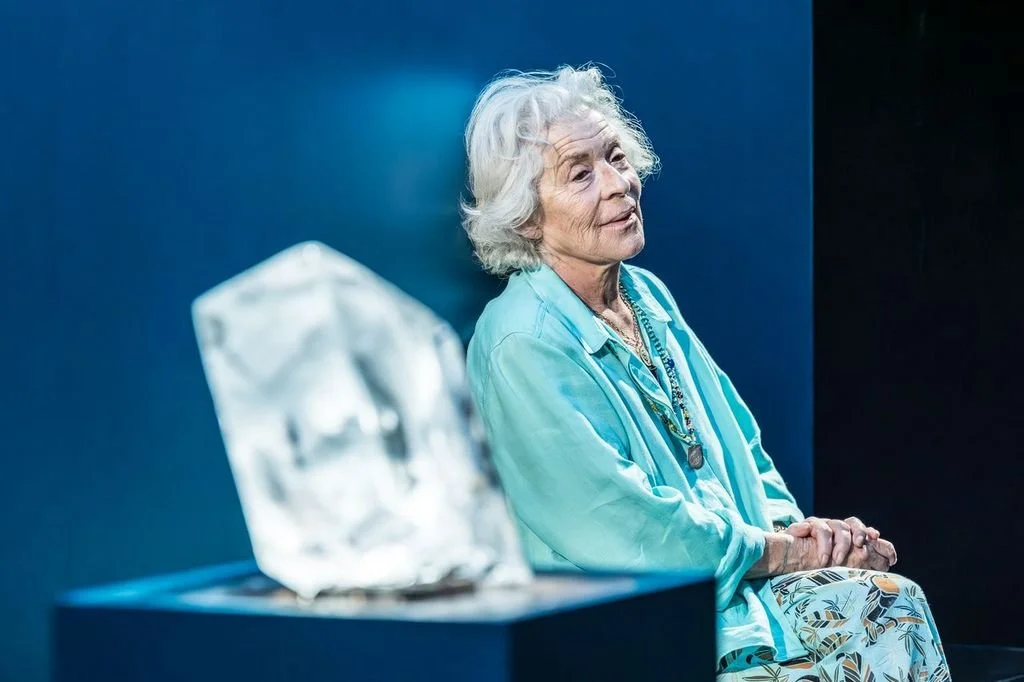
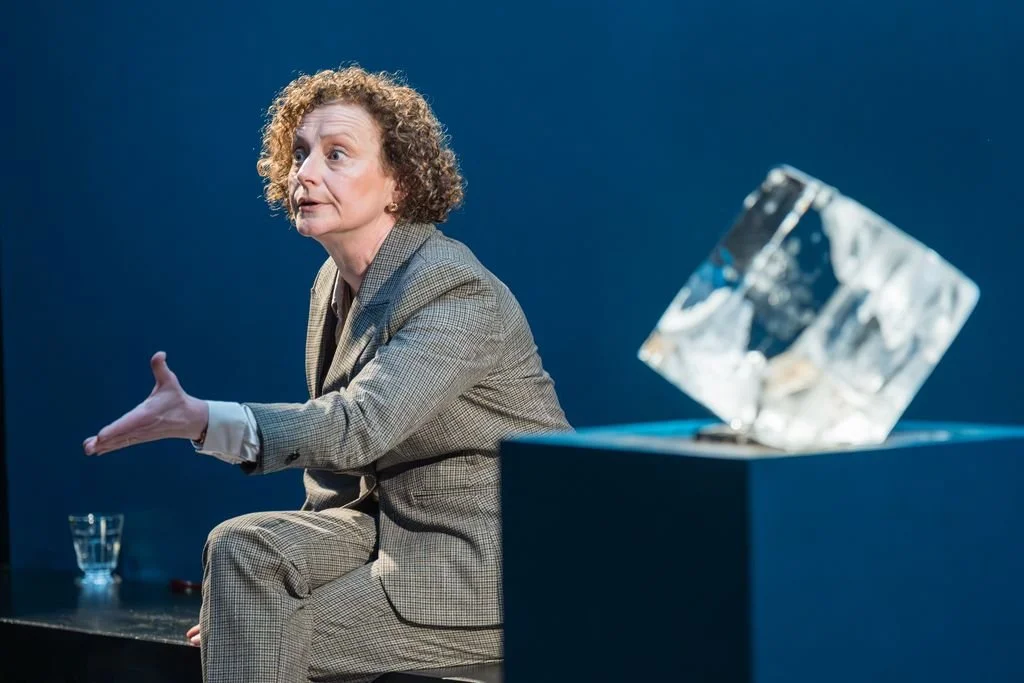
As the house lights fade, Renee (Suzanne Bertish) steps towards Joshua (Ryan Kopel) and suggests that he should simply write a play about his family. This marks not only the beginning of We Had A World but also the very premise that sets the piece in motion. Written by Joshua Harmon, the play centres on a version of the playwright himself, whilst its two other principal characters are based on his mother, Ellen (Anna Francolin), and his grandmother, Renee. Before long, Joshua informs the audience that Renee has been diagnosed with cancer and has only around two months left to live. Over the following 105 minutes, the three characters unravel the complexities of their relationships beneath the warm, intimate lighting (Joshua Gadsby). Upstage, a giant block of ice slowly melts throughout the performance (Sarah Beaton), serving not only as a reminder of the climate crisis repeatedly referenced in the play but also as a poignant image of Renee's life gradually slipping away.
Just as Joshua reminds the audience from the outset that this is a piece of theatre, the play unfolds like a private memory theatre assembled inside the mind. Its non-linear structure pieces together fragments of recollection rather than presenting events chronologically. Characters frequently step outside their immediate emotions, fast-forwarding to future moments in the story. Joshua occasionally casts his mother and grandmother in supporting roles, asking them to play characters such as waiters or his grandfather. In one scene, when Joshua produces a letter, Renee asks where he found it. He casually replies that he discovered it after her death. This approach lends the play a sense of playfulness and narrative flexibility, but it also contributes to a certain fragmentation. At times, just as the characters begin to reveal something emotionally significant to one another, the moment is hurriedly passed over. As a result, some exchanges lose a degree of authenticity and emotional weight. Similarly, while it is clear that Ellen has a strained relationship with her sister, the reasons behind that tension never receive enough attention to feel fully developed.
That said, Harmon introduces one particularly striking device that places an emphasis on the connection between theatre and reality. During Renee's final days, Joshua records a conversation with her and his grandfather. The exchange is reproduced almost verbatim and appears within the play as a short script. Joshua hands copies of this script to Renee and Ellen, and together they recreate the scene. Both Joshua and Ellen occasionally glance down at the pages in their hands, while Renee, her eyes tinged with sadness, keeps looking directly at her grandson. I found myself captivated by the strangeness of this moment, listening to their conversation with unusual attentiveness. Whether or not it is the most effective theatrical choice, it is certainly an intriguing experiment. Throughout the play, the characters frequently step into monologues to reveal their inner thoughts. Even a single event can take on entirely different meanings depending on whose perspective is being presented.
Renee, in particular, emerges as a remarkably multifaceted figure. Through Joshua's eyes, she is intelligent, energetic, passionate and endlessly creative. Yet when her alcoholism resurfaces, he is forced to confront the version of Renee that Ellen has known all along. To Ellen, Renee is irresponsible, self-destructive, selfish and, at times, unnecessarily cruel. The play does an excellent job of embracing these contradictions rather than resolving them. Ellen is equally vivid. She often feels like her mother's opposite: rational, dependable and disciplined, yet also sensitive and emotionally perceptive. She is the one who suppresses her own feelings, cleans up the messes and keeps everything functioning when others cannot. Of the three central figures, Joshua himself is perhaps the least clearly defined. Rather than serving as a conventional protagonist, he functions more as an observer within the story, guiding the audience through its memories and contradictions. Nevertheless, Kopel's inherent gentleness is very suitable for the role. At the same time, because the play is so deeply rooted in the playwright's own perspective, I found myself wondering how the real Ellen and Renee might have responded to their portrayals onstage.
My favourite scene comes near the end of the play. By this point, Renee has died. Ellen notices a pair of fuchsia leather gloves in a shop window and suddenly finds herself missing the days when she could stand beside her mother and admire them together. Because this is not reality but Joshua's theatrical reconstruction of it, an impossible conversation becomes possible. When Renee energetically reappears at Ellen's side, I could not help but smile.
The themes at the heart of We Had A World are compelling, but the play often rushes past moments that might have carried greater emotional resonance. Human relationships—particularly those between parents and children—are rarely straightforward. Even when profound hurt exists, moments of tenderness and affection often survive alongside it, making those bonds all the more difficult to understand and handle. Had the play lingered longer in such spaces, the audience might have felt more deeply the sense that these characters really once had a world of their own.
We Had A World plays at Downstairs at Hampstead Theatre until 4th July 2026.
★★★