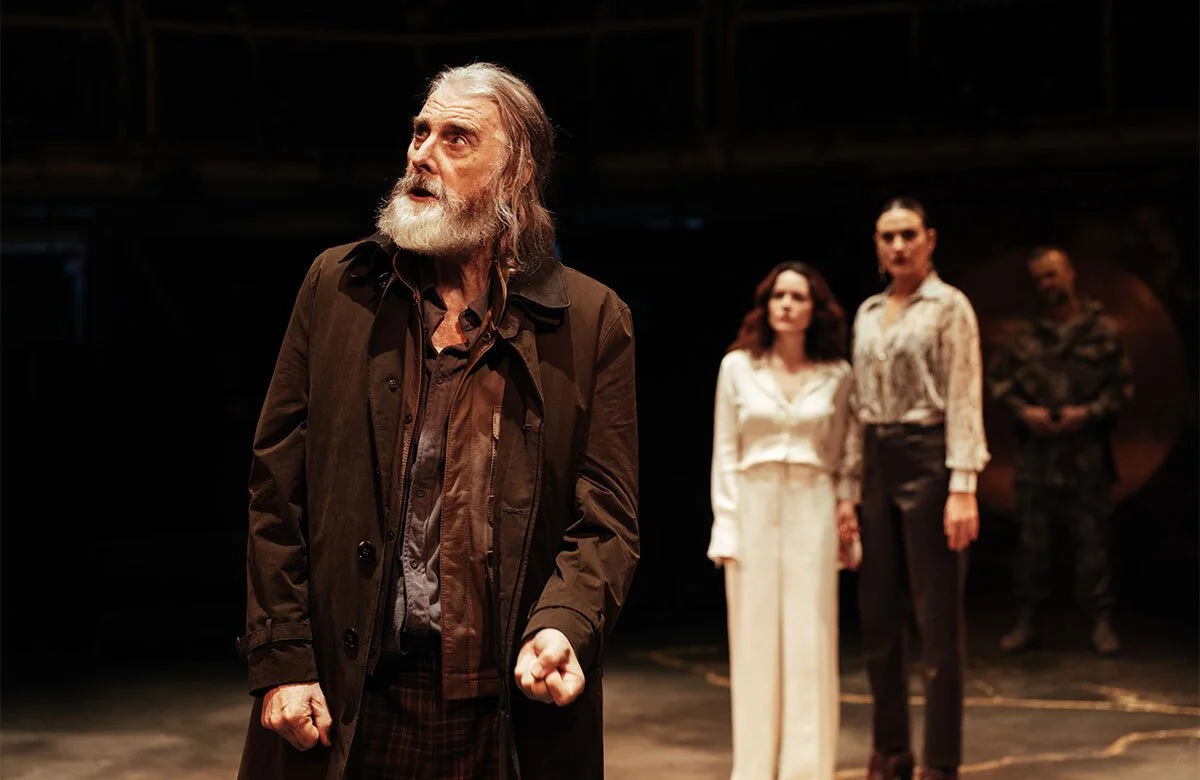
Welcome to Pemfort at Soho Theatre Review
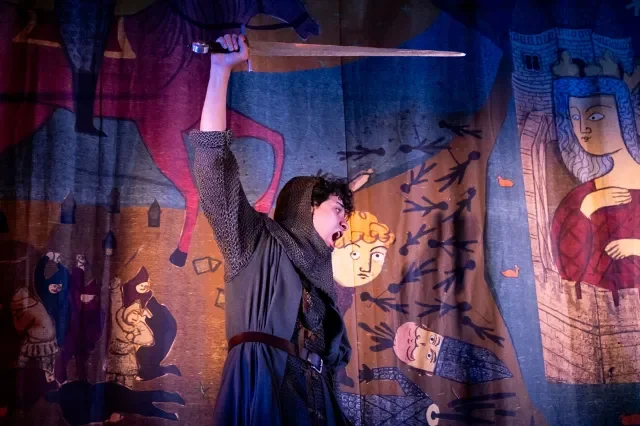
Written by Ziwen for Theatre and Tonic.
Disclaimer: Tickets were gifted in return for an honest review. All views are my own
Can past sins be atoned for? Should those who have committed crimes be given the chance to start anew? Should society fully embrace and forgive them? The 90-minute play Welcome to Pemfort, written by Sarah Power and directed by Ed Madden, attempts to explore these very questions on the stage of the Soho Theatre.
An almost deserted gift shop at Pemfort Castle is earnestly preparing for its first "Living History" theme day. For this event, they plan to tell visitors stories of the castle's past, which are invariably intertwined with violence: a battle in 1264; a woman burning her husband alive in 1777; and a highly suspicious death in 1998. Just as shop assistant Glenn (Ali Hadji-Heshmati) is excitedly and nervously preparing for the event, a new member, Kurtis (Sean Delaney), arrives at the shop. The owner, Uma (Debra Gillett), informs the staff that Kurtis has been to prison; she met him at Narcotics Anonymous and believes he deserves a chance at a fresh start. Soon, Kurtis develops a connection with the lively shop assistant, Ria. As the two grow closer, Kurtis feels compelled to confess his past crimes, leaving Ria unsure if she can still accept his affections.
Alys Whitehead's stage design transports the audience into this small yet meticulously detailed gift shop. Rows of jam on wooden cabinets, paintings hanging on the walls, wine glasses set on tables, wooden swords in baskets, little figurines pinned to the wall, postcards by the counter... these details made me want to step closer for a better look. For the most part, the lighting in the shop is warm, but at times, only a few rays of light illuminate the stage, resembling the glow of the setting sun streaming into the small shop (Cheng Keng). The sound of birdsong during scene transitions also adds a touch of natural atmosphere (Max Pappenheim).
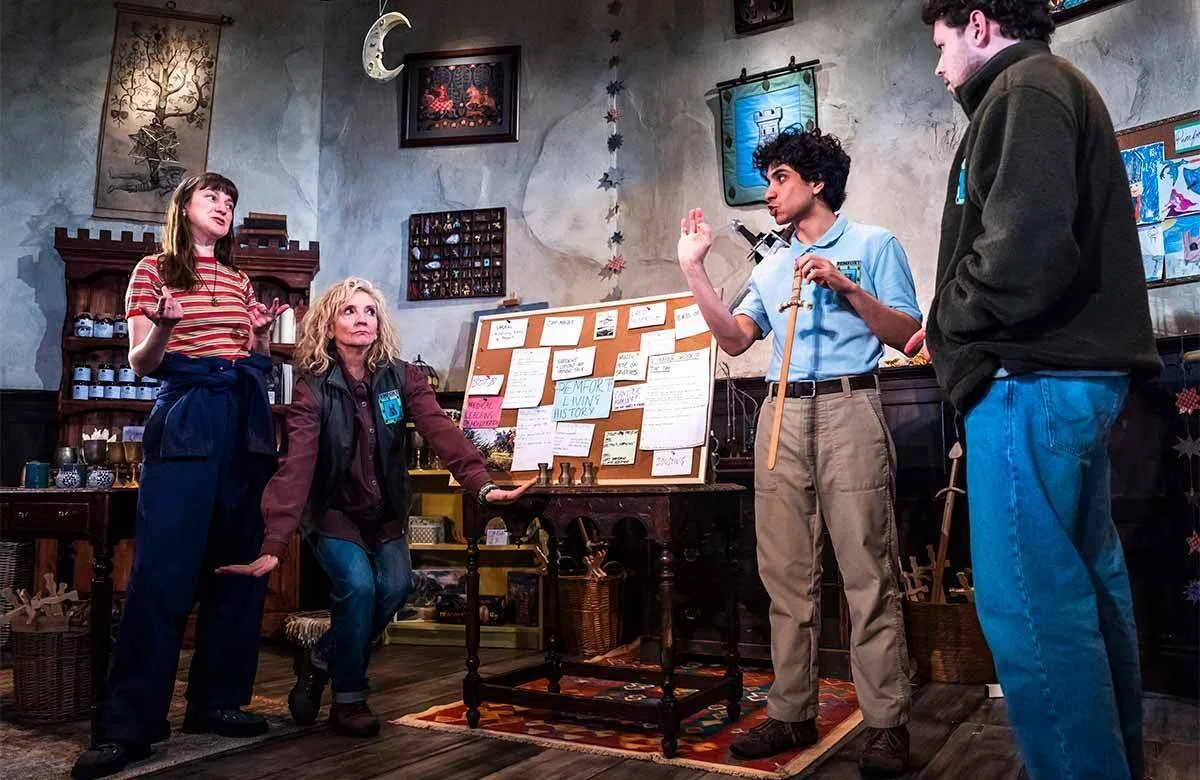
Hadji-Heshmati's Glenn is stubborn, sensitive, and detail-oriented; he is the most enthusiastic about the theme day. Gillett's Uma acts as a mother or grandmother figure to everyone; she carries a naturally approachable and loving energy, gently accommodating them all. Larson's Ria loves nature and has a deep interest in the local deer; liveliness and kindness seem to be part of her very nature. Delaney's Kurtis is easygoing, helpful, and clumsy, yet equally sensitive; he doesn't know how to cope with the uncontrollable anger inside him. There is the potential for a powerful connection among these four individuals.
However, the way the story is told leaves this connection feeling slightly underexplored. Most noticeably, the plot is often fragmented and frequently comes to an abrupt halt, leaving both the characters' and the audience's emotions stranded and unsure of where to go next, while the most crucial plot points are often omitted. Rather than just cutting to black, Ria and Kurtis working on the historical timeline and Kurtis's confession are actually the moments the audience is most curious about. Nevertheless, the play does have some deeply moving scenes. When Ria describes to Kurtis how she slowly approached the deer, I have rarely been so entirely captivated. My emotions were completely drawn in by Ria and her tear-glistening eyes.
Although the play is not yet fully mature, one can already feel the writer's gentle and delicate energy, accompanied by a touch of subtle humor. If it had only gone a little deeper and not shied away from letting the characters reveal more, the play would have forged a much stronger connection with the audience. Its potential already exists within the script. For example, the mention of Uma's past history of drug addiction could serve as more than just background. It could be explored further, as it is also a story of a person's past, much like Kurtis's past and the castle's history. And when each character is robustly grounded, that final moment—when no one knows what the truly right choice is—will be even more striking.
Welcome to Pemfort plays at Soho Theatre until 18th April 2026.
★★★