1536 at Ambassadors Theatre Review

Written by Ziwen for Theatre and Tonic
Disclaimer: Gifted tickets in exchange for an honest review. All views are our own
1536: one of the most infamous years of the Tudor era. It was the year Queen Anne Boleyn was executed by Henry VIII. Yet this Olivier-nominated Best New Play — the debut play by Ava Pickett — does not to keep its gaze fixed on the royal court. Instead, it turns toward the rural fields of Essex, centering on three strikingly different young women. They gossip in the fields, trade rumours, talk about men, marriage, and desire. The downfall of the queen in distant London hangs over them like a shadow, slowly seeping into their own lives. Watching the unease in these young women’s eyes, I could not help but feel that London was perhaps not as far away as they imagined. And that events from five hundred years ago are still uncomfortably close to us now.
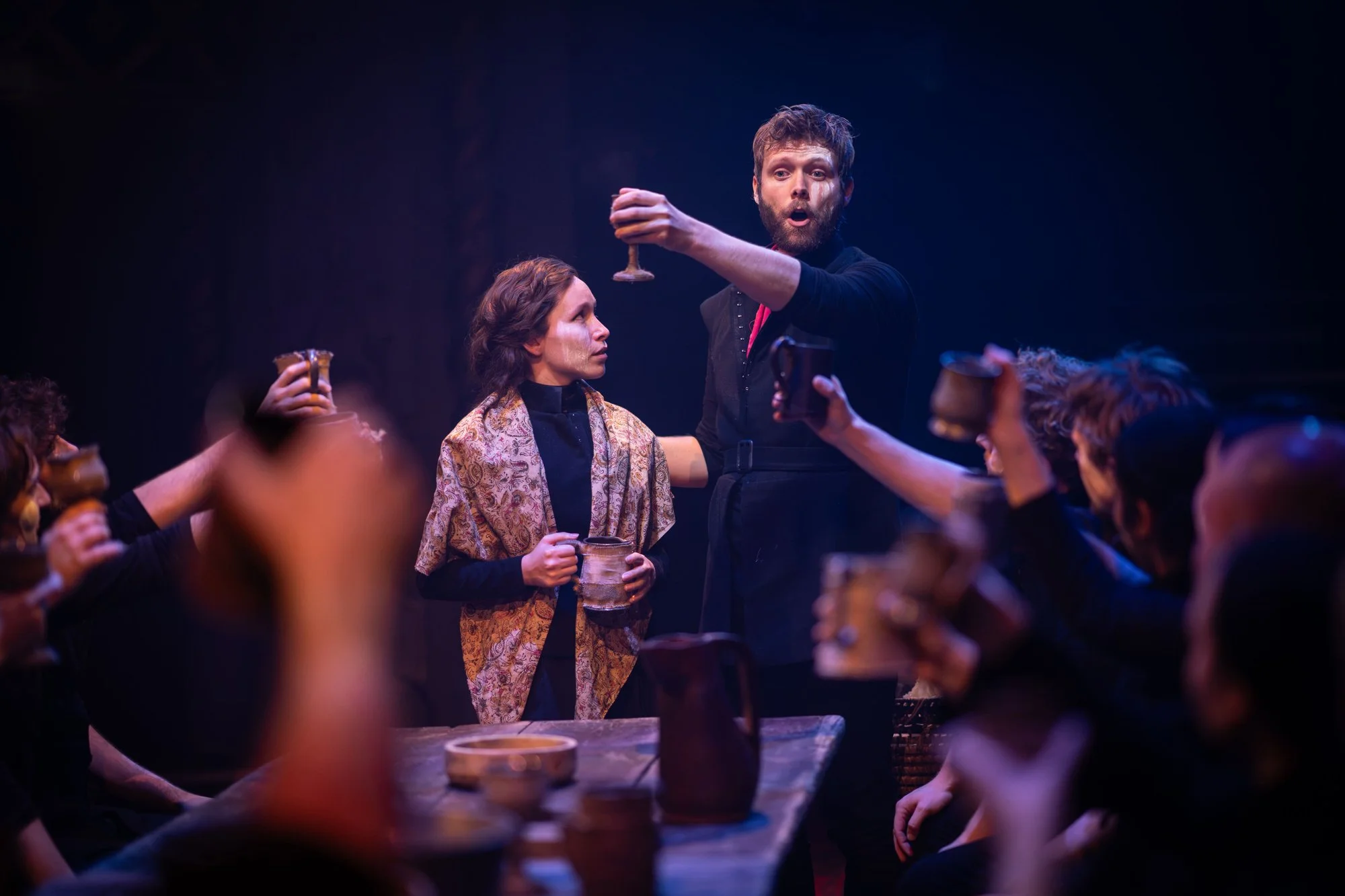
Pickett demonstrates remarkable precision in shaping her characters, and the five actors bring that vividness fully to life. Siena Kelly’s Anna is sensual, reckless, and fiercely alive, yet deeply fragile beneath it all, carrying within her an overwhelming hunger to be loved. She always seems to be burning through her own life, and yet I could not help but marvel at how beautifully she burns. Tanya Reynolds’s Mariella is sharp-tongued and funny, though beneath her biting wit lies a constant desire to protect her friends. Yet in a society like this, even the things that matter most to her are beyond her control, and in the end, the best she can do is refuse to become someone who actively harms those she loves. Liv Hill’s Jane is the so-called “good girl” that this society rewards and praises: sensitive, anxious, gentle, and restrained. Yet her terror of losing social approval is capable of drawing out a cruelty in her that borders on viciousness.
The differences between the three girls only bind their relationship together more tightly and painfully. They share secrets while testing one another, protect each other while humiliating each other. Between them, intimacy and violence exist almost simultaneously. It seems contradictory, yet feels entirely true, which only makes the cruelty of it more devastating. None of them are inherently malicious; they simply live in a world where women are granted almost no sense of security. In 1536, women had access to very little. Marriage and reputation were effectively their means of survival, and women were naturally forced into competition with one another. “Who is prettier?” “Who will be loved?” “Who will be discarded first?” Even among friends, they cannot truly escape these anxieties. They are capable of profound empathy, yet that shared understanding is still powerless to protect any of them. This is what makes the relationships in the play feel both tender and dangerous. They are complicated and distorted, but never ugly — if anything, they are heartbreaking.


Anne Boleyn herself never truly appears onstage, yet she hovers over the play like a prophecy: if a king can execute a queen, then what value does an ordinary woman’s life hold? In such a terrifying world, these girls are simply afraid of falling. Beyond the three young women, Oliver Johnstone and George Kemp deliver chilling portrayals of Richard’s suffocating need for control and William’s weakness and cowardice. Through this small corner of society alone, the play exposes the terror of the entire social structure with startling clarity.
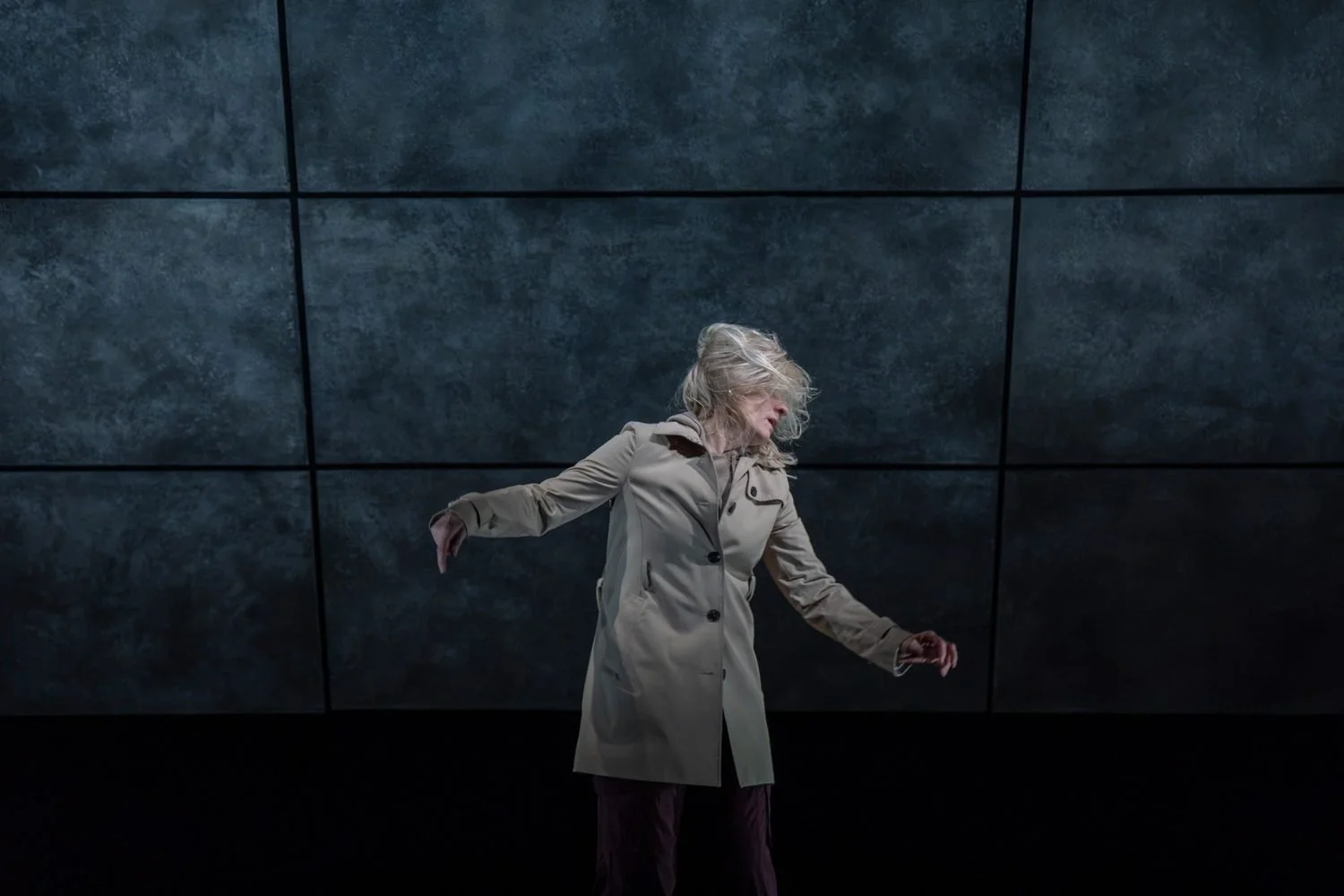
From beginning to end, the girls remain exposed within the wilderness of Essex. Tall grass, mud, dead trees, sky — that is all this land contains (Max Jones). At first, the yellow light falling across the wheat (Jack Knowles) almost allows you to feel the heat in the air. But as the story progresses, even when the sky itself seems to burn red, the landscape grows colder and colder, carrying the same piercing chill as the words spoken by Richard and William.
The characters speak in language that feels startlingly alive. When Anna senses that she may have lost her charm, that her life is beginning to slip beyond her control, she covers her face and asks Mariella whether she has become ugly. Mariella boldly declares that the world might be a better place without men in it. After Anne Boleyn’s fate is sealed, Jane wonders aloud at what moment Anne realised this would be her ending: was it the first day she met Henry VIII? Or did she still believe, right until the moment before her execution, that he could never truly do such a thing to her? These thoughts feel entirely their own, and they compelled me to think alongside them.
The play ends with Mariella urging Anna to turn around and run. Earlier, they had already dreamed of escaping this place. Back then, Anna wiped away her tears and joked bitterly that of course she would stay here — where else could she possibly go? Yet in this final moment, although she does run, can she really escape? I found myself praying that she could, that she would not remain trapped forever in this barren wilderness.
There are many feminist plays, but if I had to choose only a few, this would undoubtedly be one of the most emotionally powerful among them. Through Anne Boleyn’s fate, it speaks to the fate of ordinary women, revealing with devastating naturalness how power trickles downward from the highest levels of society onto women’s bodies and lives. And even in a world where power distorts relationships between women, love between them still survives.
1536 runs at Ambassadors Theatre until 1st August 2026. Book 1536 tickets at SeatPlan.
★ ★ ★ ★ ★