Do You Come From Gomorrah? at Abbey Theatre, Dublin Review

Written by Ciarán for Theatre and Tonic
Disclaimer: Tickets were gifted in return for an honest review. All views are our own
Frank McGuinness is a monumental figure in Irish theatre, having established his reputation in the 1980s with The Factory Girls and Observe the Sons of Ulster Marching Towards the Somme. Each new play of his, whether it’s an original or an adaptation of another icon like Ibsen, Chekhov, or Joyce, is an event in itself. His latest work, Do You Come From Gomorrah? has echoes of previous subject matter, but is more low-key and understated than many. This is in no way intended as a criticism; it is mostly due to its form, as a one-person show will almost always feel like a more subtle piece than a larger work with multiple actors. Coming in at a sharp 75 minutes, though, McGuinness’s latest is a superb, challenging, and frightening but funny piece of work. This is not a heartening, relaxing evening at the theatre, but more of a ritualistic sharing of trauma, an invitation to witness and understand the nature of suffering.
The performer in question is Ryan Donaldson, who monologues continuously in the voice of numerous people, mostly men. The main character is unnamed, but we can almost instantly understand who he is, when he is, where he is, and what is to become of him. A young man in Northern Ireland – McGuinness himself is from Donegal – during the 1970s, he describes being sent to what it is soon becomes clear was a “reform school,” for boys who had been neglected or abused. This topic has been covered extensively in Irish literature, drama, and film, but not quite in the way McGuinness does here. There is a greater awareness of the institutional nature of abuse, and we see how it moves upwards through society, silent yet potent – from the unnamed man to the soldier Steve, to the institution’s head, “Beasty Billy”, and then to a commanding officer who, we are assured, can put a bullet in almost anyone’s head, should he fear that his secrets may be revealed. It is also significant that this is not the predictable poor, Catholic world we are seeing – our protagonist is a Protestant, and while this did not insulate people from being abused, it slightly complicates what could otherwise have been a very familiar story.
While the subject matter is heartbreakingly grim, the seriousness with which it is treated, and the humanity at the core of the script and production mean that we are not merely invited to feel sorry for our unnamed protagonist. We feel his distress and shame, but also recognise his capacity for love, for humour, and for survival. The positivity is largely directed towards Keith, whom he meets at the institution, and has flirtations with, despite his fear that Keith is straight – or that Keith thinks he is straight, as he suspects when he spies on him with a girl. Through Keith we meet his fearsome, hook-handed father, a former taxi driver and now pub landlord, who stubs his cigarette out on his hook in a display of grotesque manliness, aimed to contrast the two men’s homosexuality. This is described with a keen eye for wince-inducing detail, and somehow an almost playful wit; McGuinness knows precisely who these characters are, and the impact they will have.
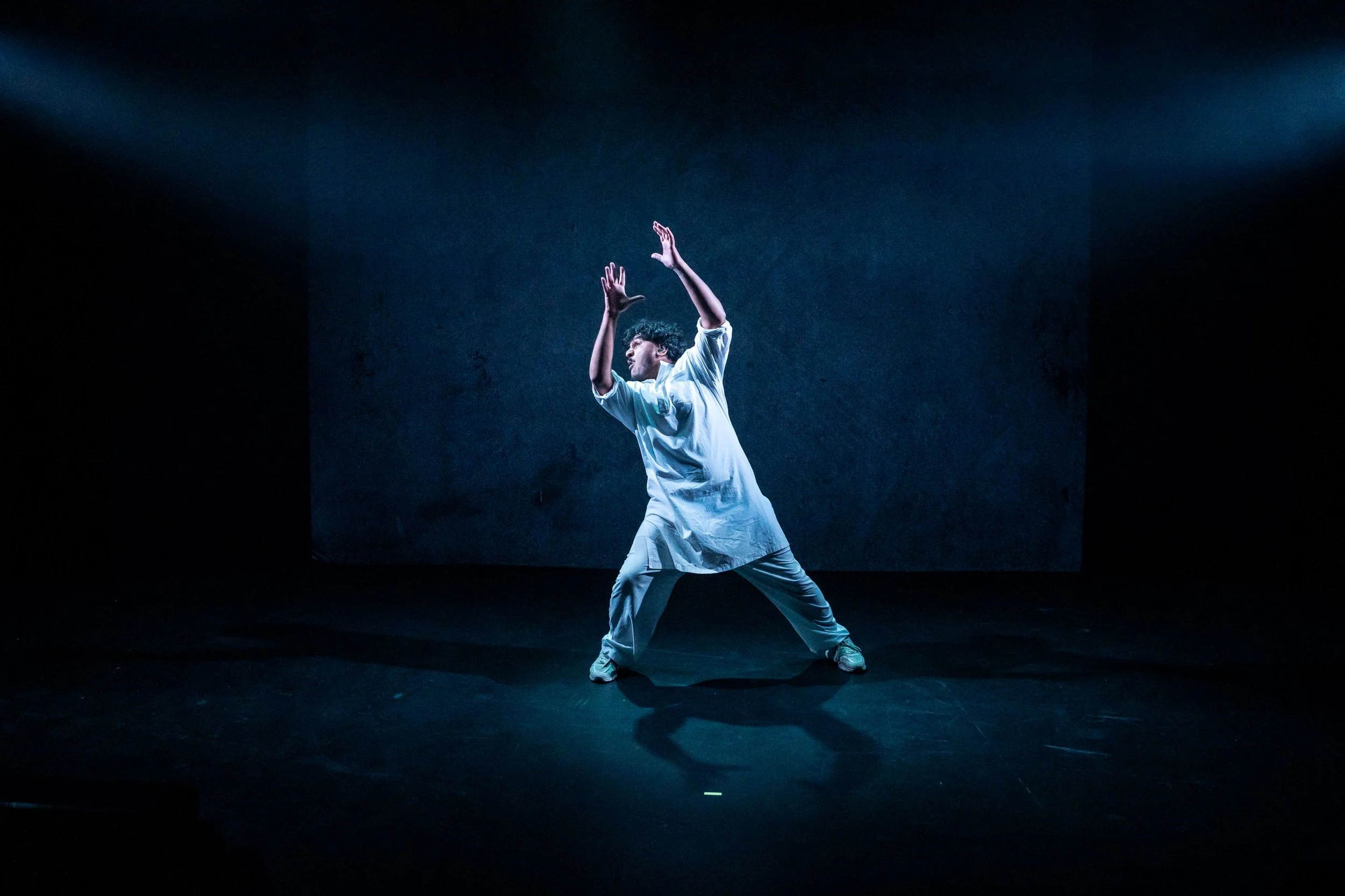
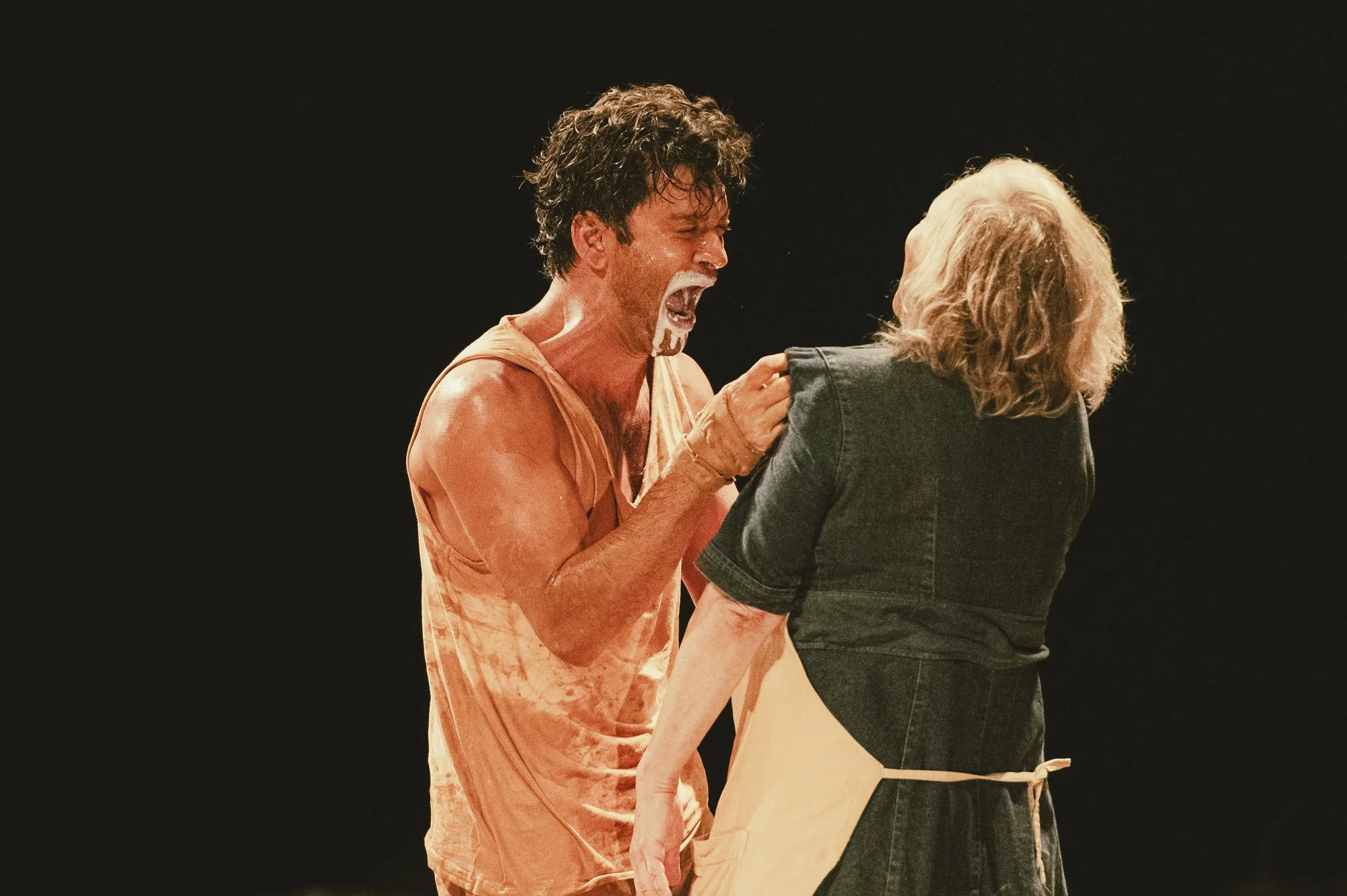
Donaldson slips between his characters with ease; his clothes never change but his body and face do, contorting and shifting whenever required. His tone is conversational, and although he speaks almost constantly throughout, he never falters or trips over a line. That he can move from the terrified protagonist to the sermonising moralistic Beasty Billy to the sadistic commanding officer with ease is indicative of Donaldson’s talent as a performer, and McGuinness’s as a writer – each character has distinct tones, rhythms and languages that are instantly recognisable.
Alyson Cummins stage is simple, but effective at communicating the singularity of this vision – although Donaldson inhabits different characters, the core is our unnamed protagonist. The dark, dusky walls, with a mirror suspended on the ceiling suggest memory, insularity, and reflection. The mottled backdrop recalls the contours of our memories; smooth in some places, jagged and dangerous in others. Sinéad McKenna’s lighting manages to balance and direct the mood; the harsh white typically matches the black walls, but the occasional spell of warmth softens everything when it is needed. The pool of water, in which Donaldson occasionally bathes himself, but is almost unseeable from the seats, suggests rebirth, and the desire to wash away filth and sin.
Do You Come From Gomorrah? is the latest in Frank McGuinness’s exploration of and dialogue with 20th century Ireland. It exposes our assumptions about institutional belief and its survivors, and in little more than an hour, presents numerous psychologically rich characters through just one performer. It will not be the most light-hearted night at the theatre you have had this year, but it may well be the most profoundly rewarding.
Do You Come From Gomorrah? plays on the Peacock Stage at the Abbey Theatre, Dublin, until 16th May
★★★★★