Eclipse at Minerva Theatre, Chichester Review
Written by Rosie for Theatre and Tonic
Disclaimer: Gifted tickets in exchange for an honest review. All views are our own
The show contains moments of fading to black out, a loud noise from a sparking plug, pyrotechnics, and use of smoke.
We all experience loss at some point in our lives; it’s part of the very essence of being human, but John Morton’s reverent reflection on the final moments of a loved one’s life feels deeply real and moving; it’s as if we are trapped watching through the windows of the house the play unfolds in. ‘Eclipse’, set over the final 24 hours of a father’s life, examines the effect this moment has on the lives of his family without ever having him feature as a character on stage. Still, he is very much present: he lives through their struggles, the heaviness of emotion, the laughter, and the garden his family so fondly sit amongst in moments of contemplation. The cast beautifully plays through Morton’s work, so naturally capturing the simple, sometimes mundane, enervated life of a pre-grieving family.
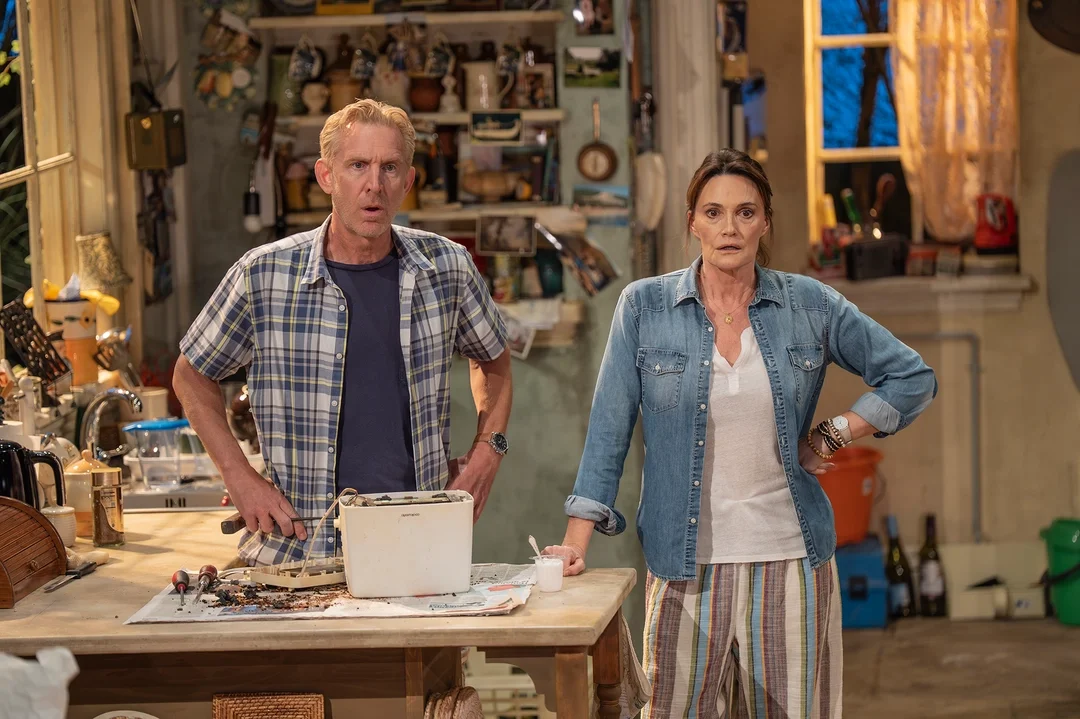
It would be remiss to start talking about ‘Eclipse’ without immediately emphasising the beauty of Simon Higlett’s set design, and how it feels as if the set is as much part of the story as the characters. Half-garden, half-kitchen, Higlett has created a space that feels so very lived in; it is the easiest thing in the world for the audience to take their seats and believe that this house is used by these characters and has been for their whole lives. From the mess by the kitchen sink, the toaster that never seems to toast bread on its first try, to the fuse box in the very back which is worked on when things go awry, nothing about the set feels like it is just a set; it welcomes you into this house despite everything that is happening, as if we are another one of the local community coming to check in and make sure everything is okay. This is beautifully complimented by Emma Chapman’s lighting design, where warmth fills the space on the sunny day it is set, gradually fading to darkness to show us the early hours of the morning without needing to explicitly state when it is we are watching.
I think what I liked most about Morton’s script and direction were the things left unsaid - moments of clarity where we can understand that Sarah (played by Sarah Parish) has spent considerably more time taking care of her father, Edward, than her London-based brother, Jonathan (played by Rupert Penry-Jones), all just from a simple moment like knowing which yoghurt flavour their father does (or rather does not) like. The core emotional weight that the women often carry in moments of care are tenderly explored, alongside the struggle of processing emotions for the men in the family. Both sides are written and performed with real love and care, a real understanding of what each character’s role and part to play in the father’s final moments are. I think this is a testament to the actors, but also the strength of the writing and direction. No one is ever still without purpose, the house is always being used, just as it would be in any real, day-to-day life. My only negative was that the show felt stinted by an interval being present; I think that whilst having the 20 minutes to sit with the first act helped put us in the shoes of the waiting family, it stopped the flow of the piece when it would have benefited from being one act straight through.
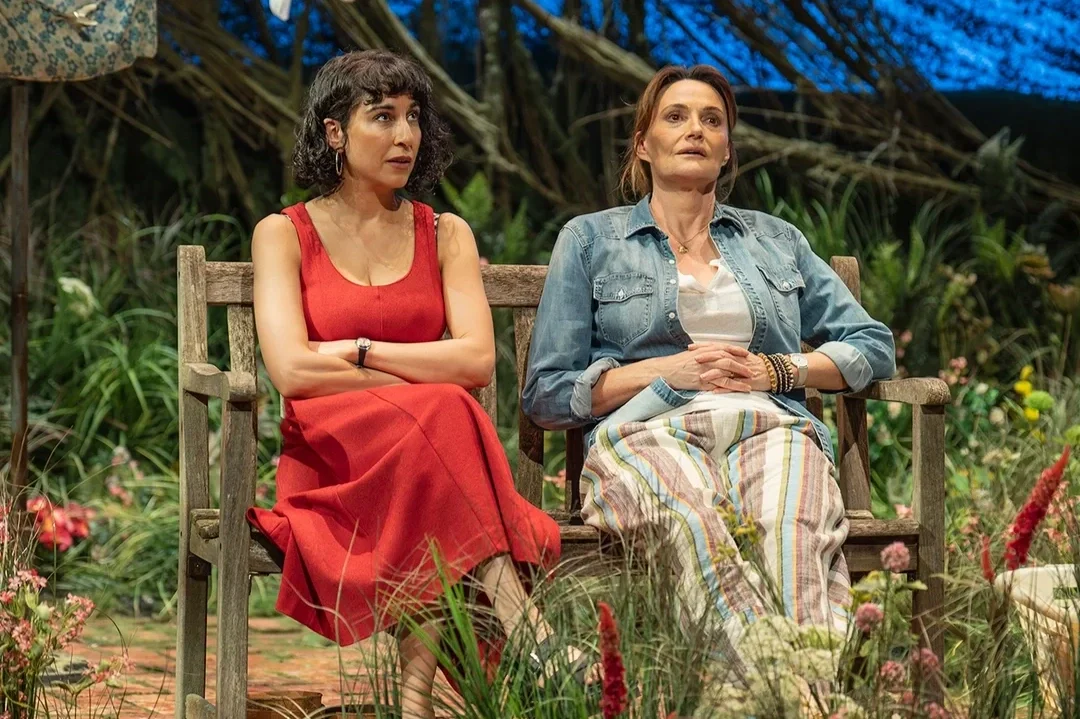
At the show’s core, Sarah Parish and Rupert Penry-Jones do an excellent, extremely natural job navigating the relationship these two siblings have with one another, their father, and the life around them. The way they navigate the space is distinctly different, motivated by Sarah being the one to live close to home and Jonathan distancing himself from the family and the place itself. Through them, we meet Sarah’s handyman husband, Graham (played by Paul Thornley), who acts as a punching bag and bit of comic relief until he isn’t, and Jonathan’s ex, Nell (played by Mariam Haque), who comes to say her goodbyes to both Jonathan and his father, introducing a different grief than the type we see elsewhere in the show. For me, the highlight of ‘Eclipse’ comes with the two main community nurses/care team who drip in and out through the span of the play to take care of Edward off stage whilst also caring for the family on stage in amongst the heightened emotions. Karen (played by Selina Cadell) is a calm, grounded presence to care for them compared with care worker Linda (played by Lizzie Hopley), who buzzes around the house with a bumbling demeanour, which you cannot help but laugh at. They allow the audience to breathe and reset when the family are burning toast or passive-aggressively throwing accusations around regarding attraction, really putting weight to the meaning of support in support workers. Even minor characters that flitter in and out have their moments of grounding, laying the foundations of how long this family has been there and how much moments like this can affect a community.
The way that ‘Eclipse’ deals with such a commonly experienced moment in humanity, exploring the grief and distance, but also warmth and humour of our time on Earth, is such a delight to watch. Time flies by, and it never once feels like a moment is wasted with Morton’s script or direction. The space is wonderfully used and we are invited in to share such a profound moment in the life of these characters; it feels as though we are part of the event. There is a wonderful moment of reflection towards the final quarter of the play, which discusses an eclipse experienced, and how, although there was dark for a brief moment, then came in the light. I believe Morton’s writing and the cast do a brilliant job of showing this in the unfolding of the play, even if we do not get to see the other side - there is still a promise, through the lighter moments we witness over the course of the show, to the words spoken by the nurses once their duty of care is up, that though there may be dark there will also be a time where the light comes back. I truly believe there is something in this show for everyone, and that there will be parts of the characters you can so clearly recognise in your own personal lives, and that is a testament to the brilliance of every layer of this show, from directing to writing to the performances themselves.
‘Eclipse’ is a beautifully understated piece which resonates with something deeply human in us all, never needing to be anything more than it is to captivate the audience and take them on a journey of grief, struggle, care and hope.
Eclipse plays at the Minerva at Chichester Festival Theatre from 8 May to 6 June.
★ ★ ★ ★ ★