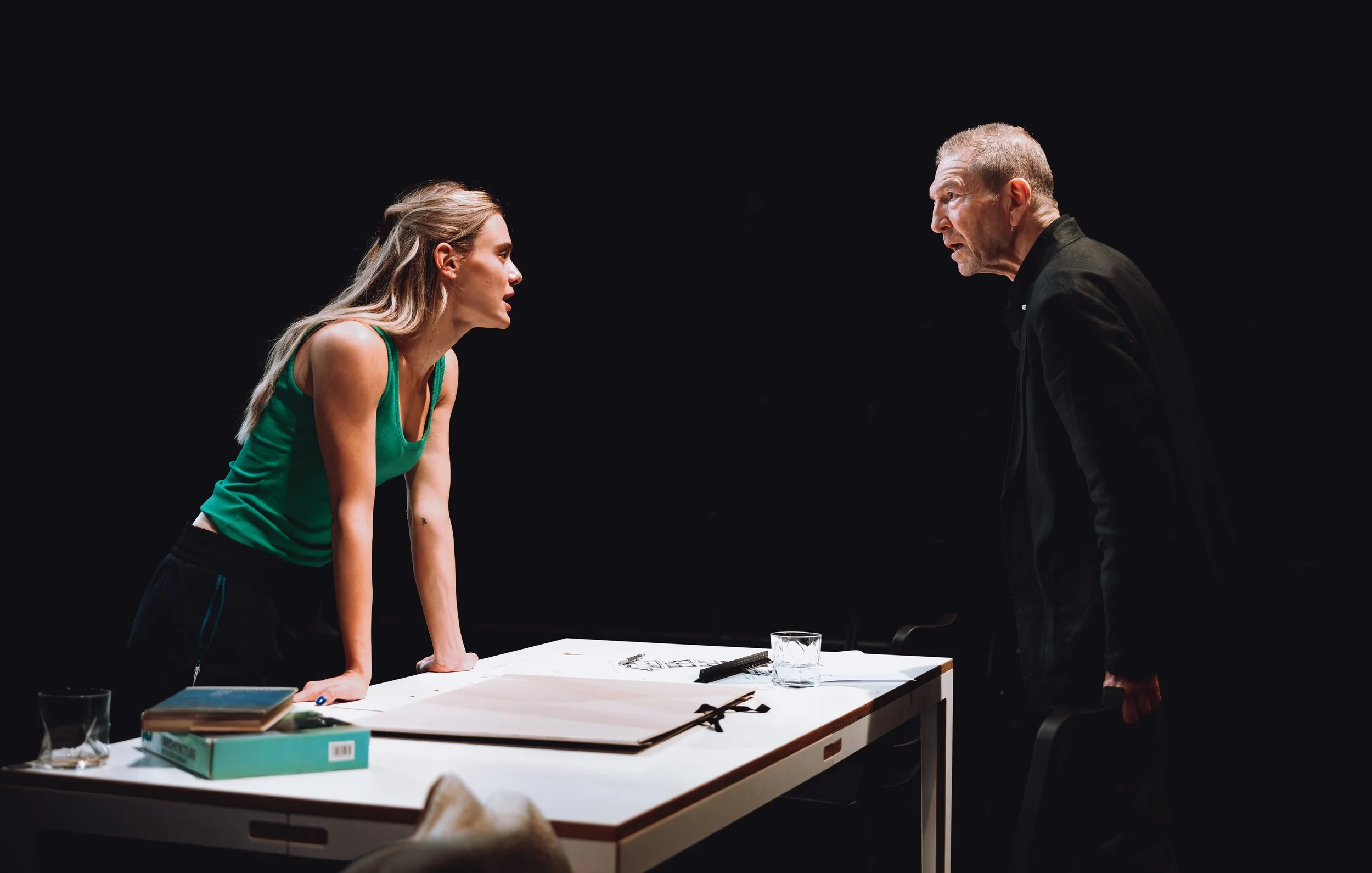
Maggots at Bush Theatre Review

Photo by Ross Kernahan
Written by Bronagh for Theatre & Tonic
Disclaimer: Gifted tickets in exchange for an honest review
This production contains use of strong language, references to death and human remains, references to decomposition with some sensory descriptions, discussion of insect infestation, depictions of mental health distress, themes of neglect and familial estrangement, references to alcohol and drug use, references to sex, loud soundscapes, use of haze, flashing/flickering lights.
On the surface, Maggots is a pretty straightforward play, taking place in a housing association block in an unassuming corner of London. The tenants mostly exchange polite greetings in the communal hallway, maybe the odd grievance in the resident WhatsApp group, struggling to get Pest Control out, dealing with neglectful Neighbourhood Team Managers from their housing association. However, Maggots is much more than that. Beneath the surface is a tale delving into social isolation, systemic failures and the importance of community.
The plot of Maggots centres around a smell coming from Flat 61 Laurel House, followed by maggots appearing in the surrounding flats. The powers that be don’t want anything to do with it, blaming the bins and drains. Little do they know that the occupant of Flat 61, Shirley, has passed away in the flat. This may sound familiar; back in 2022, the body of Sheila Seleoane was found in her Peabody property. At that point, she had been deceased for at least two and a half years. Maggots is offered in memory of Sheila, and other known cases where this has sadly happened.
We have three storytellers (Marcia Lecky, Sam Baker Jones and Safiyya Ingar) who take on the roles of affected tenants. They remind us at the start that they ‘are actors’, a Greek chorus in Bush Theatre’s studio. All three take us from character to character, offering some background and outlining their thoughts in the run up to the discovery of Shirley’s body. Despite purposely being quite distanced from those in the story, I still felt like I built up some emotional attachment with the characters and really felt their stresses beat through the studio space.

Farah Najib’s script weaves comedy with outrage, posing difficult questions while exposing how responsibility is repeatedly avoided. The script provides just enough backstory to ground each character without overwhelming the narrative. Najib, along with Jess Barton’s direction, managed to cover a lot of content in little over an hour without it feeling like we were being rushed or skimming over important details. Caitlin Mawhinney’s set design features beautiful dried flowers hanging above the stage, a striking difference to the constant talk of decomposition and rot. Lighting and sound (designed by Peter Small and Duramaney Kamara respectively), perhaps could have been used more; at times, I became acutely aware of sound being used, but not so much that it made a significant impact.
The ending is a reminder of life going on and isolation that can affect even such an urban population. We soon find out that the sense of community doesn’t quite continue, leaving us wondering if any lessons have truly been learnt and where the culpability lies. Life goes back to how it was before the smell of death started emanating from Flat 61, neighbours going back to nodding hello in the hallway. People keeping themselves to themselves, as they are wont to do when things are ‘normal’.
The Bush Theatre’s programme has been consistently strong for the past few years, and Maggots earns its place within that impressive repertoire. Tackling its subject head on, this is a clear example of theatre initiating uncomfortable yet necessary conversations. Maggots leaves a lasting impact on the audience, lingering long after lights up.
At Bush Theatre until 28th February 2026.
★★★★