
Meat at Theatre503 Review
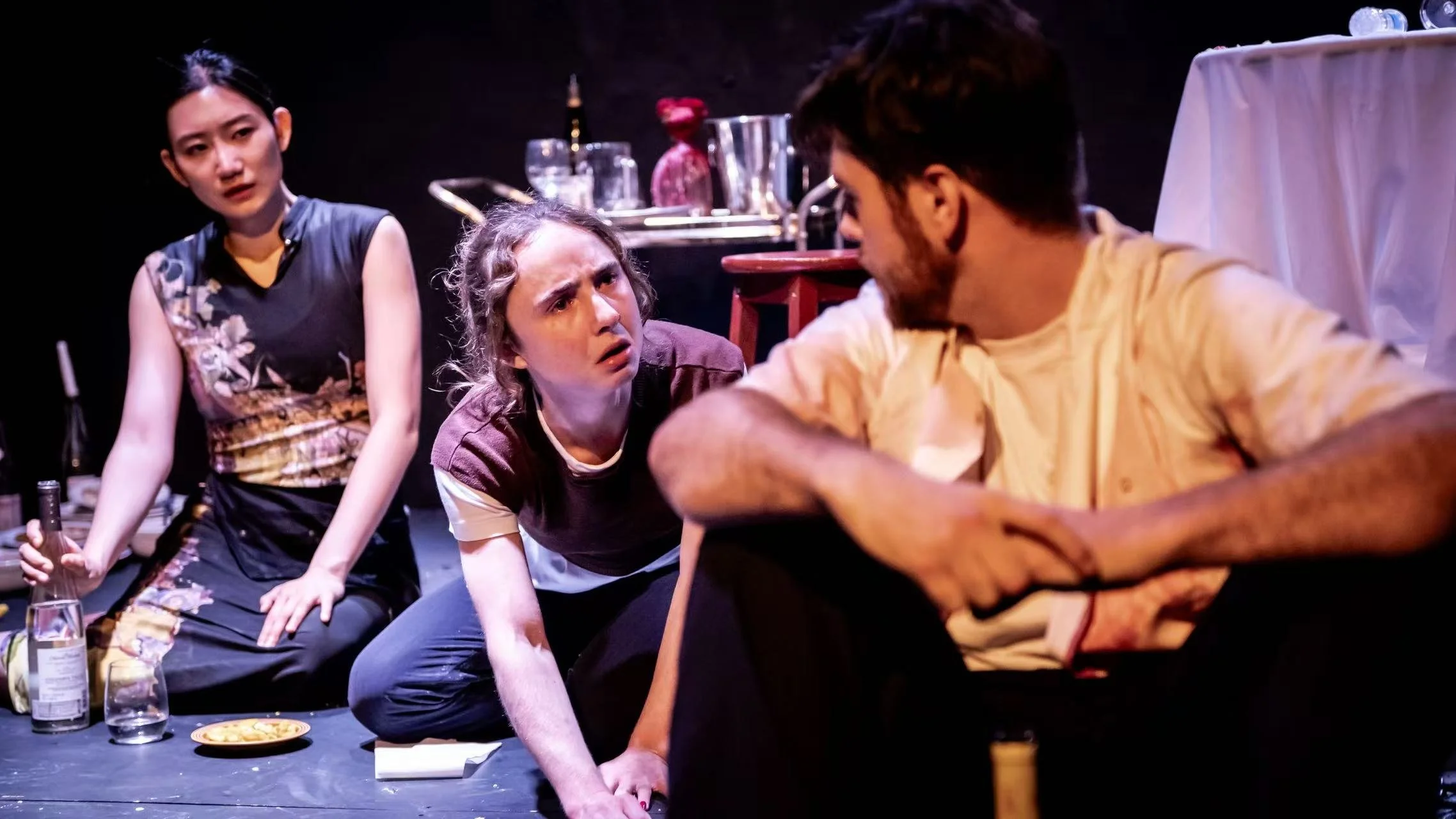
Cynthia Zhou, Lily Maguire and George Andrew-Clarke in Meat.
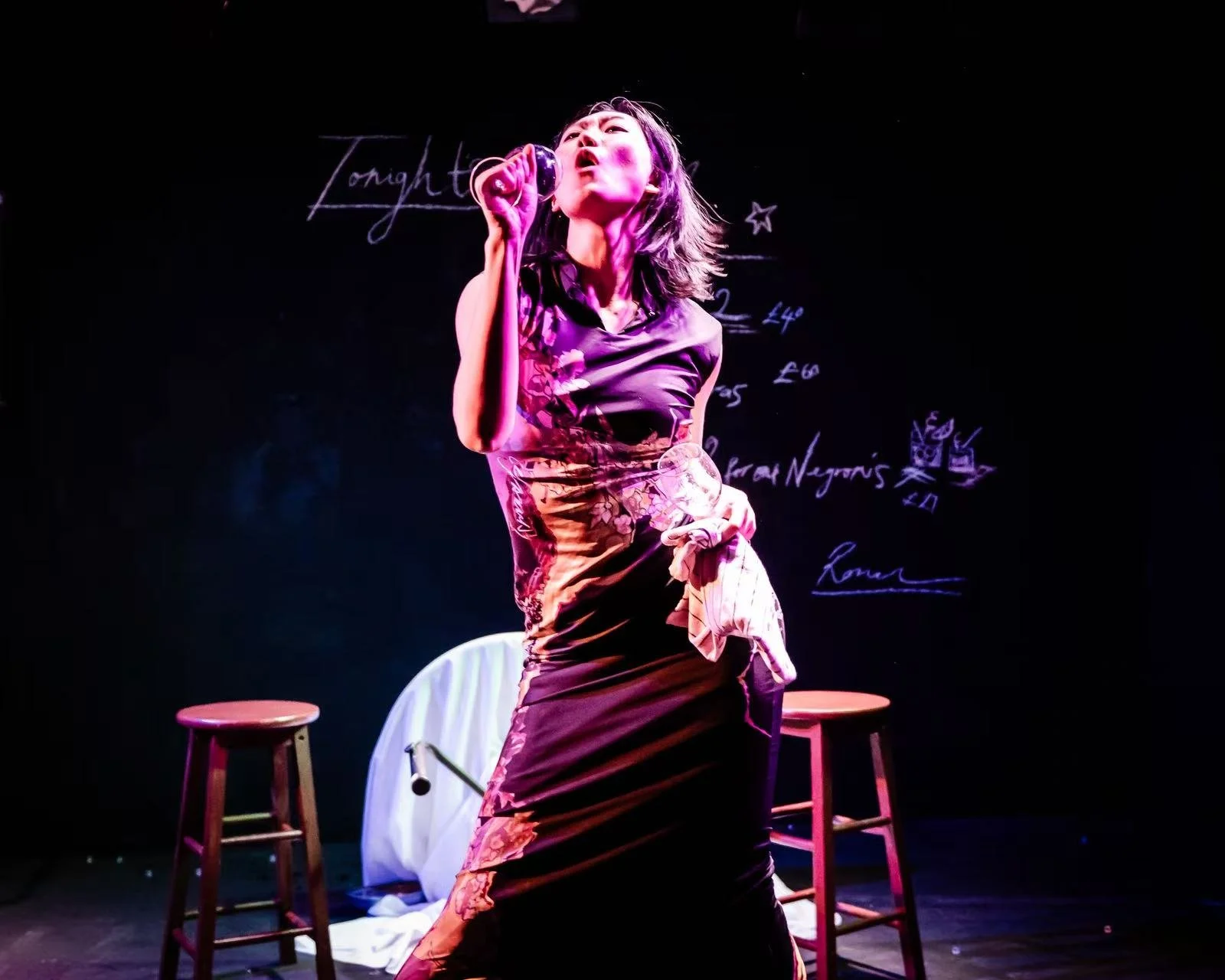
Stepping into Theatre503, we were greeted by the manager Jo (Cynthia Zhou), dressed in a qipao, and handed a menu from the restaurant Meat. This is not the first time Meat has been staged at Theatre503. Six years after its premiere, the play by Gillian Greer has returned to the venue as part of the LAMDA Showcase, this time directed by Yanlin Zhang. Her direction brings some fresh touches to this three-character story.
The entire story takes place inside the restaurant. As its name suggests, it is a meat restaurant. When vegetarian Max (Lily Maguire) walks in, however, she is not there to enjoy an evening of good food, but to meet her ex-boyfriend Ronan (George Andrew-Clarke), who is now the restaurant's head chef. She wants to discuss an incident from their past for her memoir, and needs Ronan to acknowledge what really happened. His response, however, does little to make things straightforward.
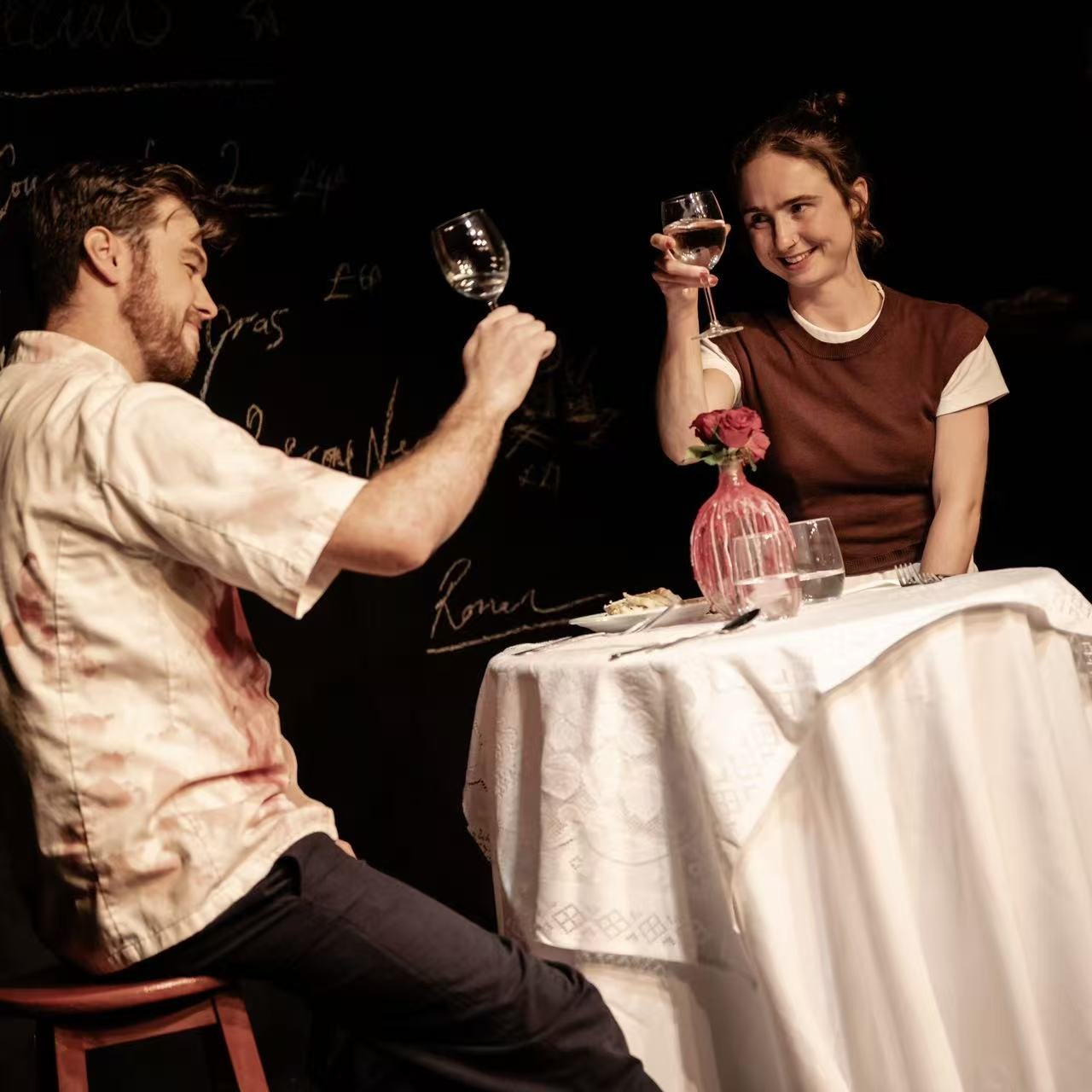
The most striking feature of the set is a small round table covered with a white tablecloth, illuminated by Holly Higgs' lighting design, at the centre of the stage, flanked by two red bar stools. A vase decorated with strips of red paper holds a single dried rose at the centre of the table. Around a corner of the stage are several similar vases, most of them made from wine bottles, alongside a few bottles of wine and a jug of water. A small blackboard at the back displays the restaurant's menu, while several pots hang on the wall. The space is small, but both the set and the gentle piano music (Phoebe Bennett) create a strong sense of being inside a restaurant. During the performance, Jo occasionally addresses the audience directly, or reminds Ronan to keep his voice down so as not to disturb the other diners. These small touches further enhance the sense of immersion.
Maguire's Max is the standout performance. From the moment she enters the restaurant, she is constantly looking around, instinctively echoing Jo and Ronan's remarks. Her nervousness is clearly conveyed through her small, involuntary gestures. As the wine glasses are repeatedly refilled and she tries oysters with Ronan, Max gradually becomes more relaxed, and the feelings between the two begin to resurface. The subtle shifts in their relationship feel very natural, and I particularly enjoyed the sudden closeness between them after their playful water fight.
The story would be even more compelling if Ronan were given greater depth. Andrew-Clarke's Ronan is relaxed and humorous, and he has strong chemistry with Max, but his arrogance can sometimes make him difficult to warm to, whilst also making it harder to forgive him for what he did in the past. The play also does not make Ronan and Jo's relationship sufficiently clear. When Jo removes Ronan's hand from her body, it initially comes across as an instance of him crossing a boundary. It was only later, based on another scene, that I realised the two might actually have an ambiguous romantic relationship. Even then, I was still unsure whether they were officially together, or whether they genuinely had feelings for each other. Given how important romantic relationships are to the play, this ambiguity can have a significant impact on how the audience understands the story.
Even if there is an element of attraction in both relationships, the feelings between the characters should have their own subtle differences. At present, Ronan's way of treating Jo feels quite similar to the way he treats Max. Finding a clearer distinction between the two relationships could also shape Jo's attitude towards Max. Zhou's Jo is cool, self-assured and intimidating, with a dry sense of humour that consistently lands well. Yet she remains largely in the same emotional state from beginning to end. I found myself wanting to know more about who she is beyond her role as the manager.
The play's intentions are clear: it explores how two people can remember the same event differently, the importance of sexual consent, the debate over whether trauma can be turned into art, and the complexity of human relationships. At present, however, the script still needs more nuanced and clearly defined character dynamics and ideas to fully support and delve into these themes. There is also room for the actors to explore their characters further. Even so, the potential of the piece is already visible in Zhang's direction. With a little more seasoning, there is every chance that audiences will find themselves thinking about Meat long after they leave the space.
★ ★ ★
Written by Ziwen for Theatre and Tonic, August 2026.