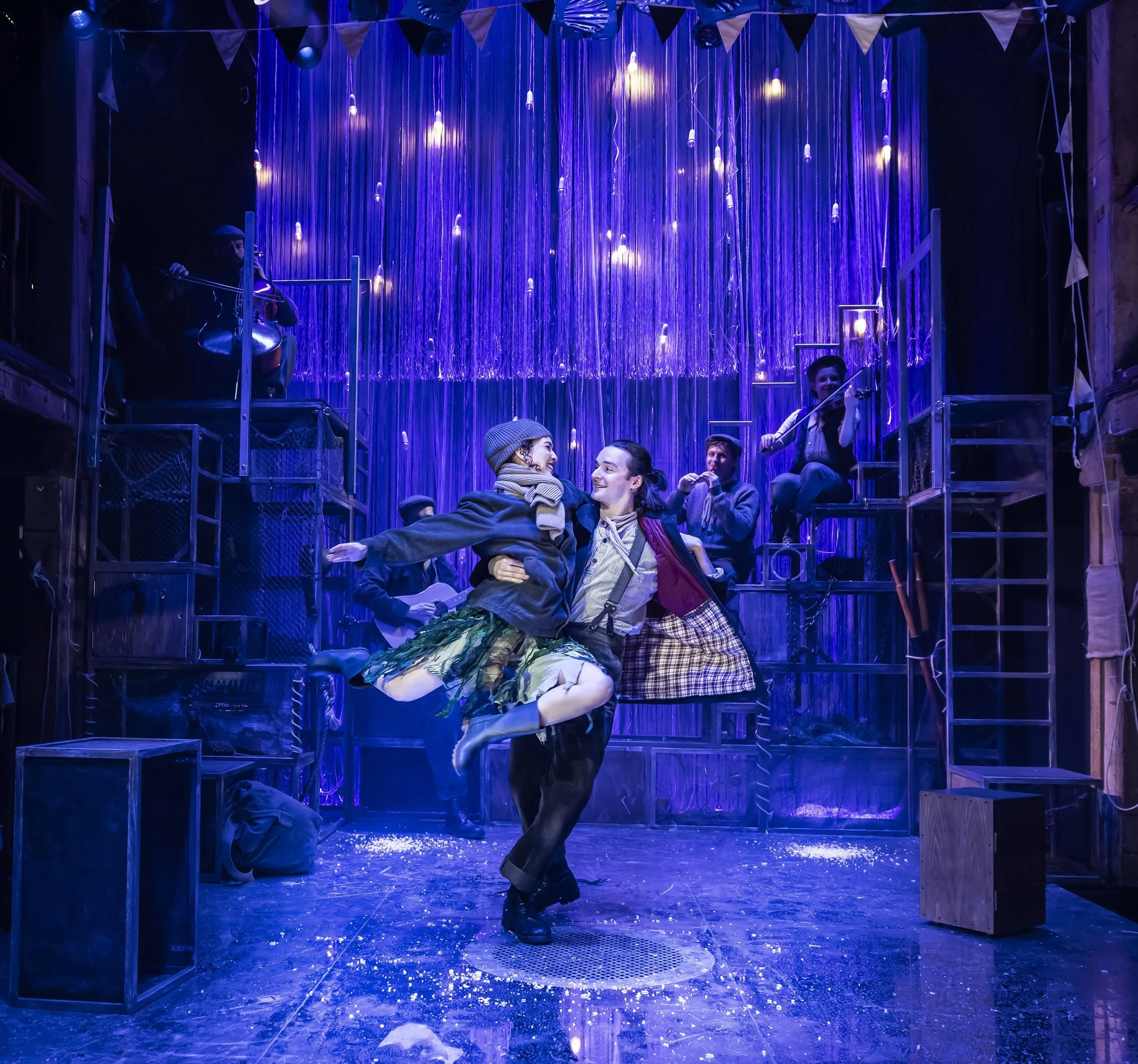
Men Behaving Badly: The Play at Barn Theatre, Cirencester Review

Written by Joe H for Theatre & Tonic
Disclaimer: Gifted tickets in exchange for an honest review
It’s always the question when a classic is revived or transferred to the stage – will it be as good as the original? For Men Behaving Badly at The Barn in Cirencester, the answer is short – no. The show begins where we left the characters from the series – at the turn of the century, New Year’s Eve on the Millenium. But 26 years later, times have changed and leaving the characters rooted in the past makes the show feel tired before it begins. The script is sensitive to cultural shifts over that time, but that means we lose any opportunity for the kind of bawdy comedy which made Men Behaving Badly popular in its time. It’s almost apologetically set in the 90s, while trying not to affront a 2026 audience, which seems like a politic but odd choice when choosing to revive this particular product.
I have to say early in the review that all of the cast did well with what they were given – against direction which killed any opportunity for comedy in a script which felt a bit pointless. Matt Howdon’s Neil Morrisey impression improved as the show went on, and held its own when in conversation with the real Neil Morrisey by time-travel painkiller-induced projector-powered hallucination. Ross Carswell does well as Gary, but feels as if he has been directed to wait for the laugh track – even when he knows it’s not coming. Ellie Nunn and Tricia Adele-Turner both carry off Dorothy and Deborah perfectly nicely, but if anything needed a cultural reset in this revival, it’s the treatment of the female characters. They are given barely anything to do except be pregnant and prissy, and while Nunn hits the comedy beats with some acerbic one-liners well, the audience’s willingness to engage has already been sapped by slow, plodding, and shapeless direction. Neil Jennings and Valerie Antwi bring some much-needed silliness and life to the show – but they seem to be given the thankless task of filling time. The second half begins with an over-long “karaoke night” which Jennings handles well, but it’s abundantly clear that it’s happening because the set design has not considered the need for an interval change, and the second act was about fifteen minutes too short. Sadly for the audience, the creative team manage to squeeze that extra fifteen minutes in.
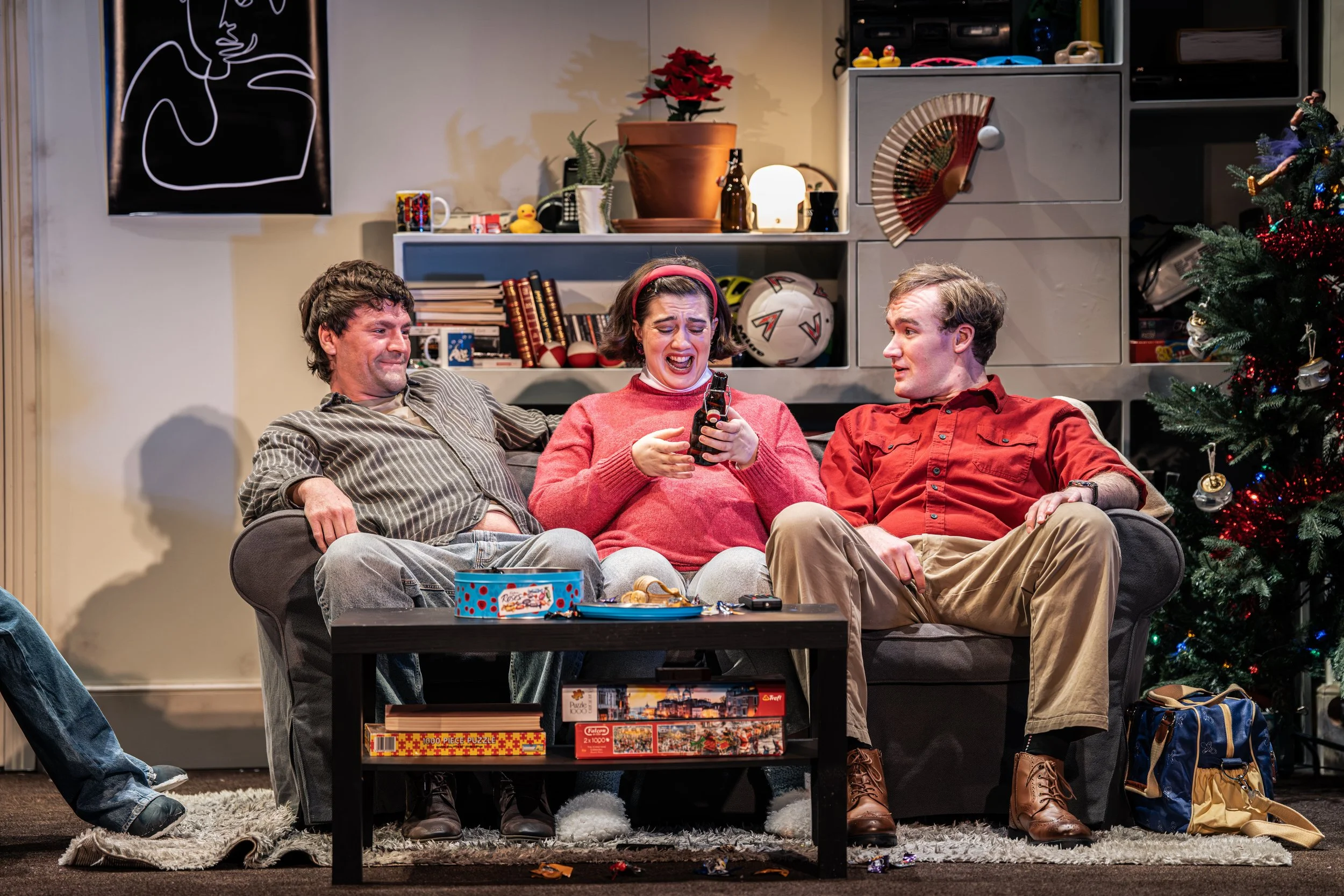
The set design by Alfie Heywood is a great replica of the TV set, and I enjoyed how the room continued off into the wings to give a feeling that there was more flat out of site. The transition into the pub was very cleverly done, and I enjoyed the roll-on walls of the bar and the archway, and the pull-out bar counter. But when the bar set doesn’t cover up the flat in the background, we find ourselves watching Nunn and Adele-Turner sleep and watch TV in the background of the scene because they can’t escape. Stylistically this was an interesting, but not bad, choice. But then when the flat needs significant rearranging at the interval, the only way to cover it is to bring in Ken – the pub landlord – to sing karaoke at us. A simple book flat or sliding wall with matching wallpaper would have taken up minimal space, but provided the necessary interval privacy to rearrange everything without feeling like Jennings is being put on stage to boost the energy after a dull first half.

The fault of this production ultimately falls to two people – writer Simon Nye, and director Joseph O’Malley. Nye has proven that his work can find an audience, and can balance realism, poignancy and absurdity to create one of the groundbreaking comedies of the 90s. But this script spends too long trying to work out how the 90s fits into 2026, and why we need an extra story for these characters, meaning the first act is just boring, and none of the characters are likeable. The humour and banter of the TV show is hard to find, and the characters feel purposeless as the show bumbles to the interval. At least in the second act there is a purpose, and Dorothy’s impending labour adds comedy, crisis and tension. But you have to have made the choice to stay after the interval to reach that, and given the conversations that were happening around me at the end of act one that’s not a guarantee for everyone.
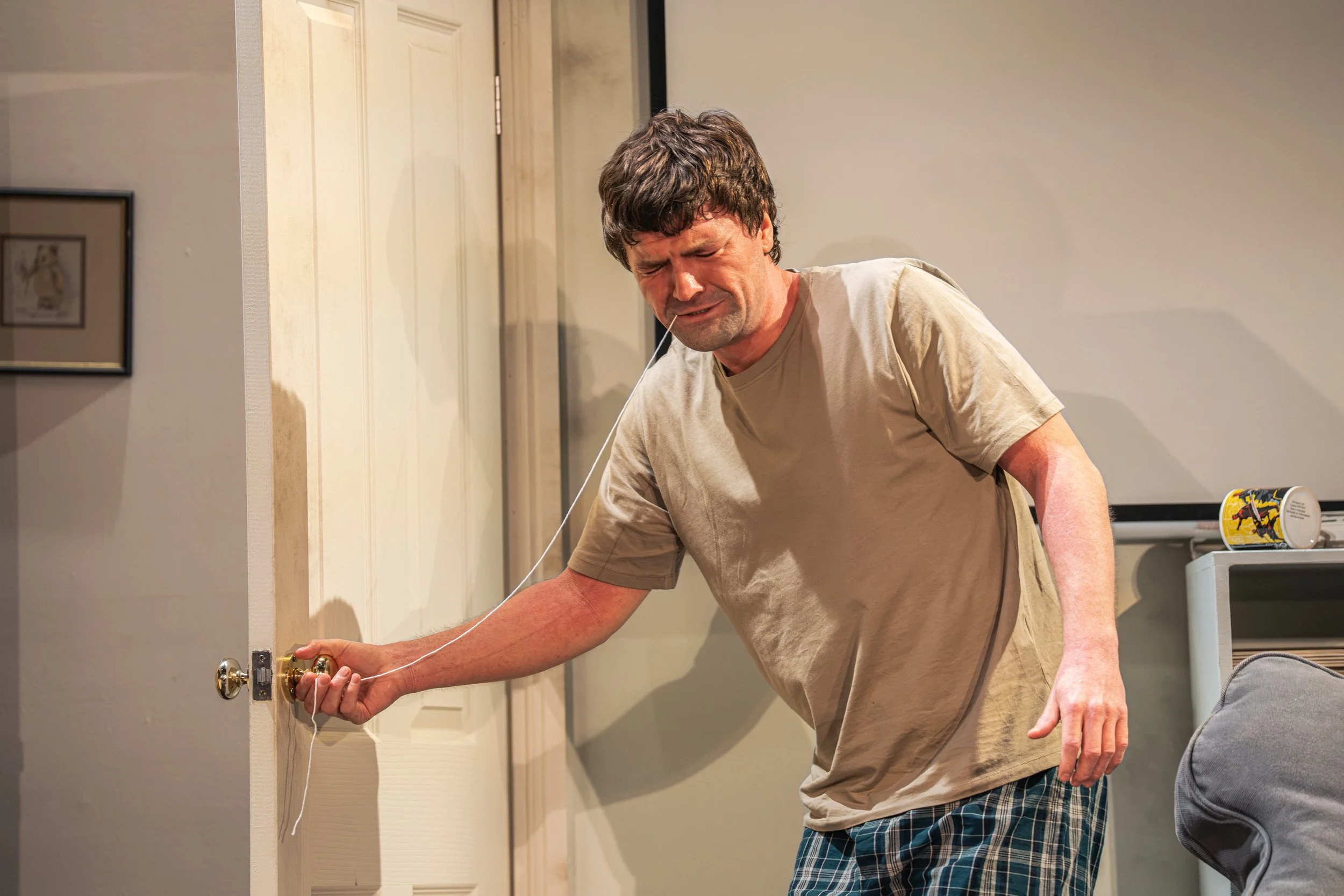
The under-funny script is only hampered further by O’Malley’s direction. In the programme, the bio for O’Malley says “Joseph is frequently seen directing fast-paced, highly physical storytelling”. I could not find that anywhere in this production. The actors were directed to pause for laughs, deliver lines slowly and purposefully – taking us out of the realism of ‘everyday conversations’ for which Men Behaving Badly was so groundbreaking – and killing every joke with either a long pause mid-sentence, a knowing wink to the audience which happened so fleetingly as to be almost accidental, or incorrect emphasis on the line. What physicality existed in the show was minimal, with actors clearly told to stand up from a chair and go and sit on a different one to break up an otherwise static scene, and moments which could have been highly physical to the point of slapstick (the tooth, the door, the butter and the wetsuit) plodded through at a snail’s pace to make sure everybody heard every word that was said and understood exactly what was about to happen three beats before it did.
An unusual choice to revive for 2026, not helped by its execution, this show would deserve a lower rating if it weren’t for a company of actors working extremely hard to try to entertain an audience who are willing them to succeed.
Plays until 7 March
★★