
My Name is Rachel Corrie at Greenwich Theatre Review
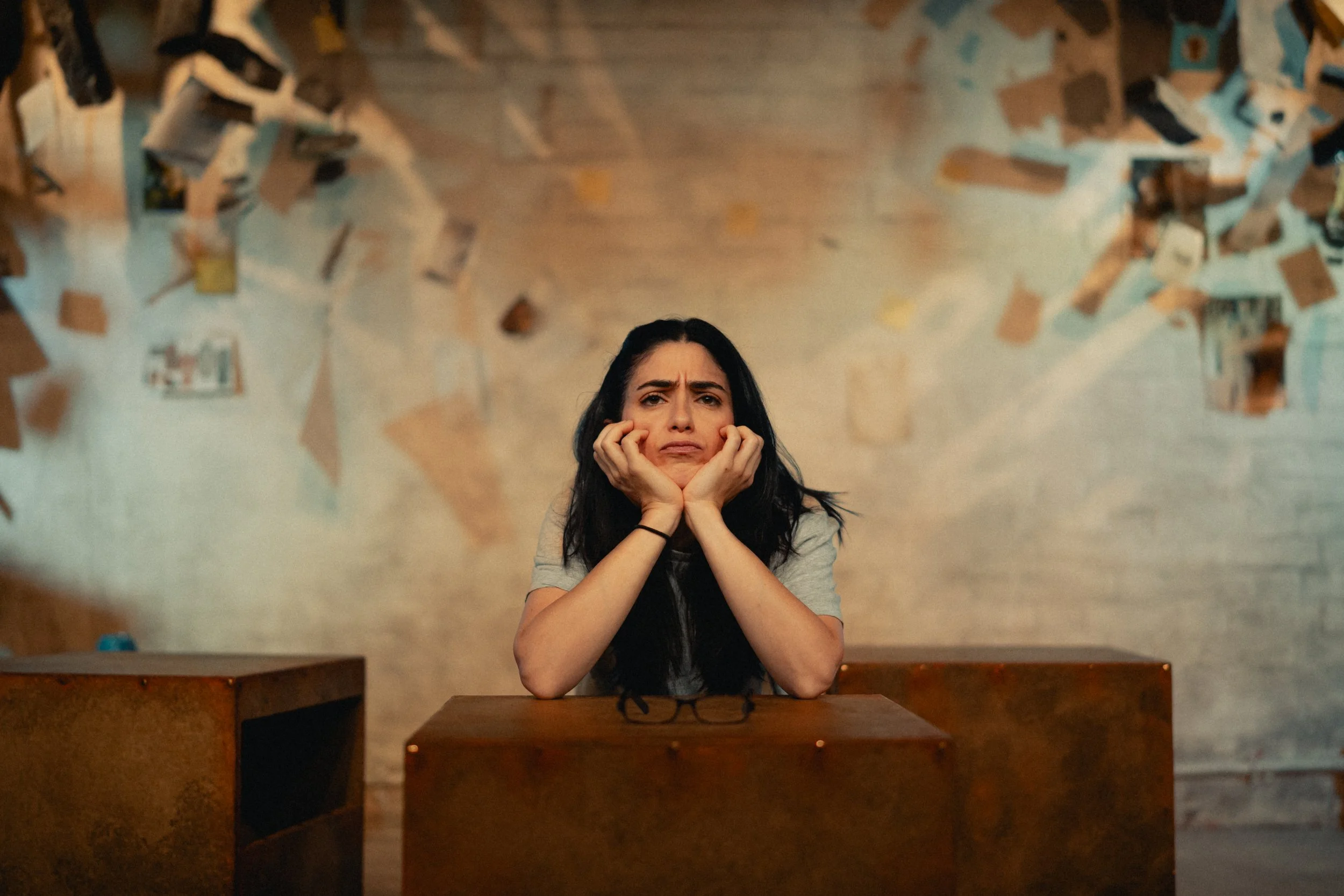
Cassie Bradley plays Rachel Corrie. Photo: Chewboy Ross Kernahan
At a time where it couldn’t possibly be more relevant, My Name is Rachel Corrie is revisited at London’s Greenwich Theatre, 23 years since she was killed in Gaza. Directed by James Haddrell and outstandingly performed by Cassie Bradley, Corrie’s words in this one-woman show are impossible to ignore during a time where humanitarian work feels more important than ever.
Originally adapted by Alan Rickman and Katherine Viner, My Name is Rachel Corrie is a collection of her letters, emails, lists, drawings and diary entries. Detailing her time working as a humanitarian activist in Rafah, the text is a huge cry for peace and an end to suffering for Palestinian civilians before she ultimately loses her life as a result of Israeli military action.
The set and costume design by Jana Lakatos is rich in its storytelling. The backdrop is a blend of warm home objects and conflict rubble, setting the scene of the ruined domesticity of the homes in Gaza. Individual pieces of paper hang from the ceiling, where Bradley pulls each one down to mark each chapter in Corrie’s storytelling until there is none left. The visual symbol of time running out and scattered memoirs from Corrie is moving and very well executed.
Likewise, Lakatos’ costume design subtly does the same. From Bradley’s face getting gradually dirtier, to putting on her high vis jacket towards the final third of the performance, the costume also draws you closer to the context of Corrie’s death in a simple yet effective manner.
Bradley’s performance is highly emotive, bringing Corrie’s words to life remarkably. She’s angry, sad, passionate and most of all, human. Well-directed by Haddrell, Bradley portrays Corrie’s voice with the perfect level of didacticism and vulnerability. She becomes emotional when speaking to her family, yet remains headstrong and fierce in her criticism of Israeli acts of violence and her calls for change.
“I’m really scared and questioning my fundamental belief in the goodness of human nature. This has to stop. I think it is a good idea for us all to drop everything and devote our lives to making this stop”.
Overall, Bradley’s deeply spirited performance is a reminder that we are all humans who have our own individual suffering, yet it is still the actions from humans that make the world we live in so intolerable. Her performance is honest, direct and sincere and is a credit to Corrie’s legacy.
Haddrell keeps the ending true to its original staging, using real video footage of a young Rachel Corrie giving an emphatic speech about ending suffering in third-world countries. Immediately following a statement surrounding the nature of Corrie’s death under an army bulldozer, the ending is intentionally heartbreaking and rightfully so.
Performing at Greenwich Theatre until 17th October, My Name is Rachel Corrie couldn’t be staged at a more important time. It’s hard to believe that the text hasn’t been modernised, where Corrie’s story continues to serve as a powerful message against the killing and displacement of Palestinians still to this day.
★★★★★
Written by Becky for Theatre and Tonic, September 2026.
Statement From Greenwich Theatre:
Reviving My Name Is Rachel Corrie over 20 years since she was killed in Gaza should be a celebration of an iconic figure in the peace process - an international civilian who went at huge personal risk to the site of a military conflict to campaign against and seek to prevent the death of civilians. However, with atrocities in Gaza continuing unabated and Palestinians displaced and killed on a daily basis, Corrie’s voice remains part of the appeal for this to end. “I’m really scared, and questioning my fundamental belief in the goodness of human nature” she wrote in a letter home. “This has to stop. I think it is a good idea for us all to drop everything and devote our lives to making this stop.”
My Name Is Rachel Corrie, a collection of Rachel’s letters, diaries, lists, emails and doodles, isn’t anti-Semitic, it’s not pro-Muslim, it’s not anti-Israel, it’s pro-peace - and that distinction is crucial to any debate about the ongoing horrors being wreaked on the Palestinian people.
“The scariest thing for non-Jewish Americans in talking about Palestinian self-determination is the fear of being or sounding anti-Semitic” she said. “The people of Israel are suffering and Jewish people have a long history of oppression. We still have some responsibility for that, but I think it's important to draw a firm distinction between the policies of Israel as a state, and Jewish people. That’s kind of a no-brainer.”
Rachel campaigned against, and ultimately lost her life as a result of, Israeli policy and Israeli military action. We are proud that her voice and her words can once again be heard through this play and that she can be given another chance to speak out against these horrors. As she said, this has to stop.