
One Flew Over the Cuckoo’s Nest at The Old Vic Review
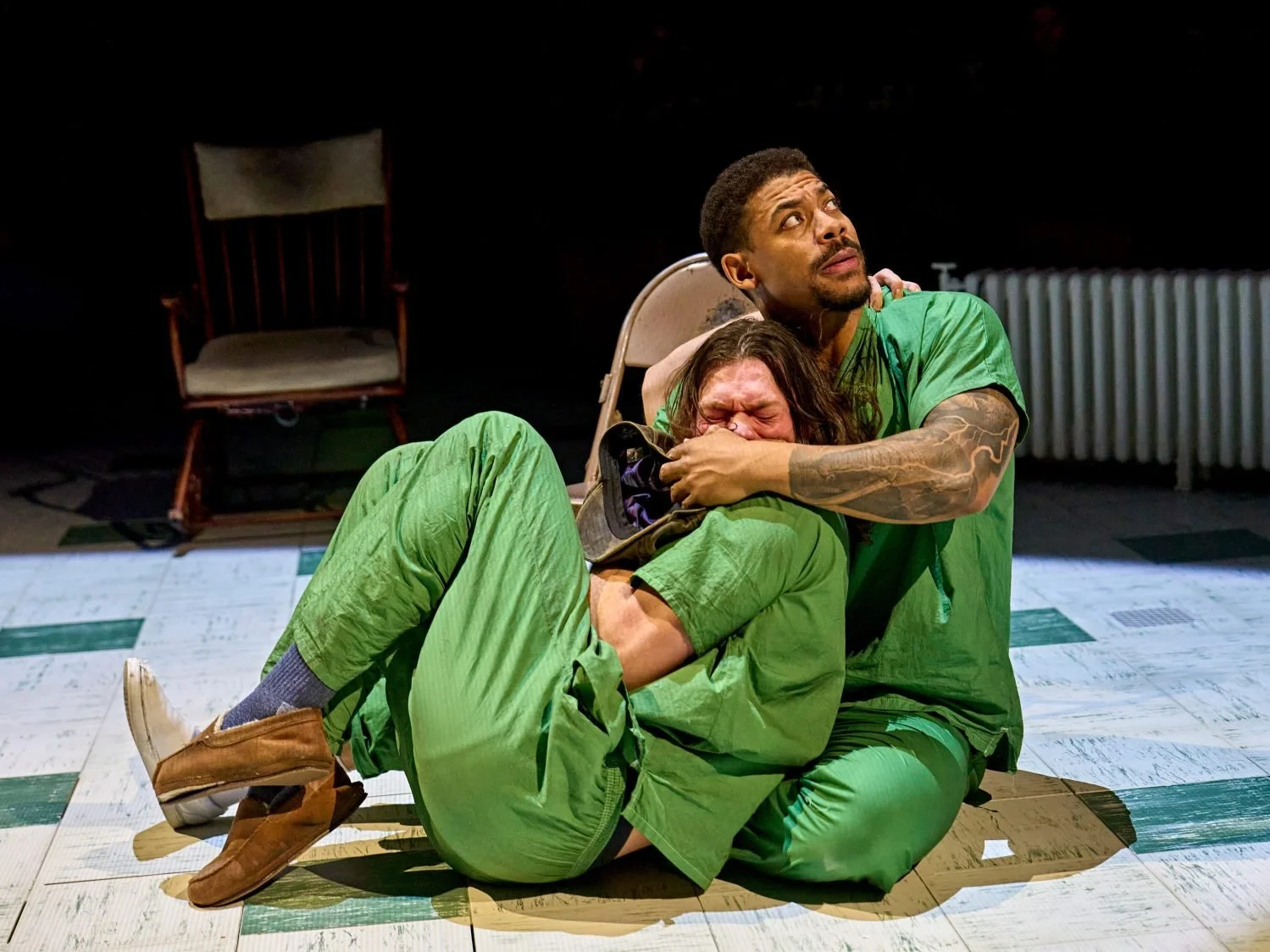
Arthur Boan and Aaron Pierre. Photo: Manuel Harlan
Written by Penny for Theatre and Tonic
Disclaimer: Tickets were gifted in return for an honest review. All views are our own
Ken Kesey’s 1960 novel is considered a countercultural masterpiece, adapted into a stage play by Dale Wasserman in 1963. This new staging from director Clint Dyer reignites the spirit of the original novel, with themes of colonialism and social structures built to silence dissent.
Set inside a psychiatric facility, the play starts with the arrival of Randle P. McMurphy, a convicted rapist presumed to be faking his psychosis to escape serving his time on a much tougher prison farm. His defiance and rebellion unsettles his fellow patients and the smooth running of the institution. He takes on Nurse Ratched, under whose iron rule the patients have been stripped of their humanity.
For his final season as Artistic Director of the Old Vic, Matthew Warchus has chosen to stage each production In The Round. This is particularly effective for this play, the proximity of the Stalls audience to the action helping to create the claustrophobic and oppressive atmosphere of the asylum and also providing a little light relief when the actors acknowledge them with an aside, a gesture or by referring to sections of them as the most hopeless of the inmates. Ben Stones’ set is sparse and a clinical white, reflected in the pristine white uniforms worn by the staff. A spiral staircase separates the ward from the staff area, with Nurse Ratched’s orders coming over a tannoy that also pumps bland music into the room, a calming device designed to get on the patients’ last nerves.
The tension and atmosphere are further heightened by Chris Davey’s lighting, disturbing video projections from Gino Ricardo Green and sound by Benjamin Grant – heavy and full of foreboding with each sudden blackout conjuring up visions of cruelty and horror.
At the start of the play, there’s a representation of Congo Square in New Orleans which, as the programme tells us, was a Native American gathering space and later associated with enslaved African Americans. It’s a clear link to the play’s themes of colonialism and resistance. With the majority of the inmates played by Black actors, the loss of these men’s civil rights during a play written and originally set during the Civil Rights era makes a strong point.
Clint Dyer’s direction tells the story of the patients and their struggles with understanding and sensitivity. There is humour in the interactions but he never plays their conditions and treatments for laughs. For example, Ene Frost’s strong physical portrayal of long-term inmate Ruckley is extreme, disturbing and upsetting, but the reactions of the other men in dealing with him show a tenderness missing from those in authority who are meant to be caring for him. At times, some of the interactions between the patients can be a little hard to follow with rapid dialogue and exaggerated reactions as characters are established, but as the play gets into its flow and our ears are attuned to accents and tone, it’s not an issue.
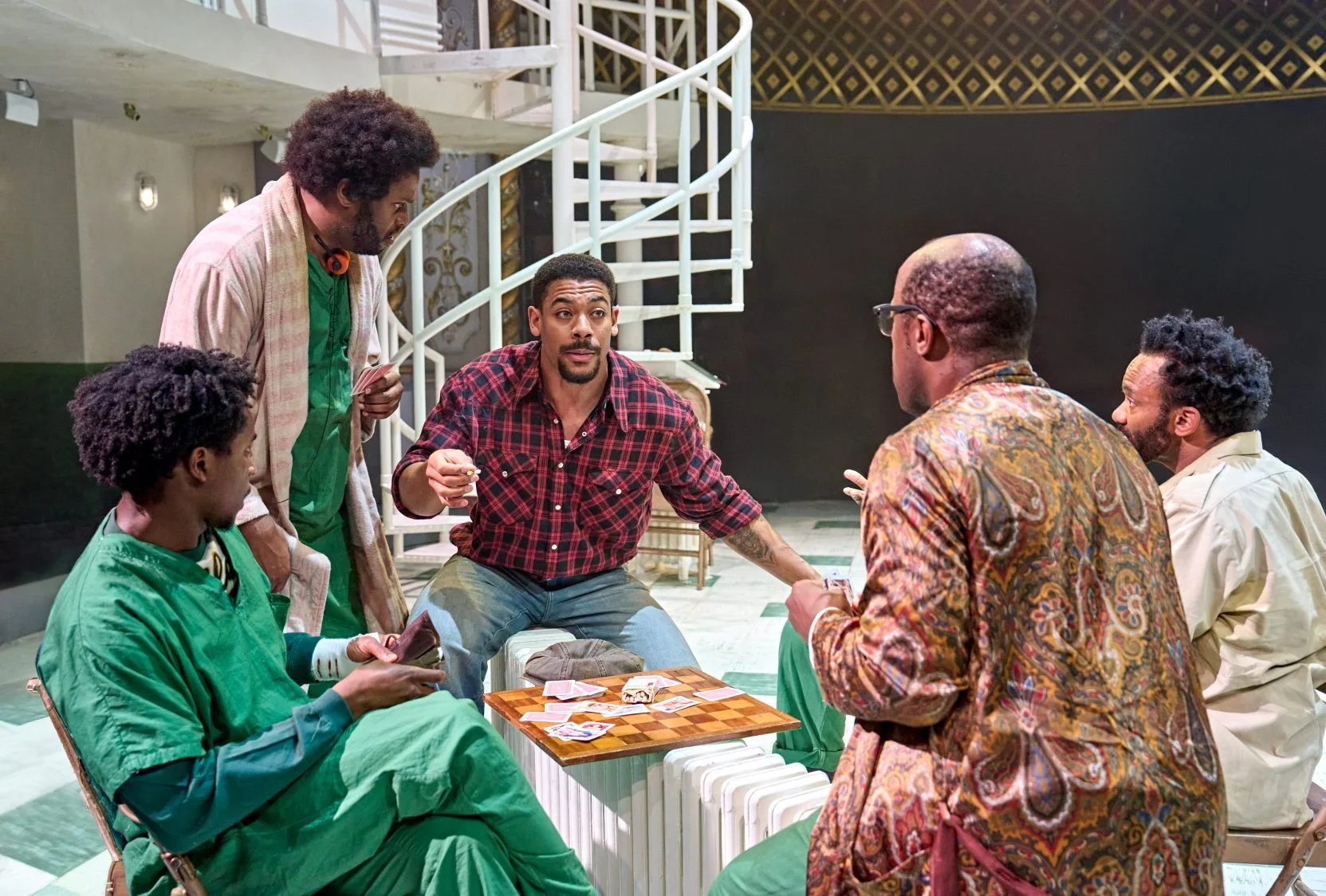
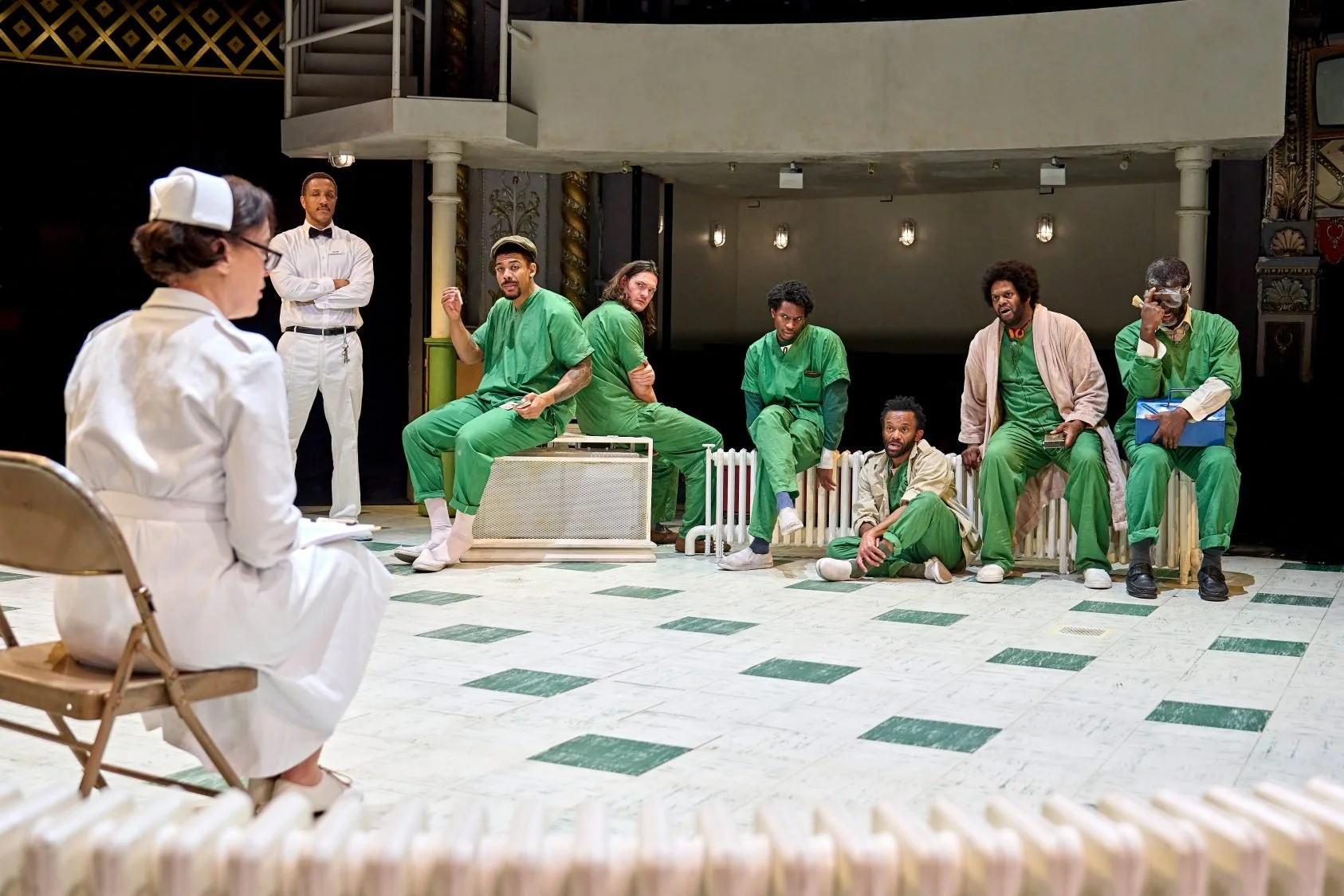
The ensemble cast is excellent, the patients displaying a clear bond and camaraderie and, as their small acts of rebellion become bolder, there’s a sense of freedom building amongst the men, despite the growing restrictions enforced by the wardens and medical staff. Giles Terera is always captivating to watch on stage, and this performance is no exception. He brings a real dignity to Dale Harding, the elected leader of the patients, erudite and calm on the surface, but with the trauma caused by his wife’s cruelty and his own suppressed homosexuality never far away. Arthur Boan also stands out as Chief Bromden, assumed to be a deaf mute, but providing the audience with a narration in the earlier stages of the play before finding his voice amongst the other men under McMurphy’s influence. We learn more of his complex backstory than we do about most of the other characters, setting his mixed race status against cultural and social expectations to explain his feelings that he is “too small” and struggling with his identity. We see his dreams (or are they delusions?) played out in short sequences representing his father and his Native American Tribe. Boan’s portrayal always draws attention, whether quietly pushing his broom or roaring against injustice.
The institution’s staff very much feel like the supporting characters in this production – even Nurse Ratched, the novel’s antagonist, fades a little under the strength of the performances of the patients, although this does serve to make the power imbalance between the groups even more jarring, reminding us that for all their theatrics, the patients hold no actual authority in their day-to-day existence. Olivia Williams gives Ratched a soft and calm tone but with an iron core that’s clear to anyone paying attention. Her cruelties and punishments masked as treatment are all the more chilling as a result of her measured delivery.
In the role of McMurphy, Aaron Pierre gives a tour de force performance with his charismatic, energetic and pitch perfect portrayal. Rarely still, he walks a fine line between leader and conman, with a glint in his eye that speaks sometimes of mischief, sometimes of madness but always looking for a rule to break, an injustice to challenge, a rebellion to start. Whether we believe that he is ultimately seeking to help or to cheat his fellow inmates, it’s impossible not to like him and become fully invested in his story.
Over sixty years on from its first staging, One Flew Over the Cuckoo’s Nest still has the ability to shock with themes that still feel very relevant – mental health, incarceration and punishment, suppression, freedom, identity and empowerment. Despite these challenging themes, it’s very entertaining and builds to a powerful and fitting climax that will certainly have audiences on the edge of their seats.
One Flew Over the Cuckoo’s Nest runs at the Old Vic until 23rd May 2026. Find out more and book here.
★★★★