Spring Sequence of New Sounds 2026 at Central Hall Westminster Review
Written by Rainy. J for Theatre & Tonic
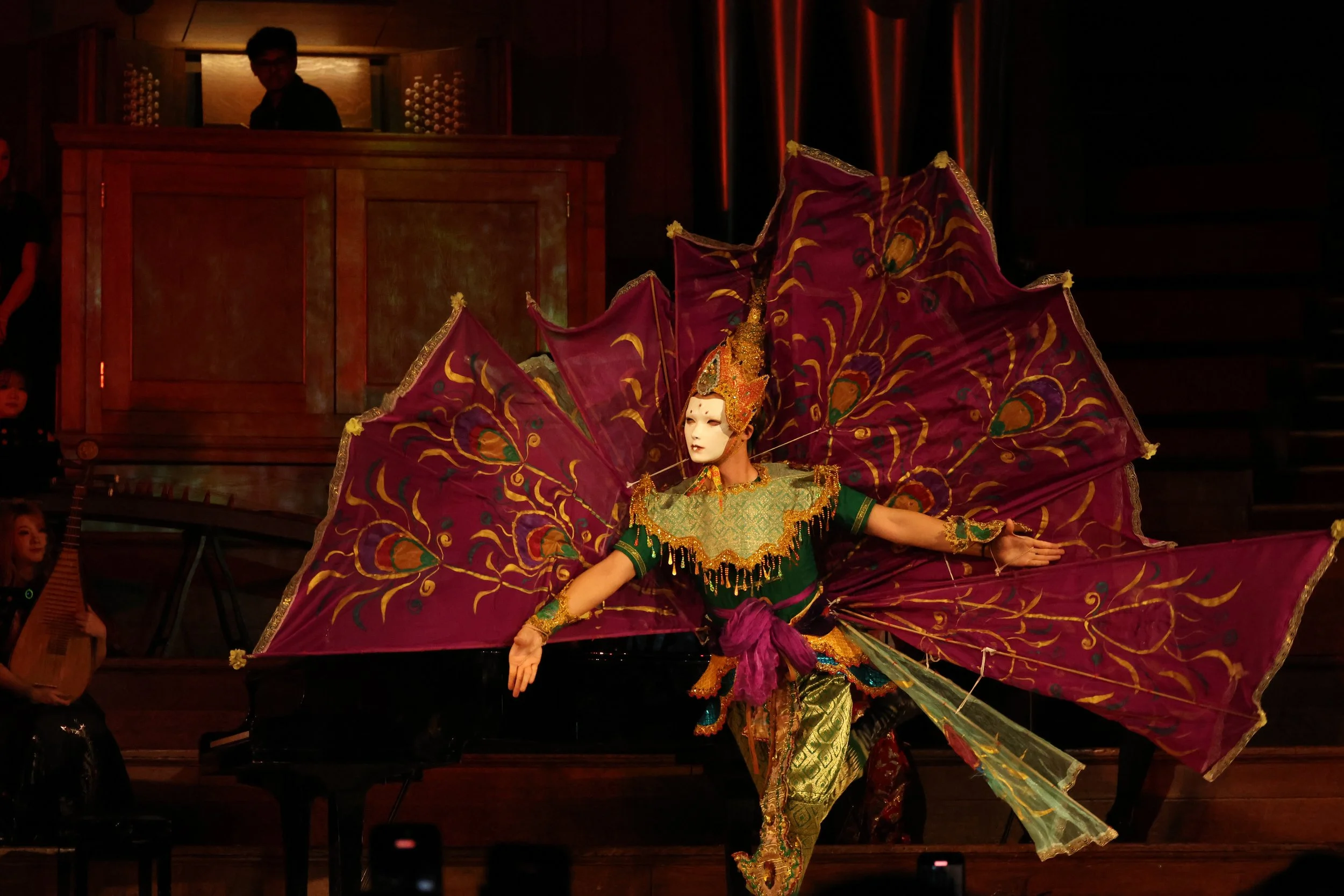
Presented during the Chinese New Year season at Central Hall Westminster, Spring Sequence of New Sounds 2026 offered a special theatre performance in the UK. Music, dance and visual design co-created a theatre performance. By working Chinese traditional arts forms within contemporary theatrical creation, the production showcased a new Chinese-classical-style aesthetic. The production was supported by Sino-British cultural organization, with dance artistic direction by Beijing Dance Academy and the director of the Confucius Institute in London. The Choreography director team Zhaotian Wang, Danlei XU, Lulu ZHU, are from China, Malaysia and the UK very established dance artists; while vocalists Lili FANG, Jirimuto are very famous artist in China, and instrumentalists and Music director team also came from an international background, reinforcing the work’s cross-cultural ambition.
The program unfolded in four chapters, each rooted in regional or historical traditions shaped contemporary staging. No presenter in the performance allowed the structure to rely entirely on musical transitions and choreographic pacing, creating a continuous, immersive flow that kept the audience inside the theatrical traditional Chinese world.
In the opening section, performed by Jingkun Chinese Arts and UK Chinese Theatre Arts, featured well-known excerpts from the Peking Opera repertoire, alongside Kunqu selections. The performers demonstrated solid command of chang, nian, zuo, da — singing, recitation, physical acting and combat technique — revealing years of disciplined training. The staging allowed the excerpts to breathe in a proscenium theatre. Slightly extended pauses and clearer spatial arrangements helped audiences follow the live music rhythm of the form. Even without detailed prior knowledge of the conventions, viewers could read the emotional shifts through vocal tone, gesture and tempo. The section maintained ceremonial dignity while remaining theatrically direct.
The second chapter moved north into Mongolian cultural expression. A court-inspired runway presentation introduced costume as moving architecture, before the stage opened into fuller dance and vocal sequences. Morin khuur paired with piano created a dialogue between tradition and contemporary harmonic support, softening what might otherwise feel historically distant. Throat singing resonated through the hall with striking physical immediacy, its overtones vibrating against the architectural dome.
Traditional Mongolian choreography — expansive arm spans, grounded stepping patterns, circular formations — were interwoven with subtle contemporary dance elements: shifts in weight through the spine, elongated transitions, and expanded use of stage diagonals. The chopstick dance and bowl-balancing dance retained rhythmic clarity, yet tempo modulation and spatial layering gave them renewed theatrical shape. The offering of the hada introduced a pause — an understated moment of reverence — functioning as dramaturgical punctuation rather than decorative ritual.
The third section travelled westward through Xinjiang and Silk Road influences. Dunhuang-inspired dance returned in mural-like lines, but here the phrasing was less rigidly symmetrical. Arms extended into softer arcs; pauses stretched slightly longer than traditional timing would dictate. Tambourine dance injected sharper rhythmic accents, counterbalanced by choral textures that filled the hall with harmonic density. The chorus did not merely accompany; it altered the scale of the visual composition, lifting solo movement into collective resonance.
Throughout these sections, the integration of erhu, hulusi, guqin and other traditional instruments was handled with sensitivity. Instead of functioning as cultural markers, the musicians co-created momentum. Musical phrasing influenced choreographic phrasing. In several passages, rhythm shifted mid-sequence, requiring choreography co creation with the music.
The final chapter from south east of China softened the atmosphere. Qipao glided across the stage in diagonal pathways, silk tracing fluid curves. Dai dance introduced pliant wrists and grounded pliés suggestive of river landscapes. The soprano provided the vocal centre of gravity, sustained tone expanding the spatial dimension of the hall. Yunnan minority intangible heritage dance performance concluded the evening with intricate rhythmic layering and buoyant ensemble energy.
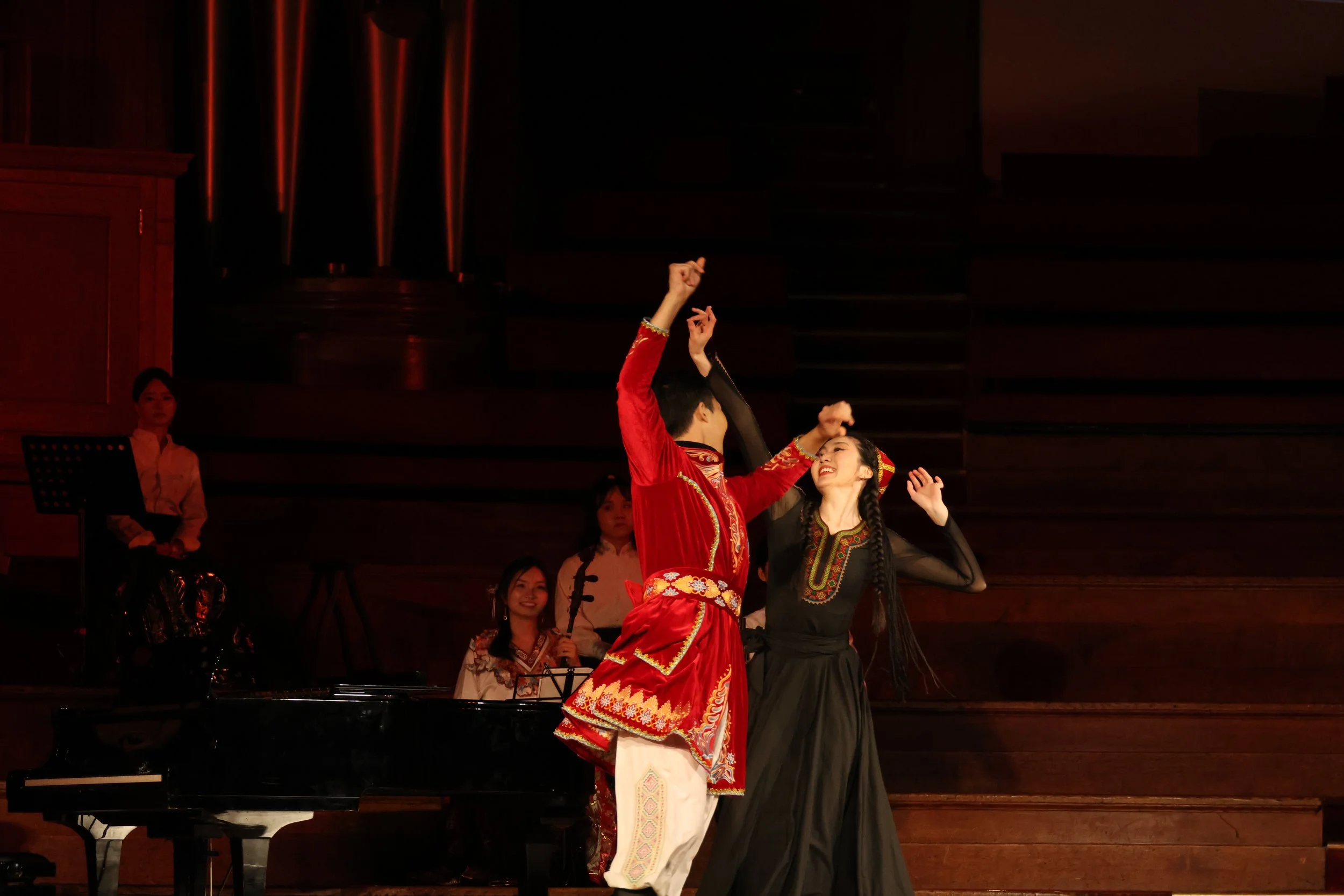
What made Spring Sequence of New Sounds stand out was the way it linked with tradition. Dance performance were really good and memorable. The choreographers did not simply recreate Chinese folk dance as they once were. Instead, they adjusted pacing, opened up the stage space and wove in touches of contemporary movement. Tempos shifted, transitions were extended, and ensemble patterns were restructured to suit a modern theatre setting. The traditional vocabulary remained recognisable, but it no longer felt distant or ceremonial. The rhythms were clearer and the relationship between music and movement more immediate. The audience could follow the structure and intention of each section without prior knowledge. The professional dancers were trained at established institutions such as Trinity Laban Conservatoire of Music and Dance, Beijing Dance Academy and Shanghai Theatre Academy. The evening relied heavily on the dance artists professional grounding. Without their technical precision and adaptability across genres, the shifts between opera, ethnic dance and contemporary theatrical framing would not have held together so amazing.
In the UK, Chinese New Year performances are often presented as short brief showcase segments. This production felt different. It had scale, structure and a clear artistic intention. The evening was carefully shaped, allowing each section time to develop rather than appearing as isolated highlights. Its strength lay in how it brought different traditions together within one theatrical frame. Opera, ethnic dance, vocal music and instrumental performance were placed in conversation, creating a stage language that felt both rooted and contemporary.
The experience could have been deepened with brief contextual introductions between sections. Even a few sentences — spoken or projected — might have helped audiences unfamiliar with Chinese cultural history follow the transitions more easily. At times, the shift from one regional form to another felt visually impressive but structurally abrupt. The connections between chapters were present, yet not always fully developed. Stronger and more logically articulated links would have clarified the overall arc.
The use of AI-generated visual elements also showed potential but did not reach its full impact. This seemed largely due to the limitations of the venue. The projection surface and spatial configuration of the hall did not allow the digital imagery to achieve maximum clarity or immersion. In a more technically adaptable theatre environment, the visual design might have felt more integrated and visually striking.
Even so, the evening stands as a substantial and professionally executed collection of works. It demonstrated serious artistic investment and offered London audiences an uncommon opportunity to encounter the breadth of Chinese performance traditions within a thoughtfully staged theatrical setting.
Spring Sequence of New Sounds 2026 performed on 6 February 2026.
★★★★