The Waves at Jermyn Street Theatre Review
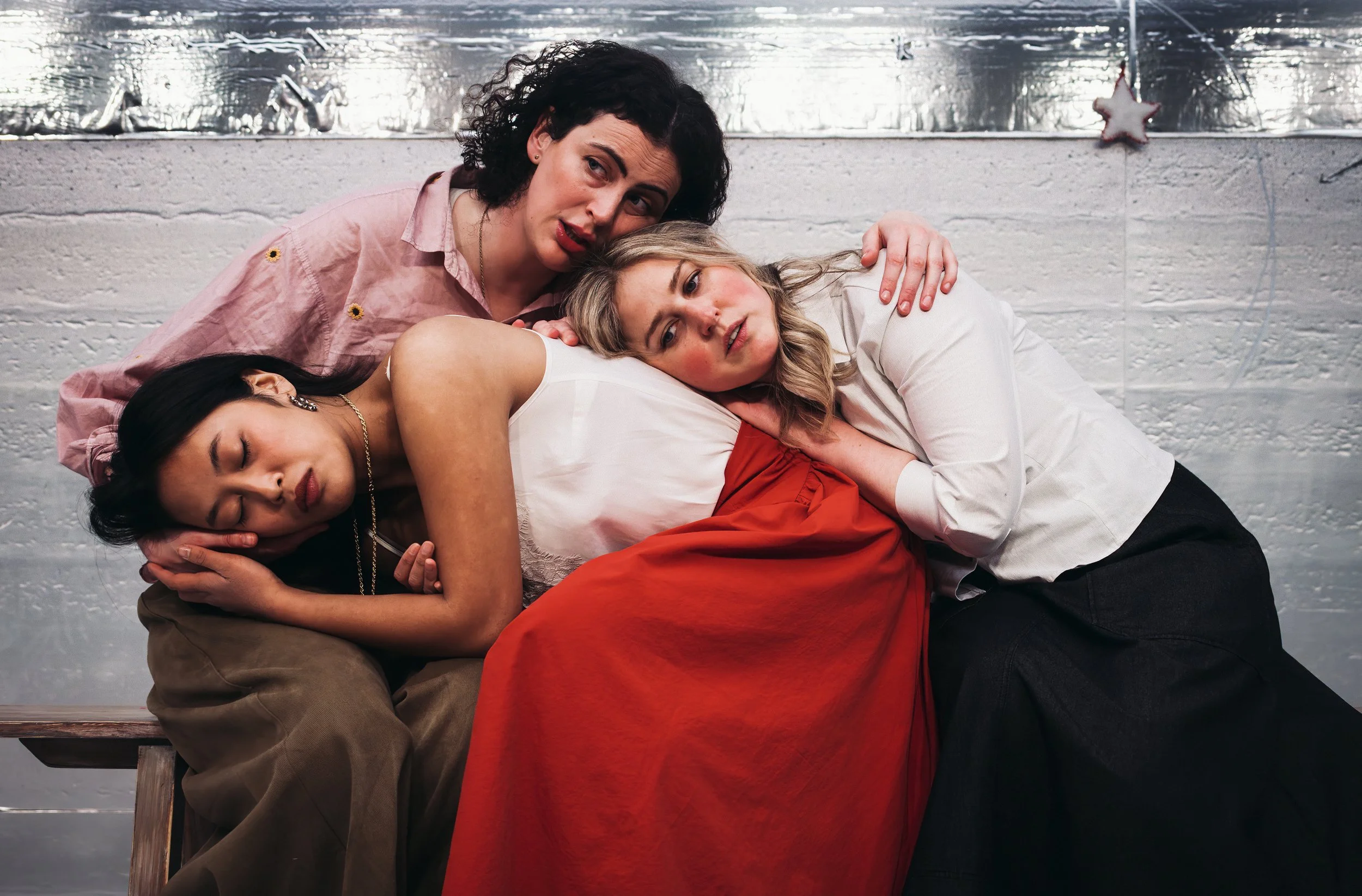
Syakira Moeladi (Jinny), Breffni Holahan (Susan), and Ria Zmitrowicz (Rhoda) in The Waves. Photo by Alex Brenner
Written by Ziwen for Theatre and Tonic
Disclaimer: Tickets were gifted in return for an honest review. All views are our own
I still remember the feeling of opening The Waves for the first time. I was immediately drawn in by the precision and beauty of its language, yet often found myself adrift—unable to clearly distinguish between the voices or fully grasp the relationships that bound them together. Written by Virginia Woolf and published in 1931, the novel is often regarded as her most experimental and elusive work. Its form is deeply rooted in the stream of consciousness: rather than unfolding through a conventional plot, it immerses the reader in the shifting interior worlds of its characters. It was this very quality that made me wonder how such a work might translate to the stage. In this adaptation by Flora Wilson Brown, directed by Júlia Levai, the production renders Woolf’s intricate text with striking clarity and immediacy.
Susan (Breffni Holahan), sensitive and prone to jealousy yet full of love; Neville (Pedro Leandro), rational and quietly in search of order; Jinny (Syakira Moeladi), exuberant, sensuous, and wholly present; Bernard (Tom Varey), warm, observant, and gently humorous; Louis (Archie Backhouse), intelligent and ambitious, yet marked by an enduring sense of estrangement; and Rhoda (Ria Zmitrowicz), perceptive and imaginative, but fragile in her sense of self. Together, these six figures trace a shared passage from childhood into later life. They play, envy, and sustain one another; they drift apart and find their way back again, their lives moving in and out of alignment like tides.
Alongside them stands another presence: Percival. Unlike the others, he never truly appears, existing only through the voices that recall him. We are never granted direct access to his inner life; instead, he is continually refracted through the six's perspectives. In their telling, Percival takes on an almost impossibly ideal form—brave, assured, untouched by doubt. He feels less like a fully realised individual than a figure shaped by collective projection, someone to admire, to rely upon, perhaps even to believe in. At times, Rhoda seems to carry his voice, and in turn, Louis appears to echo hers; this fluid shifting of perspective lends a heightened intensity to the play’s exploration of consciousness.
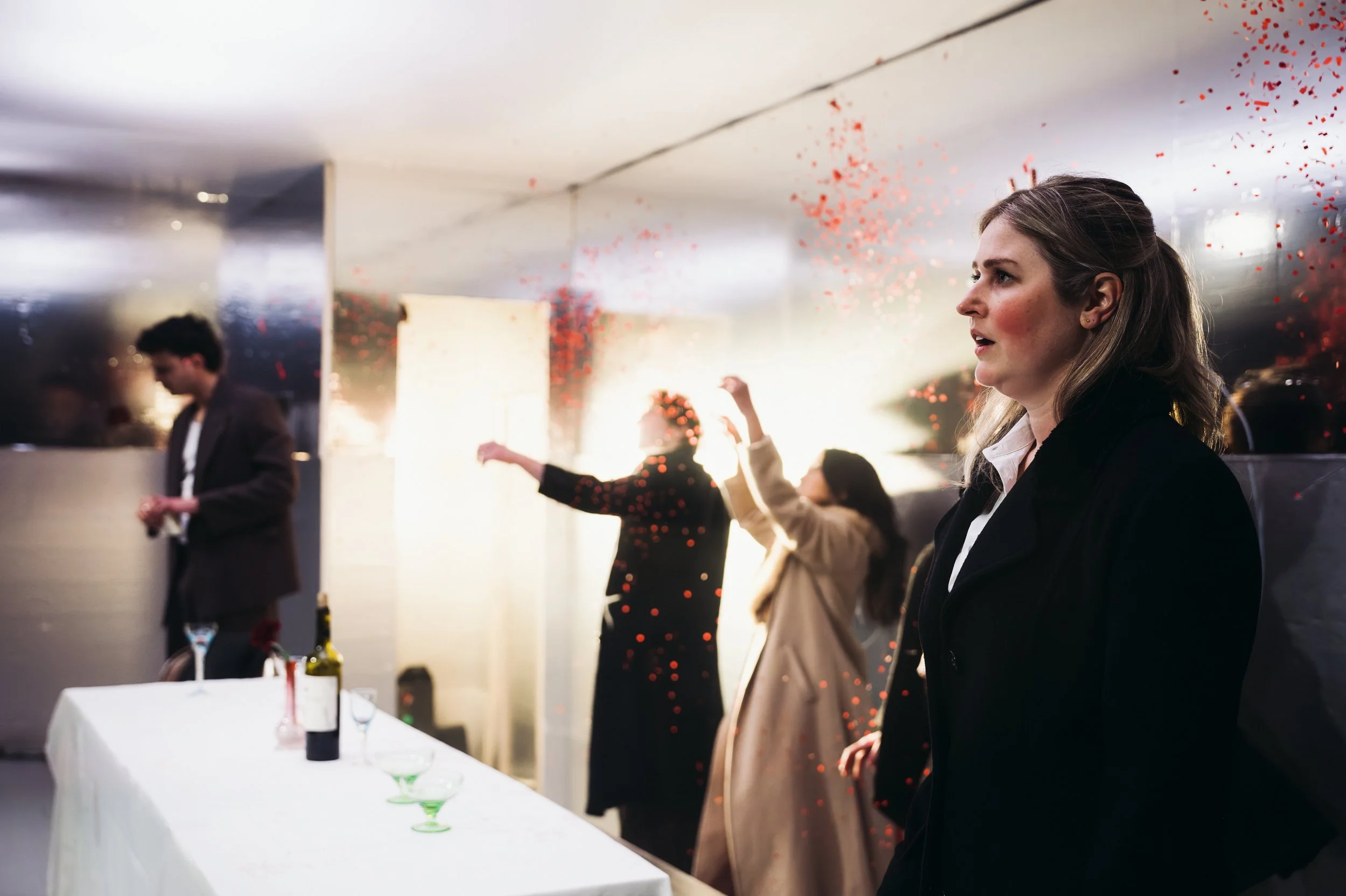

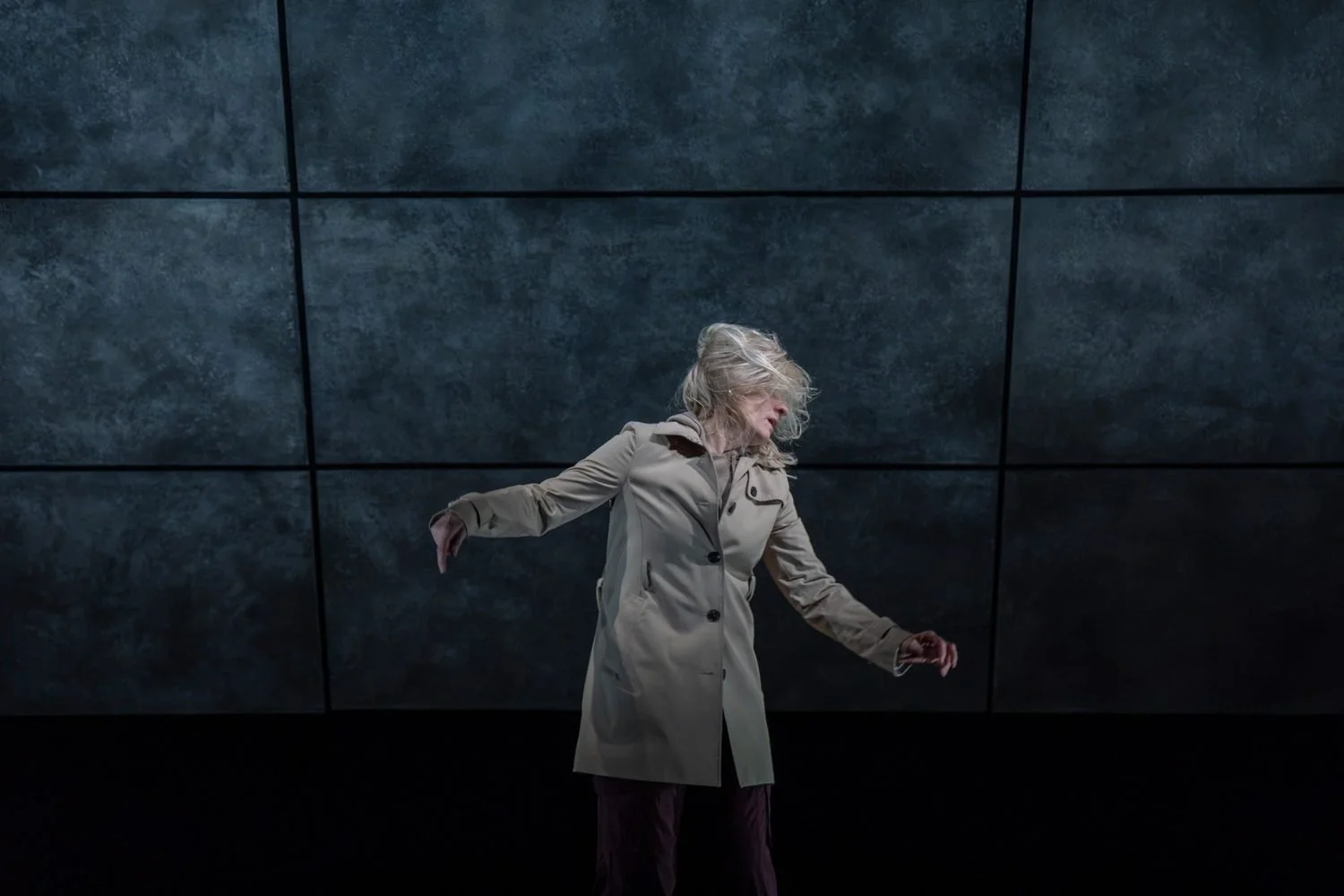
Tomás Palmer’s set is deceptively simple yet quietly evocative. The walls, sheathed in a foil-like surface, are inscribed with drawings and fragments of text—“They dance,” “love is simple.” As the performance unfolds, the actors add to these markings, allowing the space itself to accumulate memory. Anett Black’s costumes follow a similar logic: understated, yet sharply defined. At the outset, each performer wears a white T-shirt bearing their character’s name; as time passes, these give way to clothing that feels more personal, more lived-in. Sound design by Matthew Tuckey further enriches the atmosphere—school bells, the sound of a clock, the loud music in the party—creating a space that feels at once suspended and intimately real.
Within a tightly shaped ninety minutes, Flora Wilson Brown weaves together the essential threads of Woolf’s novel with remarkable sensitivity. The Waves is often read as the articulation of a single self in six voices—Bernard as language, Rhoda as anxiety, Jinny as the body, Neville as reason, Susan as instinct, and Louis as the social self. Whether one reads them as distinct individuals or as facets of a shared consciousness, the effect is equally compelling. The performances are striking in their naturalness; the cast truly inhabit the sense of a long-standing intimacy. Their perceptions of the world—so varied, so finely attuned—hold the audience without the need for dramatic plot. I found myself leaning in, drawn by the quiet anticipation of each new line. By the end, it felt as though I had come to know them. There is little doubt that this production captures the essence of Woolf’s work. It may seem, at first glance, to be concerned with death; yet what it reveals, more profoundly, is an attentiveness to living. Life continues, as the waves do—restless, rhythmic, and unceasing, whether in stillness or in surge.
The Waves plays at Jermyn Street Theatre until 23 May 2026.
★★★★