Twelfth Night at Barbican Theatre Review

Written by Stacy for Theatre & Tonic
Disclaimer: Gifted tickets in exchange for an honest review
After finding its feet with the Royal Shakespeare Company in Stratford, Twelfth Night now makes the move to London, feeling confident, settled, and well-worn in the best possible way. There’s a sense that the choices have been tested in front of audiences before, allowing the show to land here with an ease that comes from experience rather than spectacle. It’s not trying to prove itself; instead, it simply invites the Barbican audience into a version of Shakespeare that already knows what it wants to be.
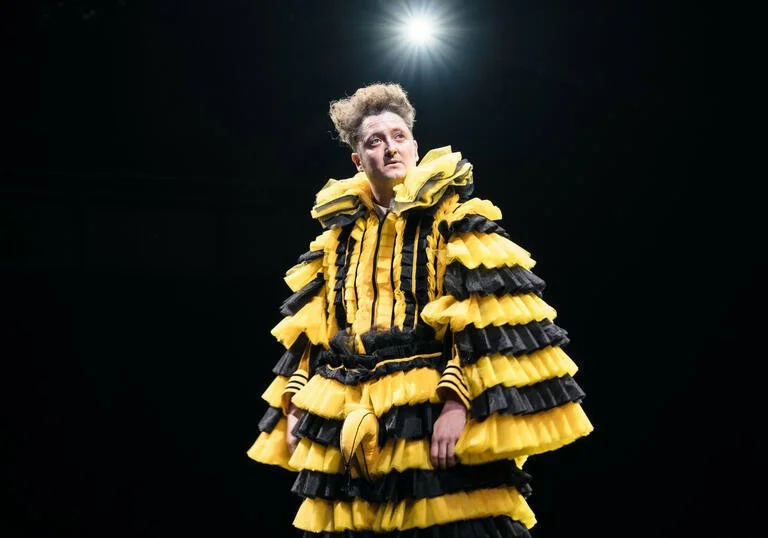
Comedy is expertly woven throughout this production of Twelfth Night, resulting in a show that is, at times, an undeniable crowd-pleaser. Nowhere is this more evident than in Feste, played with pitch-perfect timing by Michael Grady-Hall. He fully embodies the fool’s sharp wit and mischievous spirit, grounding the play’s humour while also cutting through it with moments of surprising melancholy. Shakespeare’s love of comic confusion is most satisfyingly realised in the play’s final moments, as the tangled web of mistaken identities unravels. When all characters are finally brought together and forced to confront their own desires, the ensemble works in harmony to ensure the revelations land with clarity and impact. The production closes on a reflective note, with Feste’s final song reminding us that time, weather, and life itself continue on — festive illusions notwithstanding.
The inherent chaos of the story is heightened by strong performances across the board. Twelfth Night resists the idea of a single protagonist, though much of the emotional weight rests with Viola/Cesario, played by Gwyneth Keyworth with warmth and conviction. Keyworth effortlessly balances Viola’s vulnerability with Cesario’s confidence, creating a performance that is both endearing and assured, while maintaining believable chemistry with everyone she shares the stage with. Freema Agyeman’s Olivia is commanding and self-possessed, making it easy to see why those around her fall so quickly and so deeply. Another standout comes from Joplin Sibtain as Sir Toby Belch, whose convincingly chaotic drunkenness begs the question of whether he’s truly acting — perhaps someone should check he’s only drinking juice.
The production at the Barbican features brand-new original music and songs, composed specifically for this staging by singer-songwriter Matt Maltese, which marks his first time composing for theatre. The score shifts its tone throughout the show, moving between playful and unexpectedly tender moments, helping the scenes flow and giving a little extra insight into the characters’ inner worlds. Sometimes the music felt a little out of place, but the song performed by Feste towards the end of the play really allowed the story to end with a reflective tone.
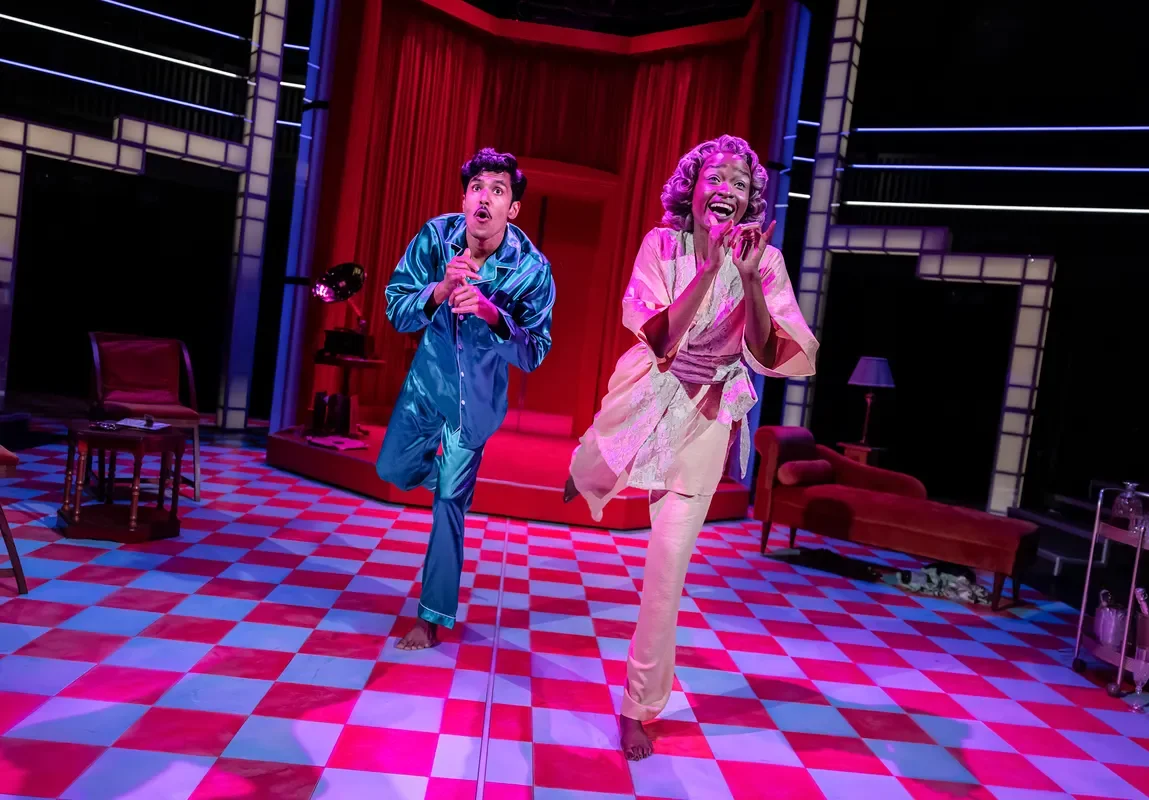
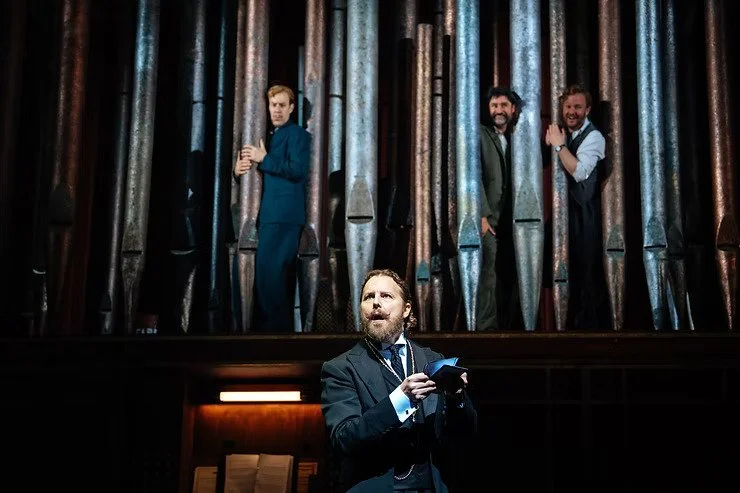
Visually, the production makes excellent use of the Barbican’s vast stage. Set and Costume Designer James Cotterill crafts a rich theatrical environment from deceptively simple layers, allowing the space to feel expansive without ever becoming overwhelming. A striking “lights off” moment with Feste stands out, as does a particularly memorable piece of physical comedy involving three characters entangled around an organ — with one becoming hilariously stuck. Together, the design and performances work in tandem to deliver a Twelfth Night that embraces both the joy and the disquiet lurking beneath Shakespeare’s most playful comedy.
Twelfth Night plays at the Barbican Theatre until the 17th of January 2026
★★★★