A Midsummer Night’s Dream at Shakespeare’s Globe Review

Photos by Helen Murray
Written by Ziwen for Theatre & Tonic
Disclaimer: Gifted tickets in exchange for an honest review. All views are our own
Like its title suggests, one of the defining qualities of A Midsummer Night's Dream lies in its dreamlike atmosphere. When the audience can fully believe in what unfolds before them, yet still sense that it might dissolve like a dream, the production has succeeded. In this staging, director Emily Lim weaves for her audience a dream that is, unmistakably, one of joy.
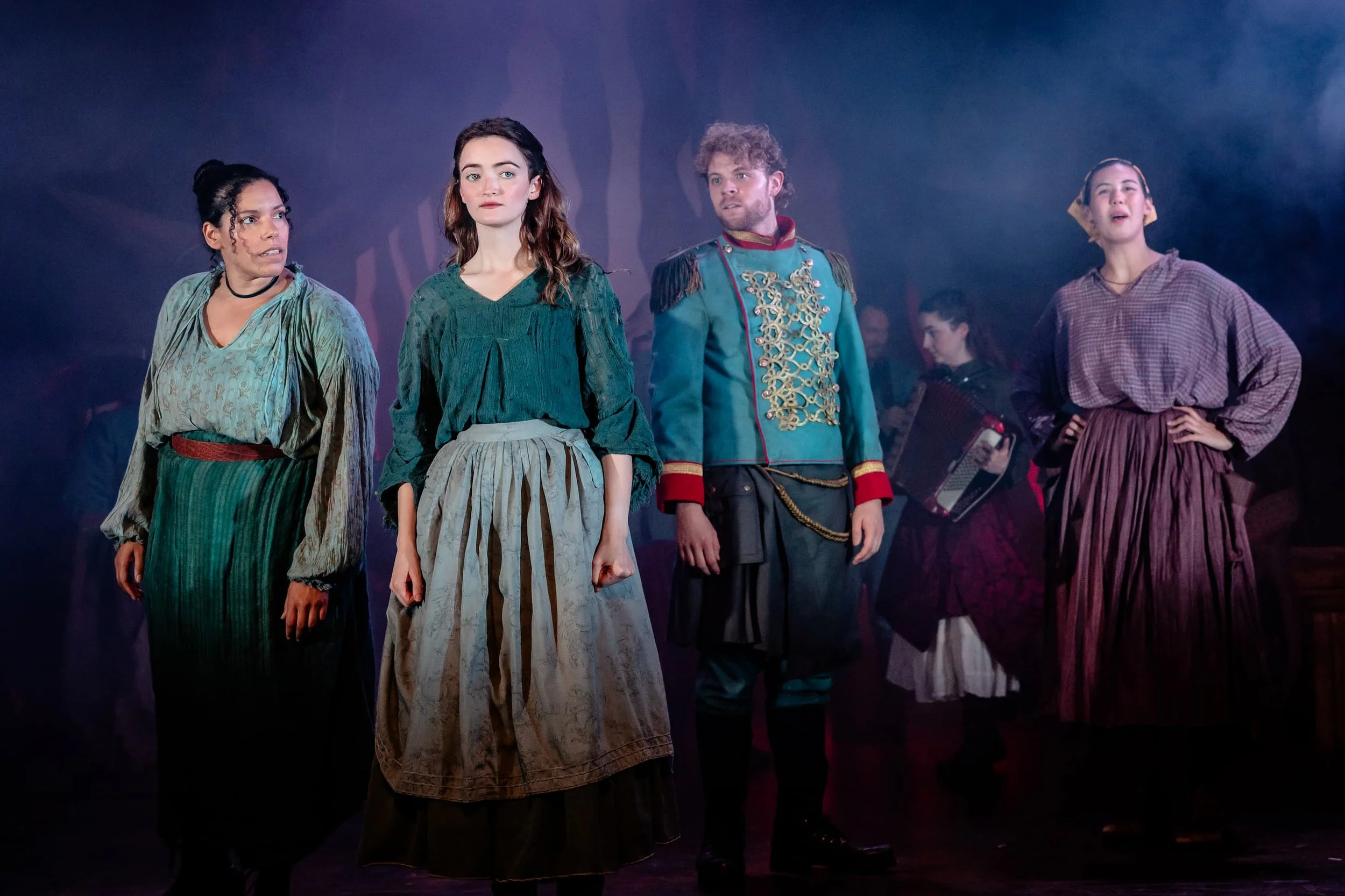
In Athens, Duke Theseus (Enyi Okoronkwo) prepares to marry the Amazon queen Hippolyta (Audrey Brisson). Meanwhile, Hermia (Sophie Cox) and Lysander (Mel Lowe) are deeply in love, yet she faces the prospect of being forced to marry Demetrius (Gavi Singh Chera), who in turn is loved by Helena (Romaya Weaver). The entanglements among these four drive them into the forest beyond the city—a place where rules loosen and reality begins to bend. Deep within the woods, the fairy king Oberon (also Okoronkwo) and the fairy queen Titania (also Brisson) stand opposed in dispute. Oberon orders the sprite Puck (Michael Grady-Hall) to use a magical flower whose juice causes one to fall in love with the first being seen upon waking, in an attempt to manipulate love and redress injustice. Yet Puck’s mistake throws already fragile human affections into complete disarray. At the same time, a troupe of craftsmen enters the forest to rehearse a play, and the guileless Nick Bottom (Adrian Richards) is transformed into a donkey-headed creature, unexpectedly winning the enchanted devotion of Titania…
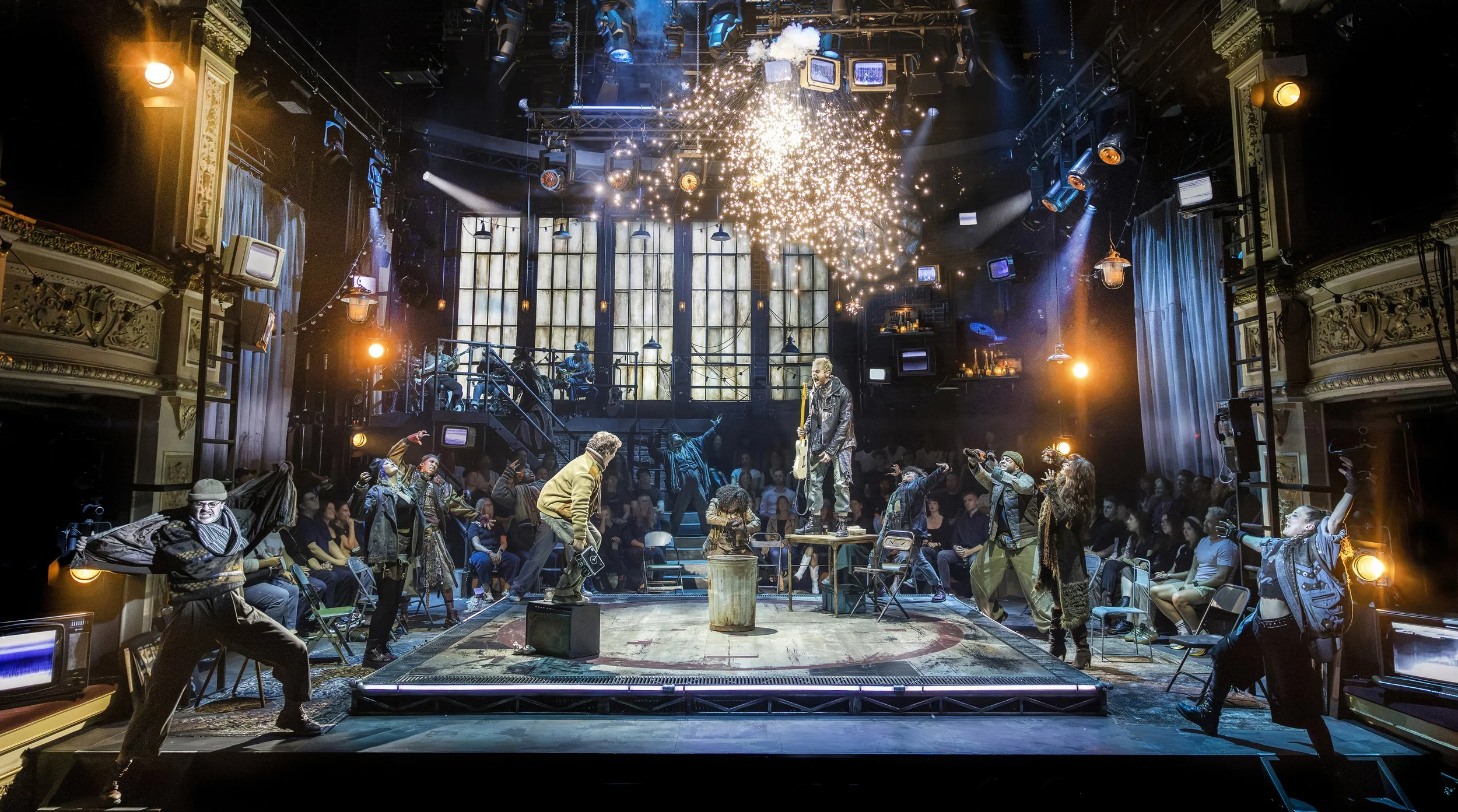
One of the play’s most exquisite qualities is that it never clearly tells us where the dream ends and reality begins. This production renders that boundary even more indistinct. Before the narrative truly begins, the audience is already immersed in the midsummer night. Musicians Sally Simpson and Piotr Jordan play violins at the edge of the stage. A large sign reading “Auditions” stands in view, members of the company mingle with the audience—some checking them in, others leading warm-ups and teaching dance movements. These opening minutes are appealing and quietly delightful.


This sense of interaction continues throughout the performance. The audiences would scatter confetti at the wedding, raise a shimmering moon for the play-within-the-play, and even join the action directly: two spectators are invited onstage to play the Moon and the Tomb, while others become the Wall. Puck, in a moment of comic mischance, even falls in love with an audience member while applying the magic potion. At times, these interactions may feel more ornamental than necessary; yet when the entire audience begins to clap in rhythm together, or when flowers seem to bloom onstage in response to a shared harmony, it is hard not to smile. Folk music forms another central element of the production. With words and music by Jim Fortune, heightened emotion frequently gives way to song, carried by tuba, percussion, accordion, and twin violins.
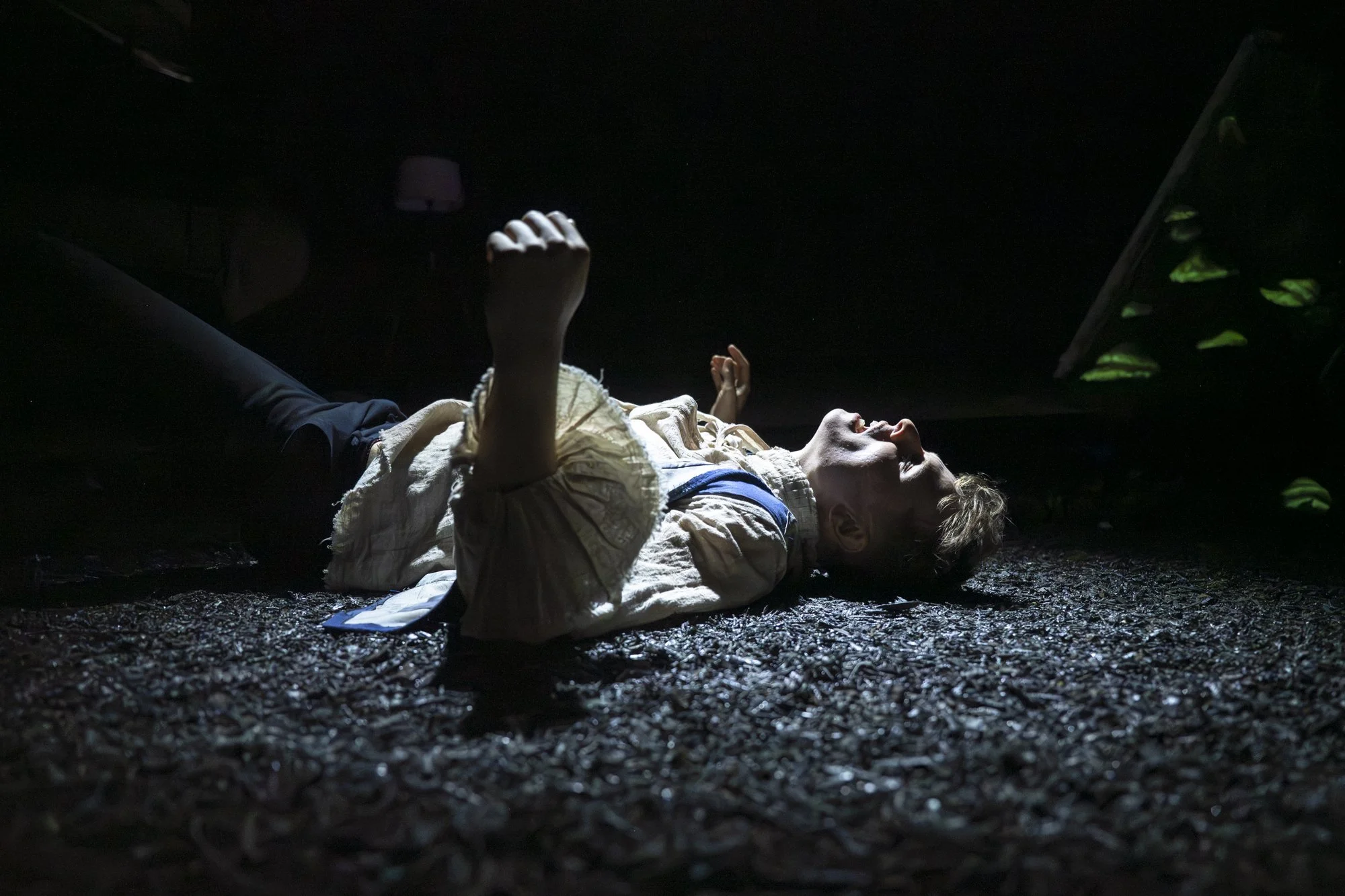
The performances are equally engaging. Cox, Chera, Lowe, and Weaver bring a fervent, youthful emotionality to their roles. Brisson’s Titania is strikingly charismatic, commanding the forest with authority while retaining a maternal warmth. Most memorable performances are delivered by Grady-Hall and Richards, whose performances are marked by a serious kind of humour. Puck, as embodied by Grady-Hall, occupies a singular position—almost a half-narrator guiding the story’s course. Mischievous, slightly wicked, yet endearing. As the story deepens, night thickens. The stars emerge overhead, colours intensify across the stage, and drifting bubbles lend an added touch of enchantment.
Disorder is an essential element of the play, yet shaping that disorder organically is both crucial and difficult; mishandled, it can easily collapse into mere noise. If there is an aspect that might be further refined, it lies in the portrayal of love, which at times feels playful rather than fully convincing, lacking a deeper sense of gravity or melancholy. Still, though the production sacrifices a measure of seriousness and poetic depth to its exuberance, it leaves one with a lightness of spirit. At the close, all characters return to contemporary dress—except Puck, who remains unchanged. Was it all a dream, or did it truly happen? In any case, the audience, for one night, has shared a delightful dream.
A Midsummer Night's Dream plays at Shakespeare’s Globe until 29th August 2026.
★ ★ ★ ★