My Fair Lady at the Chichester Festival Theatre Review
Written by Stephen for Theatre and Tonic
Disclaimer: Gifted tickets in exchange for an honest review. All views are our own
Since its inaugural performance seventy years ago, My Fair Lady has been the gold standard of musical theatre. The musical's 1956 Broadway production was a notable critical and popular success, winning six Tony Awards, including Best Musical. It set a record for the longest run of any musical on Broadway up to that time and was followed by a hit London production. Its Broadway poster by Al Hirshfeld remains iconic. The George Cukor 1964 film was equally lauded. If there is anyone left on the planet who is unaware of this show, it is the classic musical that follows Eliza Doolittle, a working-class Cockney flower girl, who takes speech lessons from the arrogant phonetics professor Henry Higgins. Higgins makes a wager with his colleague Colonel Pickering that he can transform Eliza’s speech and etiquette enough to pass her off as a refined lady among high-society elites.
On this presentation, this wonderful piece of musical theatre, book and lyrics by Alan Jay Lerner and music by Frederick Loewe, has lost none of its lustre with its delicious musicality, erudite, witty and punch line lyrics, and its excellent adaptation of G.B.Shaw’s 1913 play Pygmalion, and provides an evening of delight to theatre goers, most of whom are, no doubt, familiar with the 1964 George Cukor movie, if not the stage show itself.
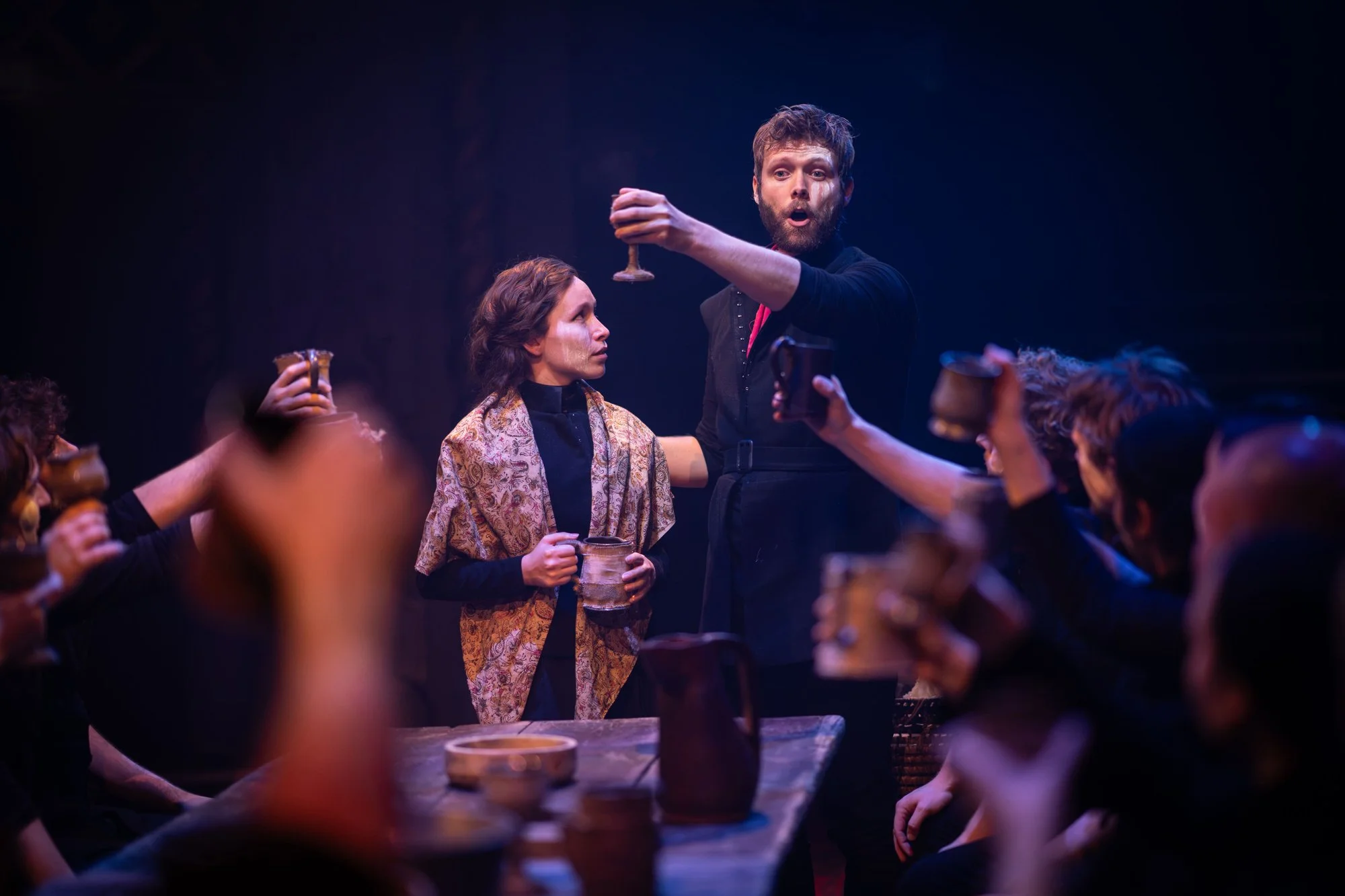
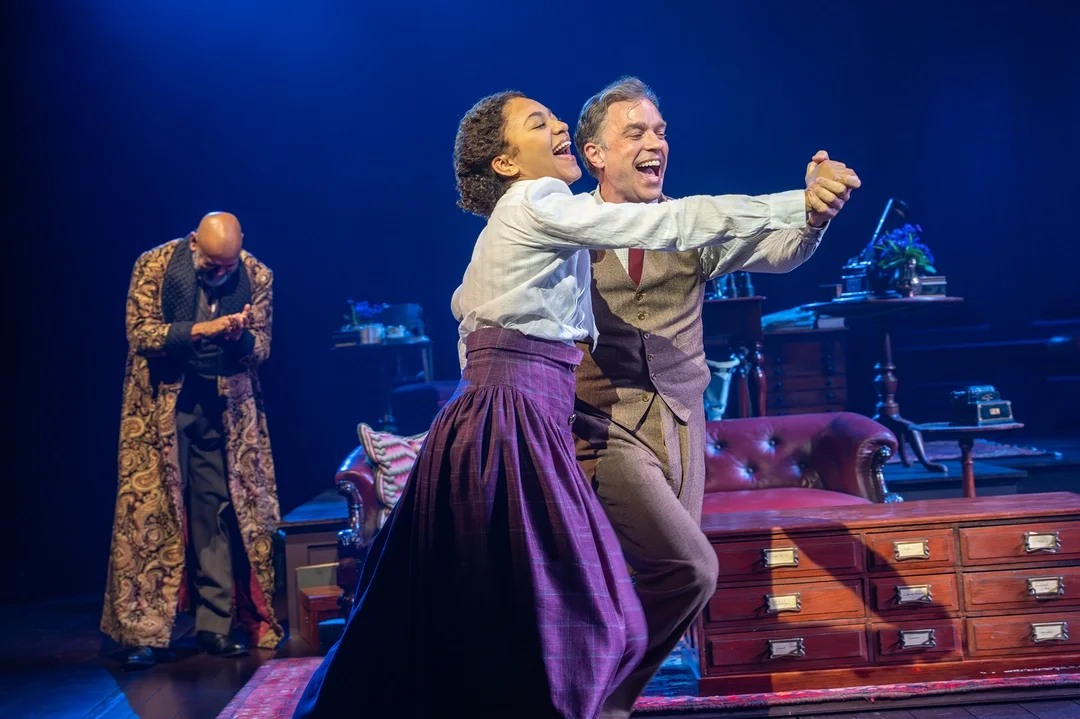
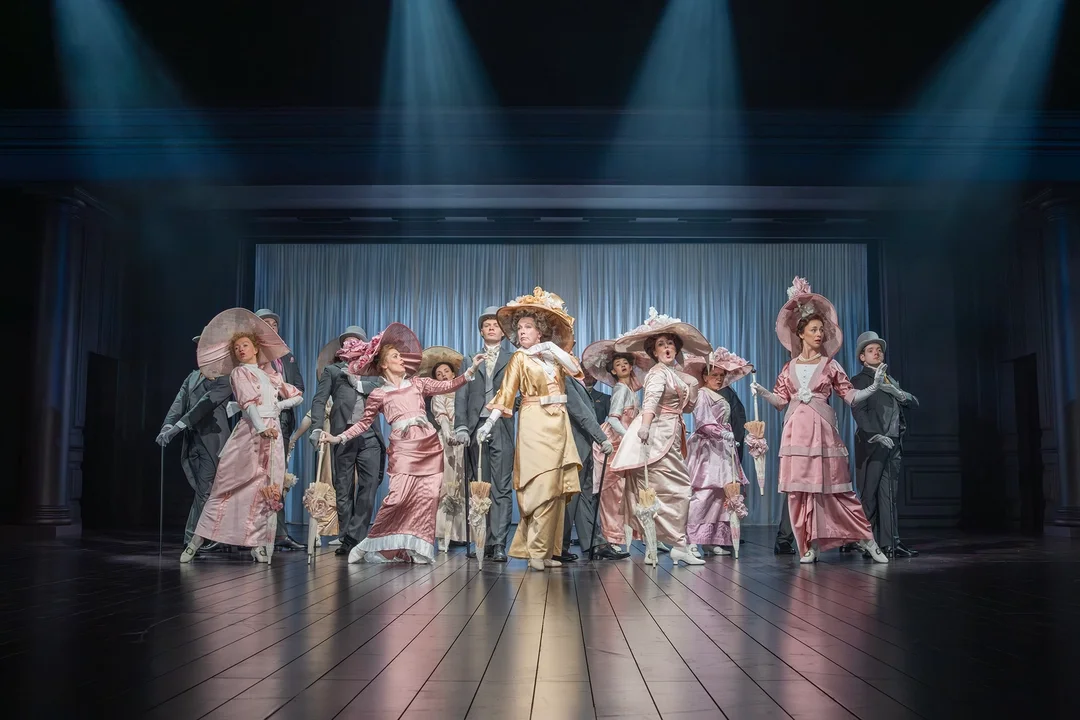
My Fair Lady has been primarily considered, in previous iterations, a classic proscenium piece, so how would it fare on the vast open Chichester stage, where, even if you wanted to, there is no place to hide? Under Rachel Kavanaugh’s direction, the performances delivered are never less than ace, of which more later. Stephen Mear’s choreography in the Covent Garden numbers, blending traditional joyful “knees-ups", British music hall routines, and soft-shoe tap, provides a real show stopper in ‘I’m Getting Married in the Morning’ from Gary Milner (excellent) as a dancing, prancing Alfred P. Doolittle and ensemble. Mear’s Ascot Gavotte is a delight, and even in the smaller scenes, such as ‘I’m an Ordinary Man” and “The Rain in Spain”, there is an eye for detail and emphasis in the character-led musical staging.
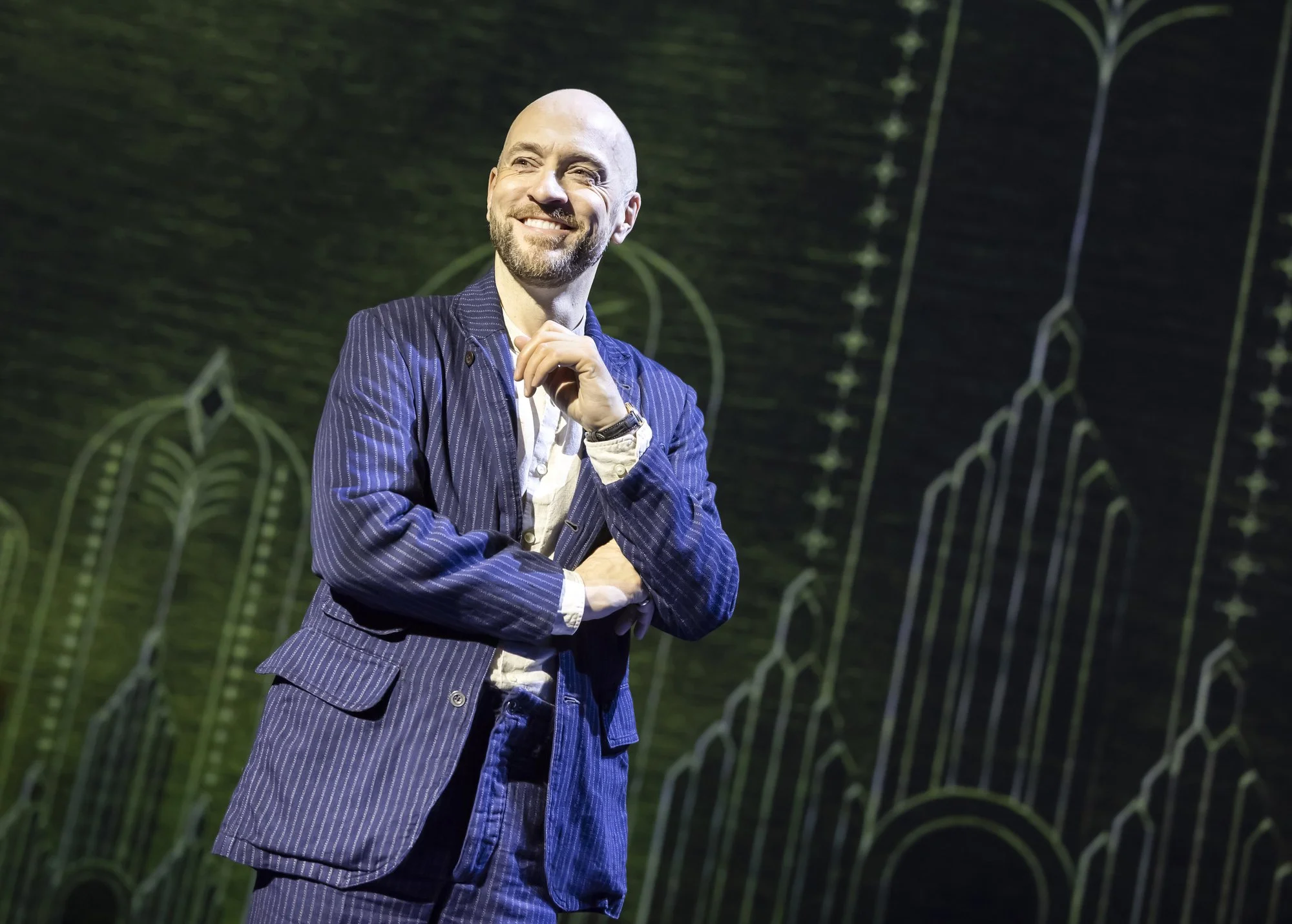
Keziah Ibe as Eliza is absolutely smashing and her performance really takes off after her transformation for ‘guttersnipe’ to ‘lady.’ As she wraps her tonsils around Loewe’s music she imbues each number with ‘brio,’ passion and intensity. She performs equally well in the text opposite Hadley Fraser’s first class Higgins, played rather more broadly than Rex Harrison’s understated performance. In Fraser’s hands, Higgins is a misogynist, a bully, unlikeable, but ultimately, a rather sad individual. Some would take the ‘book’ as sexist with its threats of women being ‘walloped,’ and being undeserving, but in this production Eliza succeeds in treating Higgins like an ungrateful child. Perhaps after all, he needs mothering rather than true intimacy? It is a fine performance and it’s a delight to hear the score sung rather than in Harrison’s ‘speech-singing’ style. I felt a real chemistry between these two actors.
Tony Jayawardena as Higgins’s foil, Col. Pickering, Finty Williams as Mrs Pearce and Belinda Lang as Mrs Higgins provide outstanding support and a special mention to Ben Culleton as the asinine lovelorn silly-ass, Freddy, whose heavenly tenor in ‘On the Street Where You Live’ was just luscious.
You may think there is a ‘but’ coming. And you’d be right. It took me a while to warm to the show and I’ll explain why. First of all Cat Beveridge’s outstanding fifteen piece orchestra, despite being up stage and on a high platform in which they were well lit during the bows and play out, did not open the show with one of the most recognisable overtures in musical theatre. This was obviously a directorial decision and, bluntly, it was wrong. The overture, and this one in particular, wraps itself around an audience with friendship and warmth and sets up the show for them.
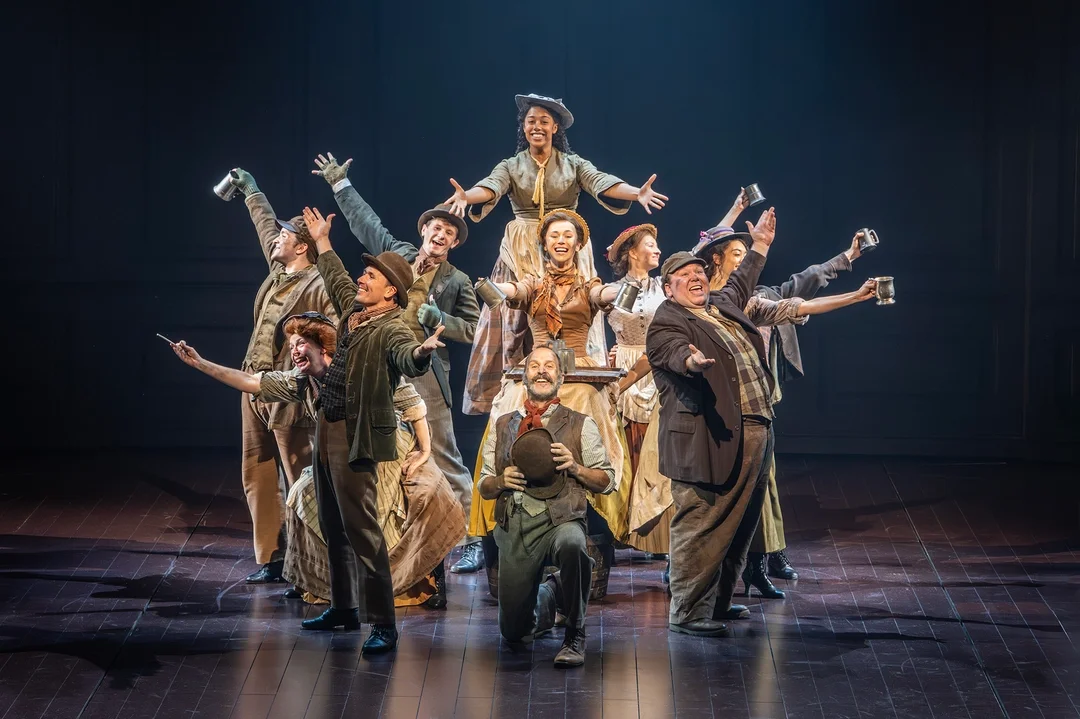
Instead, the show opens in gloom. It is dark. Apart from four pillars onstage left and stage right (which are barely noticeable), and a decorative tympanum above the cavernous Chichester stage, there is little sign of the bustling, colourful Covent Garden of yore. As written, it is a rainy night outside the Royal Opera House in London's Covent Garden, where theatregoers and opera patrons huddle under the arches to wait for cabs. Where were they? In this production, it is almost thrown away, likewise the meeting between Higgins and Pickering and the numbers “Wouldn’t it be Loverly” and “With a Little Bit of Luck,” not because of the performances you understand, but because of the dark settings and lighting in which the actors are asked to perform. It is all too gloomy.
The most substantial set is Higgins’s study, brought in on a platform and which makes good use of the theatre’s whole stage revolve. The Embassy Waltz, prettily dressed with red velvet cushions in gold lacquered frames, looked pretty but spartan without at least some background
There are second-act scenes in which the wide open spaces of Chichester merely contained two chairs, for conversation between two characters, each placed on either side of the stage. Clearly, the pictorial design was a directorial choice by Kavanagh. In my view, it was the wrong choice. My apologies to the set and costume designer Peter Macintosh.
So in summary, I praise without hesitation the calibre of both performances and musicality of, and, in the show, and I’m positive it will be a great success, but, in all honesty, I left disappointed in the visual reimagination of some of the most beloved set pieces in musical theatre.
My Fair Lady plays at the Chichester Festival Theatre until 5 September.
★★★★