Our American Queen at Bridewell Theatre Review
Written by Cathie for Theatre and Tonic
Disclaimer: Gifted tickets in exchange for an honest review
The Bridewell Theatre, nestled within the City of London, is a fitting location for a play about one of the most influential women of 19th Century American politics. Unfortunately, like many trailblazers, she is now largely forgotten. Kate Chase is no longer a name often heard, yet she dominated newspapers and salons in 1864 during the American Civil War as the fierce and intellectual daughter of Salmon P. Chase. Chase was Abraham Lincoln’s Treasurer and mounted several attempts at the presidency.
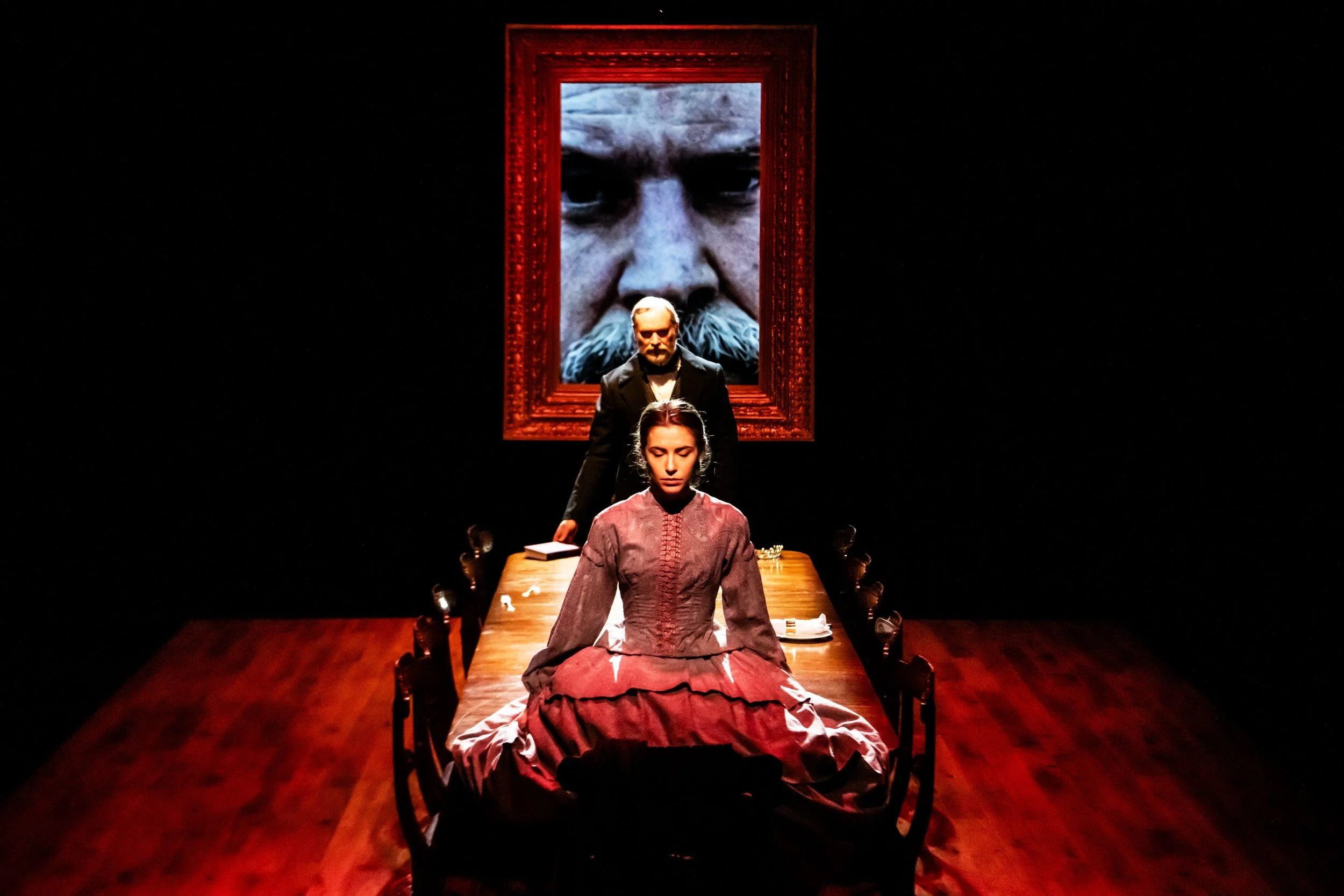
As the daughter of Salmon P. Chase, Kate wielded considerable political influence and power, but this play, written by Thomas Klingenstein and directed by Christopher McElroen, focuses instead on the more human elements of this remarkable woman. We hear of her grand political schemes and tireless efforts to see her father elected President, yet her greatness in this arena is more spoken of than shown. Confined entirely to the grand dining room of her home, the action unfolds within a deliberately limited space. Neal Wilkinson’s minimalist set, dominated by a large dining table and an imposing portrait looming in the background, works effectively to centre the political grandstanding and lengthy dialogue that drive the play. The portrait works well as a limited mirror into the wider war events of the time, but mostly represents the psychological weight of Chase’s disapproval and criticisms of his daughter.
The lighting and video design by Beril Yavuz, alongside Camilo Tirado’s sound design, effectively emphasise both the tense atmosphere of a nation at war and the internal political squabbling on either side. However compelling this tension is, it subsequently portrays Kate as an isolated figure, surrounded by political allies rather than friends, with no close family other than her emotionally distant father. As a result, she emerges as emotionally naïve and deeply vulnerable. Thematically, the play might have benefited from a broader or deeper exploration of her life beyond the narrow scalpel of 1864.
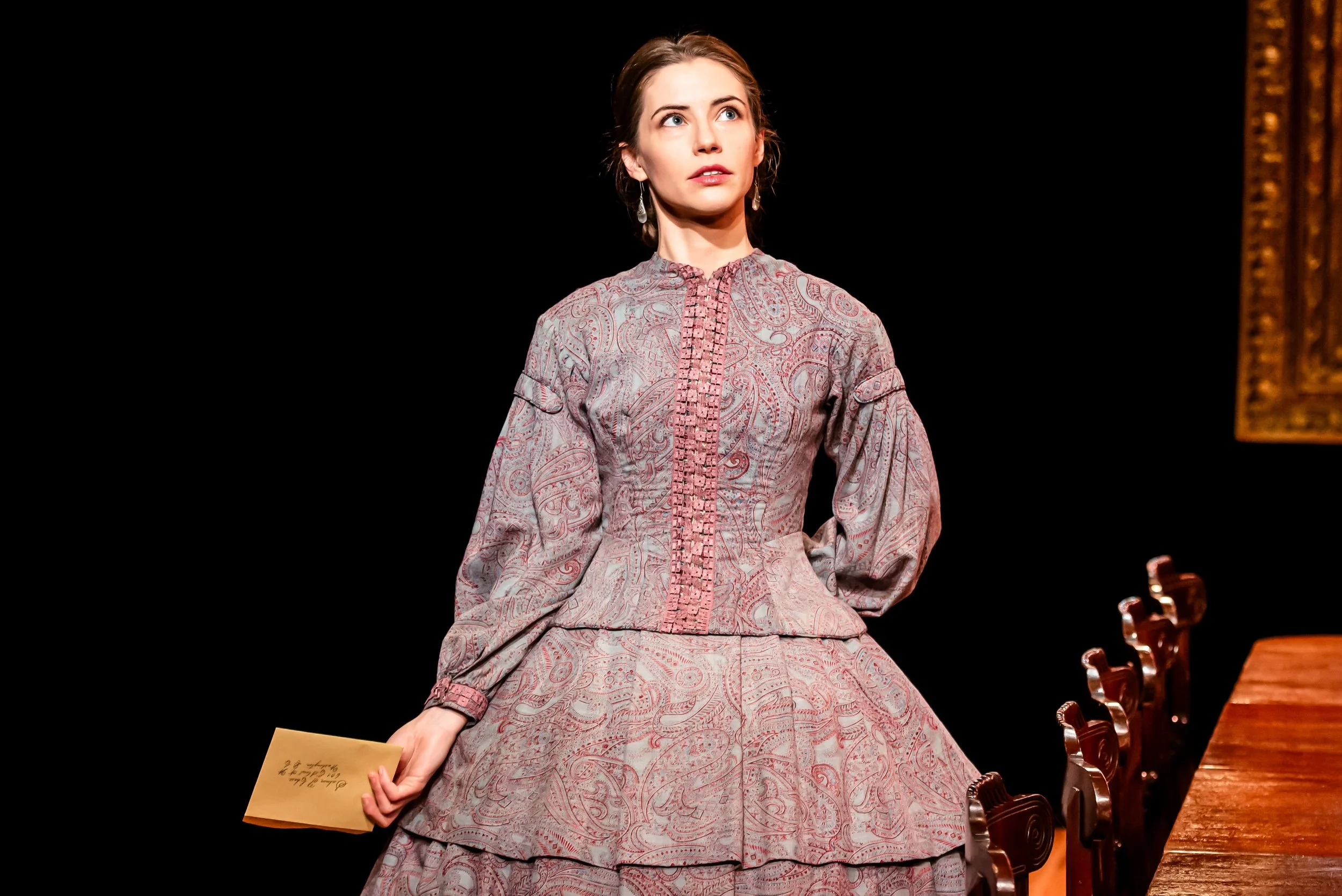
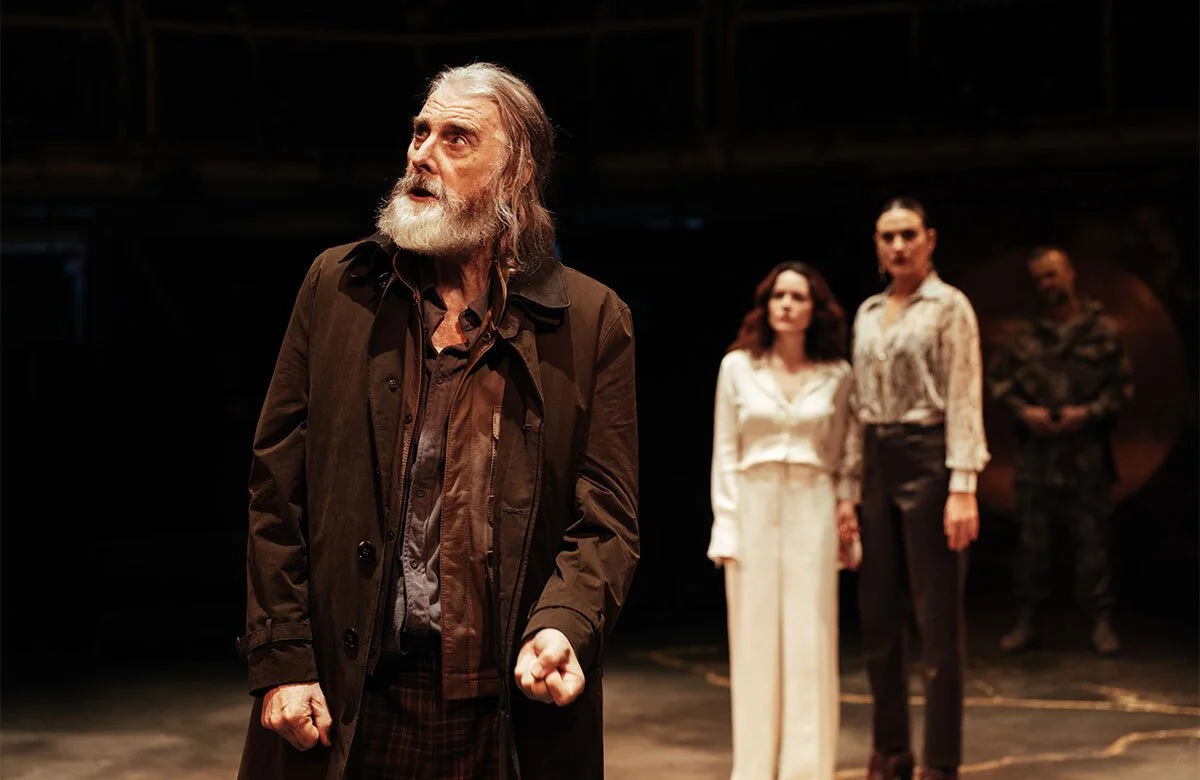
The cast works well together in centring Kate Chase’s life before marriage. Christy Meyer is particularly magnetic as Mrs Eastman, playing the role with tenderness, compassion, and the most profound wisdom of any character on stage. Haydn Hoskins excels as General McClellan, capturing both fearful hesitation and brash confidence as Kate’s first love and later her father’s bitter political rival. Tom Victor is equally captivating as John Hay, delivering a performance rich in nuance, vulnerability, and wit. Darrell Brockis is brilliant as an emotionally avoidant father, impassioned on equal rights, but so stubborn and insecure that he cannot accept anyone having a sharper political or financial acumen than himself. He and Wallis Currie-Wood have excellent chemistry as awkward father and daughter and showcase the pain and struggles of their relationship. Wallis Currie-Wood is wonderful as Kate Chase, in turns elegant, vulnerable, fiercely independent, and deeply charismatic. The costume design by Elivia Bovenzi Blitz is a significant strength of the production, subtly highlighting both the self-imposed and societal restrictions placed upon the characters, as well as their emotional relationships with one another.
The pacing is slow but consistent across the one hour and forty minutes, performed without an interval. Tension is sustained through political discourse and charged interpersonal exchanges rather than action. Though understated, the play offers a compelling portrait of a woman hemmed into a life of dissatisfaction, driven by an all-consuming devotion to her father’s ambitions at the expense of her own fulfilment. The examination of the politics of the era, and their modern echoes, is thoughtfully woven throughout.
This is a fascinating play that foregrounds herstory rather than history. In a world that too often chooses to forget the contributions of women, Our American Queen places Kate Chase firmly back at the centre of her own story. If you are interested in women’s political power, fractured family relationships, and the cost of ambition, then this is the show for you.
Running until 7 February 2026
★★★