Royal Academy Musical Theatre Company: Chess Review

Written by Ziwen for Theatre and Tonic
Disclaimer: Gifted tickets in exchange for an honest review. All views are our own
With music by ABBA's Benny Andersson and Björn Ulvaeus and lyrics by Tim Rice, Chess is best known for iconic numbers such as “One Night in Bangkok”, “I Know Him So Well”, and “Anthem”. Having undergone numerous revisions since its conception, it remains one of the most influential and ambitious musicals of the late twentieth century. Just a few days ago, I had the opportunity to see Bruce Guthrie's production, presented by students of the Royal Academy of Music.
Set during the Cold War in the late 1970s and early 1980s, Chess centres on the World Chess Championship, where the competition has become far more than a sporting event. Every move on the board carries political weight, serving as a proxy for the ideological rivalry between the United States and the Soviet Union. American champion Freddie Trumper (Emilio Moreno Arias) is arrogant, volatile and fiercely individualistic, while Soviet grandmaster Anatoly Sergievsky (Adam Haddour) is composed, restrained and constrained by the demands of the state. Caught between them is Freddie's second, Florence Vassy (Laura Araiza Inasaridse), a Hungarian refugee separated from her father during childhood, who gradually falls in love with Anatoly. As political tensions intensify, the championship becomes not only a contest of intellect, but also a struggle between freedom, loyalty and personal choice.
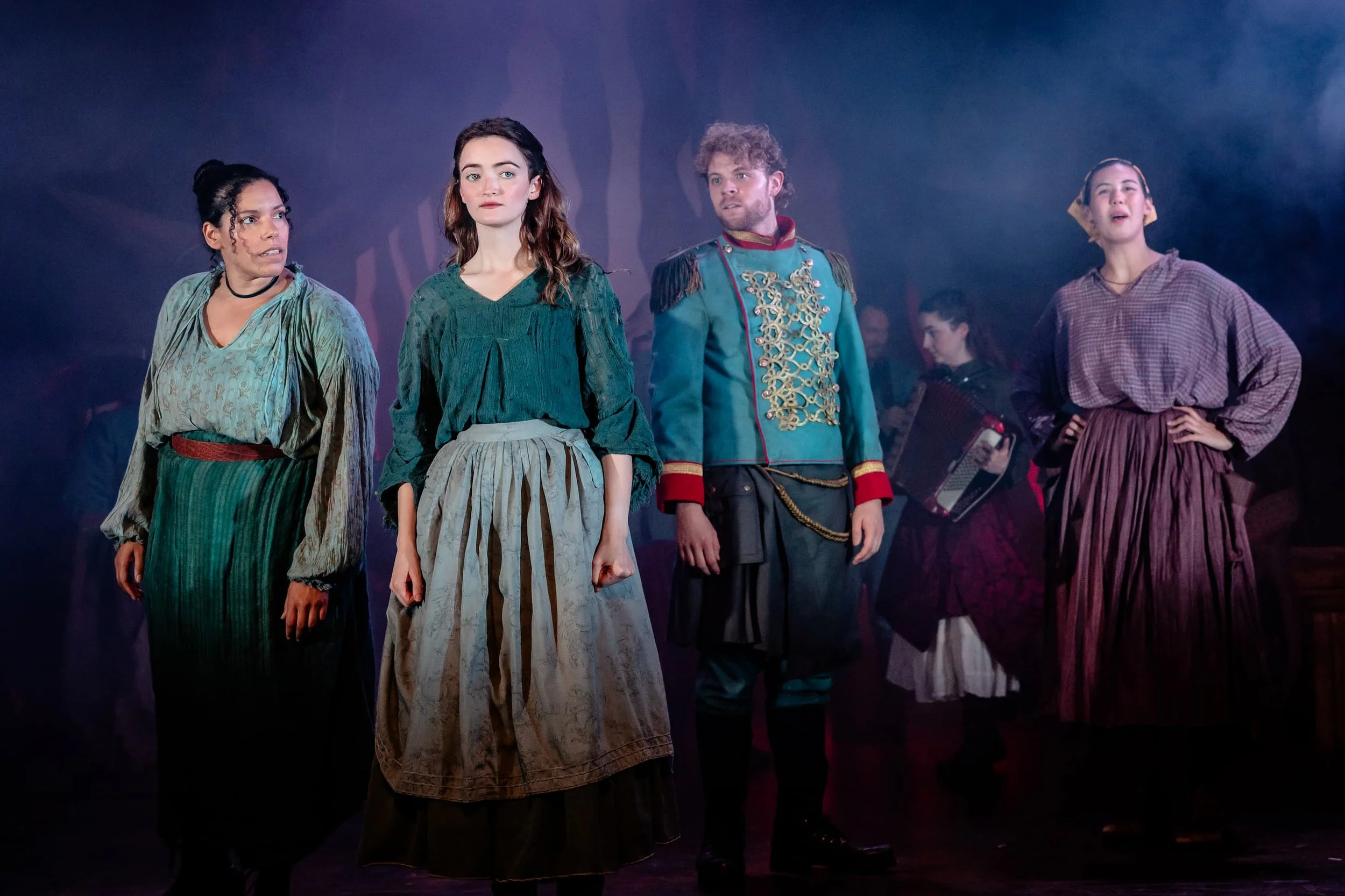
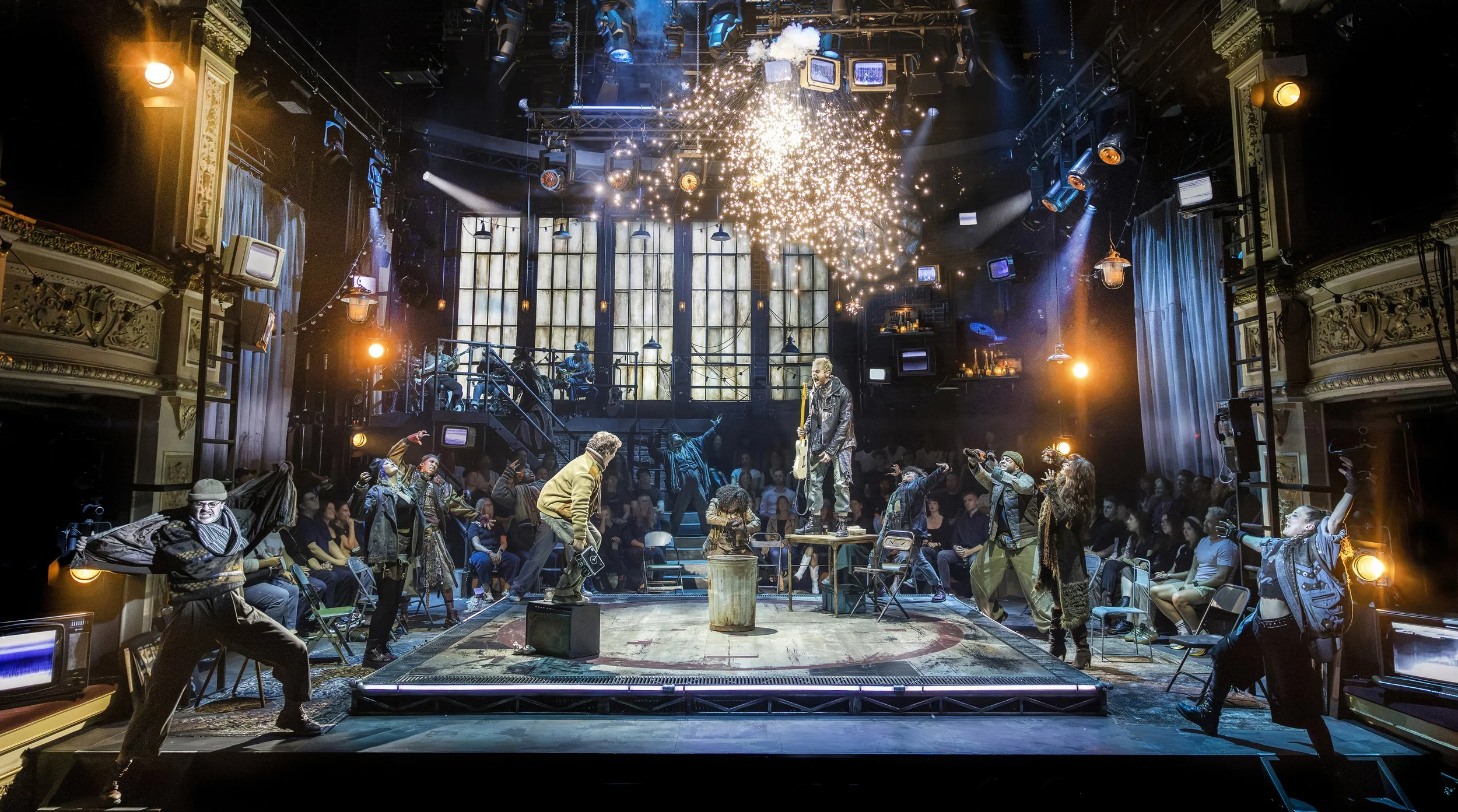
The production strongly emphasises the visual language of chess. Black-and-white squares dominate both the stage floor and the upstage screen (Andrazej Goulding), while the actors frequently move across the space as though navigating a chessboard. Costume designer Sophia Pardon extends this motif through a monochrome palette, with the black-and-white belts worn by almost every character serving as a particularly memorable visual detail.

While Chess has long been celebrated for its score, its book has also been the subject of considerable criticism, and after seeing this production, I found many of those criticisms justified. The psychological development of the characters often feels underwritten. Although important aspects of their inner lives are mentioned in the dialogue, they are rarely fully dramatised. As a result, the intelligence of the two chess players never entirely translates into dramatic action; Florence and Anatoly's romance develops with little emotional groundwork; and key elements of the characters' histories are introduced rather abruptly—particularly the late references to Anatoly's wife and child. Their decisions consequently lack sufficient dramatic motivation. This makes it difficult for the audience to follow the emotional journeys of the characters or to fully invest in their changing circumstances, leaving us more as observers than participants. Likewise, despite repeatedly invoking chess as both subject and metaphor, the musical offers surprisingly little insight into the game itself. Rather than deepening our understanding of chess, it largely employs it as symbolic decoration, which occasionally causes the pacing to feel slower than the material perhaps warrants.
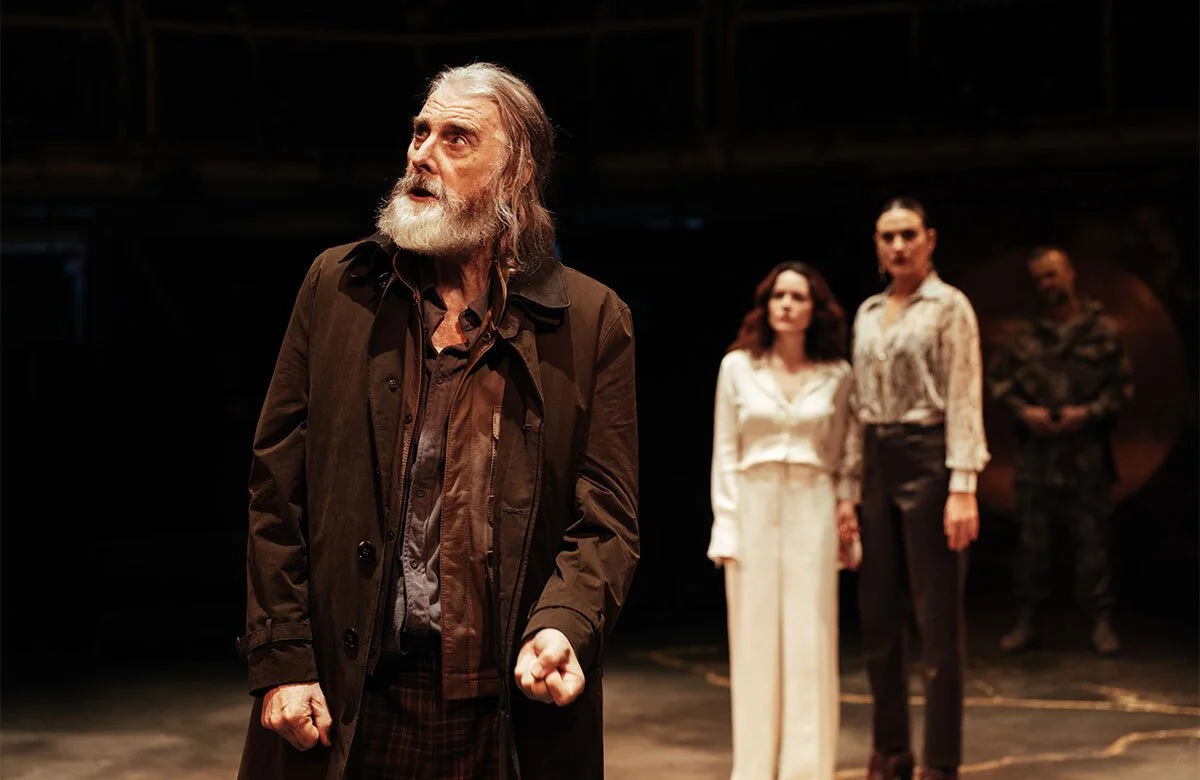
The production was double-cast, with Cast A and Cast Z alternating performances; I attended a performance by Cast A. Arias captures Freddie's arrogance with remarkable precision, portraying a man who instinctively lashes out at others as a means of self-defence. Haddour presents an Anatoly who is the complete opposite: quiet, restrained, yet constantly burdened by inner conflict and anxiety. His work on the Russian accent is also evident. James Wang brings an unmistakable authority to Molokov, while Jobim Ffrench's Arbiter projects an effortless composure that provides an effective contrast to the surrounding political tension.
Among the cast, however, Inasaridse delivers the production's most compelling performance. Her Florence possesses both emotional sensitivity and intellectual strength, while never losing sight of the character's uncertainty and vulnerability. Her rendition of Nobody's Side is at once powerful and nuanced, combining emotional intensity with remarkable control. Moreover, at moments when the rapid pace of the score occasionally affected the clarity of others' diction, Inasaridse's articulation remained consistently crisp. She performs with the confidence, precision and stage presence of an already accomplished professional.

Ben Hartley's choreography contributes enormously to the production's theatrical impact. The ensemble work in Diplomats, with its forceful, synchronised movement emphasising displays of power and political spectacle, is particularly striking. Equally memorable is the physicalisation of Freddie and Anatoly's chess matches through the dancers' movements. I was especially fond of the staging of One Night in Bangkok: as the curtain rises, the stage is suddenly flooded with vivid red light (Imogen Clarke and Rob Halliday), creating a dramatic visual contrast to the restrained atmosphere that dominates much of the rest of the production.
Music may be the defining element of any musical, but a compelling dramatic structure is equally essential. Chess is clearly a work of extraordinary ambition and undeniable potential. Its title refers not only to the game itself, but also to the geopolitical chessboard of the Cold War. The players appear to be moving the pieces, yet they are themselves pieces in a far larger game, each struggling to preserve love, freedom and dignity while caught in forces beyond their control.
Within the strengths and limitations of the material, the students of the Royal Academy of Music have mounted a production of remarkable quality. Their commitment, musical excellence and dramatic conviction reveal an exciting generation of performers, and I have little doubt that many of them will soon be seen on West End stages.
Chess plays at Royal Academy of Music until 5th July 2026.
★★★★