Interview with Benjamin O’Mahony, Holy Fool at Park Theatre
This month, the World Premiere of Holy Fool arrives at the Park Theatre in London. A thrilling new play about art, censorship, and resistance is inspired by the extraordinary true story of legendary Soviet composer Dmitri Shostakovich and his battle to preserve his artistic voice under Stalin’s brutal regime. Starring in Rosalind Adler and Lea Sellers production is Benjamin O’Mahony, who joins us to tell us more.
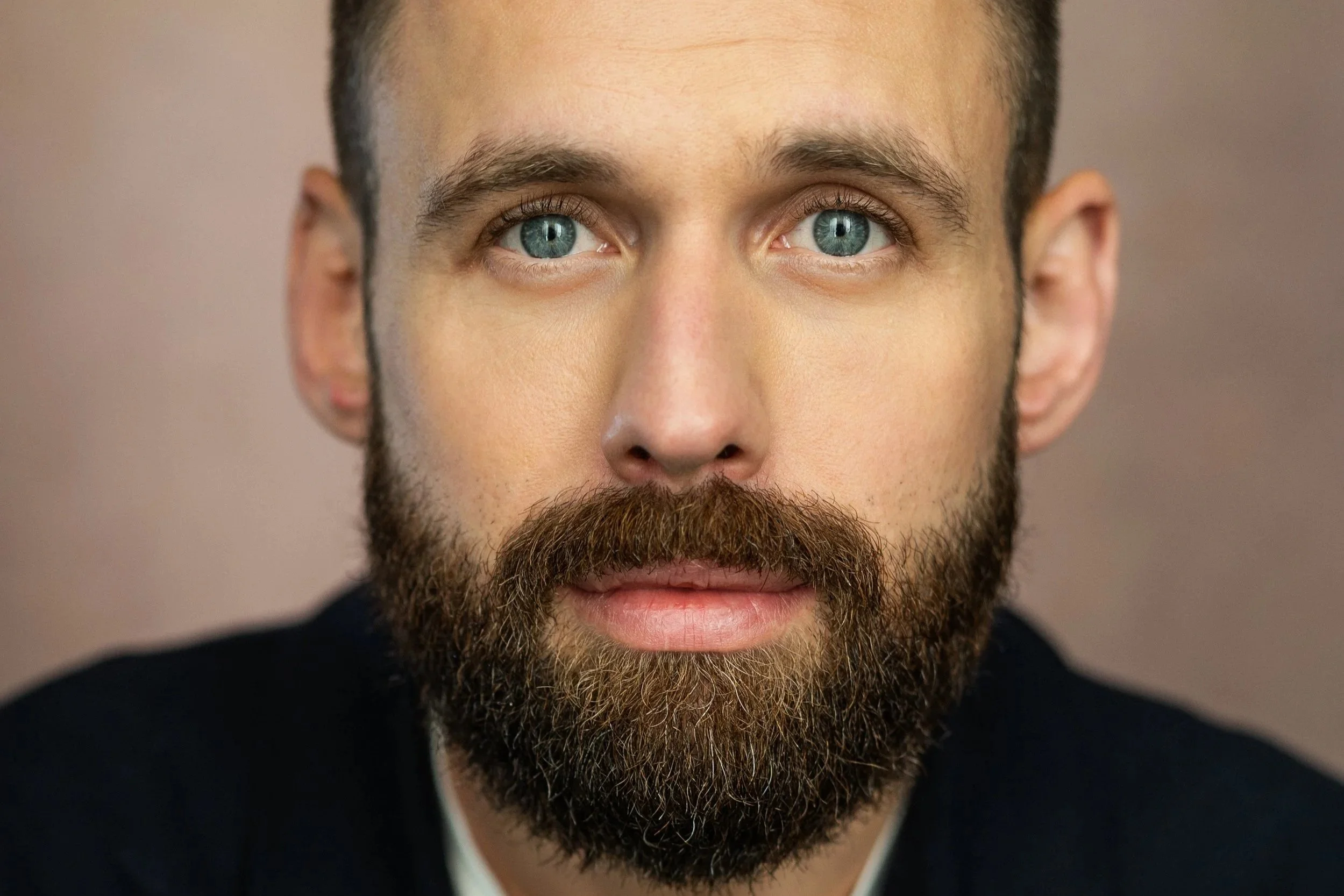
1. For a large part of your career you have taken on tough, physically imposing characters. How do you think your past experiences have prepared you for Mitya? And how is it different from TV and film?
Over the last decade, I’ve certainly played my fair share of morally questionable characters and the occasional sociopath on screen! But my career began in the theatre, so returning to the stage with material this rich feels very much like coming home.
What screen work really teaches you is intimacy. In a close-up, the audience is effectively centimetres from your face—they have direct access to your interior life, so there’s no need to be demonstrative. You learn that audiences naturally see what a character is trying to hide. Theatre is different in that those same internal thoughts have to travel through your spine and project into a shared space. But because the Park Theatre is such a beautifully intimate venue, you don't need to overdo it.
With Mitya, my physical background has been flipped completely. He was a man whose body was a physical canvas of his trauma—extremely myopic, deeply neurotic, and later suffering severe motor impairment and a failing right arm. But the key isn’t 'playing the terror' or playing a victim. It’s about how that terror manifests physically: in various neuroses, in sudden swells of ego, in erratic emotional shifts, and in a profound sense of isolation that he’s constantly trying to break through.
2. There is a lot on the line for Mitya; his life is hanging in the balance between obedience to Stalin's authoritarian rule and resistance to the regime. What has been your process for developing that psychological duality?
It’s very easy with historical figures to oversimplify their motivations—to neatly package them as either heroic dissidents or cringing yes-men. But real human beings can hold two completely conflicting ideas at the same time. Over Shostakovich’s life, there were periods where he conformed and periods where he rebelled. He held deep artistic ideals, but he also had a very pragmatic desire to survive, to succeed, and to protect his family.
In approaching Mitya, it was crucial to me not to beatify or canonise him. There are moments where his ego is completely unleashed, and others where he feels deeply insignificant. That contradiction—a huge creative ego paired with a profound self-dislike—is fundamentally true of many great artists. He was a sickly boy who grew up separated from his peers, existing as an outsider. That isolation made him a brilliant observer, but it also bred a deep anxiety that manifested in narcissism, and intense, sometimes volatile emotional connections to the women in his life—particularly his wife, Nina. My job isn't to judge him, but to let all those contradictions live truthfully on stage.

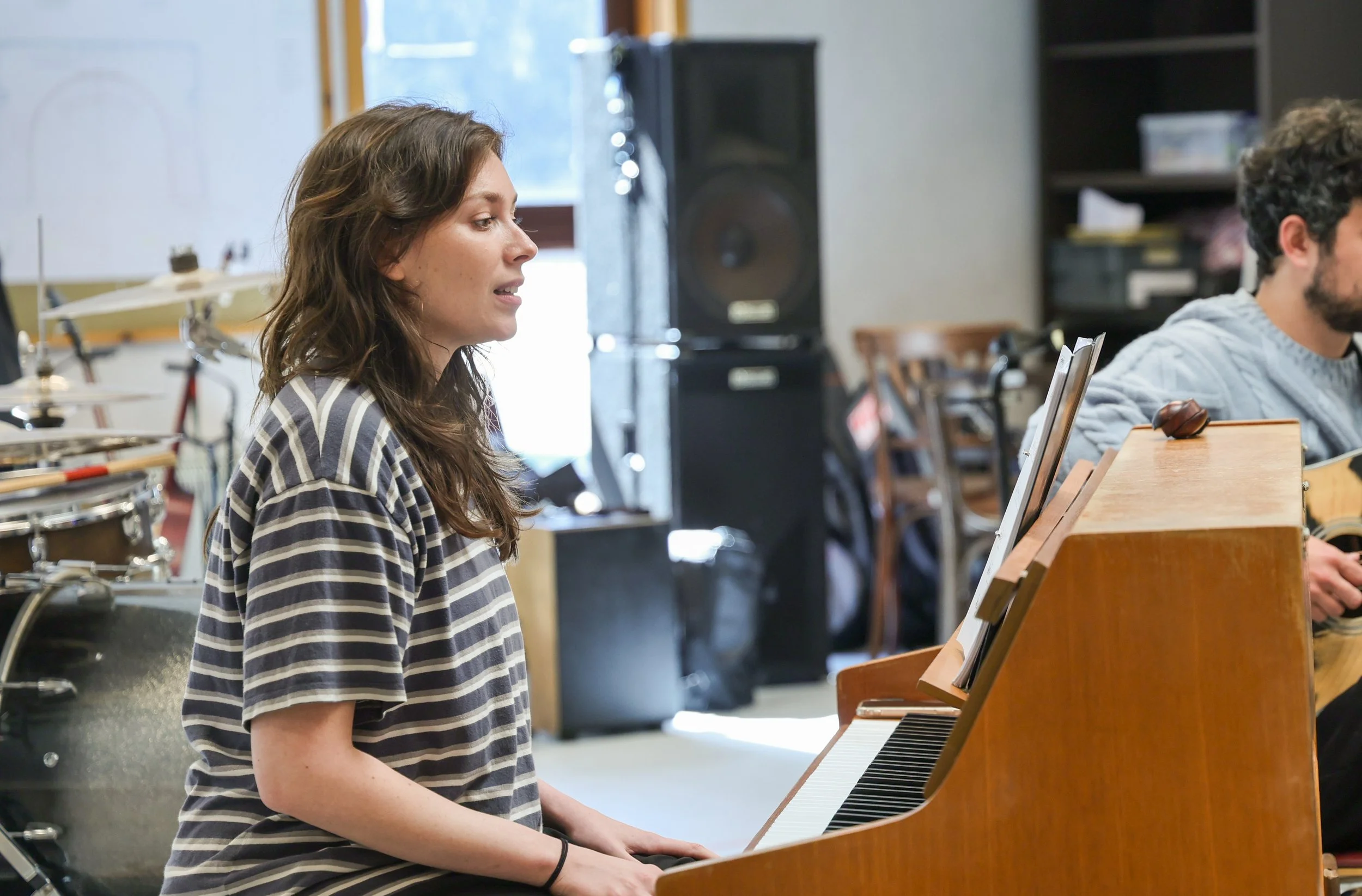
Holy Fool in Rehearsals. Photo by Mark Douet.
3. As a celebrated composer, Mitya's resistance comes from his music rather than through violence, which is a clear historical parallel to the likes of Brecht who also used art as a weapon. With this creative defiance in mind, have there been any specific people or stories from your research that have influenced your development of Mitya?
Brecht is an interesting comparison, but Brecht was far more overt and didactic in his political messaging. With Shostakovich, it’s much more subtle, which I think makes him far more fascinating as a human being. His 'resistance' wasn't a loud, ideological posture—it was coded into orchestral textures, secret musical signatures, and references that only a select few would recognise.
There’s a line Mitya speaks in the play that really unlocked him for me: 'I do not compose because I am principled or subversive—those are other people's labels. I compose because I cannot not. The process is unstoppable.' That’s the core of him. If you look for a grand political idealist, you’ll be disappointed. But if you look at a man simply trying to survive in a state where freedom is impossible, whose artistic instinct is as involuntary as breathing, you find something far more profound. His music wasn't always written to make a grand political statement; it was written because it was the only way he could process the sheer, terrifying reality of the world around him.
4. At its core, the play is about censorship and 'the courage it takes to keep telling the truth when the consequences become unbearable.' Apart from theatre enthusiasts and history buffs, what kind of audience do you want to come and watch the play and what do you want them to take away from Mitya's story?
Having grown up in a society where artistic and personal freedoms felt largely guaranteed, it’s been sobering in recent years to realise how easily those freedoms can erode if we take them for granted. Holy Fool holds up a mirror to what happens when censorship becomes normalised—what we lose not just politically, but in terms of our basic humanity and collective empathy.
But beyond the politics, I want audiences to come simply because it’s a bloody good night out. It’s a play filled with incredible warmth, dark humour, tenderness, and domestic conflict. Even in a totalitarian world where citizens are expected to act as pawns, human individuality, love, and camaraderie still manage to thrive in the quiet corners of private life. I want people to walk away having experienced the incredible beauty of his music, but also feeling the profound joy of seeing human relationships triumph against the odds.


5. What drew you to the play originally?
First and foremost, the quality of the writing. As an actor, it always comes down to the script. I had a decent grasp of 20th-century Russian history, but I actually knew relatively little about Shostakovich’s personal life when I first read it. What blew me away was the rhythm of the language, the razor-sharp wit, and the complete avoidance of neat clichés. The play connects on a deeply human level regardless of how much you know about classical music. It’s an extraordinary portrait of a marriage and a high-stakes thriller all wrapped into one.
6. What is your favourite part of the play to perform? And what are you most excited for audience members to see?
Pinning down a single favourite moment is tough because the play feels like one continuous, analogue journey—I’m on stage virtually non-stop! There are a couple of moments in the second half of the play where a character surprisingly and unexpectedly hold him to account which escalates into a terrifying interrogation, which is a thrill to navigate; and I hope it’s going to hold the audience on the edge of their seats.
7. If you had to sum up the play in a sentence what would you say?
Holy Fool is the gripping, deeply human story of a man trying to preserve his soul and find his true voice in a world determined for him not to have one—and the devastating cost borne by those who loved him.
Benjamin Oh’Mahony stars in Holy Fool at Park Theatre from 27 August to 10 October 2026. For further information, visit this website.
Interview conducted by Cerys for Theatre and Tonic, August 2026.