Springwood at Hampstead Theatre Review
Written by Ziwen for Theatre and Tonic
Disclaimer: Gifted tickets in exchange for an honest review. All views are our own
The summer of 1939. Europe stands on the brink of the Second World War. King George VI and Queen Elizabeth Bowes-Lyon are making the first official visit by a reigning British monarch to the United States, guests of President Franklin D. Roosevelt at his family estate, Springwood, in Hyde Park, New York. Britain desperately needs American support as war looms, yet Roosevelt remains reluctant to commit himself publicly, constrained by the strength of isolationist sentiment at home. Rather than negotiating a treaty, the King and Queen must establish something less tangible but equally vital: personal trust. It is this historic weekend that Springwood sets out to dramatise. Originally announced with Stanley Tucci making his stage directing debut, the production was later taken over by playwright Richard Nelson himself after Tucci withdrew because of scheduling conflicts.
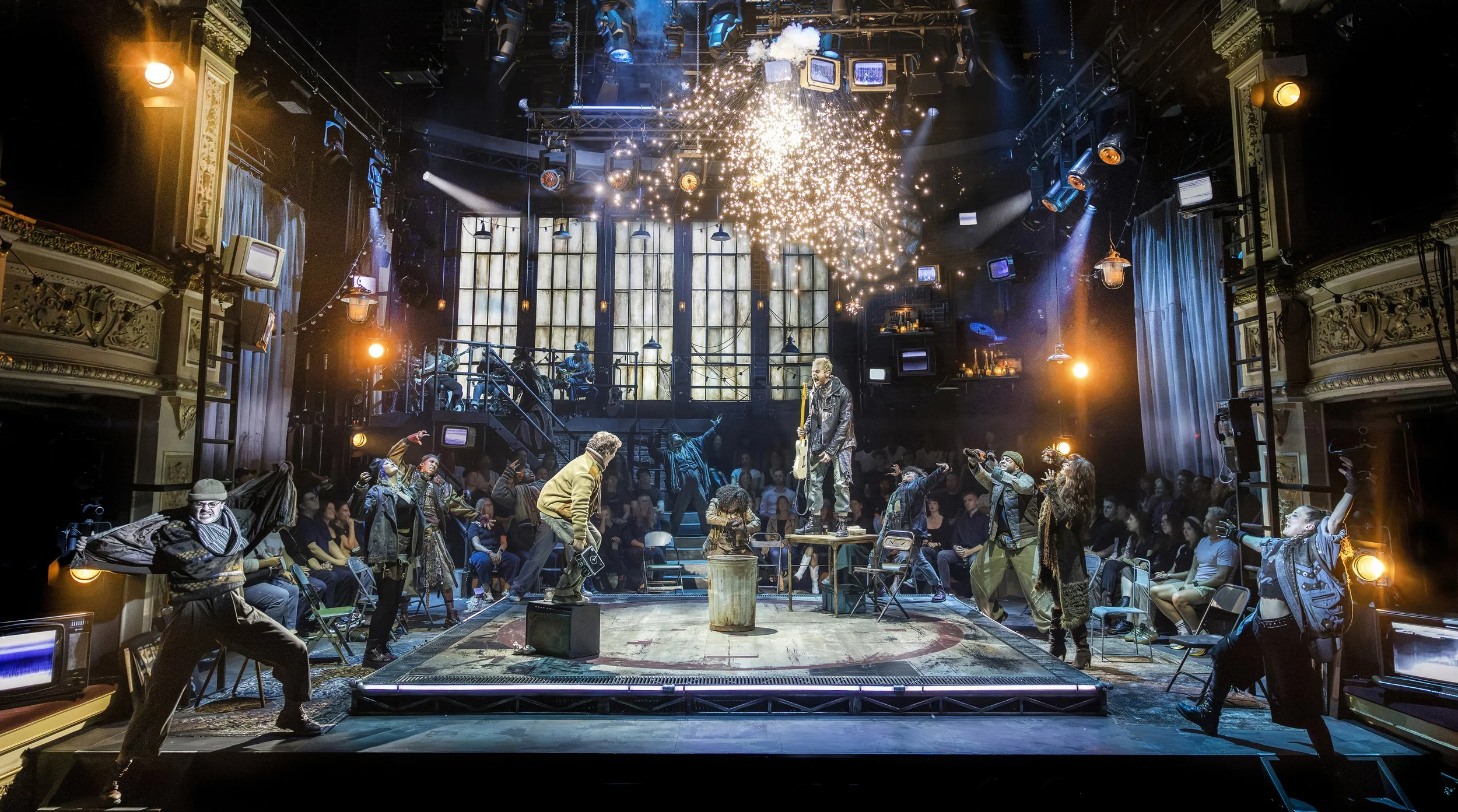
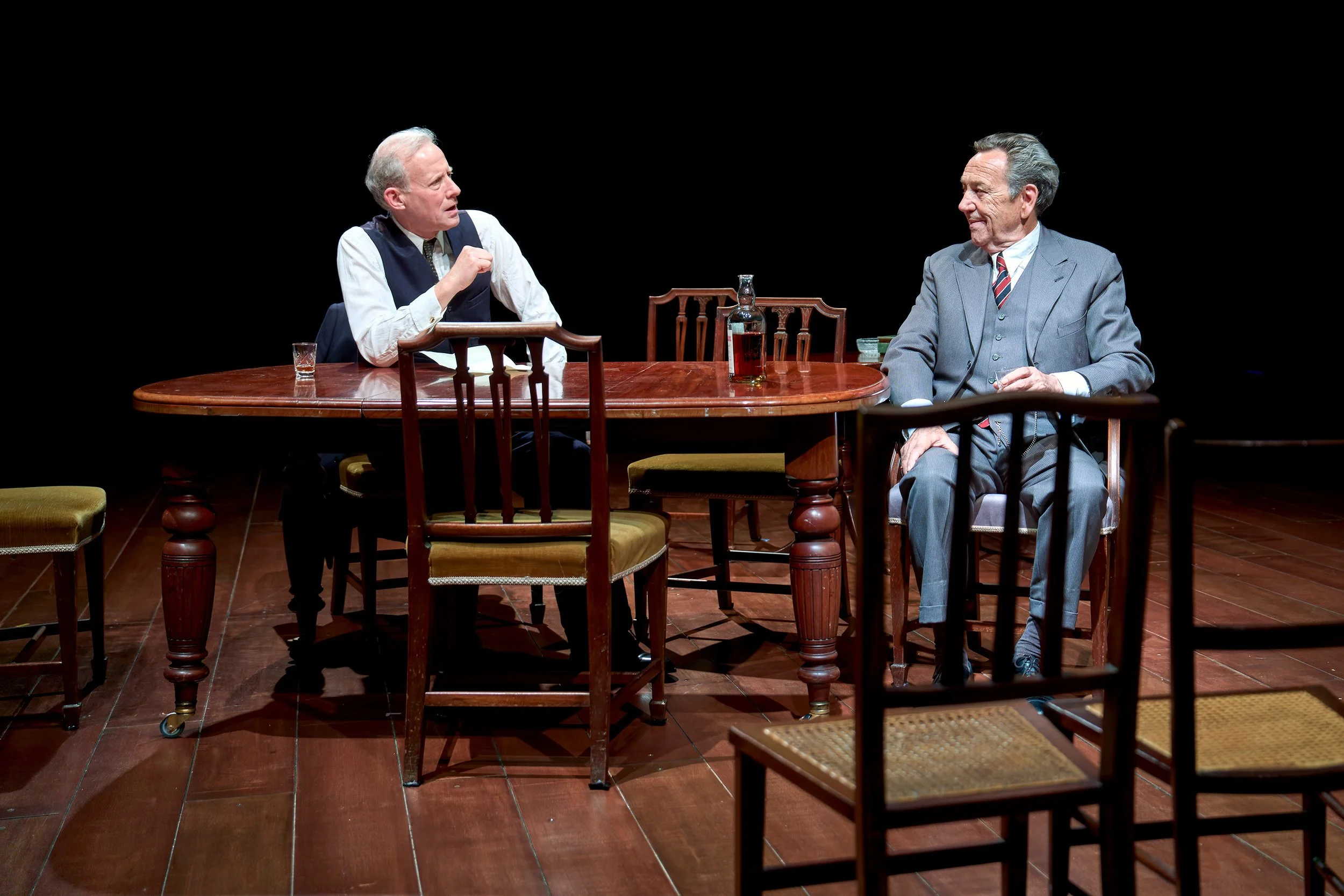
The play begins promisingly, thanks in no small part to its cast. Robert Lindsay's Franklin Roosevelt is perceptive and effortlessly charming. Even seated at his desk, writing while carrying on a conversation, he commands the room. Jemma Redgrave gives Eleanor Roosevelt a quiet dignity, suggesting an undercurrent of melancholy without ever disturbing her composure. Rachel Pickup's Daisy is gentle, sensitive and almost painfully shy. Andrew Havill captures Bertie (as George VI is referred to throughout the play) with convincing restraint, balancing the King's awkward reserve with flashes of temper, while portraying his stammer with remarkable naturalism. Rebecca Night presents Queen Elizabeth as proud and self-possessed. These performances introduce a group of fascinating historical figures, yet the script rarely allows them to develop into fully realised characters, choosing instead to concentrate elsewhere.
One seemingly insignificant detail from the visit received extraordinary media attention, despite having almost nothing to do with diplomacy itself. The following day's New York Times carried the memorable front-page headline: "KING TRIES HOT DOG AND ASKS FOR MORE; And He Drinks Beer With Them." On 11 June 1939, Roosevelt chose not to host an elaborate state banquet but instead invited his royal guests to an informal picnic on the lawn at Springwood, where hot dogs featured prominently on the menu. The image could hardly have contrasted more sharply with the formal dinners, fine wines and champagne traditionally associated with the British monarchy. Before the visit, newspapers had even speculated about whether the King would eat a hot dog at all. In reality, the occasion appears to have been considerably more relaxed than the press anticipated. Queen Elizabeth later joked in a letter that she had enjoyed a second hot dog—she simply neglected to tell the journalists.
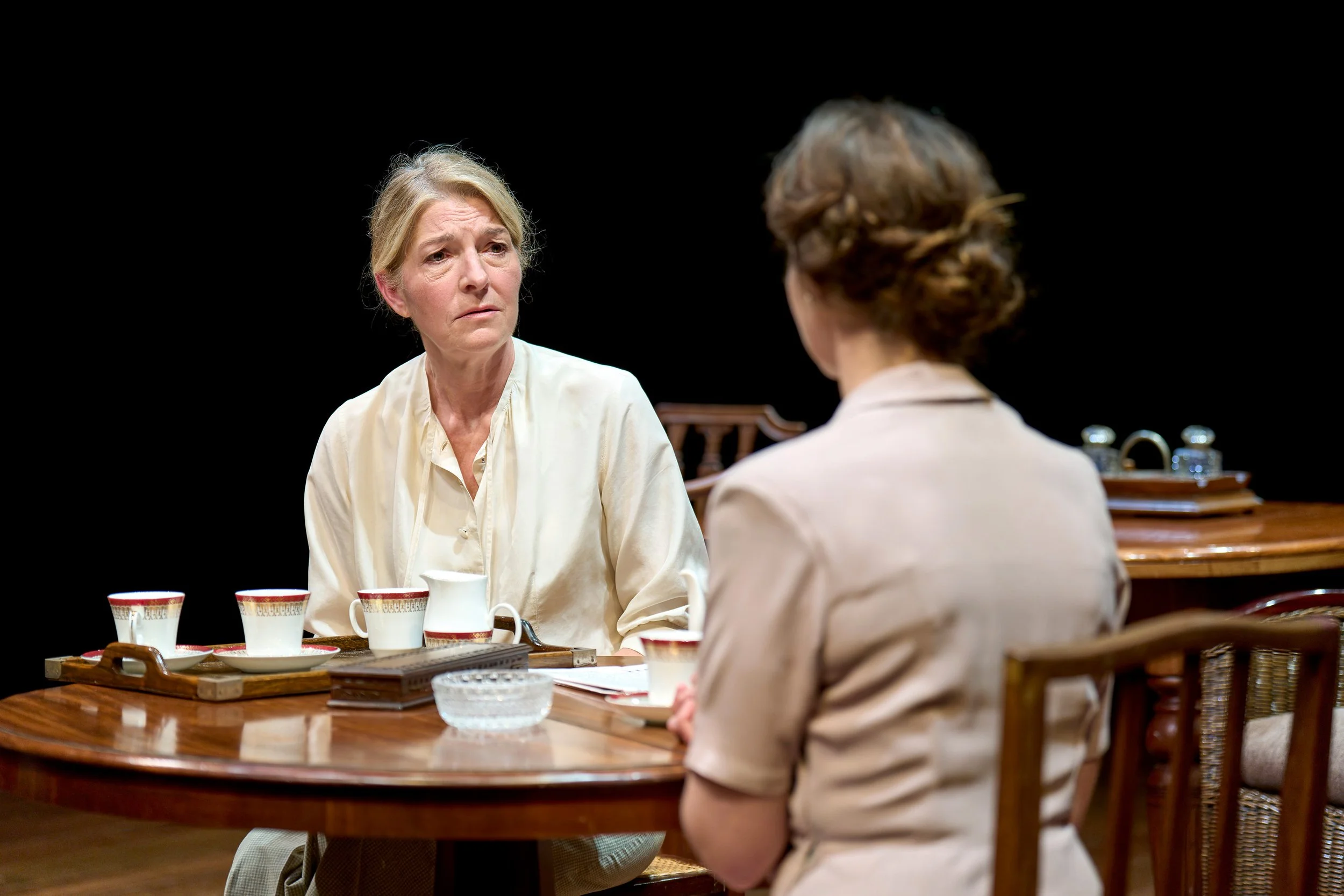
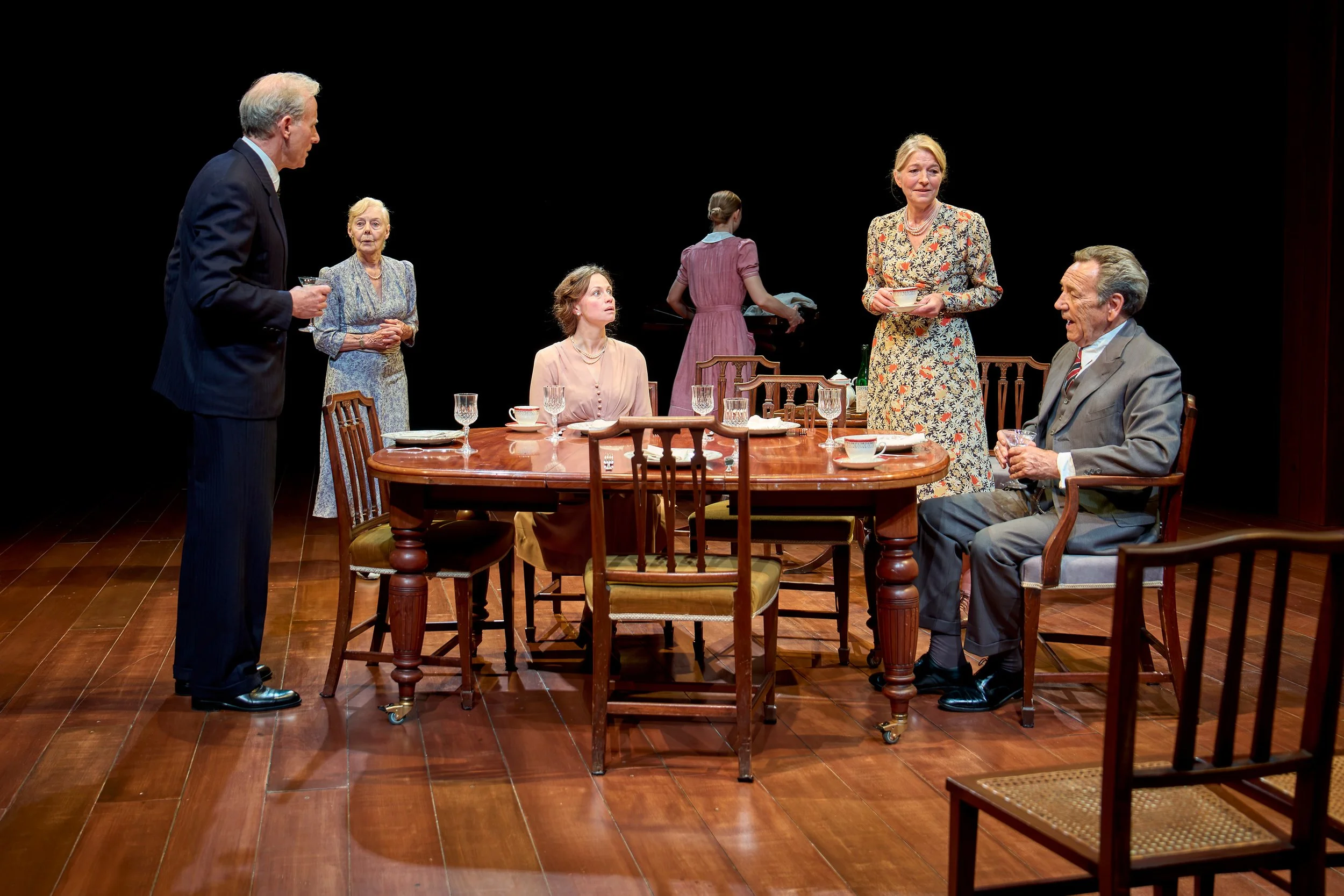
This anecdote becomes the dramatic centre of Nelson's play, with much of the dialogue revolving around it. Bertie and Elizabeth initially suspect the invitation to be little more than an elaborate attempt to embarrass them. Their uncertainty, self-consciousness and anxiety lead them to repeatedly question Roosevelt's intentions until they eventually realise that nothing so complicated is taking place: the President and First Lady simply want to share an ordinary picnic with them.
Although the early conversations about the hot dogs provide moments of gentle humour, they gradually become repetitive, much like the recurring references to the house's thin walls. More importantly, one cannot help questioning whether the historical Queen Elizabeth—widely remembered as warm, witty and exceptionally socially intelligent—would really have reacted as she does here.
The relationship between Bertie and Franklin occupies much of the play's emotional focus. During a late-night conversation, the two men speak privately. Franklin reflects on losing the use of his legs after contracting polio, while Bertie speaks candidly about the burden of his stammer. Their shared vulnerability becomes the foundation of an unexpectedly intimate friendship.
It is undoubtedly an affecting scene. Yet it also feels somewhat too immediate. These are two men who have only just met, each occupying one of the most scrutinised positions in the world. It seems equally plausible that both would instinctively guard themselves, presenting strength rather than exposing their deepest insecurities. Historically, there is no evidence that such a conversation ever took place. Whatever understanding developed between them was likely rooted in far more than their respective physical challenges. Even if they recognised something of themselves in one another, that recognition may well have existed as an unspoken mutual understanding rather than a conversation that needed to be articulated.
More significantly, neither this exchange nor much of the rest of the play fully explores what makes these historical figures compelling. Bertie's brother is mentioned, yet only in passing, almost as a historical shorthand. Nor do the everyday conversations—often drifting towards cliché—offer much insight into American public opinion, Britain's precarious position, or the political realities shaping Anglo-American relations in 1939. As a result, it becomes difficult to believe that these are the historical individuals themselves rather than theatrical interpretations of them.
Tom Piper's set design transforms Hampstead Theatre's familiar stage configuration. The actors perform unusually close to the audience, surrounded on three sides. Before the play begins, the stage is crowded with wooden tables and chairs, while the exposed framework lends the space a subtly traditional quality. As the story unfolds, James F. Ingalls's warm lighting gradually darkens, John Leonard's piano score quietly emerges, and the furniture is rearranged to create a succession of different spaces. Behind the walls lies only darkness, from which conversations occasionally drift through unseen rooms. These are thoughtful design choices, yet they never quite illuminate the unique historical atmosphere the play seeks to evoke.
The purpose of the 1939 visit was never simply to negotiate policy; it was to establish personal trust. Diplomacy is rarely straightforward, and a play about diplomacy requires not only historical context but also psychological depth. Here, the foundations are already compelling. The circumstances are fascinating, the relationships rich with dramatic potential, and the four central figures possess strikingly different personalities. Watching them gradually build a trust capable of shaping history should be inherently absorbing.
One image reproduced in the programme has stayed with me. Taken during those few days in 1939, it shows the principal figures sitting together outdoors, smiling with remarkable ease. The atmosphere is peaceful, almost effortlessly so. Had the play ventured further beneath the surface of these people, allowing us into their inner lives with greater subtlety, they might have become as vivid and alive as they appear in that photograph—and the production itself would have carried far greater emotional and historical resonance.
Springwood runs at Hampstead Theatre until 25th July 2026.
★★★