The Boy Who Harnessed The Wind at @Sohoplace Review
Written by Ziwen for Theatre and Tonic
Disclaimer: Gifted tickets in exchange for an honest review. All views are our own
When the film adaptation of The Boy Who Harnessed the Wind was released, it received widespread acclaim. Yet among those positive responses, the perspectives of African audiences often differed significantly from those of viewers in Europe and North America. There is no doubt that this is a story worth telling. However, while the stage musical adaptation by Richy Hughes and Tim Sutton is already a polished production, it may ultimately resonate with only part of its audience.
Book your tickets for The Boy Who Harnessed the Wind at SeatPlan.
The story centres on William Kamkwamba, who was born in rural Malawi. Many families there relied almost entirely on growing maize: a good harvest meant survival, while a poor one could plunge an entire household into crisis. The region had long struggled with poverty. Many villages had neither electricity nor running water, schools lacked resources, and even school fees posed a heavy burden for farming families. William’s own family was already poor, and worsening drought conditions gradually pushed them deeper into hardship, at times leaving them with only one meal a day. Unable to pay his tuition, William was forced to leave school. Yet he remained desperate to learn. He would secretly visit the school library, studying English-language science books that he could not fully understand, teaching himself about electricity, engines, and wind power. As he continued learning, an idea slowly began to take shape: he would build a windmill that could generate electricity, bring light to the village, and power water pumps to irrigate the fields so people could continue to live.
What makes this story particularly fascinating is that audiences from different parts of the world often focus on very different aspects of it. That contrast reveals something important about what allows a work to connect emotionally with broader audiences. In Europe and North America, The Boy Who Harnessed the Wind is frequently viewed as a classic inspirational tale about a gifted young boy changing his destiny, with the windmill itself becoming a symbol of hope and ingenuity. Many African viewers, however, responded with a different question: “Why had the government failed to do these things in the first place?” Their reaction was not simply admiration for William’s achievements, but also a reflection on the social conditions that required a child to shoulder such responsibility. The success of the original film lies precisely in its ability to hold these perspectives together. Alongside its message of hope and perseverance, it also confronts famine, political failure, and educational inequality. These are areas the musical adaptation could have explored more deeply.
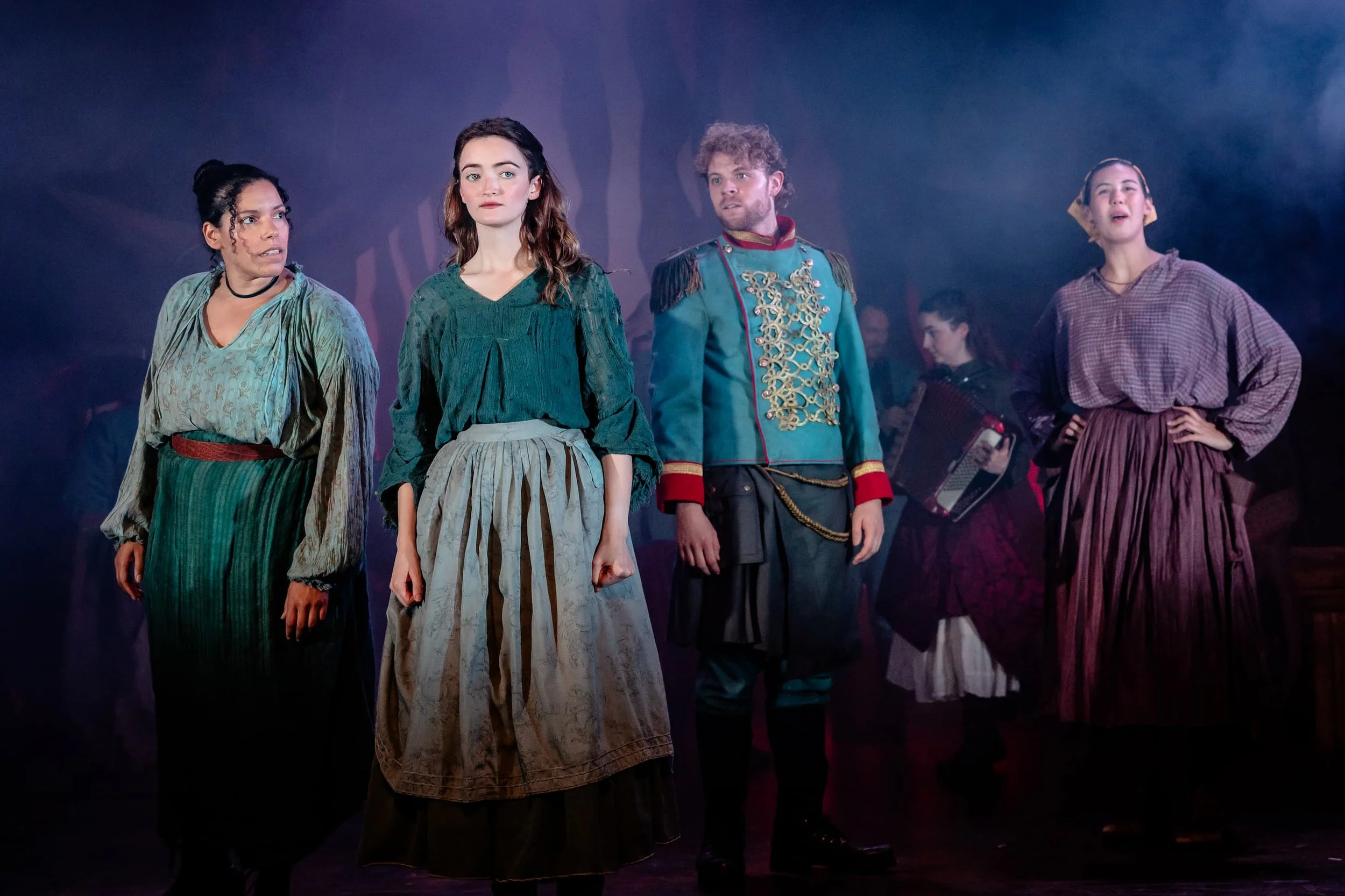
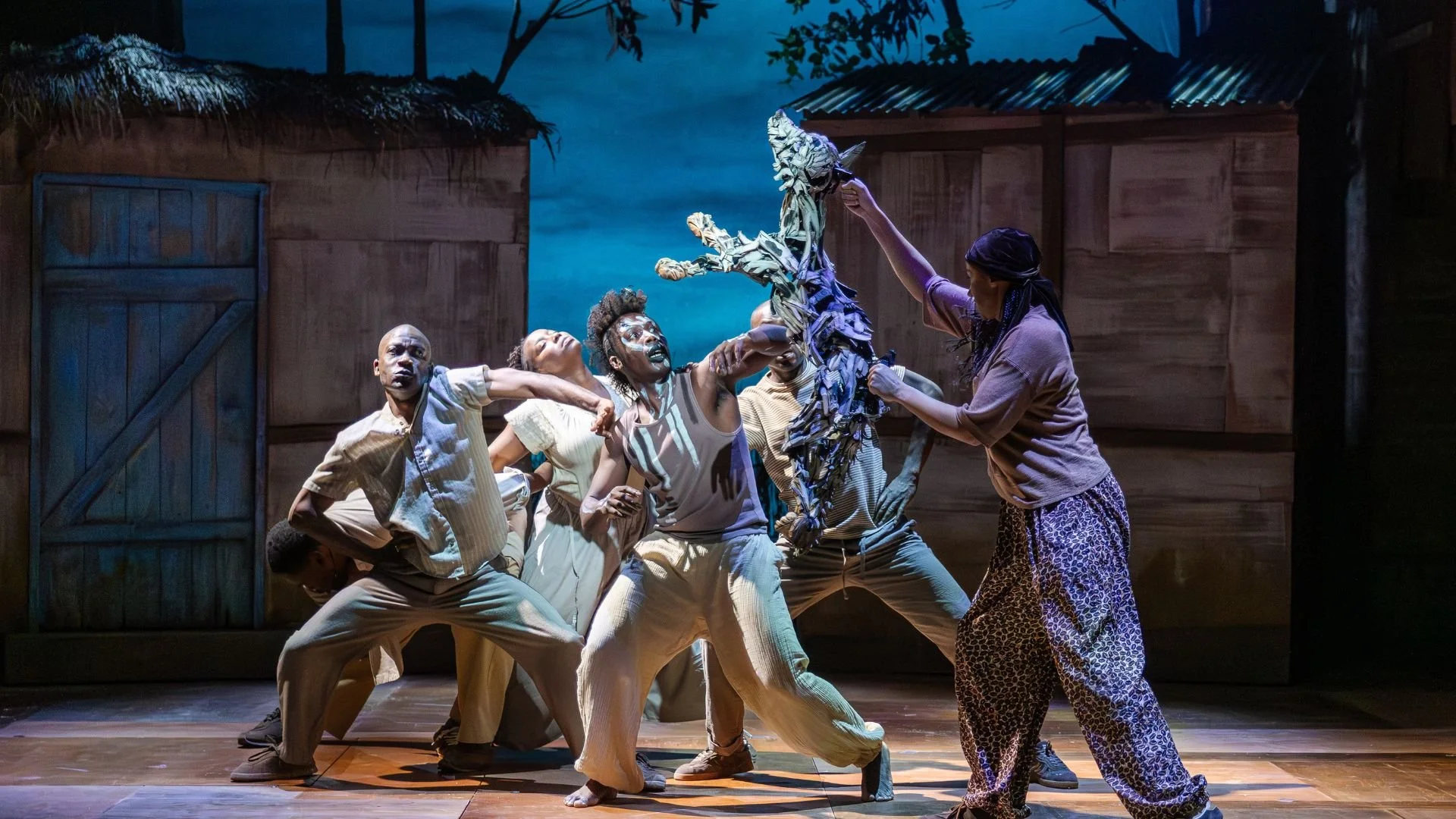
In this production directed by Lynette Linton, however, the overall tone remains persistently buoyant, with suffering occupying only a very small portion of the story. That sense of warmth and ease is established even before the performance officially begins. Before the house lights fully dim, the actors walk onto the stage carrying radios and sacks of grain, greeting the audience and even encouraging a few spectators to dance along. The cast — Alistair Nwachukwu, Sifiso Mazibuko, Madeline Appiah, Tsemaye Bob-Egbe, and Idriss Kargbo — all perform with tremendous energy. Their emotional language feels remarkably unified, creating an immediate sense of intimacy and closeness. Yet because both the script and the performances lean so heavily into comedy, the production feels somewhat disjointed whenever it attempts to confront the harsher realities of the story, lacking some of the emotional weight and realism those moments require. At many of these points, the music itself also continues at an upbeat tempo, which also heightens this sense of tonal imbalance. The extensive use of narration sometimes contributes to the issue as well. While it allows the audience to absorb information quickly, its abrupt interruptions occasionally disrupt the emotional rhythm of the production.

Beyond its portrayal of the environment, the characterisation of William himself is equally crucial. Nwachukwu’s performance captures the boy’s curiosity, compassion, and gentle affection for his family and friends. However, the script underplays William’s intelligence and ingenuity. Often, his success appears to arise from coincidence or discoveries made through the encouragement of those around him, rather than from his own extraordinary talent and remarkable perseverance. The staging choices reinforce this simplification. Whenever William begins thinking through an idea, projections of cartoon-like bicycles and light bulbs designed by Gino Ricardo Green appear across the stage. These playful visualisations make his scientific exploration feel more like part of a fairy tale.
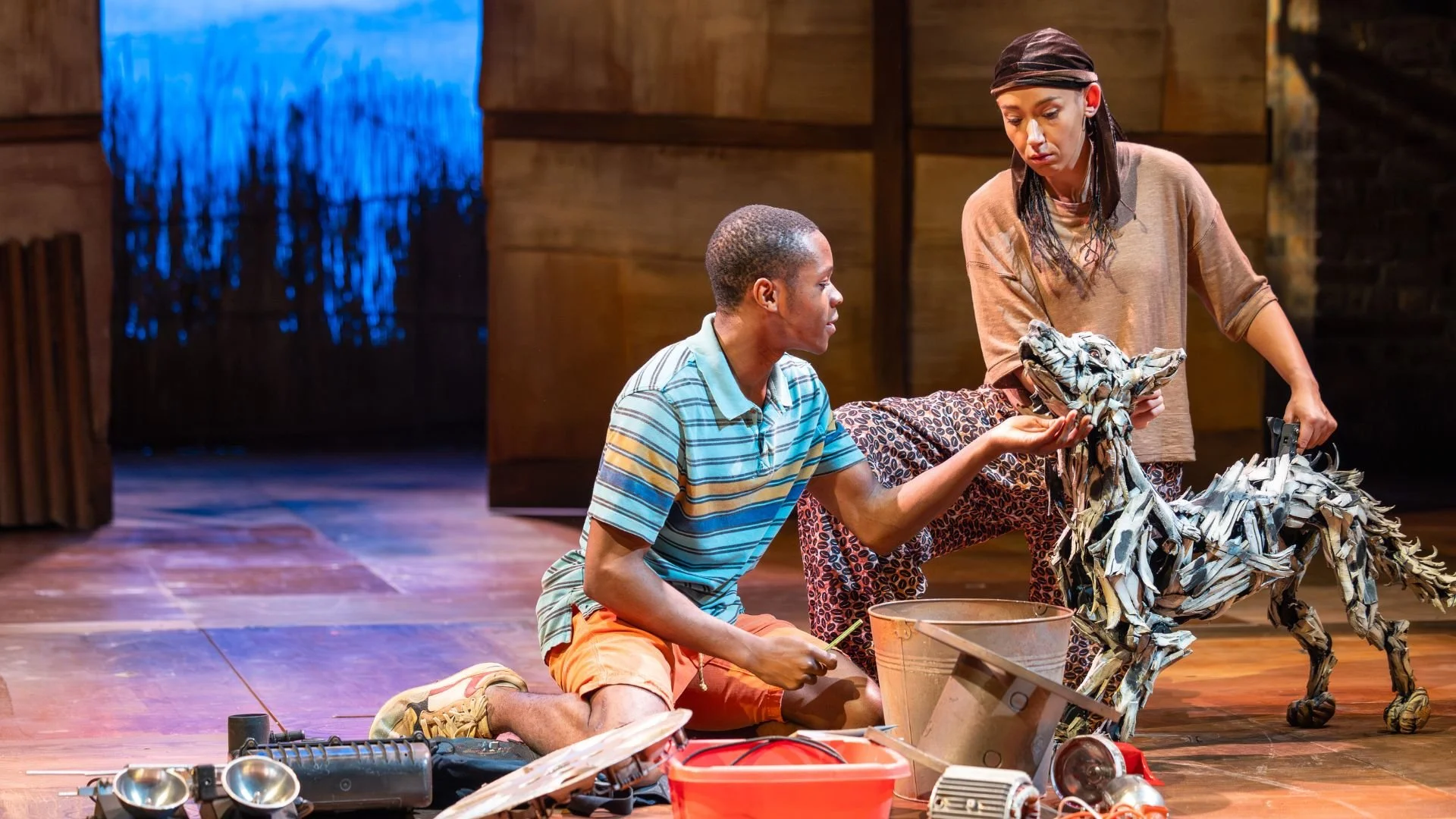
One of the production’s highlights is its use of a dog puppet. Yana Penrose’s puppetry brings the animal vividly to life, and when she gently lowers the dog to the ground in its final moments, it genuinely feels as though its spirit has departed. Drumming also plays an essential role throughout the production. Beyond adding cultural texture, the percussion consistently and precisely supports the emotional atmosphere. It is slightly disappointing, however, that many of the songs lack a particularly memorable quality. With more numbers possessing the quiet strength and tenderness of “This I Know,” the musical might have achieved a greater emotional impact. Oliver Fenwick’s lighting design, dominated for much of the performance by warm tones, evokes the relentless heat of the sun.
If the musical’s ambition is to create a warm, energetic, family-friendly production, then it succeeds reasonably well. Yet it is also a work capable of containing far more. Even now, the climactic moment when William climbs the windmill, the blades slowly begin to turn, the hanging light bulbs flicker on one by one, and water finally bursts through the pipes remains genuinely stirring. If the production allowed audiences to feel more fully the hardship and persistence behind that triumph, it could become more than simply an uplifting fairy tale. It could also emerge as a deeply human story of survival — one capable of resonating far more profoundly across different audiences.
The Boy Who Harnessed the Wind runs at Soho Place until 18th July 2026.
★ ★ ★