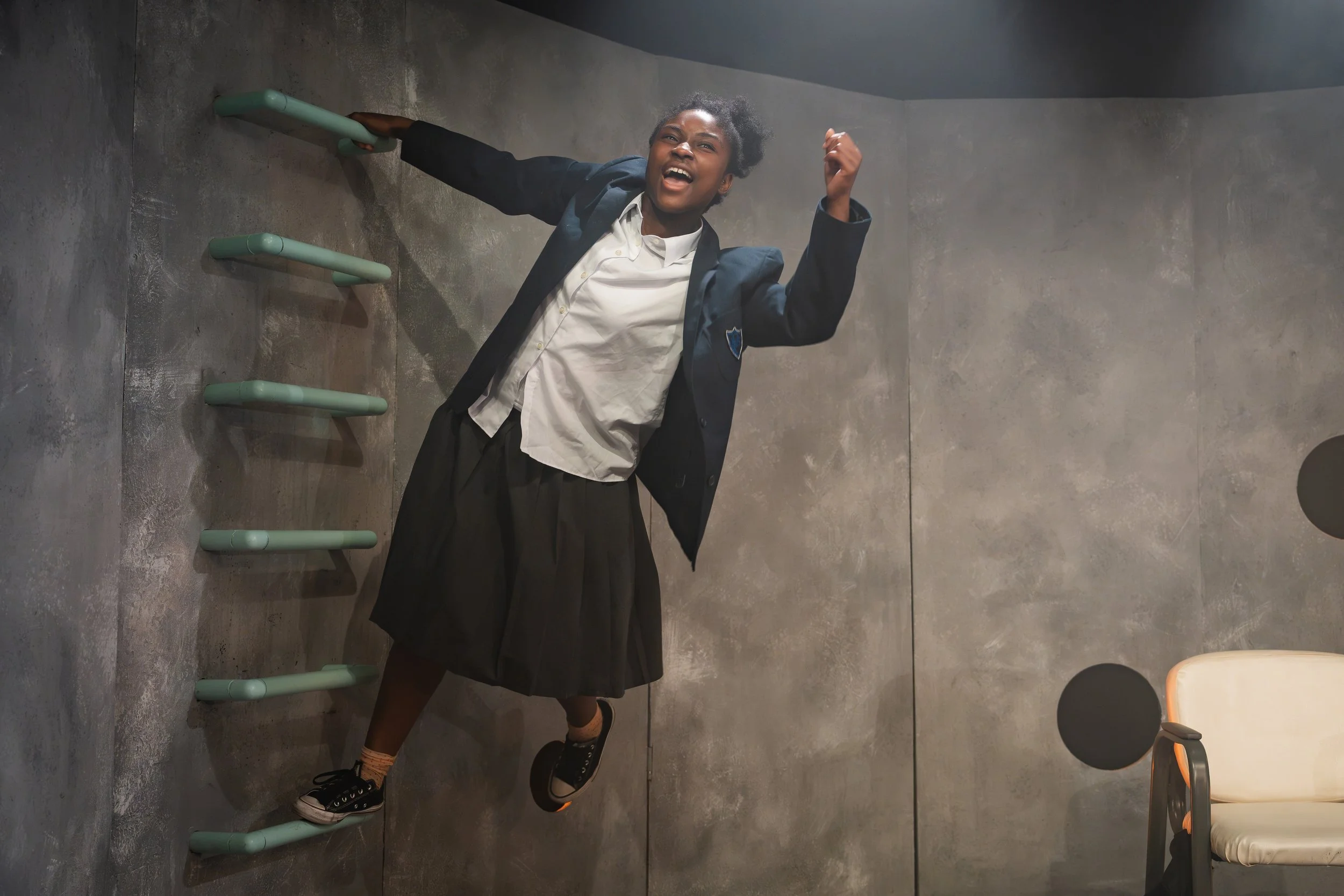
Union Shorts at Union Theatre Review
Between 24th and 26th August, Union Theatre hosted the fifth edition of Union Shorts. Across the three evenings, audiences were presented with nine short plays, each running between 15 and 25 minutes and written by playwrights from the UK and the US. I had the pleasure of seeing three of them on the evening of 26th August: The House Sitter, written by Matthew Sheridan and directed by Nathan Gael York; Make Sure It’s Me, written by V Causey and directed by Zach Lonberg; and The Sit In, written by Bek Parsons and directed by Cameron Tindall.
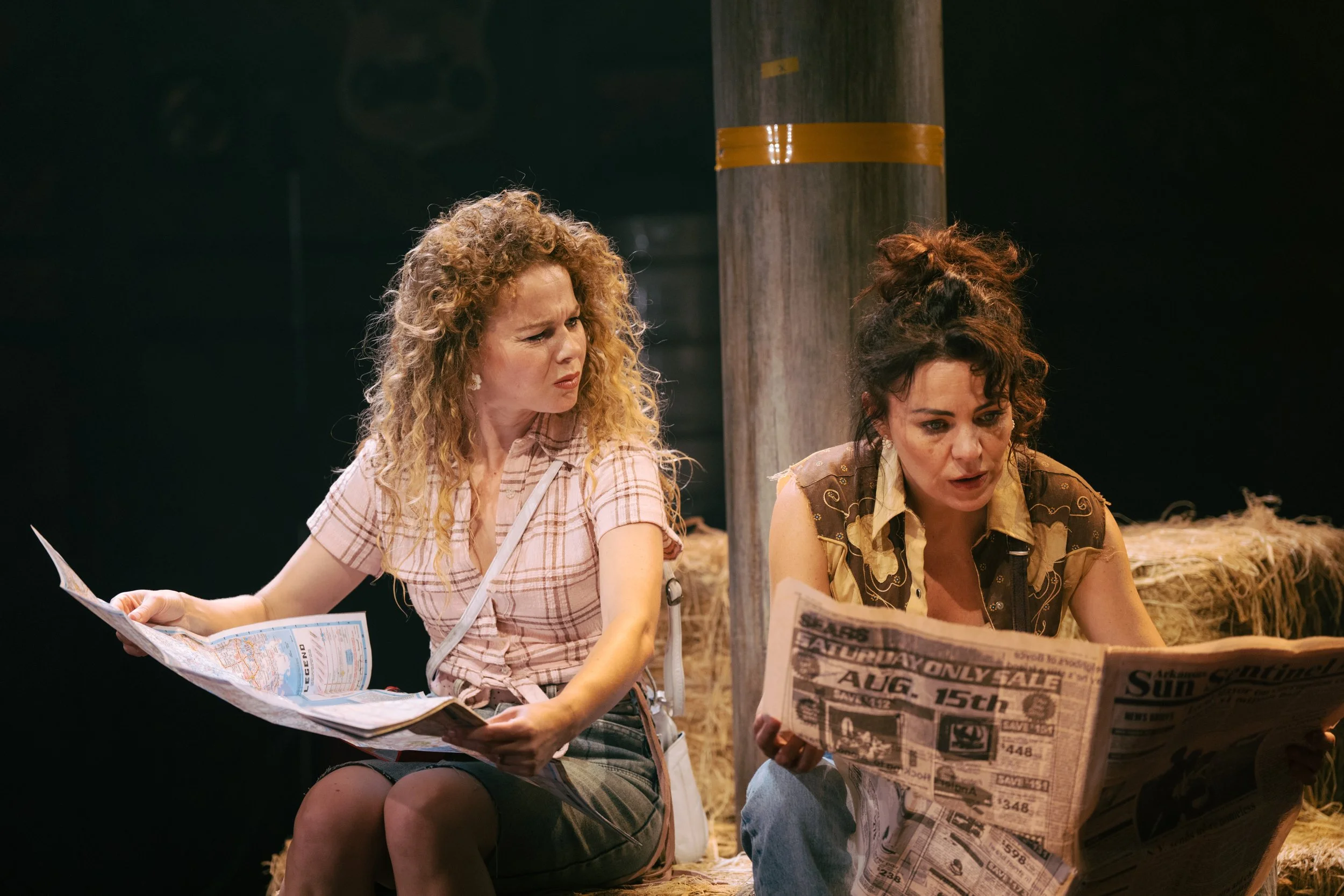
The House Sitter and Make Sure It’s Me use the same domestic set, with only slight changes to the positioning of the furniture and props. Most noticeable are the two sofas. The first story takes place in the Hudson Valley, where Andie (Jolie LeBell) is housesitting for her wealthy, married friend (Nora Went) when a stranger (Ben Watts) suddenly appears in the house. The second takes place in Jess’s (Katie Ball) home, where two visits from her close friend Tasha (Gareth Moriarty) create two very different atmospheres.
Within the limited running time, it is clear how much the actors work to give their characters and stories greater depth. Went carries herself with an effortless confidence and pride, while her attitude when lying to her friend is calibrated with just the right degree of restraint. Watts keeps his body in a state of unnatural tension throughout, and his nervousness and overreactions, combined with LeBell’s wariness towards him, heighten the surprise of the eventual twists.
Ball and Moriarty present the most immediately familiar and intimate relationship of the three plays. This makes it easy for the audience to settle into their banter and follow their conversation. However, dialogue that feels too ordinary and predictable can leave the audience somewhat unsatisfied. When the unexpected finally arrives, the development also feels somewhat disconnected from the first half of the play, largely because there has not been enough foreshadowing. The use of recorded sound also makes some of the characters’ later exchanges feel slightly distorted and removed. Having the actors perform those voices live from behind the stage without microphones might have created a stronger sense of immersion. That said, the production is effective in building a growing sense of tension.
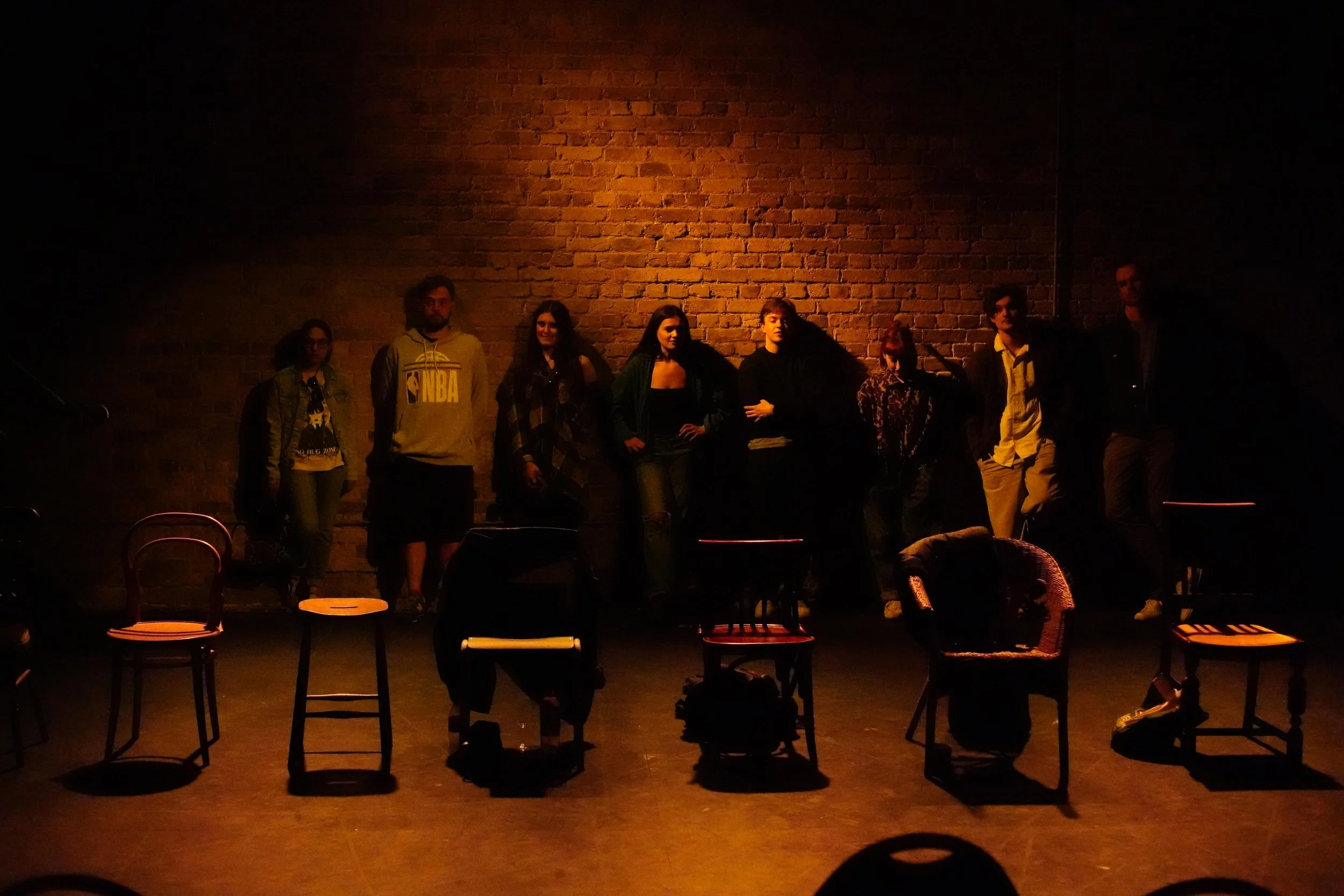
Unlike the first two plays, The Sit In makes use of little more than a few folding chairs. The story centres on a sit-in protest at a school. Alice (Ella Ashton) is the first to appear. After putting up several protest posters on the wall, she quickly begins organising the space for the sit-in, drawing the audience into the environment with her. Everyone in the front row receives a leaflet, and at Alice’s direction, some audience members are invited onto the stage to help arrange the chairs, others are asked to organise the materials, and three audience members are even brought together for a photograph.
Soon, as Alice continues preparing the space, the other students (Susannah Robbins, Daniel Palazzi, George Wood, and Shreya Bora) enter one by one. Ashton’s Alice is highly organised and constantly eager to take control of the situation, with an almost excessive enthusiasm. Robbins’s performance is refreshingly direct, with a subtle hint of sarcasm. In striking contrast is Palazzi’s Billy, who is reserved and shy but possesses a simple, stubborn conviction. His attention to detail is particularly noticeable. As he listens to the other students’ conversations, his small physical gestures and constantly shifting expressions reveal something more about him.
Bora’s character is similarly introverted, but unlike Billy, she seems almost completely without motivation for the sit-in. Wood, whose character is more openly sceptical, nevertheless comes across as fundamentally understanding. Through their interactions, one can sense the potential for these five characters to develop a strong sense of ensemble. In the final silent wait, the timid hope of one character (Palazzi) alongside the hopeless companionship offered by another (Bora) creates a particularly lovely image.
That said, each character across the three plays feels as though they could benefit from further exploration, and there is also considerable room for the stories themselves to be developed. For short plays, distinctive ideas and characters that immediately give the audience a reason to care are especially important. In trying to tell the most effective story within a limited timeframe, a 15-minute play needs to be particularly careful to avoid conversations that do not reveal enough about the characters or advance the narrative. There is, in fact, far more information and emotional complexity that can be conveyed within 30 minutes than what is currently presented here. The connections between characters, as well as subtle shifts in atmosphere, could also make the relationships clearer and more engaging. At present, the sense of connection between the actors onstage remains somewhat underdeveloped. Nevertheless, the fact that such results have been achieved within such a short rehearsal period is highly commendable.
Overall, watching three productions like these in a single evening leaves one feeling genuinely hopeful. Platforms like Union Shorts are always necessary. Even when a work is still in its early stages, it is possible to see whether it has room to grow, and good performances and good ideas will always find a way to be noticed.
★★★
Written by Ziwen for Theatre and Tonic, September 2026.