Golden Boy at Almeida Theatre Review

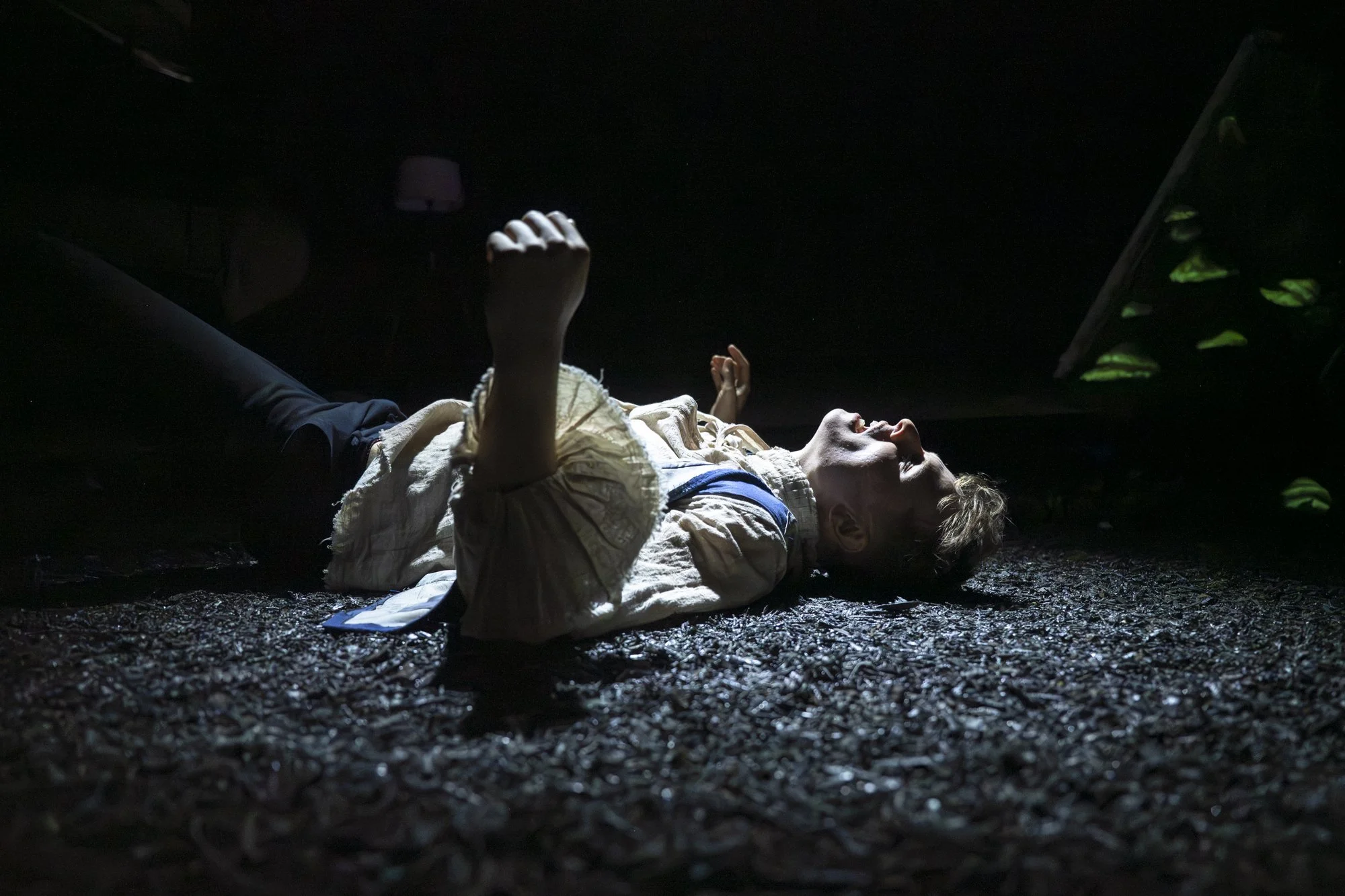
Photo: Marc Brenner
Torn between music and boxing, Joe Bonaparte is the Golden Boy on the ropes. Clifford Odets’ rarely revived Golden Boy could prove to be one of the year’s most compelling revivals.
There is nothing subtle about the Almeida’s production. Odets’ play is, for the most part, conspicuously lacking in subtext, but however clunky the writing may occasionally be, Golden Boy remains a riveting watch. Director Sam Yates embraces this lack of subtlety, marrying the worlds of music and sport by filling Joe’s subconscious with a string quartet. The approach is bold, obvious and deliberately transparent.
Joe Bonaparte (Josh O’Connor) is an Italian-American with dreams of making it. An exceptionally talented violinist, Joe decides that music is no longer his dream. Instead, he chooses boxing: a route to fame, fortune and, ultimately, the American Dream. He approaches boxing manager Tom Moody (Daniel Mays), declaring that he will be his next big fighter. With the help of Moody, Moody’s boxing partner and club owner, Roxy Gottlieb, gangster come promotor, Eddie Fuseli, and his trainer Tokio, Joe appears to have a genuine shot at success.
His family are appalled. Joe has always been a gifted musician, having poured his life and soul into his violin, and even Joe himself is initially uncertain about his new path, obsessively protecting his hands from injury. His ambitions become further complicated when he falls for Lorna Moon, Moody’s lover. At its heart, this melodramatic tragedy explores what happens when people compromise their integrity in pursuit of success.
Yates’ artistry shines through in the bold, sometimes wonderfully absurd choices he makes. Cameras embedded within a punching bag (video design by Jack Phelan) capture Joe in the midst of a fight, projecting the footage onto the set in real time. It is a stroke of genius, allowing us to glimpse something of Joe’s inner turmoil while placing us directly inside the violence of the ring.
This contemporary theatrical language is in striking contrast to Rosanna Vize’s distinctly 1930s-inspired set. The string quartet, meanwhile, becomes an extension of Joe’s subconscious. Their beautiful playing continually reminds him of the future he could have had — the life he has abandoned in pursuit of something else. Isobel Waller-Bridge’s melancholy score is haunting, heightening the sense of Joe’s gradual descent into despair.



Of course, the performances in this production are world-class.
Josh O’Connor marks his return to the stage with a masterful central performance. He is angry, frustrated, lost and lonely, delivering a performance of remarkable nuance and complexity. O’Connor manages to embody both the formidable physicality of a man becoming a supreme boxer and the vulnerability of a frightened, lost little boy who still belongs at the violin. There is an extraordinary amount of sorrow in his portrayal, and watching Joe spiral is genuinely heartbreaking.
The ensemble is outstanding. Daniel Mays captures Moody’s light and shade beautifully, constantly shifting between humour and menace. Zubin Varla is disturbing in the best possible way as Eddie, a man seemingly ready to strike at a moment’s notice. It is a truly compelling performance.
Stanley Townsend and Richard Fleeshman are equally affecting as Joe’s father and brother. Townsend’s Mr Bonaparte is heartfelt and heartbroken as he desperately tries to get his son back, while Fleeshman’s Frank provides a quietly strong and supportive presence alongside his father. Both performances are excellent, although both characters feel somewhat underutilised.
Hayley Squires brings an intensity and naturalism to Lorna. Torn between Joe and Tom, we watch as she allows herself to be swept up in her feelings for Joe before attempting to pull herself back from them. Squires gives a wonderful performance, finding the humanity beneath what could otherwise become a fairly melodramatic character.
Golden Boy may not be the finest example of the great American plays of the 20th century, but it remains an important one. Its deconstruction of the American Dream, and its exploration of what happens when love, ambition, money and personal integrity collide, remain remarkably relevant.
Yates’ adaptation is an absolute triumph: visually daring, musically evocative and powered by a superb ensemble. For all the bluntness of Odets’ writing, this production finds theatricality in the spaces where subtlety is absent — turning Golden Boy into something immediate, visceral and deeply affecting.
Golden Boy plays at the Almeida Theatre until 31st October.
★★★★
Written by Phil for Theatre and Tonic, September 2026.