Ilford Boy at Donmar Warehouse Review
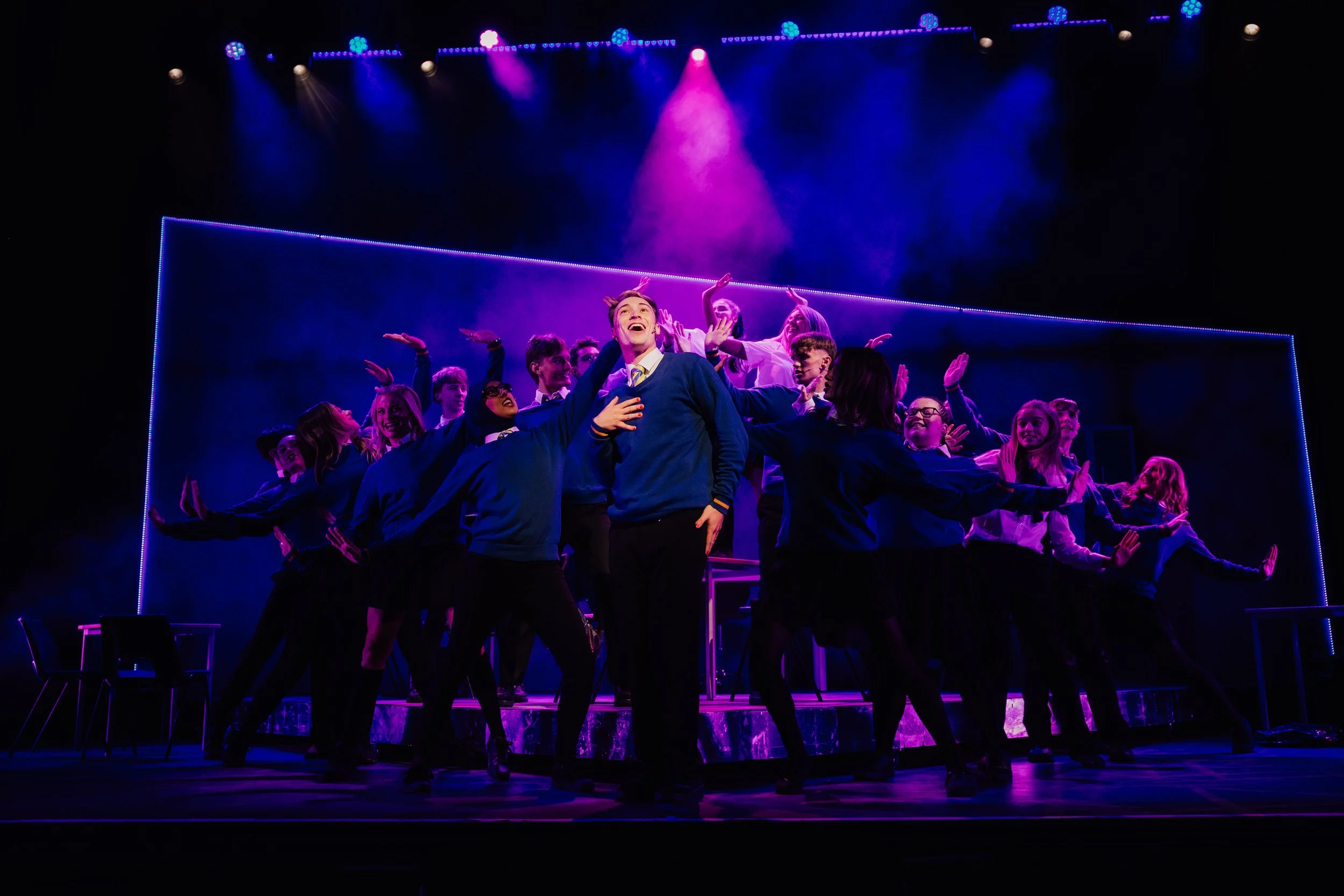
The company of Ilford Boy. Photo by Helen Murray
Danny Lee Wynter’s second play, Ilford Boy, follows his acclaimed debut Black Superhero, which premiered at the Royal Court in 2023. This autobiographical coming-of-age story is a worthy successor, charting mixed race teen Ted's journey through 1990s Ilford as he struggles to understand who he is and where he belongs amid a larger-than-life East End and Essex family.
The play opens at the 1995 funeral of family matriarch Elaine. Her daughters, Tillie, Jackie and Ann, prepare to lay their mother to rest, each accompanied by their husbands, or in Tillie’s case, her on-off partner and Ted’s father, Kenny. Into this already volatile mix arrives Patrick, Tillie’s old best friend: a mixed race and unapologetically gay man navigating a world of secrets and shadows at the height of the AIDS crisis. The narrative shifts between 1980 and 1995, gradually revealing how these characters and their relationships have evolved. What emerges is a tender, often hilarious exploration of grief, love, identity and the complexities of family life.
Wynter’s writing is sharp, witty and deeply affecting, with dialogue that feels as though it has leapt straight from life onto the stage. The family’s relationships are wonderfully recognisable in all their dysfunction. They bicker relentlessly but love fiercely, and beneath the insults and arguments lies an unwavering sense of family. Patrick, meanwhile, faces judgement from people who have known him for years, yet continues to show up for those he loves. His growing bond with Ted, united by their shared love of theatre, becomes the play’s emotional heart. Through Patrick, Ted begins to understand that being different is not something to hide, but something to embrace.

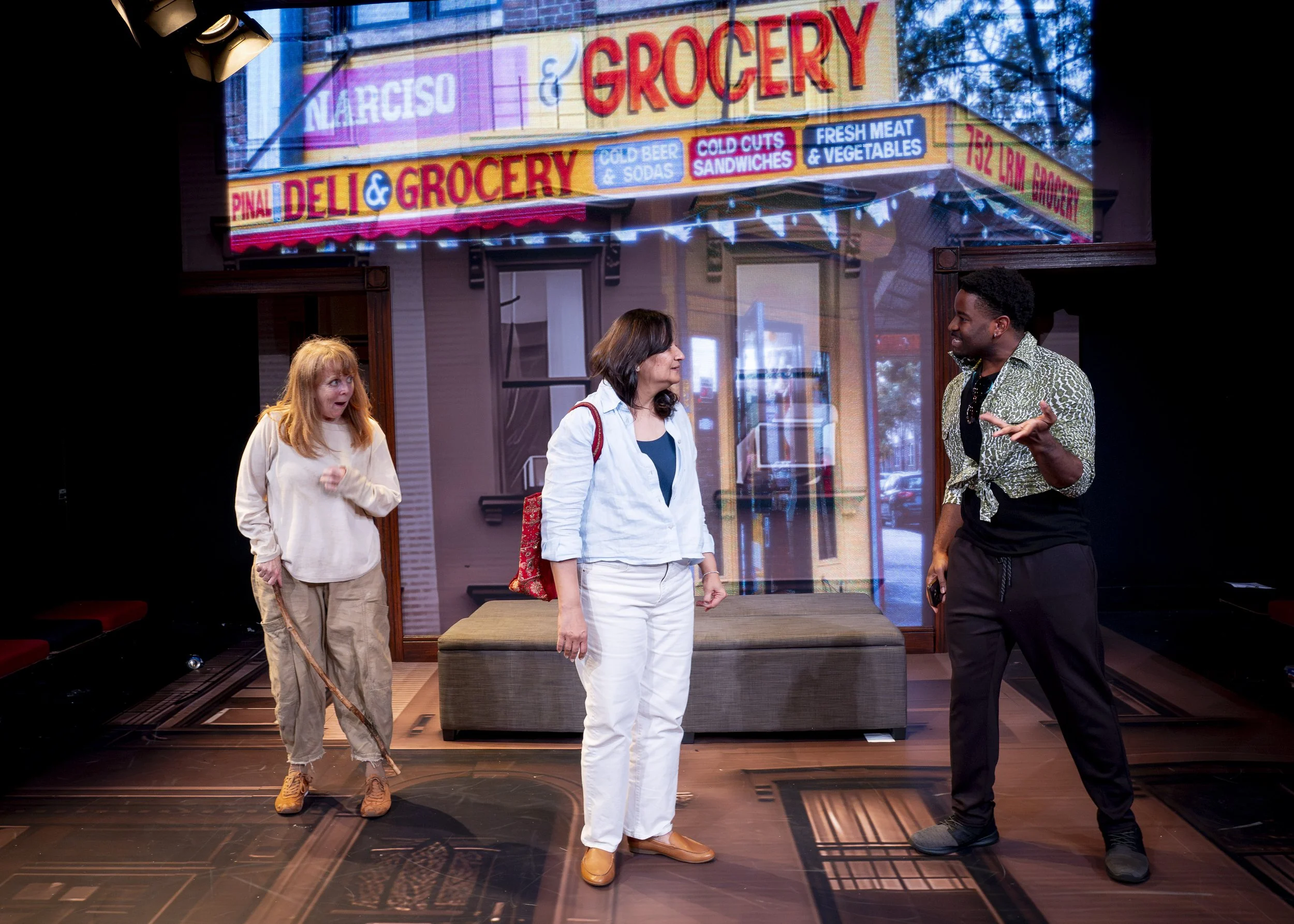
Craig Stein and Leo Whitfield Harris in Ilford Boy. Photo by Helen Murray
The cast is sensational. Making his stage debut, Leo Whitfield Harris gives a touching performance as Ted, capturing the confusion, sadness and apprehension of a young man who feels fundamentally different from those around him. Ria Zmitrowicz brings tremendous warmth and fire to Tillie, Ted’s fiercely protective mother, whose Essex sensibilities provide some of the play’s funniest moments. Indeed, all three sisters contribute enormously to the comedy. Jodie McNee is wonderfully cutting as Jackie, imbuing the eldest sister with a brittle, slightly neurotic energy that keeps everyone guessing. Charlotte Jaconelli is a particular delight as Ann, the youngest sister. A natural comedic force, Jaconelli delivers Ann’s no-nonsense observations and perfectly timed jibes with effortless precision, bringing a wonderfully mischievous energy to the family dynamic. Preparing to welcome her first child, Ann is equal parts fiercely opinionated, affectionately protective and playfully flirtatious with her husband Raj. Jaconelli finds the humour in every interaction without ever sacrificing the character’s warmth or humanity. She is an absolute joy to watch, creating a character who feels instantly familiar and whose every appearance brings another welcome burst of laughter. Lindsey Coulson provides a grounded and convincing portrayal of Eileen, the family’s stalwart matriarch in 1980, though the role feels somewhat underused.
The men orbiting the family are equally well drawn. Gershwyn Eustache Jnr gives Kenny the bravado of a man desperate not to become his own father, only to find himself repeating the same mistakes. Aaron Gill is suitably forthright as traditional Raj, while Cary Crankson brings a quieter, resigned humour to Trevor, who seems content to be Jackie’s doormat. Yet it is Craig Stein who leaves the most indelible impression as Patrick. Effortlessly cool and unapologetically himself, Patrick radiates warmth and authenticity. Watching his decline is heartbreaking, and Stein brings extraordinary power to a performance rooted in love, dignity and resilience in the face of prejudice. His tap-dancing sequence at the end of the first act is a particular highlight.
Tim Sheader’s direction balances the play’s emotional weight with its chaotic, often raucous family dynamics. Even at its loudest, the production retains an underlying warmth, while quieter moments are allowed the stillness they need to resonate. Peter McKintosh’s minimalist set keeps the focus firmly on the drama, with Aideen Malone’s neon-yellow strip lighting helping distinguish the two periods. Ryan Dawson Laight’s costumes do much of the work in establishing the time shifts, with a delightful array of 1980s and 1990s fashions.

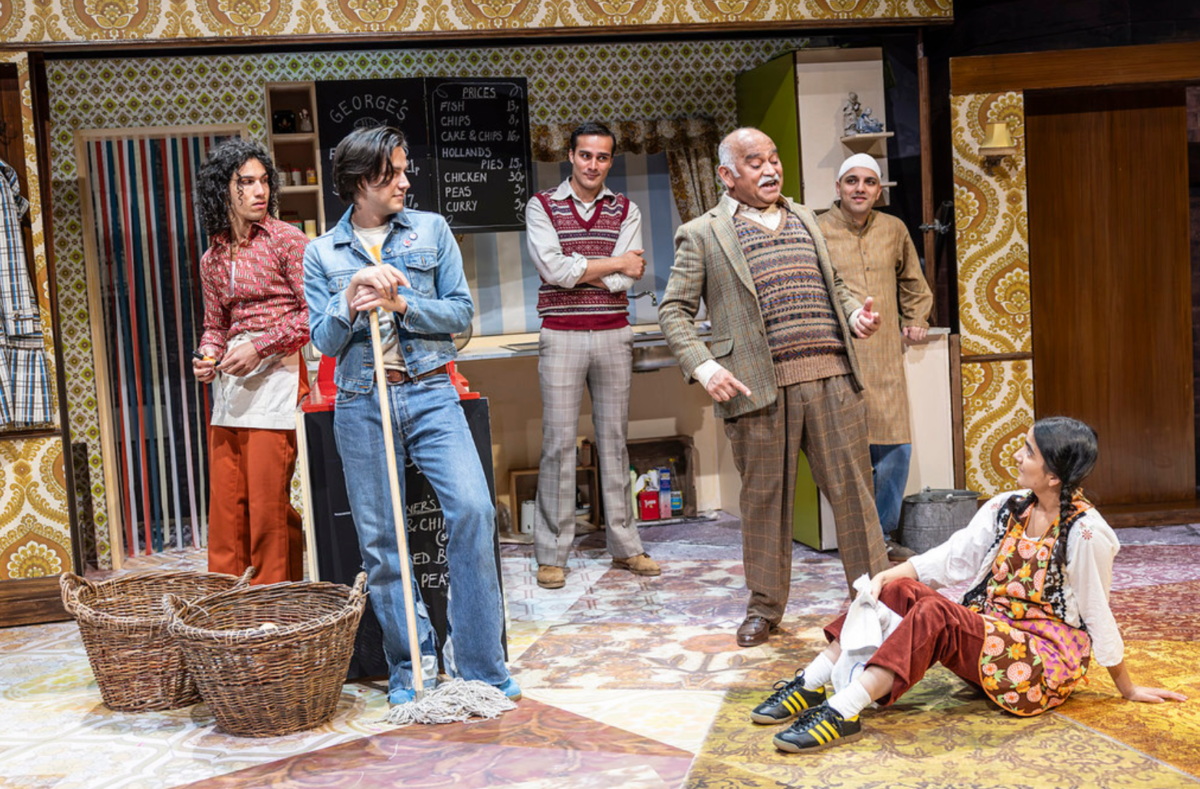
Charlotte Jaconelli and Aaron Gill in Ilford Boy. Photo by Helen Murray
As someone who has lived in Ilford my entire life, I found the production particularly resonant. I have never quite known how to articulate the character of the place or the relationships that define it, but Wynter captures them beautifully. This is a vivid portrait of multicultural life in Ilford and the surrounding Essex communities, enriched by affectionate nods to local landmarks and references that will delight anyone familiar with the area. Never did I expect to hear Bodgers the haberdashery mentioned at the Donmar Warehouse. References to Supermarket Sweep and Chess, featuring Elaine Paige and Barbara Dickson, further root the play in its era. These details lend the production an irresistible sense of recognition and belonging.
My principal reservation is that the second act occasionally meanders. The story appears to be hurtling towards its conclusion, only to continue through passages that feel less necessary and, at times, tonally at odds with what surrounds them. While their autobiographical significance is understandable, some of these elements might have been more effective elsewhere, allowing the emotional climax to retain its full force. Nevertheless, this is a relatively minor criticism of a deeply personal work, and Wynter’s commitment to his own experiences is evident throughout.
Ilford Boy is a heartfelt celebration of family, identity and community, finding love and laughter alongside grief and prejudice. I sincerely hope it enjoys a further life in London and beyond. For all its imperfections, this is a warm, affecting and wonderfully familiar piece of theatre that makes the personal feel universal.
Ilford Boy plays at the Donmar Warehouse until 28th November
★★★★
Written by Philip for Theatre and Tonic, October 2026.