Image: Charlie Flint
Blending dystopian science fiction with living history, Memoriam presents a thought-provoking exploration of how we preserve the past, and whether technology can aid our understanding of history or risks diminishing the very experiences it seeks to protect.
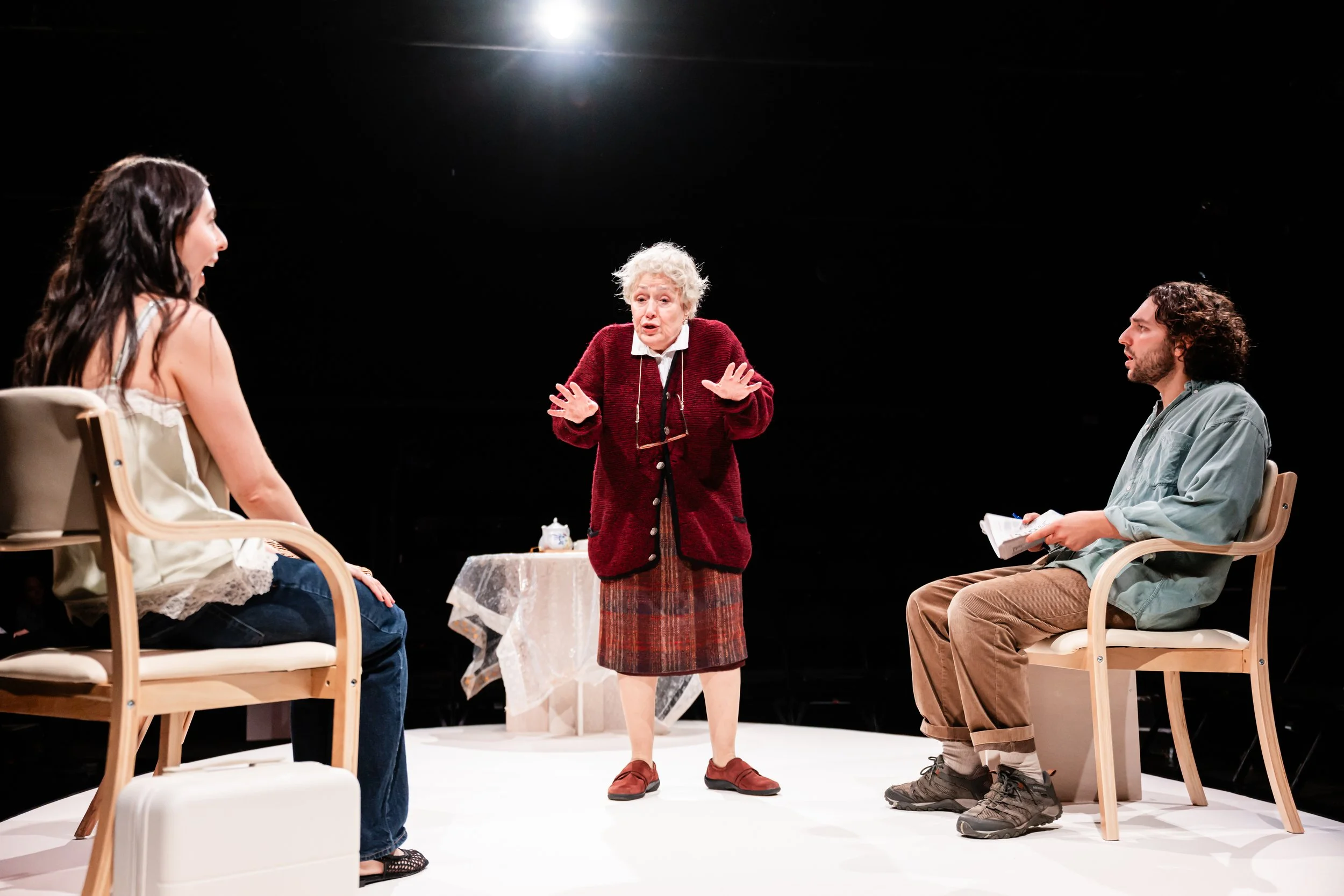
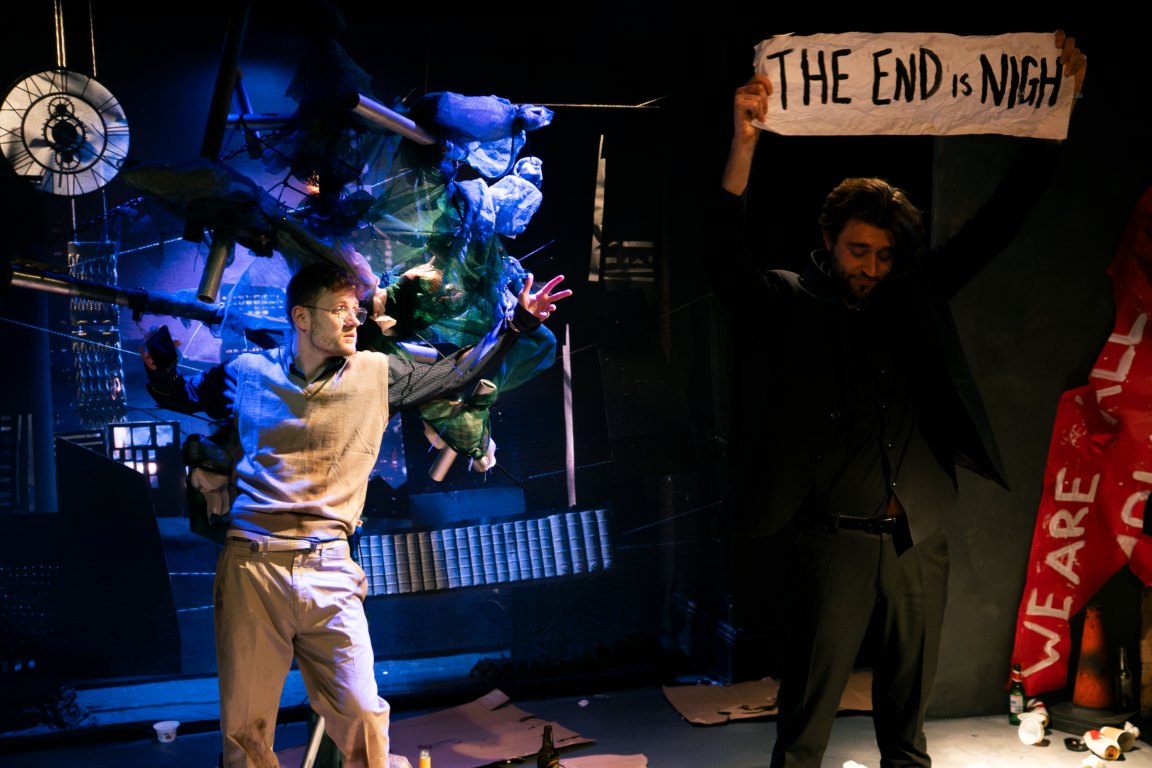
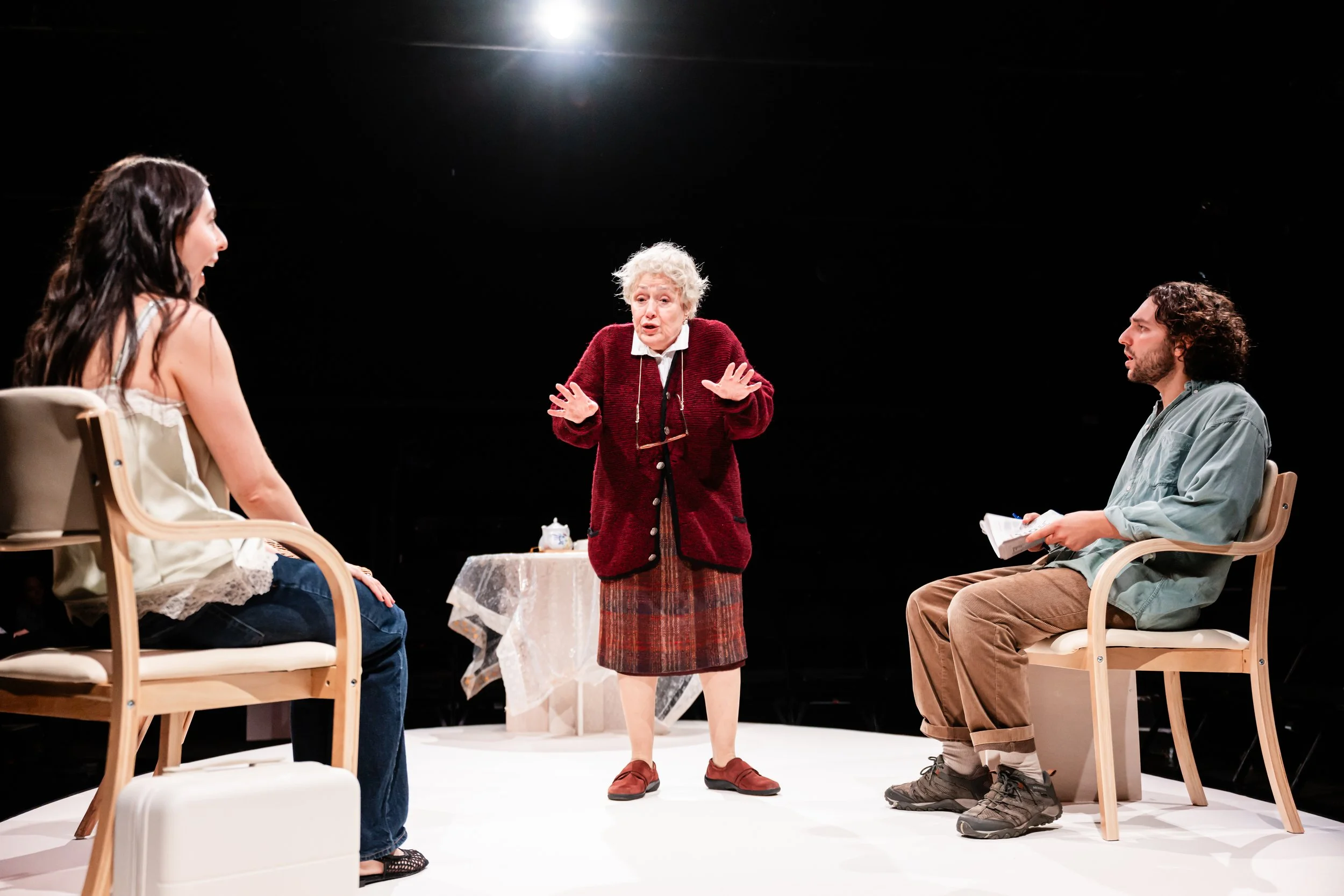
At the centre of the story is a Jewish family, siblings Rachel (Rachel Barry) and Daniel (Ashley Margolis), and their grandmother Rivka (Beverly Klein), a Holocaust survivor. Rachel works for Memoriam, a technology company that harvests people's memories and transforms them into immersive virtual reality experiences. When her boss Chris (Ben Wiggins) persuades her to approach Rivka about selling her memories of the Holocaust, the proposition sparks a fierce moral disagreement between the siblings, forcing the family to confront questions of ownership, exploitation and the responsibility of preserving history.
The opening initially leans heavily into its science-fiction premise, and I admittedly struggled to settle into what felt like a rather on-the-nose commentary on the rapid rise of AI and our growing dependence on technology. However, as the story progressed, it developed into a far more compelling family drama, with the technological premise becoming a vehicle for a much broader conversation about collective memory, historical responsibility and the limits of recreating lived experience.
The central concept is undoubtedly strong, offering plenty of food for thought, but the script doesn't always do it justice. Certain scenes feel unnecessarily drawn out, while others labour their points beyond what is needed. There is an abundance of context surrounding the play's various themes, but rather than enriching the narrative, this occasionally dilutes its impact. By the time the final scenes arrive, so much has already been explored and explained that some of their intended emotional weight feels lost.
Performed in the round, the production offers an interesting intimacy, allowing the audience to observe the family's tensions from every angle. Unfortunately, this staging also proves a disadvantage, particularly during the quieter, more emotionally vulnerable exchanges, when dialogue is frequently lost as performers turn away from sections of the audience. These are precisely the moments that demand the greatest connection, and their impact is noticeably diminished as a result. Jonathan Chan's lighting, however, is particularly effective, its clinical, cold quality complementing the dystopian setting while helping to guide the transitions throughout the piece.
Beverly Klein delivers the standout performance as Rivka, bringing a remarkable sense of emotional understanding and care to the role. There is a quiet authenticity to her portrayal, with Rivka's lived experience and perspective providing a welcome contrast to the increasingly fraught exchanges between the younger characters. She is perhaps the only character who feels entirely grounded and emotionally truthful, and Klein handles the weight of her story with great sensitivity.
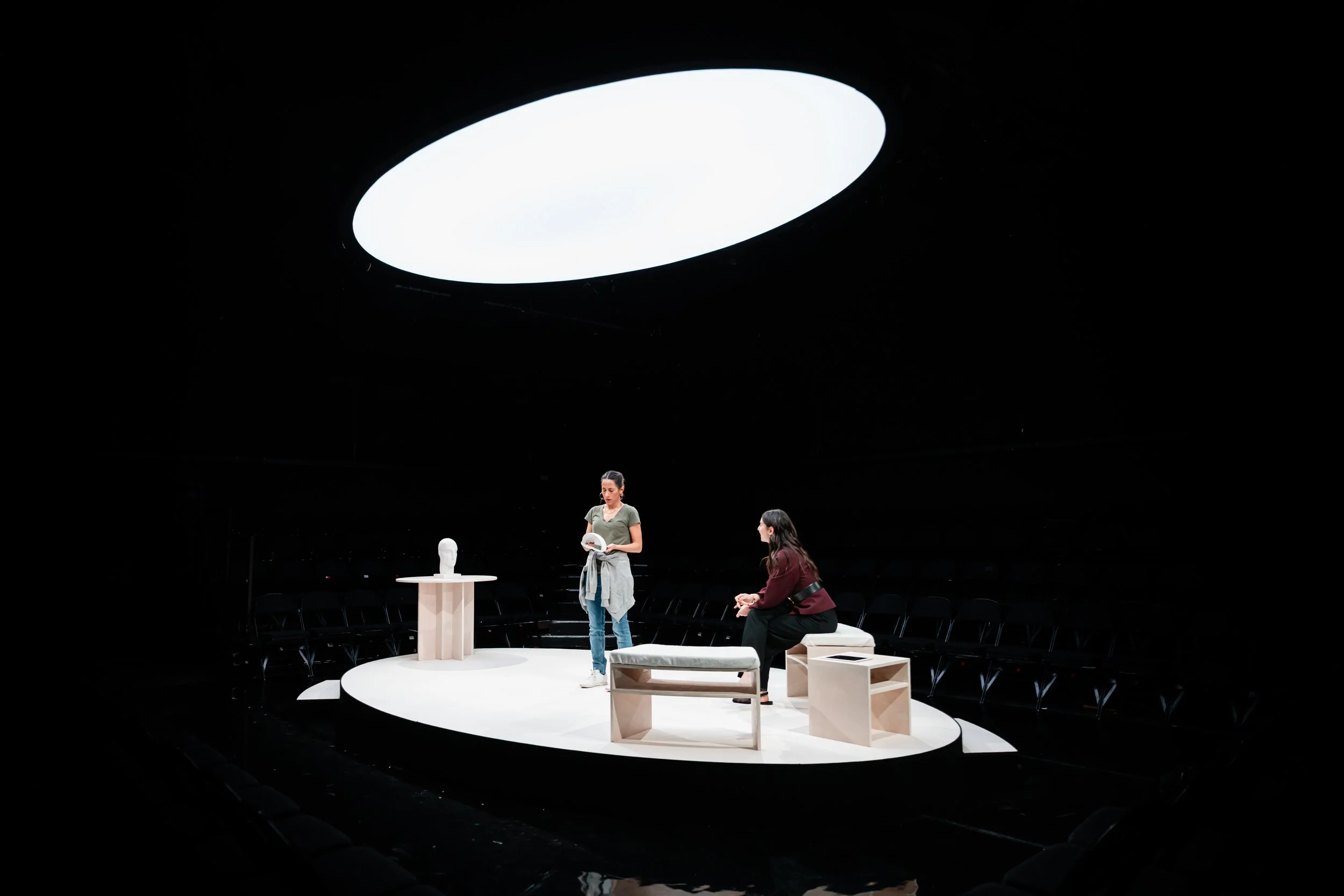
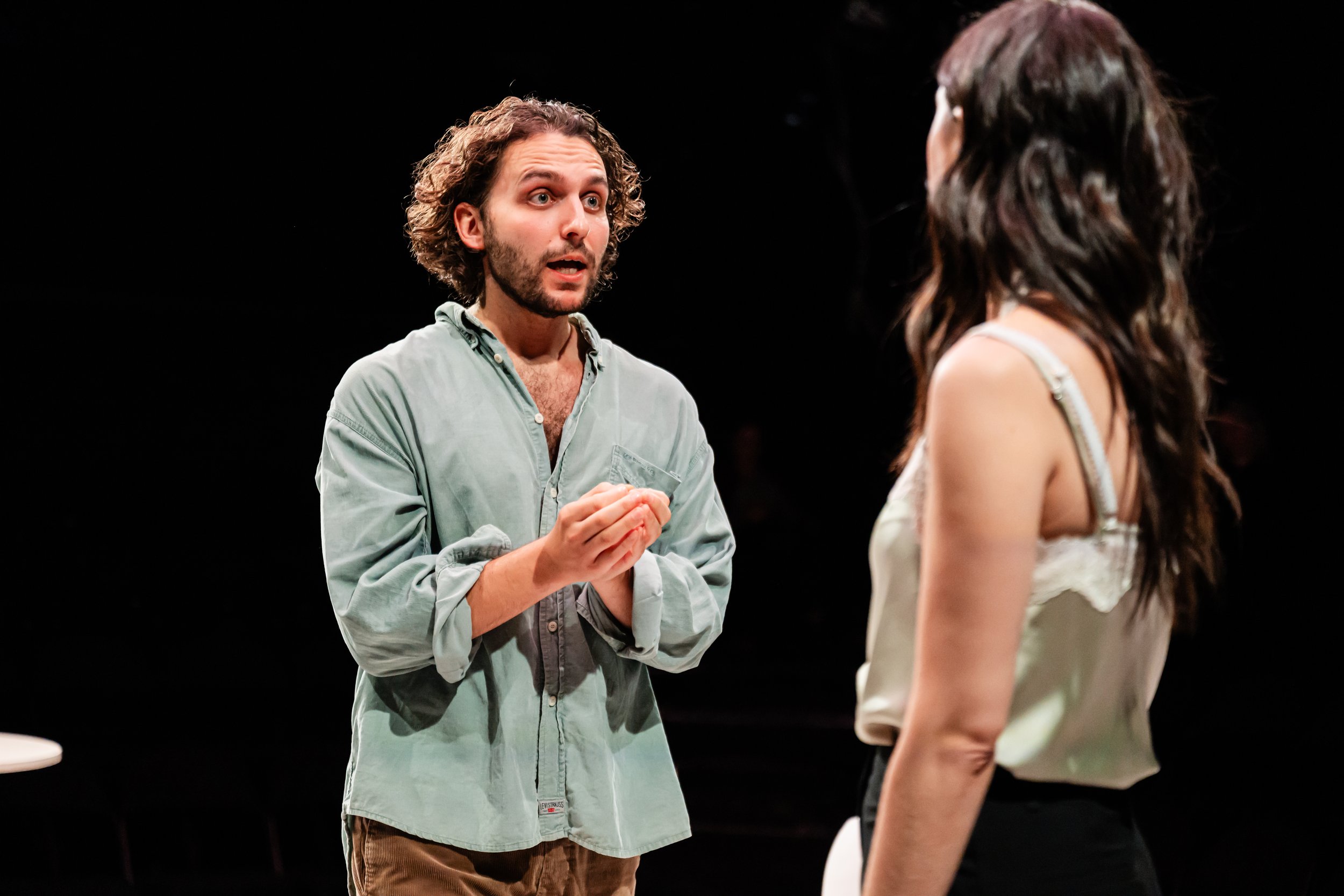
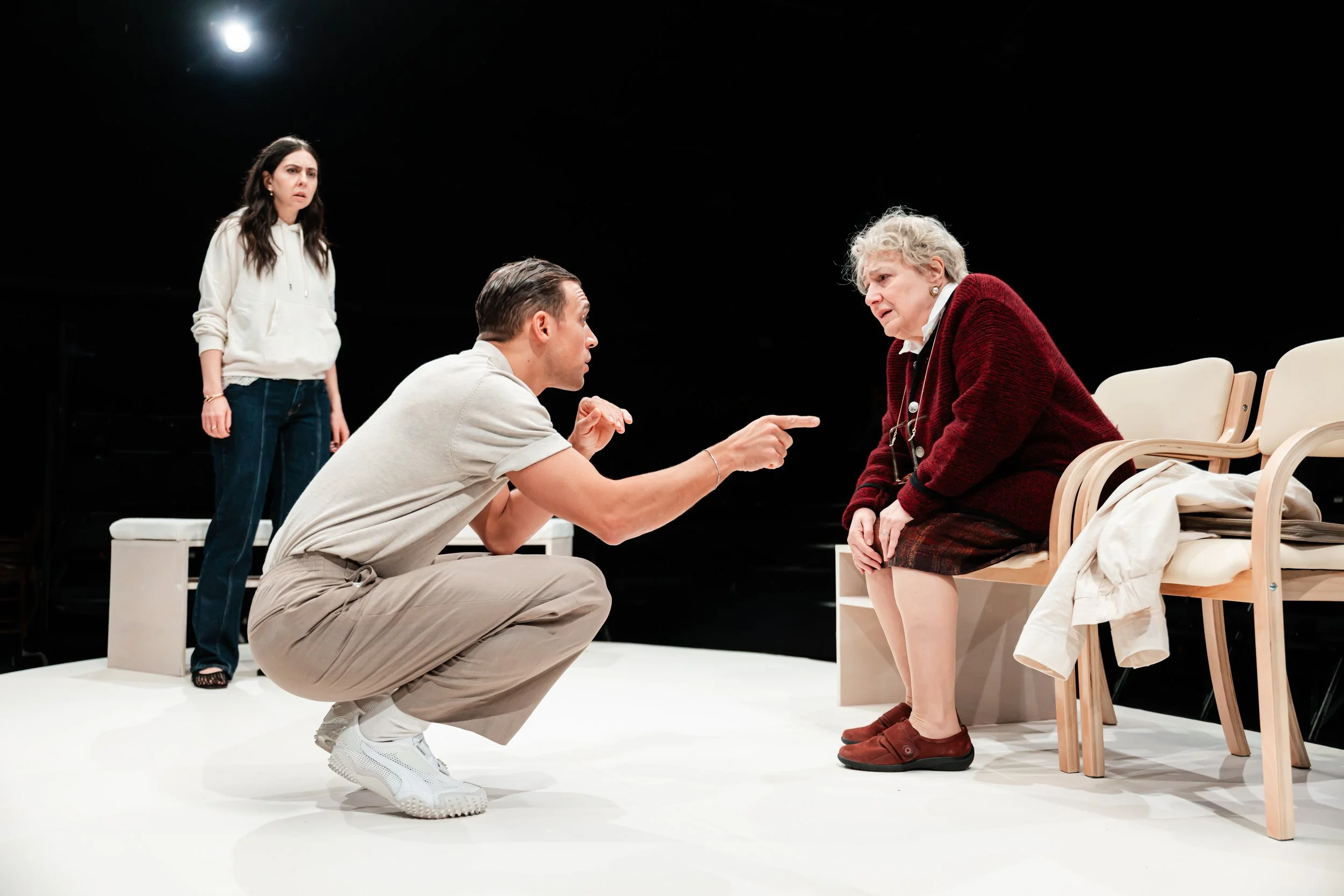
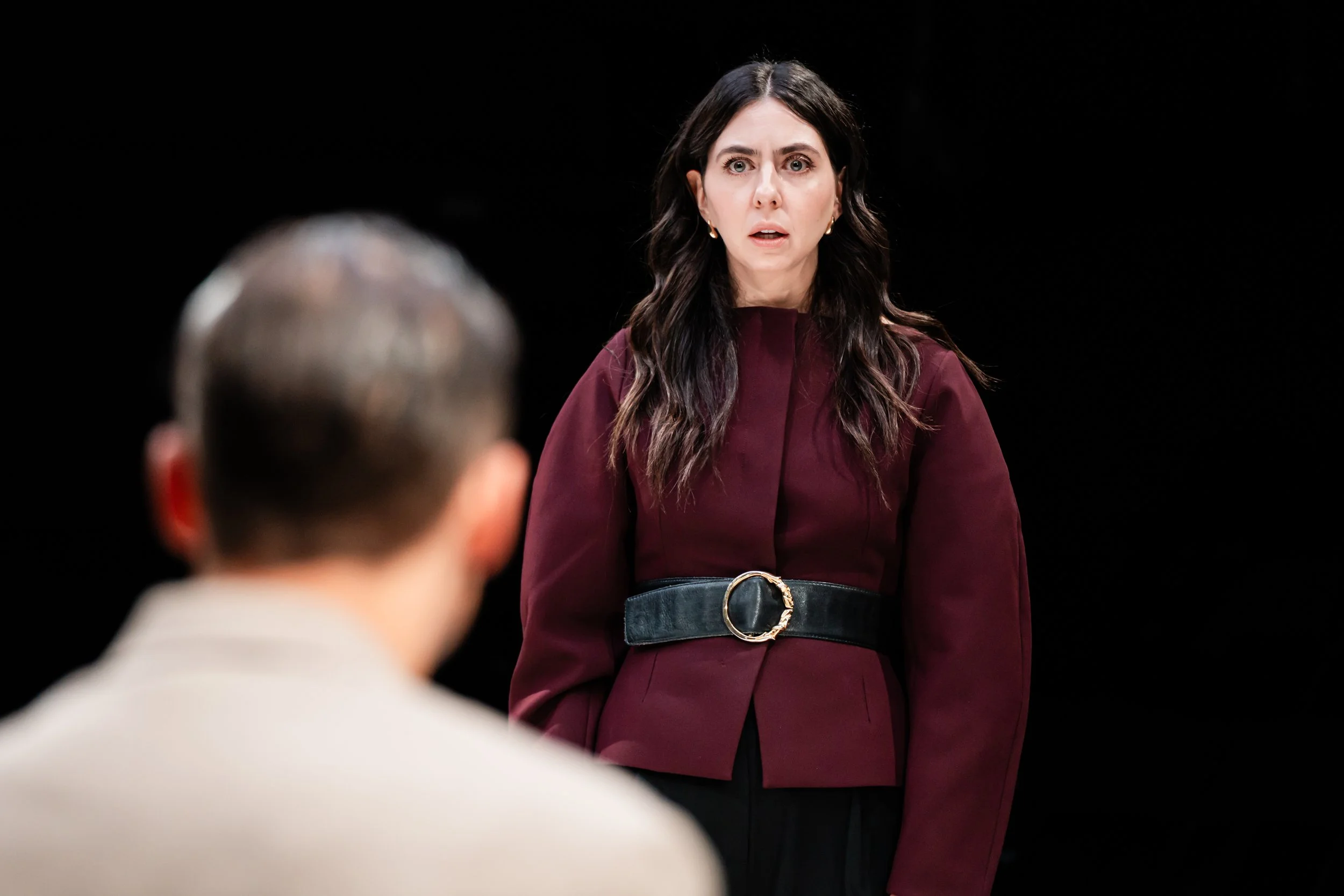
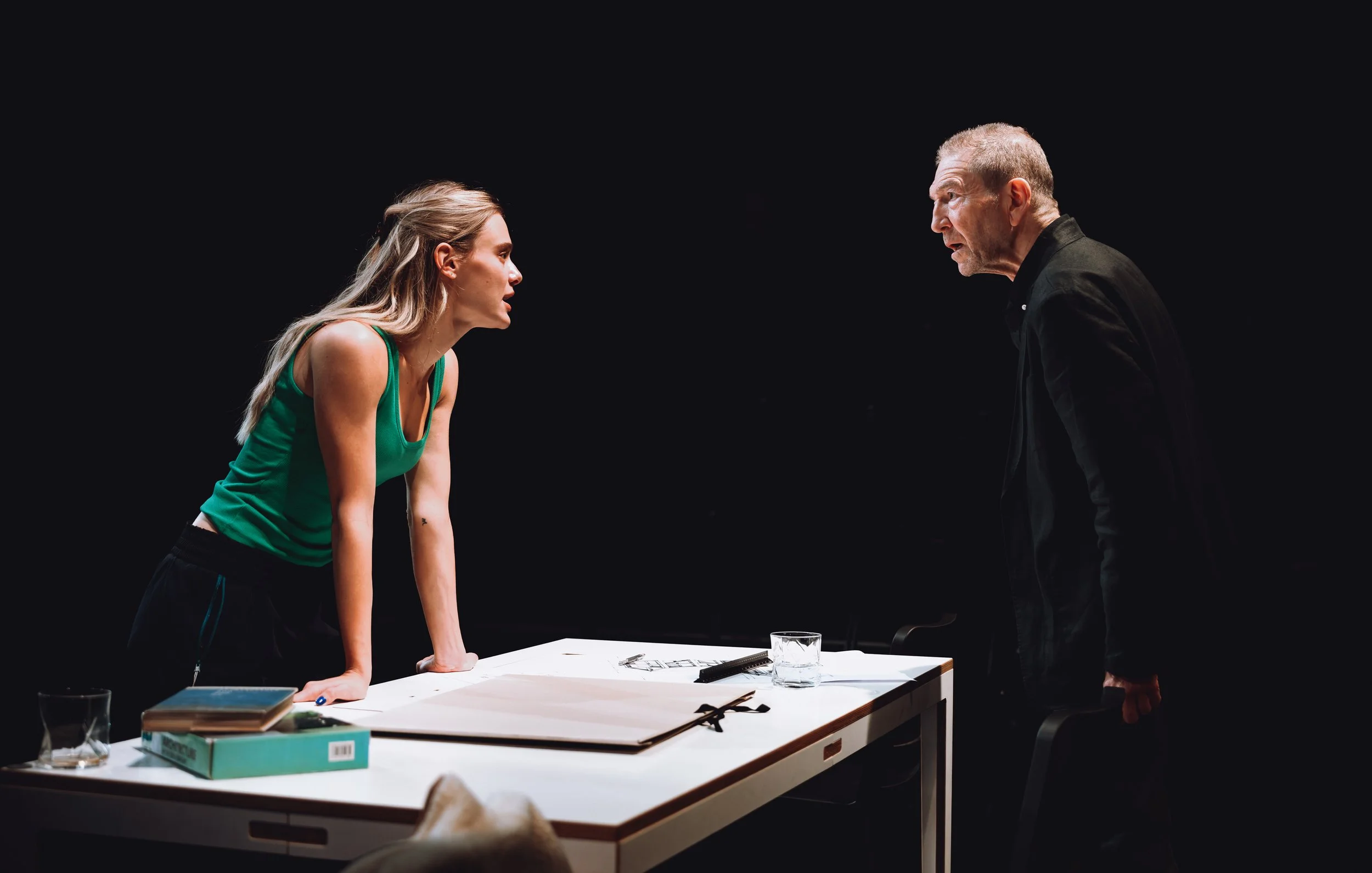
Rachel Barry is equally assured in her performance, delivering a clear, confident and often commanding portrayal of Rachel. Unfortunately, the writing affords her character little of the same nuance. Rachel is consistently difficult to sympathise with, and her determination to persuade her grandmother to sell her memories never feels sufficiently justified. Her arguments with Daniel, meanwhile, frequently descend into a surprisingly childish sibling dynamic, undermining the seriousness of the moral questions at stake. When Rachel finally reaches her moment of revelation, it feels rather inevitable, leaving little room for the emotional reckoning the play seems to be building towards.
There is much to admire in Memoriam, particularly its ambition to interrogate the relationship between technological advancement, historical preservation and personal experience. Should we want to experience something as horrific as the Holocaust in such a visceral, manufactured way, or is there greater value in preserving history through the honest accounts of those who lived it? Does recreating such suffering risk diluting its significance, reducing deeply personal experiences to something to be consumed rather than understood? These are fascinating and increasingly pertinent questions, particularly as the number of living Holocaust survivors diminishes and the responsibility of preserving their testimonies becomes ever more pressing.
Ultimately, however, the production feels somewhat overwhelmed by the breadth of its own ideas, something that a more restrained script could hugely help with. Its strongest moments emerge not from the technology or the philosophical debate, but from the deeply human story beneath them, and it was a thoroughly thought provoking piece of theatre.
Memoriam plays at Southwark Playhouse Borough until 21st November.
★ ★ ★
Written by Annie for Theatre and Tonic, October 2026.