After Miss Julie at Park Theatre Review
Written by Ziwen for Theatre & Tonic
Disclaimer: Gifted tickets in exchange for an honest review
On a Midsummer night in 19th-century Sweden, before her aristocratic father returns home, Miss Julie—whose engagement has just been broken off—slips away from the ball and goes down to the kitchen, where she begins to flirt with the valet. The consequences, however, are beyond imagination. This is the plot of Miss Julie, the representative work of the father of modern drama, August Strindberg. One hundred and seven years later, Patrick Marber adapted this work under the title After Miss Julie. Now, this production, directed by Dadiow Lin, has come to Park Theatre. In this version, the time has been moved to the night of the 1945 British general election.
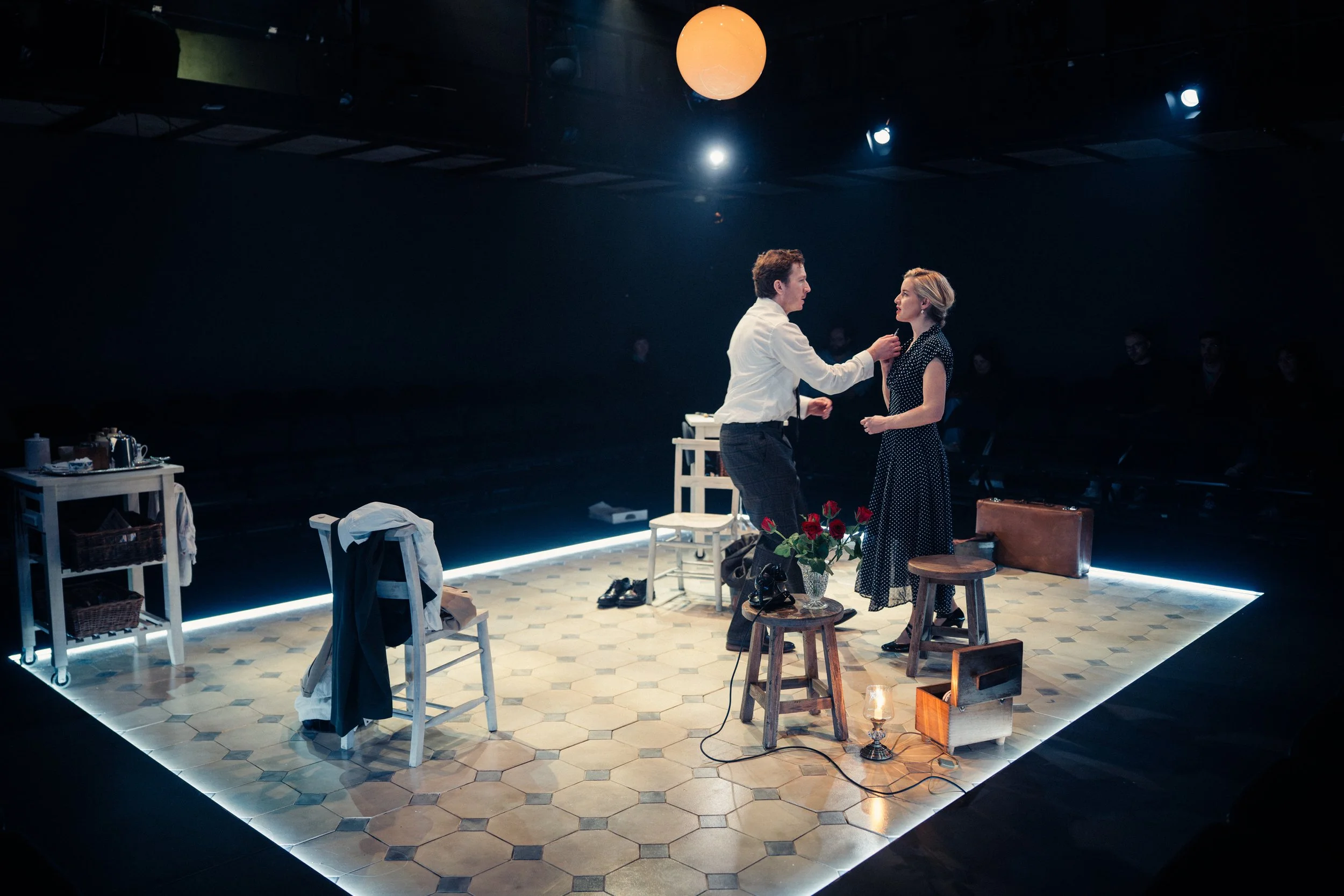
In the story, Miss Julie comes from the ball into the kitchen, and the kitchen is the core setting of the play. At the center of the stage (Eleanour Wintour) stands several white wooden tables and chairs, with baskets on top containing food and tableware. On a small stool to one side sits a vase holding a bouquet of bright red roses and a telephone. Beneath them is placed a pair of Julie’s father’s leather shoes, waiting for John to polish them. Although the scene of the ball is never shown, music (Ed Lewis) can be heard coming from upstairs. At the start of the play, while those upstairs celebrate political change, the maid Christine remains in the kitchen, tidying up and chatting with her fiancé John. The upper floor belongs to the aristocracy, whereas the kitchen is the servants’ territory. As a lady, Julie would not normally set foot in this space, yet she crosses the class boundary and enters it. From that moment, the groundwork is laid for the power struggle that unfolds among the three.
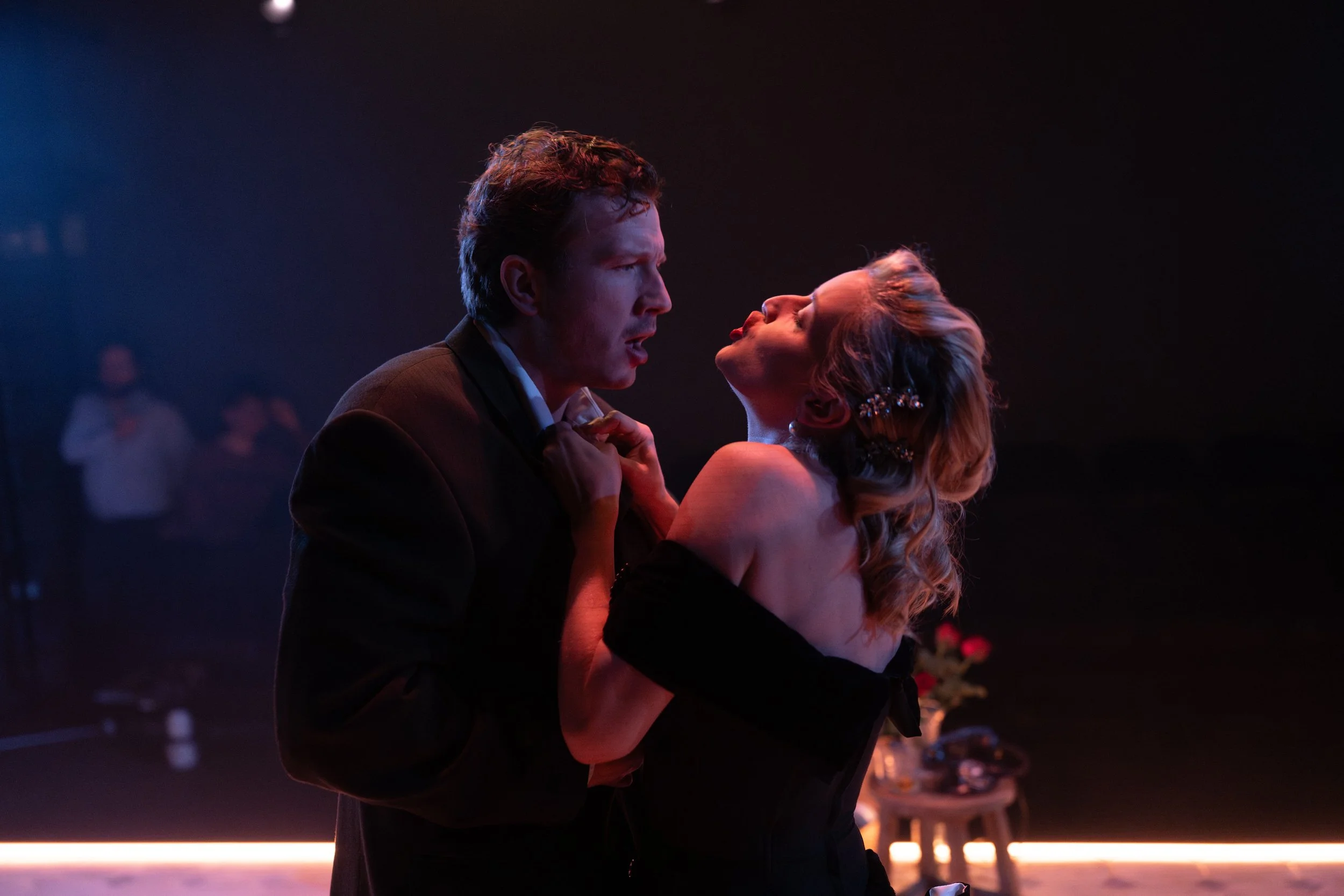
Liz Francis’s Miss Julie is sweet and light, carrying elegance and playfulness in every gesture. Her innocence contains cruelty, and her extreme lack of and longing for love make it difficult for her to escape the path of self-destruction. Tom Varey’s John is very sensitive, while feeling inferior about his own status, he is also extremely conceited, harboring enormous fantasies and obsessions about upper-class life. The chemistry between the two of them is very strong. From the accent Charlene Boyd uses when portraying Christine, one can clearly sense the great difference between her background and that of the young lady. Unlike her fiancé John, she accepts her own class and maintains her self-respect within her living condition. She is calm, pragmatic, and restrained. In this production, because the emotional shifts of the characters are extremely rapid and intense, handling such changes is quite difficult. At certain moments, the three actors are slightly less natural when their emotions and attitudes shift. However, overall, their performances are very gripping.
Within about seventy minutes, such a small space presents a night that changes in an instant. It not only reflects the complexity of human nature, but also reveals the state of society. In the words of director Dadiow Lin, “It is not only a battle between these two, it is even more of a battle between a country and its people”. What seems like the beginning of a hopeful new chapter is overshadowed by the lingering restraints of the past, which prove impossible to escape. Even as Julie and John speak longingly of the future, the audience, like Julie, senses that their dreams are destined to collapse. If Strindberg’s Miss Julie is a tragedy about the unchangeable forces of fate, class, and patriarchy, then Marber’s After Miss Julie is a tragedy about people who remain lost despite living in a society that claims to have changed. Marber’s adaptation is undoubtedly very successful, and this version is certainly worth seeing.
After Miss Julie plays at Park Theatre until 28th February 2026.
★★★★