The Plough and the Stars at Abbey Theatre, Dublin Review
Written by Ciarán for Theatre and Tonic
Disclaimer: Gifted tickets in exchange for an honest review
In Ireland we love little more than commemorating the past – we recently had an entire “Decade of Centenaries” to mark the momentous political, social, economic and cultural changes of 1913-1923, which began with labour strife, included the First World War and the 1916 Easter Rising against British Rule, and concluded with the War of Independence and subsequent Civil War. It was easy to assume, then, that the Abbey would go all-out with its centenary production of Sean O’Casey’s The Plough and the Stars. First performed in 1926, on 11th February of that year, the production was disrupted by protestors storming the stage, some of whom assaulted the actors.
The issue was the depiction of the revolutionaries and participants of the 1916 Rising; while unpopular at the time, in the intervening decade, Official Ireland had deemed them martyrs beyond reproach. O’Casey’s tactic, as ever, was to disturb these cosy assumptions, and show the human, petty reality underlying notions of valour and goodness – thus we are presented with citizens looting shops while the city burns, gossips glorying in the misfortune of others, and blowhards prancing around in military regalia, but fleeing any actual fighting. Though unpalatable to some at the time, Plough has gone on to become “perhaps the definitive Abbey Theatre play” in the words of historian Donal Fallon, and as such the opening night was certainly An Event – confirmed by the attendance of recently elected President of Ireland, Catherine Connolly. Given all of this context and anticipation, it was safe to assume something grand and epic would be forthcoming, especially given the scale and ambition of December’s Dublin Gothic. Unfortunately, too many aspects of the production fell flat, and though the script sparkled into life at many points, it was difficult to leave without feeling disappointed.
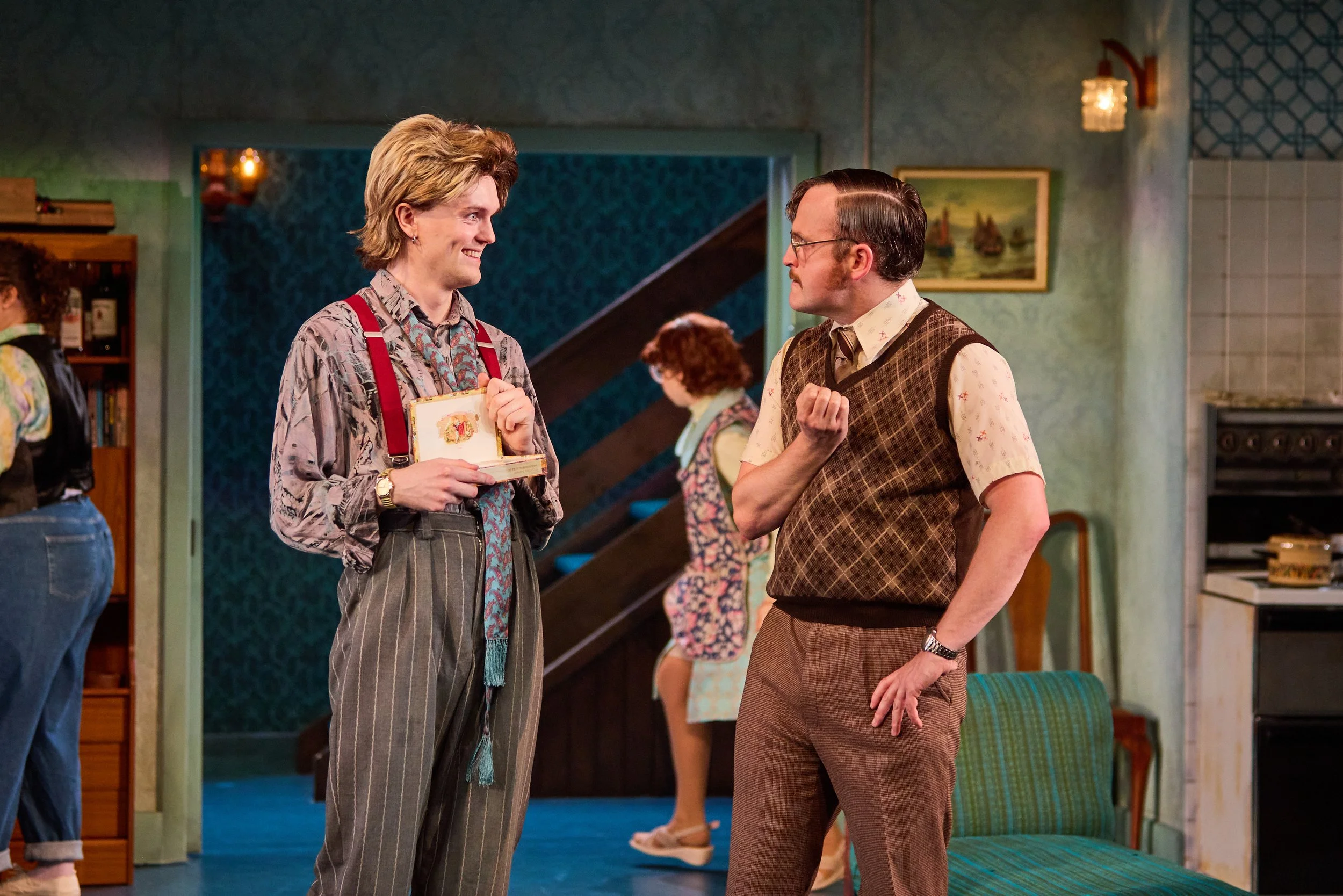
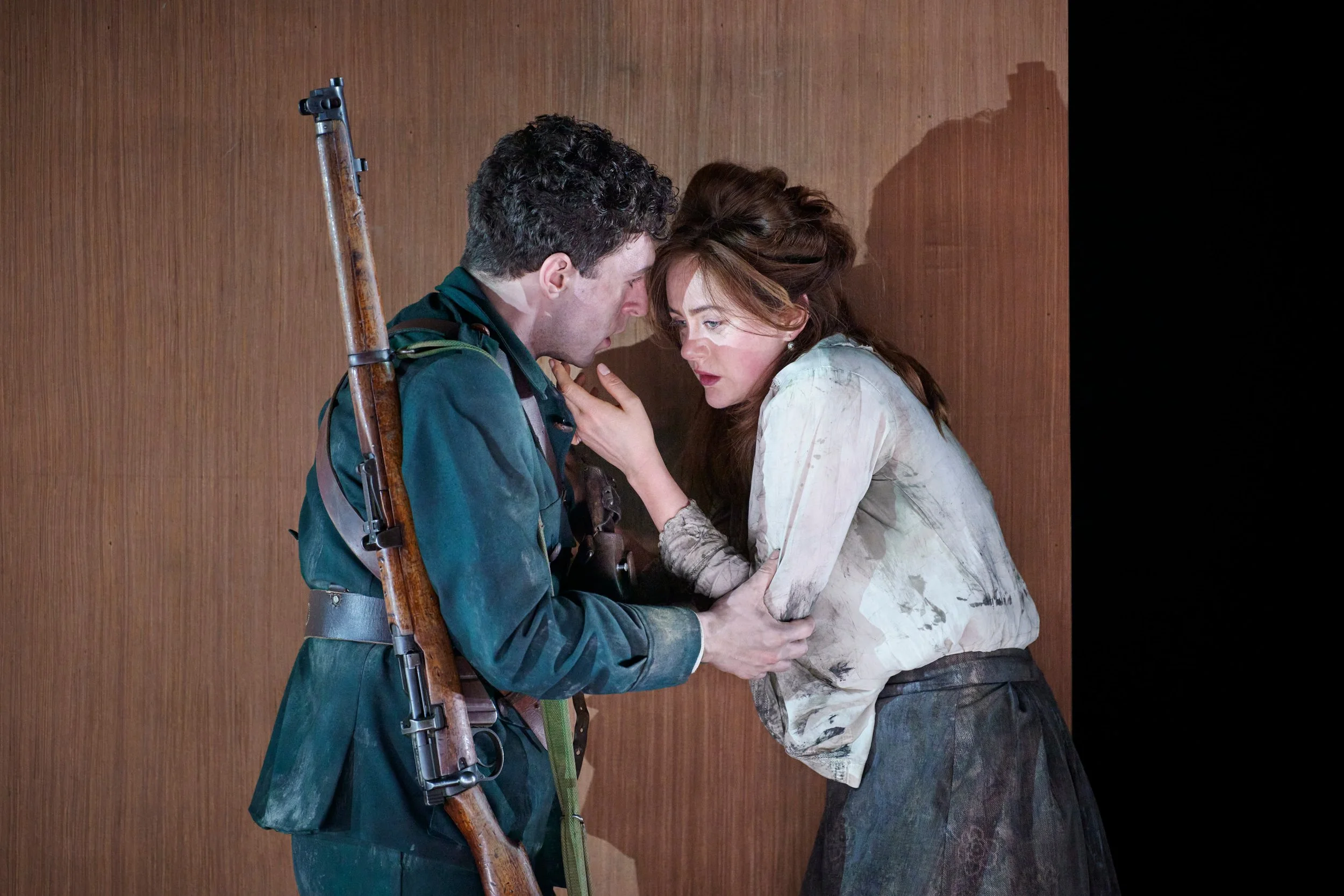
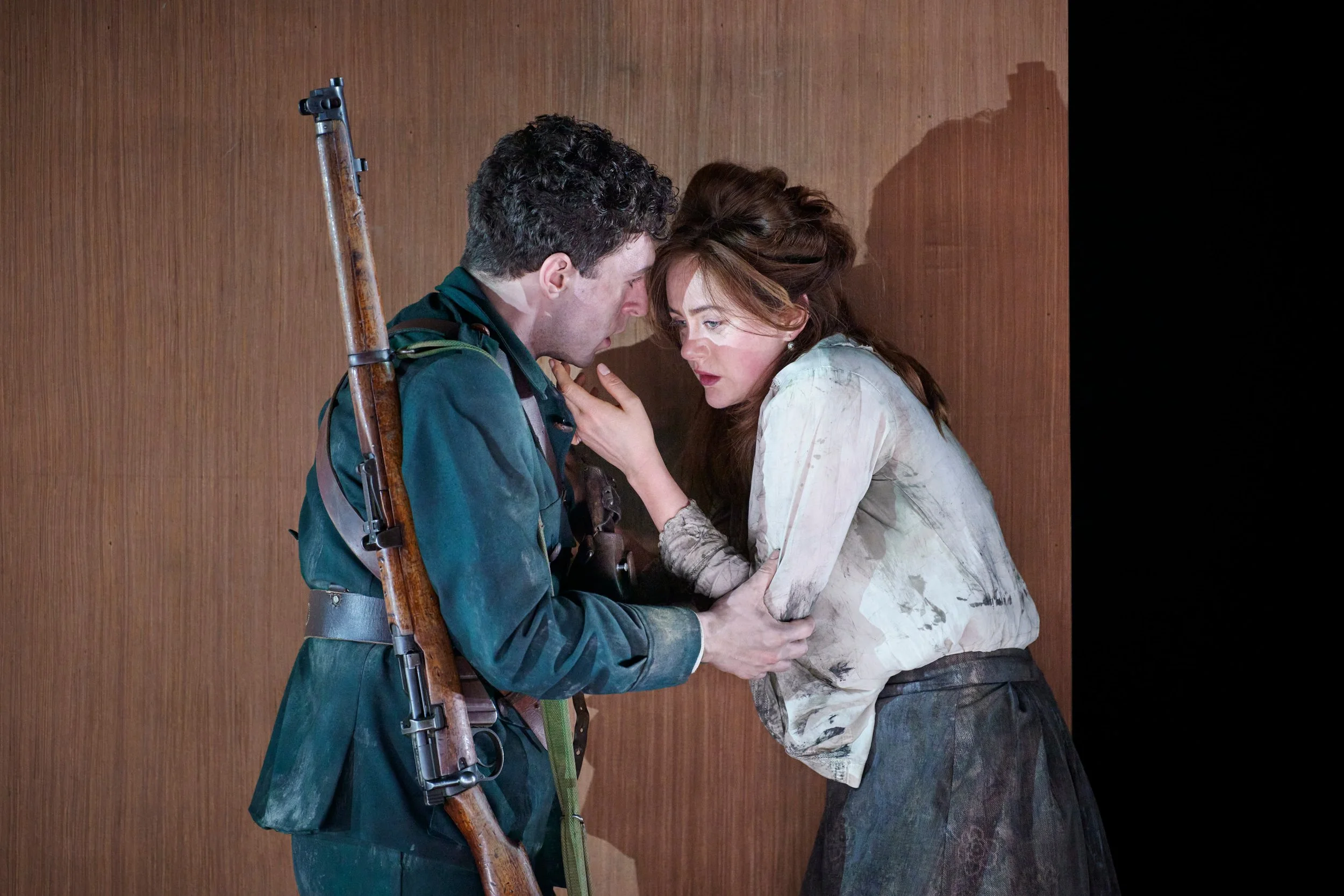
The play takes place in a tenement building in Dublin’s north-inner city, not far from the Abbey itself. The core characters are the Young Covey (Thommas Kane Byrne), an articulate but immature socialist; Peter (Michael Glenn Murphy), the older wannabe revolutionary; Fluther Good (Dan Monaghan), a carpenter; and Jack (Eimhin Fitzgerald Doherty) and Nora Clitheroe (Kate Gilmore), respectively a former commander in the Citizen’s Army, and his wife, whose goal is to get out of the tenement and, in the ultimate social sin in Irish life, makes no secret of her desire to better herself and her lot. This is one of the first things we learn, as Mrs Gogan (Kate Stanley Brennan) takes in Nora’s delivery of a new hat and mocks her taste. We learn that these characters are both politically involved (which at this time also meant militarily involved – in the Citizen’s Army or Irish Volunteers, who eventually fought in the 1916 Rising), but also petty and bitter; the Young Covey and Peter bicker endlessly, while Jack resigned from the Citizen’s Army when he wasn’t chosen for a promotion. As the play moves beyond the home and into the pub and streets, we meet a broader group, including a prostitute, Rosie (Catríona Ennis), and a barman (Michael Tient), and the scenes are intercut with speeches by revolutionary leader Patrick Pearse, whose rhetoric preached the glorious nature of war. The final two acts are set in the midst of battle, during Easter Week in 1916, when revolutionaries seized public buildings in Dublin, declared the Irish Republic, and were swiftly defeated by British forces. This is where O’Casey’s satirical voice is the sharpest, as he shows an almost relentless parade of cowardice, with the backdrop of war, destruction, and, on a far more low-key level, the withering away of Ms Gogan’s child, Mollser (Evie May O’Brien) from tuberculosis – a far less glorious, but more common, death that many in Ireland met.
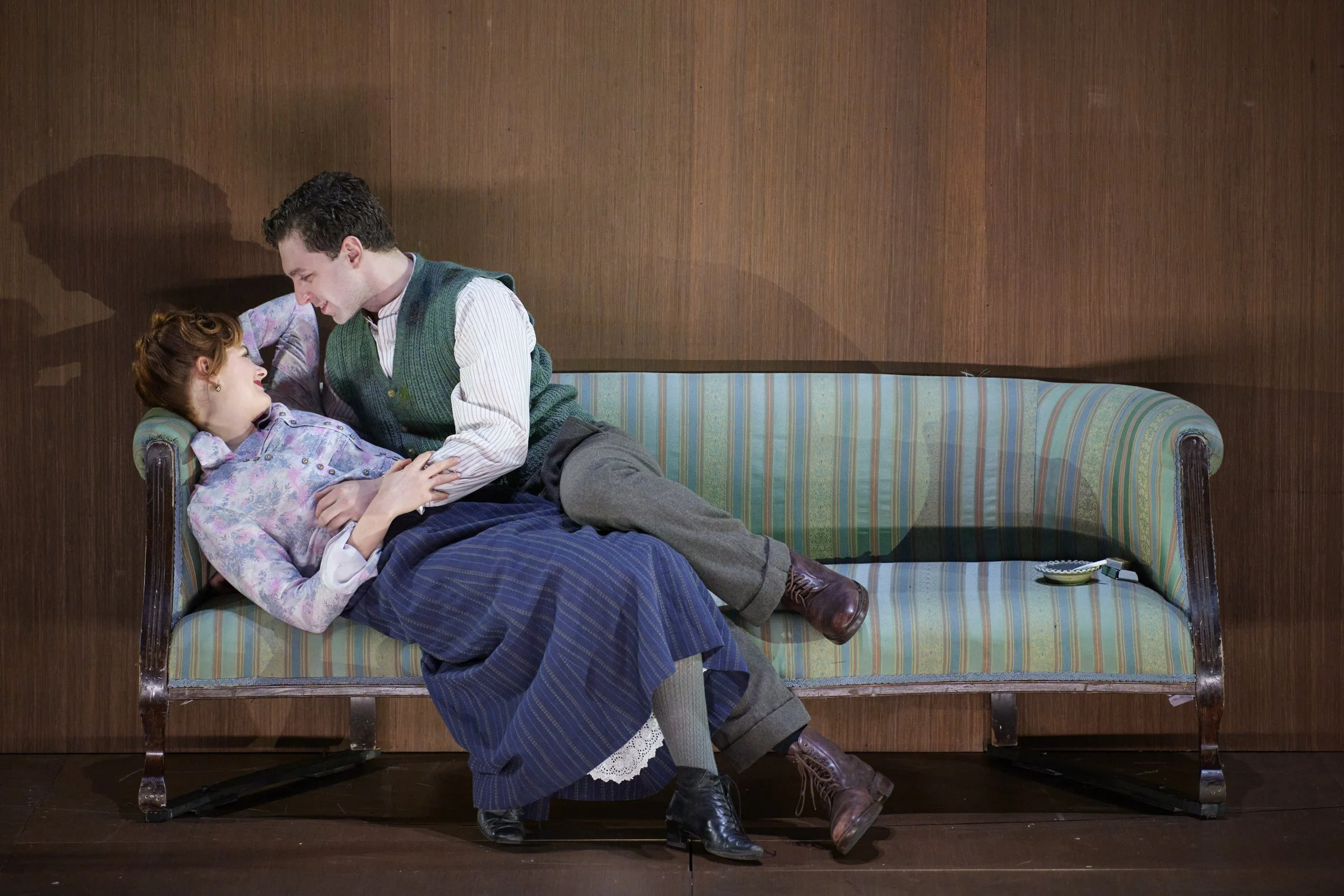
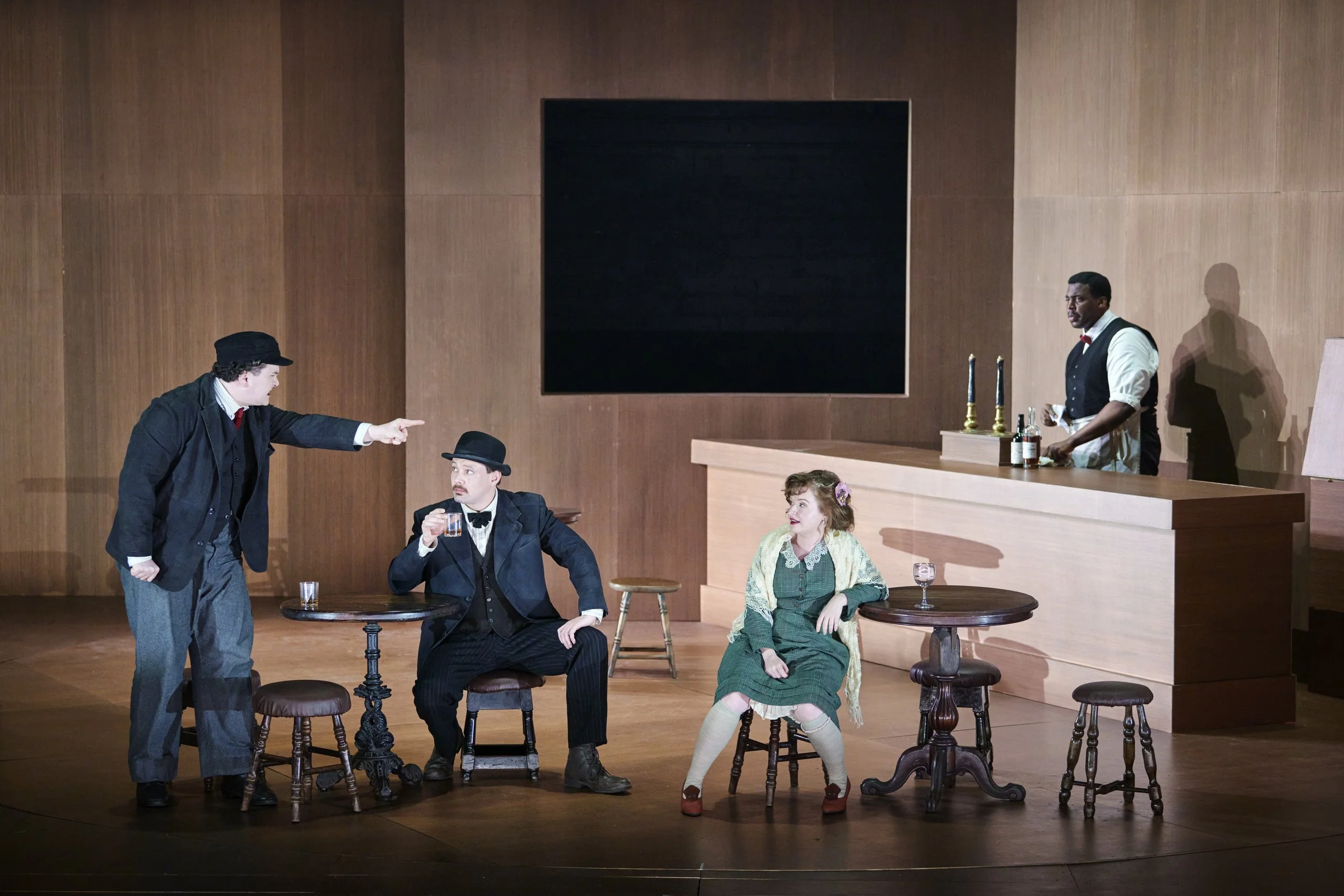
The first two acts, in particular, are genuinely amusing, with O’Casey’s genius for language shining through with ease – Fluther constantly uses and misuses terms like “derogatory” and “vice versa,” Mrs Gogan has an exaggerated and depressing story for any situation, and the Young Covey’s constant rote articulation of socialist talking points and slogans always produces a laugh. The final act especially is more tense, and ultimately sombre, and the performers are consistently able to meet and play to the required mood. Kane Byrne as the Young Covey excels; he is a shimmering, blistering light in Irish theatre right now –exuberant, natural, charismatic, he matches his booming frame with uncommon delicacy and precision. It’s hard to imagine a role or production he wouldn’t make watchable, and with a script this good he makes it captivating. Fitzgerald Doherty and Gilmore as the lovestruck Clitheroe couple are more low-key, but again superb; if they don’t convince, the play will have no chance of working, and they certainly do. Monaghan and Murphy are excellent comic foils throughout, while Catherine Fay’s costumes are relatively straightforward, but have lovely flourishes that manage to consistently elevate them.
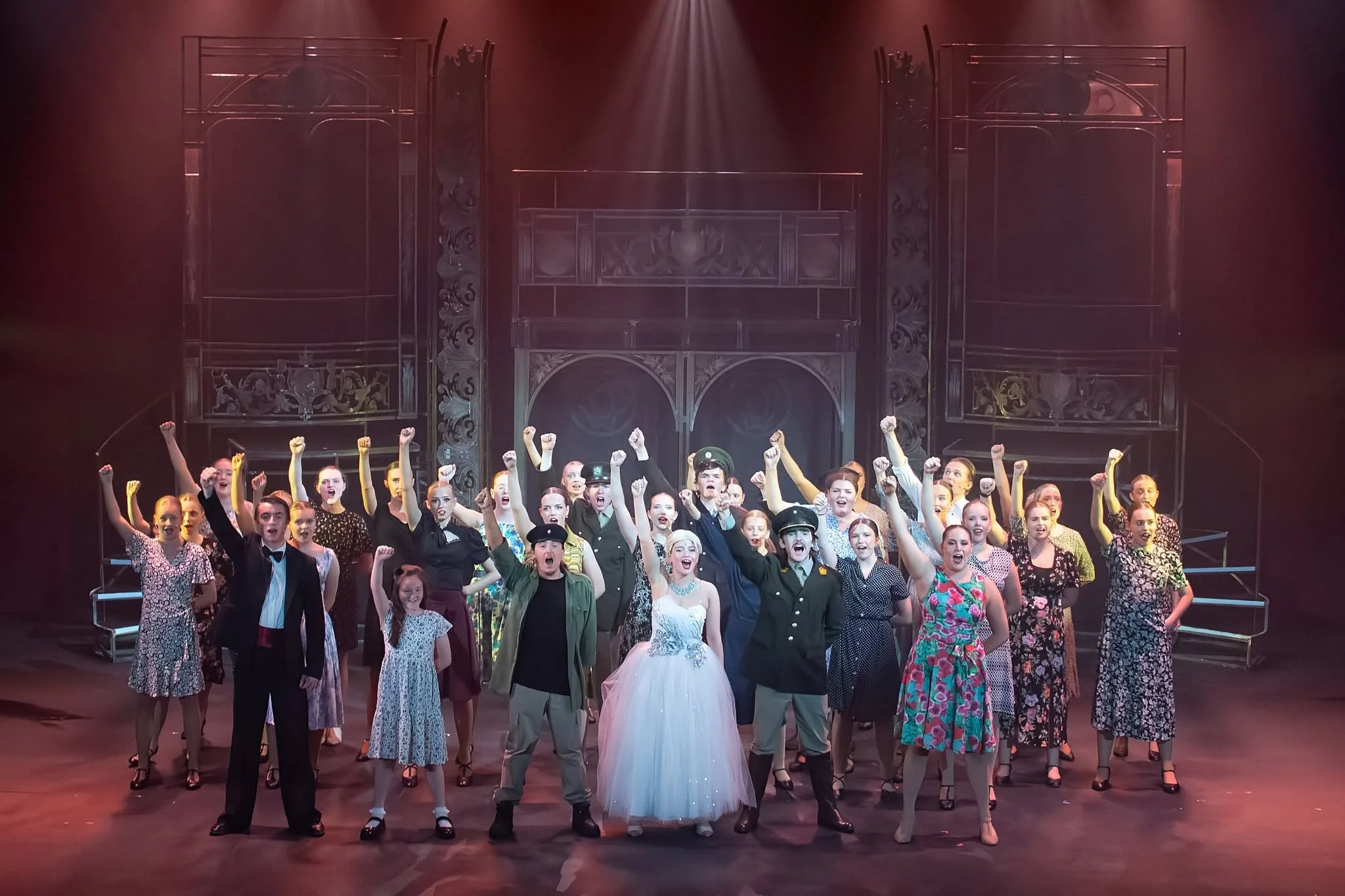
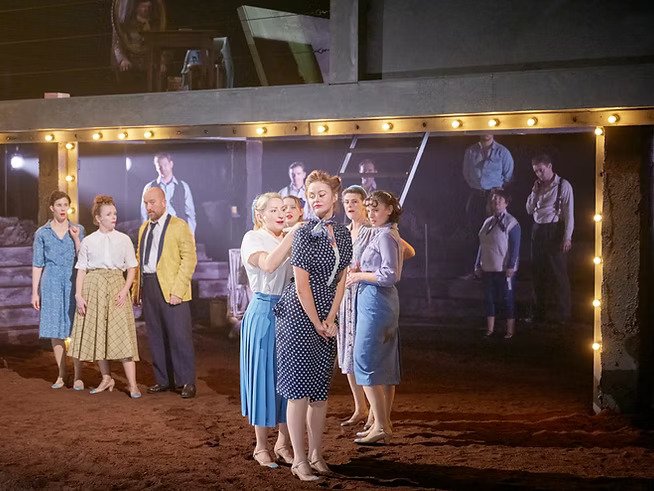
The main issue was evident from the very beginning, and was a consistent problem - the set was composed almost entirely of tall, straight wooden panels tightly packed beside each other. For the tenement building and the pub, then, there was almost nothing of interest to look at on stage. Given that O’Casey was one of the great realists of the twentieth century, this decision to use his script and appropriate costumes, but match them with a dull, blank stage was utterly mystifying. If they had decided to make it a heavily stylised production (which would have been welcome – The Plough and the Stars is surely the most produced play in the history of the Irish state), with radically distinct costumes, dialects, and movements, this would have been explicable, but in this production it was just bizarre. The only alterations from this plain background were a revolving platform on which Matthew Malone recited Pearse’s speeches, and the final act, in which the stage was fully stripped back to black paint on bare concrete. This was likely to suggest the Stonebreaker’s Yard in Kilmainham Gaol, where the leaders of the Rising were executed, but given that it is a scene that called for intimacy and paranoia, the open space, and occasional use of the slow revolve weren’t entirely convincing.
The Abbey’s centenary production of The Plough and the Stars was always likely to frustrate some cohort – although not as many as the original production – so I have some sympathy with the director Tom Creed and his team; there were a lot of eyes on them, and everyone’s a critic. But this is what makes their stylistic choices the more bemusing; there was an overall lack of coherence and drive to the show. Anyone curious about O’Casey, or who hasn’t seen the play, should still go and see a fine rendition of a fine play, but it’s impossible not to feel that we could’ve seen something a lot more startling and ambitious.
Plays at the Abbey Theatre, Dublin, until 30th April
★★★