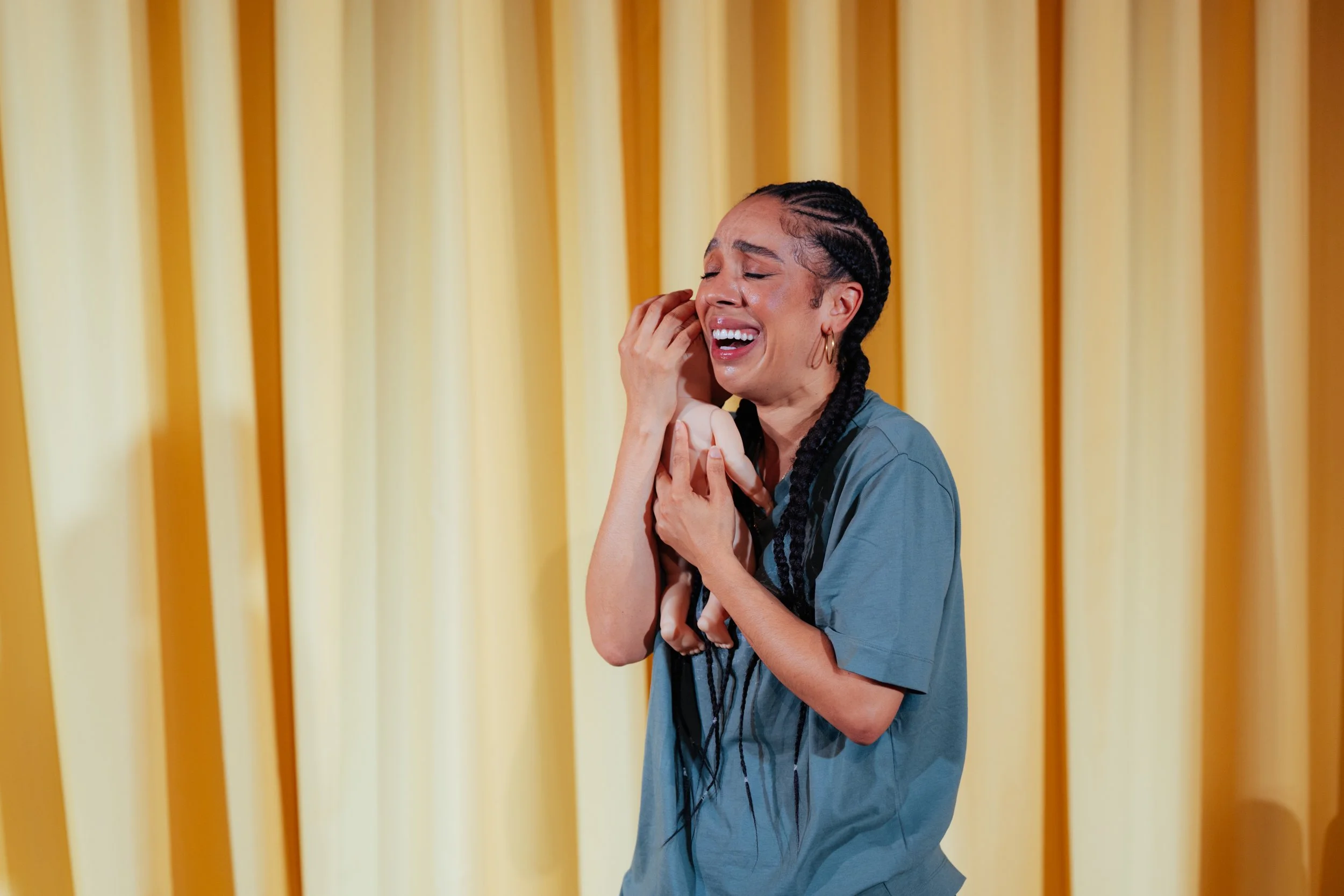
The Curious Incident of the Dog in the Night-Time at Smock Alley Theatre Review
Written by Ciarán for Theatre & Tonic
Disclaimer: Gifted tickets in exchange for an honest review
If adapting a best-selling novel for the stage can be tricky, producing a West End and Broadway hit in a community theatre-setting is by far the more daunting task. Shorn of the budget, technology, time, and resources that feed into the most expensive and highly produced theatre on the planet, the task of community theatre is to be creative, to do a lot with a little, and make sure that its productions create a new vision of the work, not merely a smaller-scale version of its grander predecessor. With their interpretation of The Curious Incident of the Dog in the Night-Time, written by Simon Stephens after the Mark Haddon novel, No Drama Theatre have given this a really good go, and while they don’t always succeed, there is much to love in the work.
The story, surely, will be well-known to everyone at this stage – Christopher is a teenager who experiences the world in a very particular way, and when he finds his neighbour’s dog pinned to their front garden by a pitchfork, he becomes determined to find out who the murderer is. This leads him on a trail of discovery that stretches from his Swindon home all the way to London, and on the way, he discovers the secrets that both of his parents wanted to keep from him.
While it is never stated in the novel or play, Christopher most likely has Autistic Spectrum Disorder (ASD), as he hates loud noises, fixates his attention on certain topics and ideas, and has an inability to lie – acting, for him is lying. The presentation of ASD, while notable when Haddon published the novel in 2003, hasn’t aged particularly well, with far too many tropes being jammed into Christopher’s personality in order to make his condition recognisable to a broader audience. This isn’t the place to get into the weeds of that argument, but it must be acknowledged that Noah Harte plays the role superbly. They are delicate but firm, funny yet plain, and entirely absorbed in Christopher’s world. The rest of the cast all play various roles, including a chorus, with Grainne Holmes Blumenthal as Siobhan, Christopher’s life skills teacher and narrator, and Benjamin Musgrave and Jane Tuohy, as Christopher’s parents, sharing the stage most often.
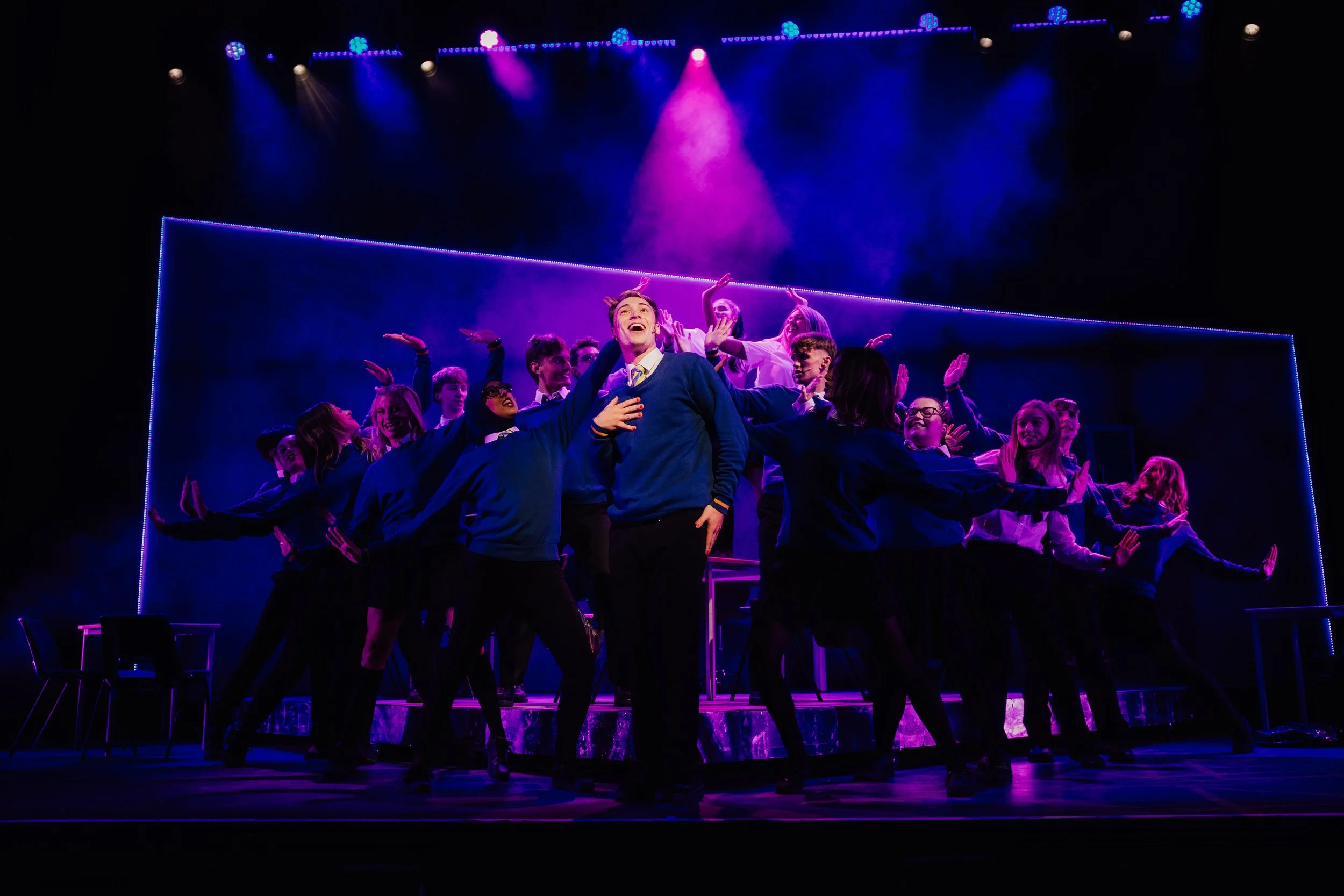
The play takes a while to get going, and this is primarily because of how Christopher interacts with the world in the first act – it is too often a narration, with Harte or Blumenthal describing actions or emotions, and because it is so linguistically based, there is little space for Christopher’s ASD to allow for effective, engaging creative decisions. While his discovery that his father has lied about his mother’s death is harrowing, it plays in a pretty straight manor, not taking into account Christopher’s neurodiverse response to this news. This changes in the second act, as he is compelled to move beyond the confines of his locality, and the role of narrator or describer, into that of doer. And so we see Christopher interacting with strangers, searching for the train and Underground stations, and being lost in a world that, suddenly, he isn’t able to control or curate. He tries to navigate London and is overwhelmed by the chorus of people, noises, and advertisements, or is buffeted by an army of blank-faced commuters, in a scene reminiscent of Eugene O’Neill’s expressionist masterpiece, The Hairy Ape. This indicates the theatrical benefit of a protagonist having ASD, as it enables a creative director to present an experience of life onstage that is unusual to the majority of the audience. Director Ellie Lee Henry, within the limitations of her budget and resources, meets the challenge well in this second act, with her work on sound design nicely complemented by Hannah Bevan’s lighting design.
At two hours 10 minutes, there are moments when you may fear that time will lag, but such is the visceral nature of the second act, of Christopher’s collision with the neurotypical world, that when it ends, it all feels a little too soon. Some may feel that it becomes excessively sentimental in its conclusion, and while there is a neatness that seems out of place with the harshness of the first two hours, it must also be remembered that this is a Young Adult novel adapted for the stage, so this ending really shouldn’t be a surprise.
Community theatre is vital for the cultural life of any mid-size city. As arts venues in Dublin continue to close or scrape for funding on a yearly basis, the dedication of people to produce interesting, engaging work for a reasonable price is to be lauded. With this production of The Curious Incident of the Dog in the Night-Time, No Drama have again shown that they are a consistent source of good, ambitious work that pushes against its own limitations.
Plays at Smock Alley, Dublin, until 31st January
★★★