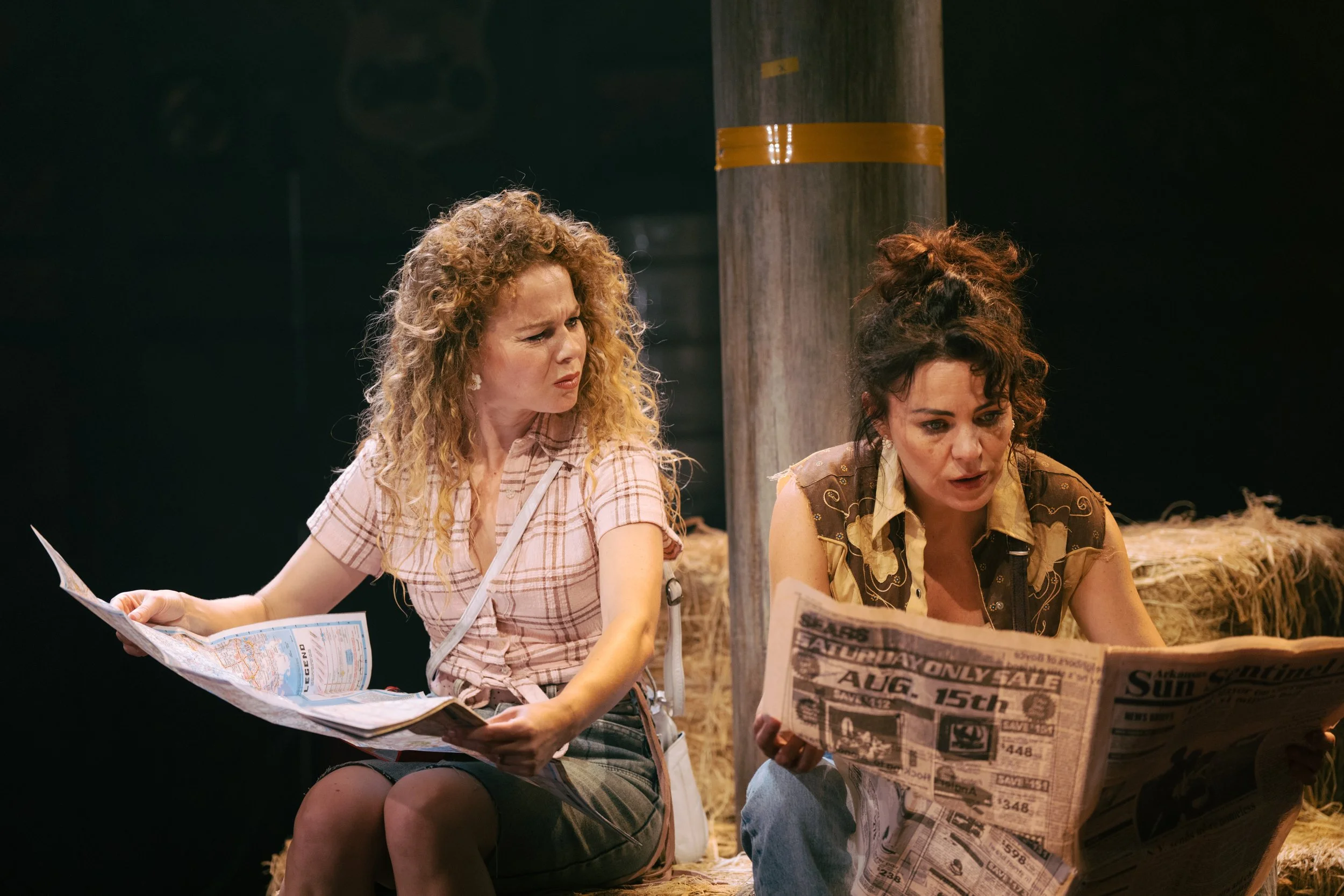
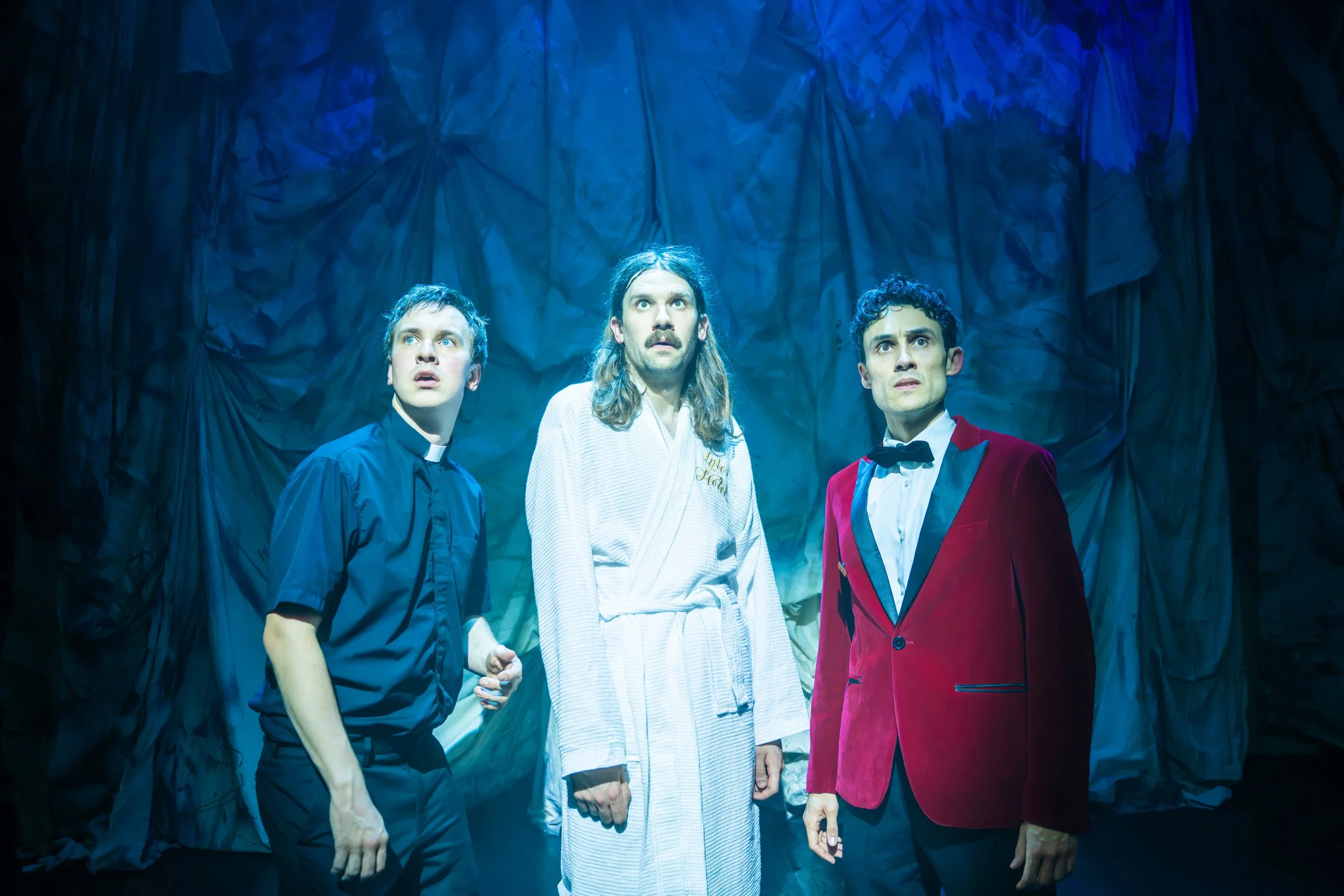
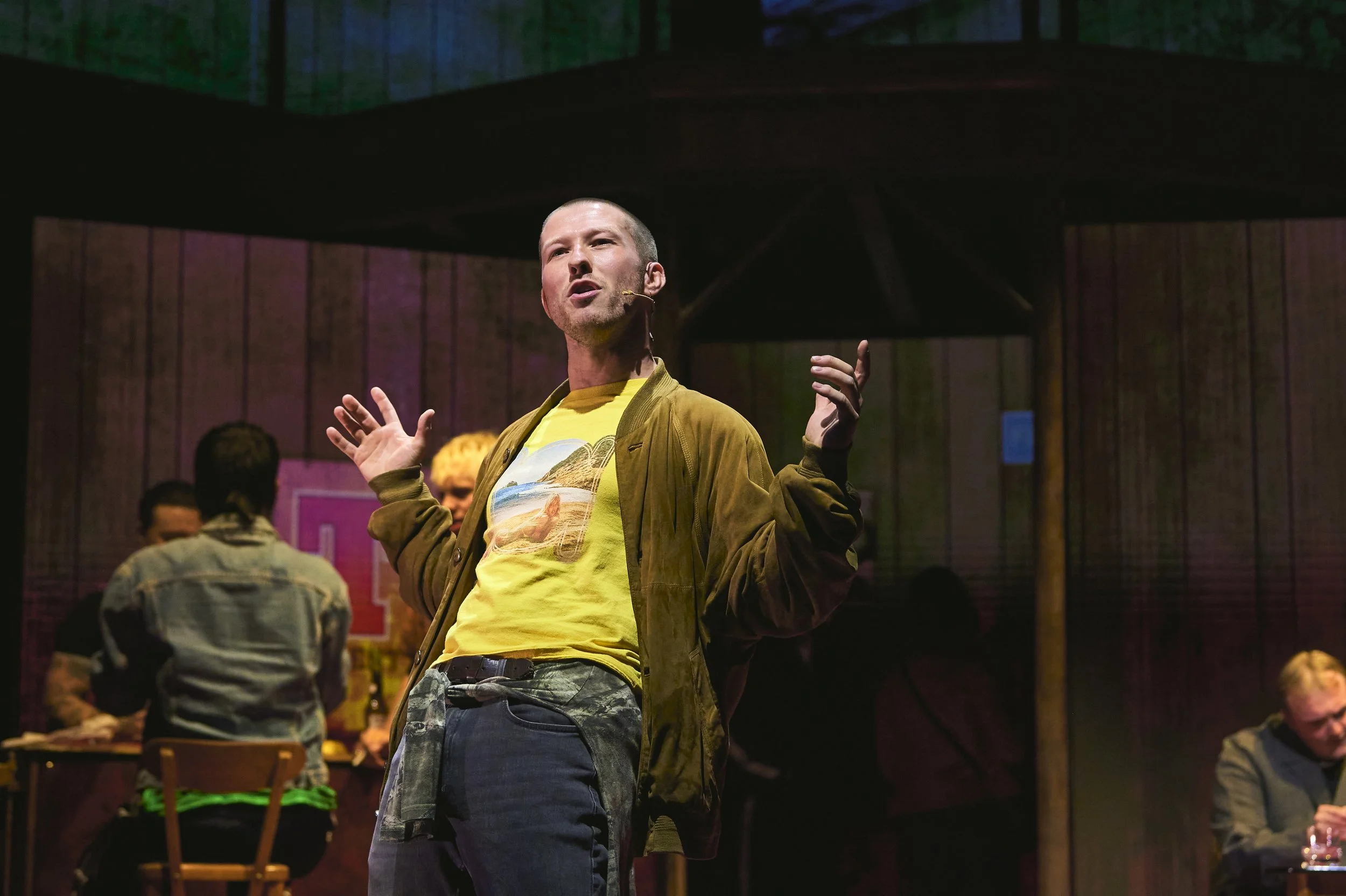
FLYBY at Southwark Playhouse (Borough) Review
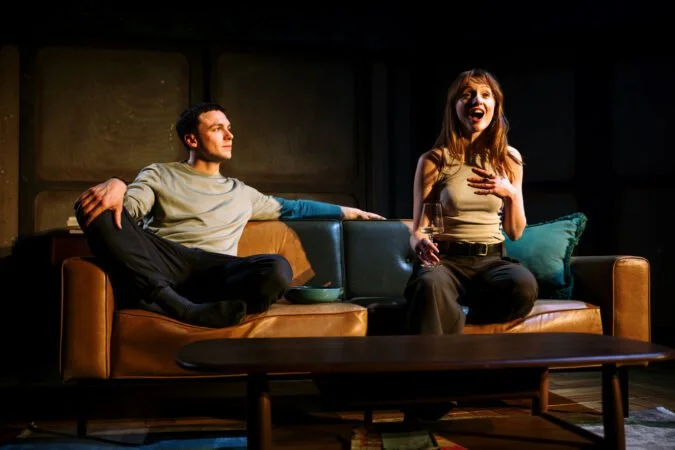
Stuart Thompson and Poppy Gilbert
Written by Penny for Theatre and Tonic
Disclaimer: Tickets were gifted in return for an honest review. All views are our own
The opening of a new musical with an astronaut as one of its main characters is perfectly timed – Project Hail Mary is smashing it at the box office, and the world has been gripped by the Artemis II mission. FLYBY promises to fuse “an exhilarating love story with the vastness of space”. Unfortunately, this story of a toxic relationship, largely told in flashbacks, is full of angst and emotional lows, with no highs to balance the repetitive misery.
The problem lies firmly with the script – acting, orchestrations, set and technical support are all excellent and deserve much better material. At the play’s start, the scene is set by a presenter (Rupert Young) who tells us about the ESC, a bumbling European space agency that has “lost” a spacecraft, stolen by astronaut Daniel Defoe (presumably naming him after the author of history’s most famous castaway was meant to either amuse or make a point, but it was just distracting). Young tells us that Daniel’s reasons for this daredevil action will be explained and explored. Spoiler: they’re not. At least not in a way that tells an engaging story with a satisfying conclusion.
Most of the piece tells us the story of the relationship between Daniel and a brilliant young filmmaker, Emily. We follow them through a series of everyday couple milestones: – a stay in a “rustic” Airbnb, living together and coming home after a tough day at the office, or a trip to a stately home. It’s presumably meant to position them as a relateable love story, but one that is so powerful that a break up is devastating, a break up in which one of them steals a spaceship and leaves the planet is utterly incomprehensible. The reality is that Emily is written as such an awful person that Daniel’s actions, although utterly ridiculous, begin to make sense.

There’s no lightness in this relationship, none of the humour and banter of early days – just a lot of existential analysis, “Am I kind?” (No). “Am I a good person?” (No). The characters’ flaws are explained with more flashbacks to their childhoods. Emily’s father, a filmmaker who regularly cheats on her mother, appears to have created the monster she has become. A song that lays out all of the cruelties inflicted on Daniel during his earlier years aims to explain why he puts up with Emily’s bullying and aggression. This would be more impactful if the cruelties were more than the standard growing pains everybody endures.
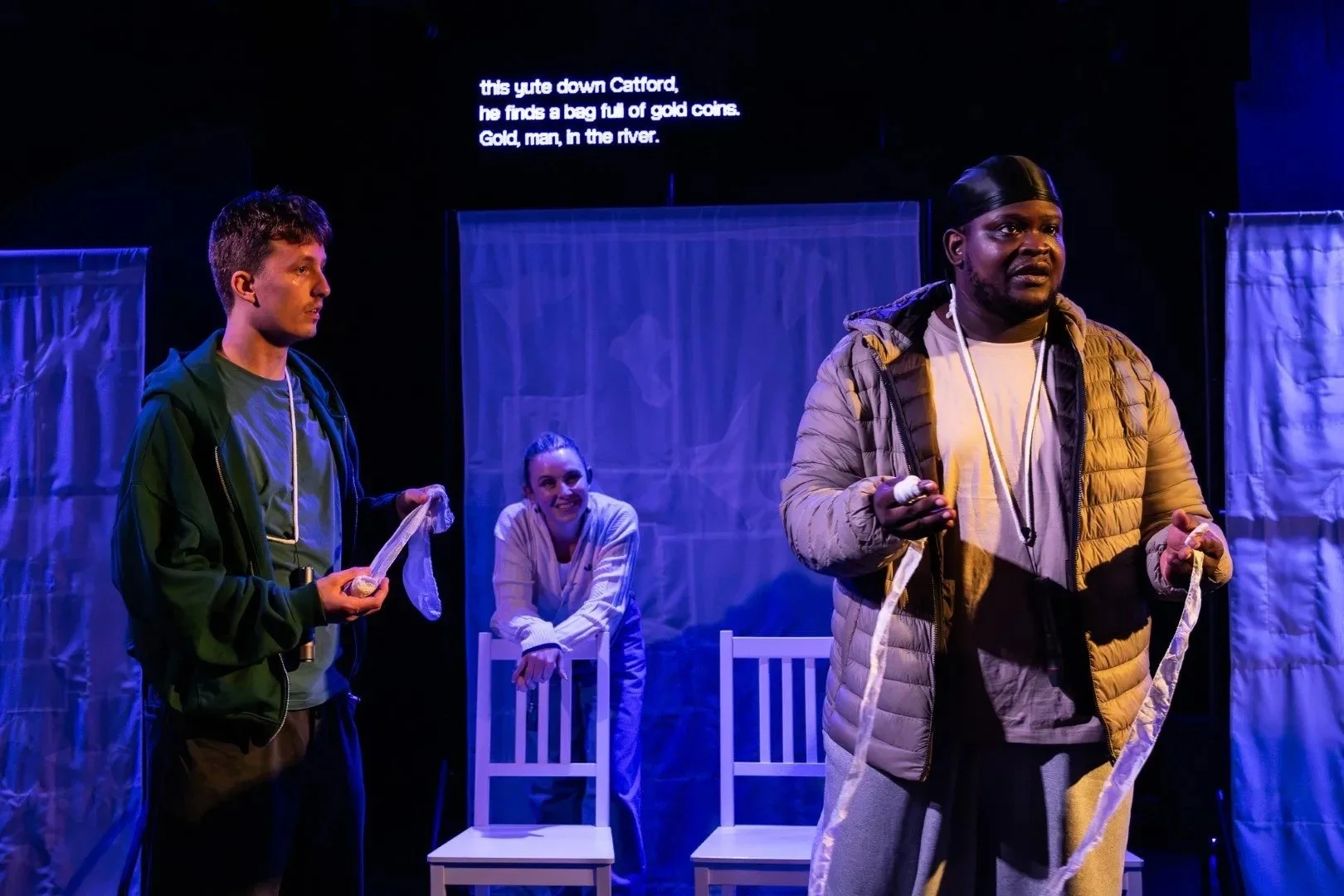
There are some lovely melodies in the score, beautifully orchestrated by composer and writer Theo Jamieson. But a lot of the songs are discordant and jarring, with quickfire lyrics that mean many are lost. The three actors who provide a Greek Chorus style of narration (Rupert Young, Simbi Akande and a woefully underused Gina Beck) produce some wonderful, rich harmonies that elevate the performance. But these are few and far between. The trio do well to deliver complicated dialogue at a very fast pace with crystal clear diction, although this pace is so fast that it’s hard to keep up despite their capable delivery.
FLYBY’s saving grace is definitely in the lead performances. As Daniel and Emily, Stuart Thompson and Poppy Gilbert are natural, confident and very watchable. Thompson has a glorious singing voice that brings depth and emotion to his impressive solo numbers. Gilbert portrays a very flawed young woman, full of anger and bitterness and hard to empathise with, but once she lets the barriers drop and displays some real emotion, in Gilbert’s hands it’s a very powerful and convincing performance.
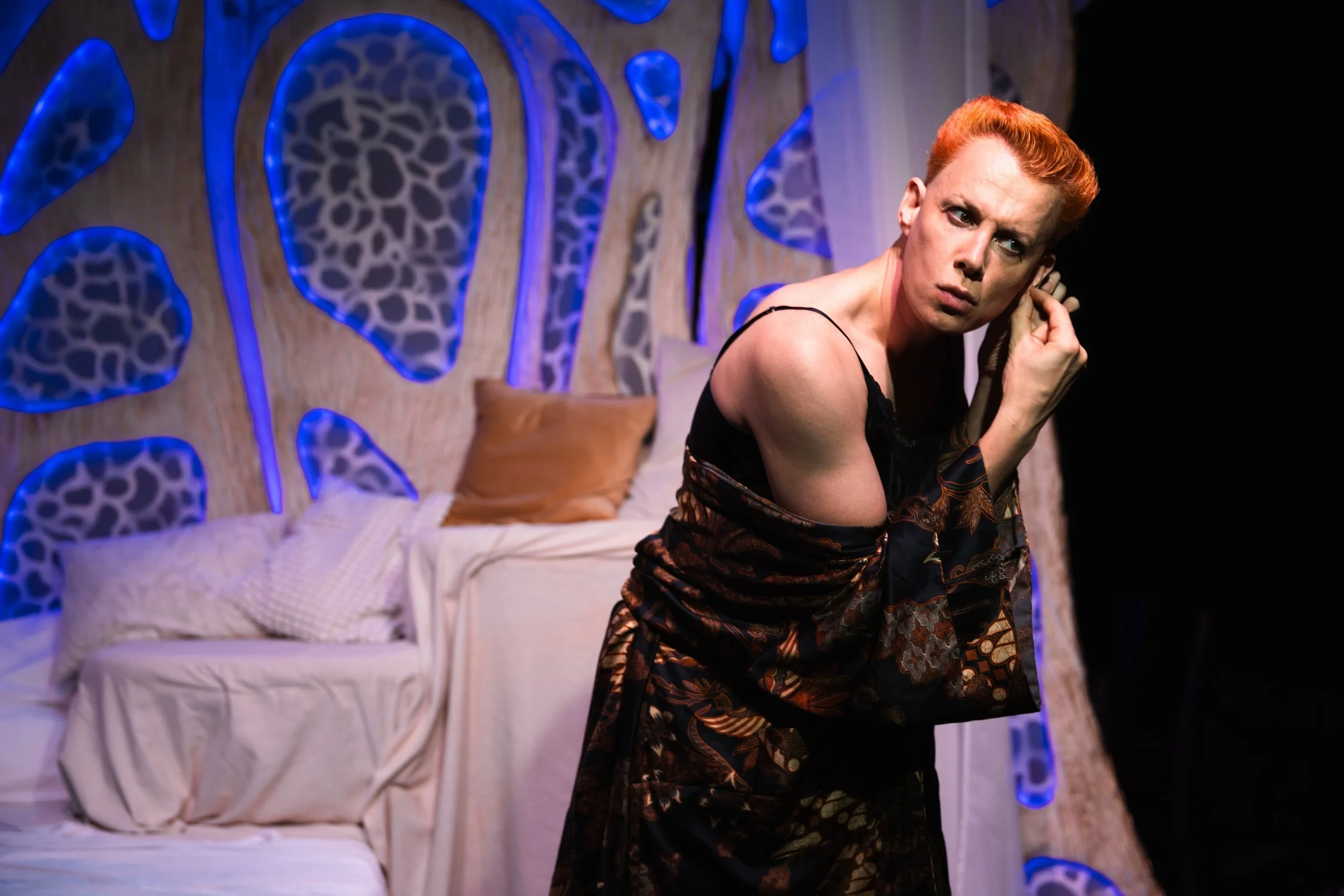
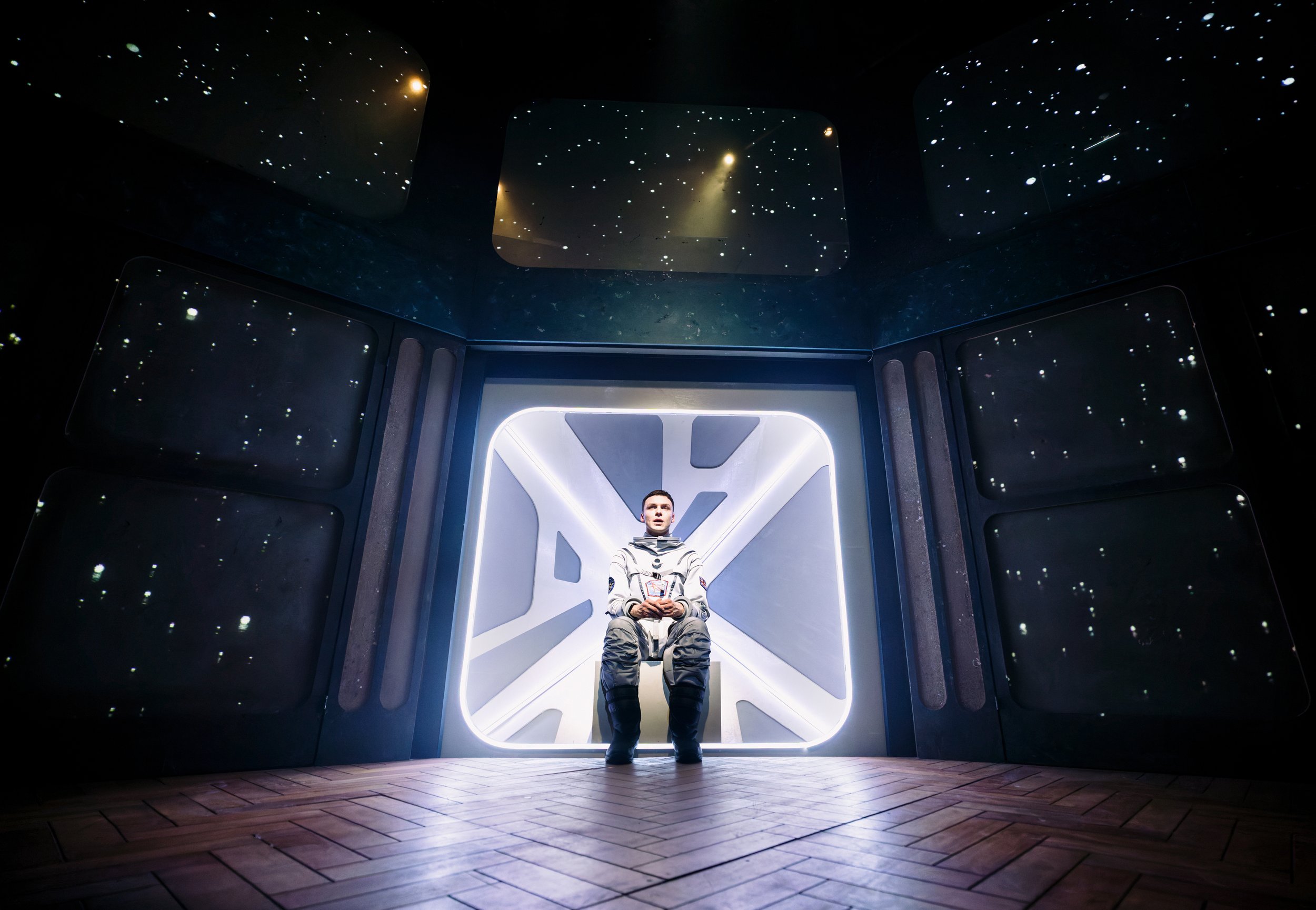
Set and lighting design is also impressive. Co-creator Adam Lenson is also responsible for the video design that draws us into the infinity of space with mesmerising projections, perfectly offsetting Libby Todd’s very down-to-Earth set. A panel to the rear of the stage opens to take us into Daniel’s spacecraft, a suitably futuristic and recognisable representation. Unfortunately, these interstellar interludes are too short and never fully explain Daniel’s true mindset or motivation.
Despite the obvious talent involved on and off stage, FLYBY needs a lot of work if it is to succeed. The dialogue is all very fast-paced, making it an exhausting watch, but to add much needed balance to this relentless pace would extend the one hour and 45 minutes running time to an unworkable length with its current structure. There’s a lack of light and shade, it lacks any humour to offset the angst, and the characters need some more likeable traits to make the audience care about them. Although currently let down by its script, it has a bold and interesting premise that could tell a compelling story with more development.
Flyby runs at Southwark Playhouse (Borough) until 16th May 2026.
★★