The First Year (of the Gaza Genocide in the Media) at New Diorama Theatre Review
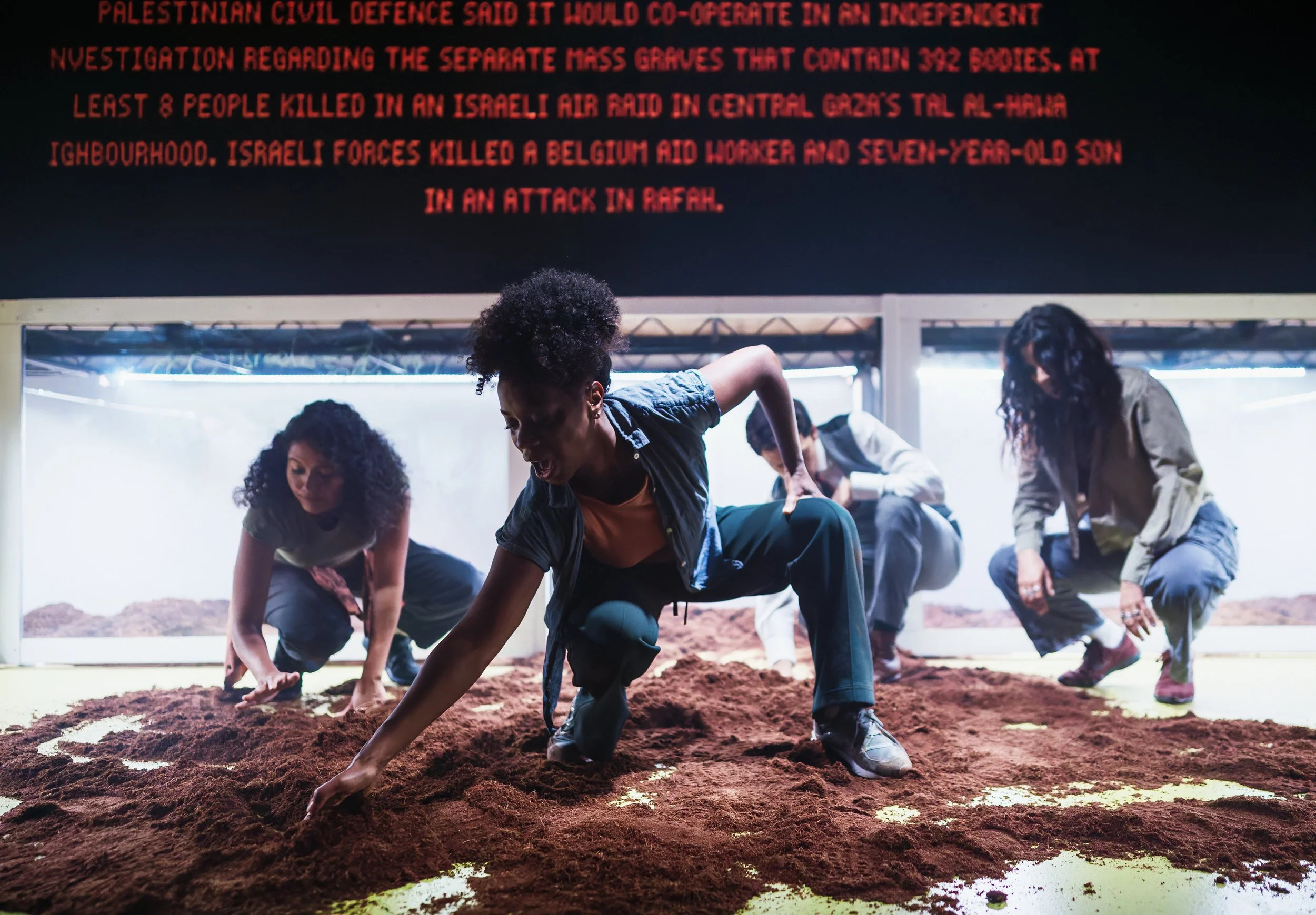
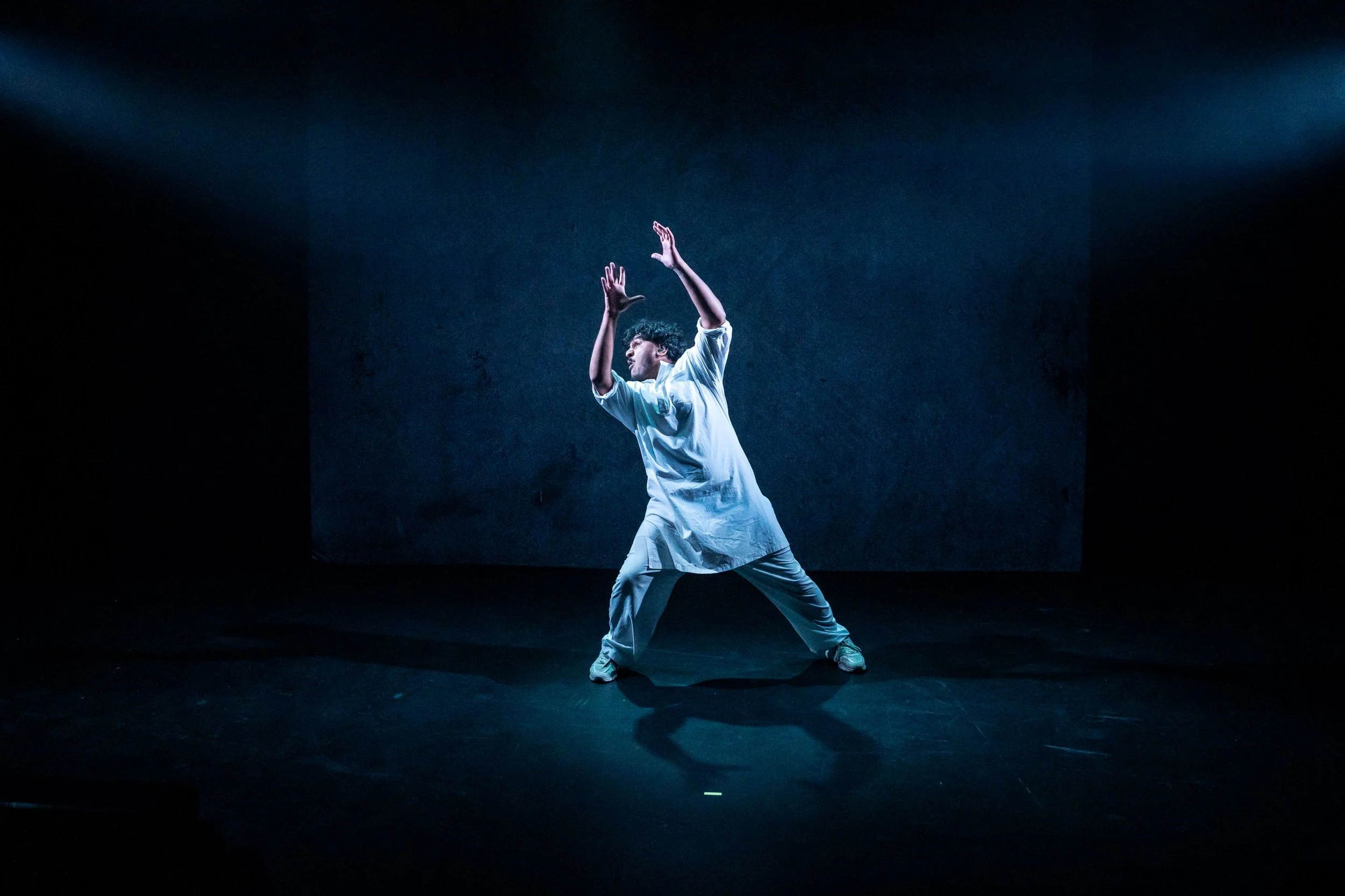
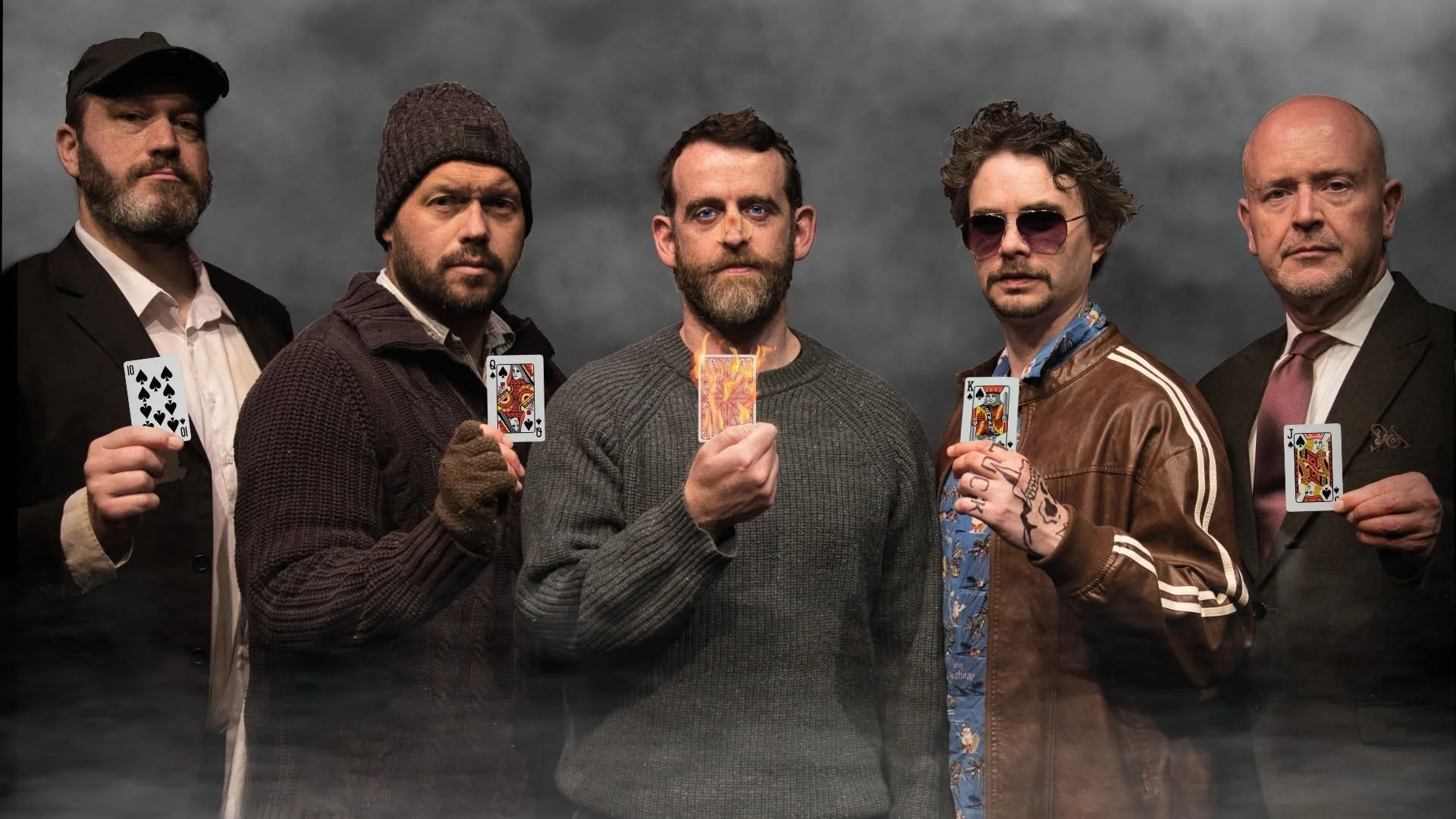
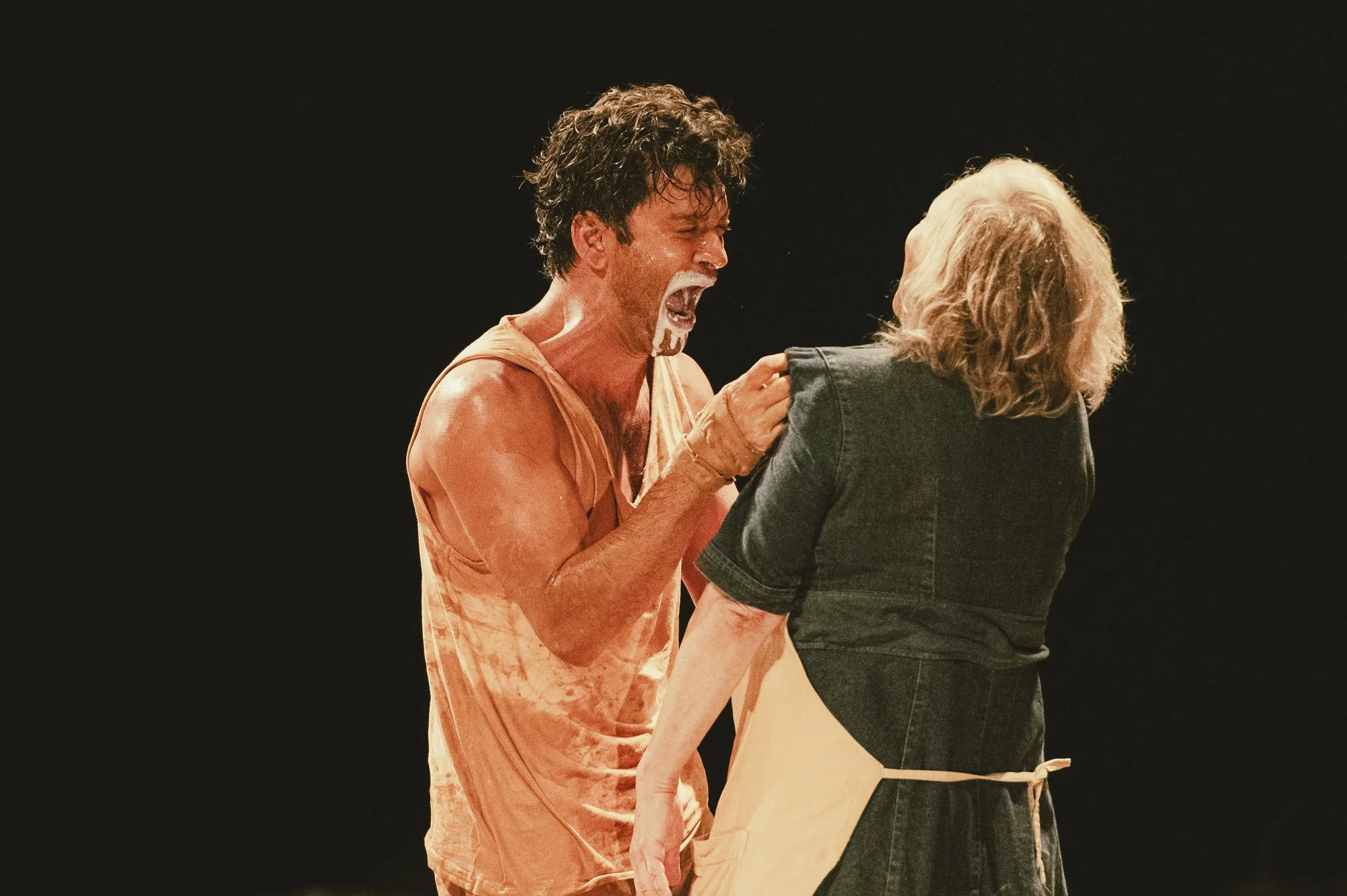
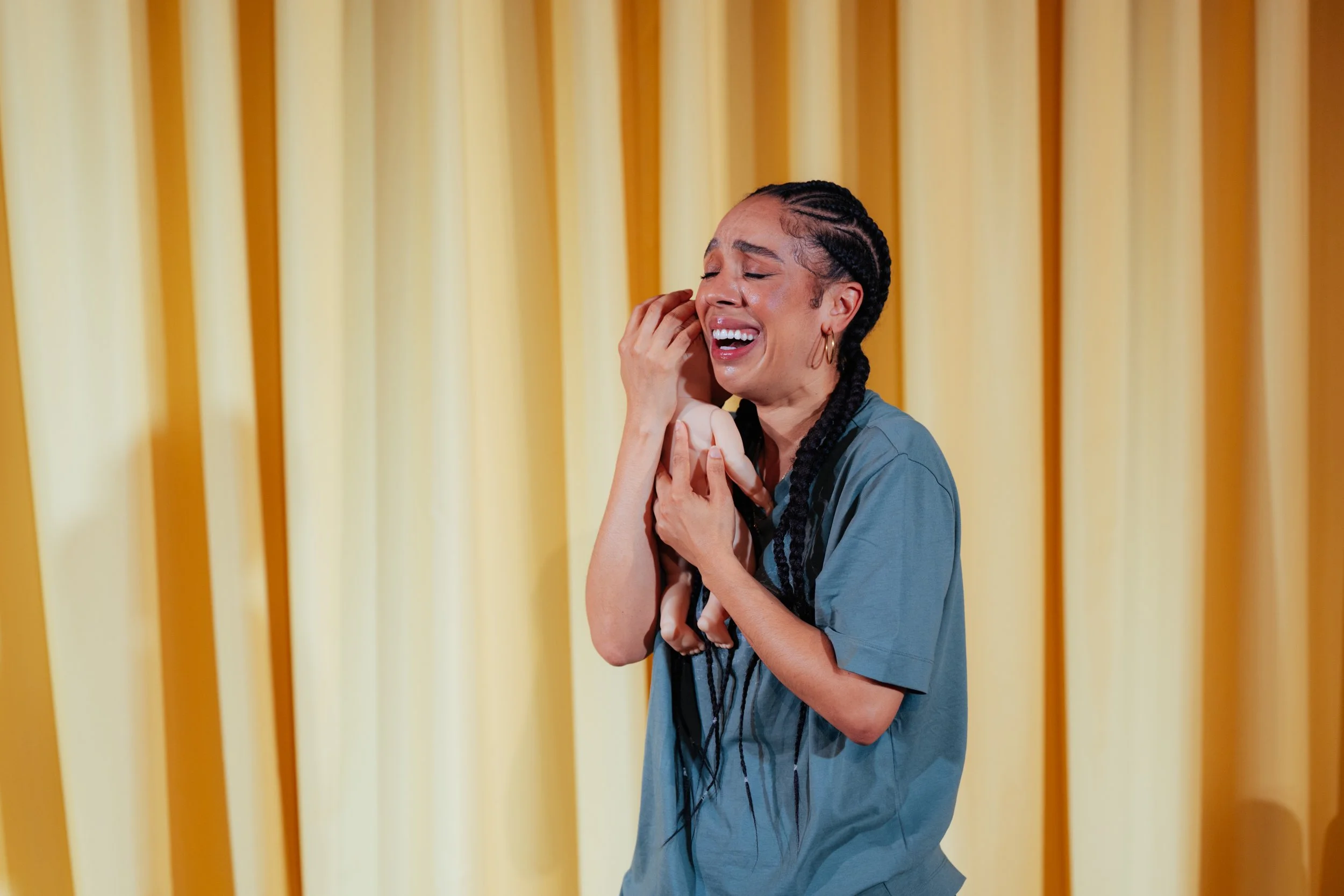
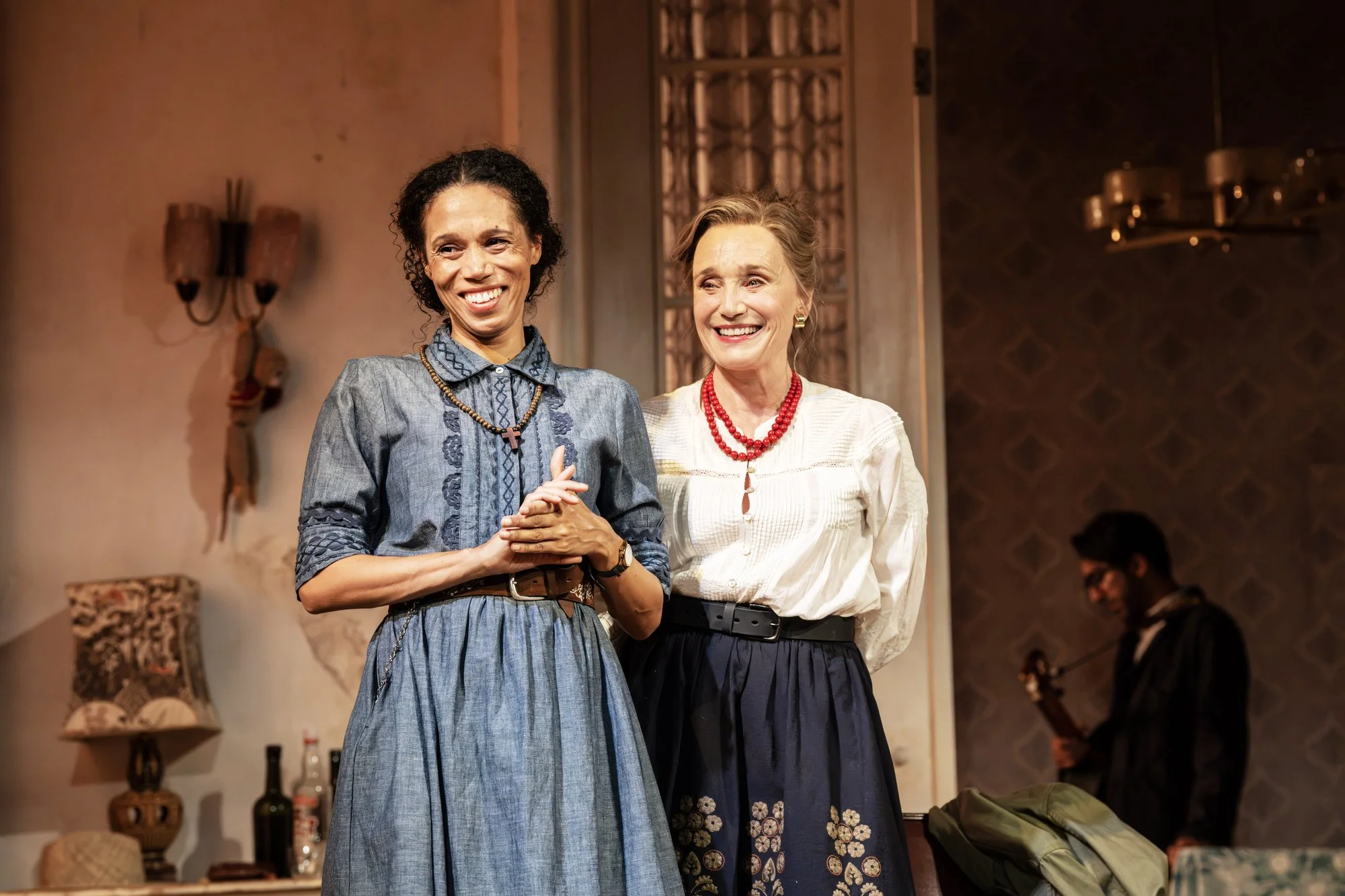
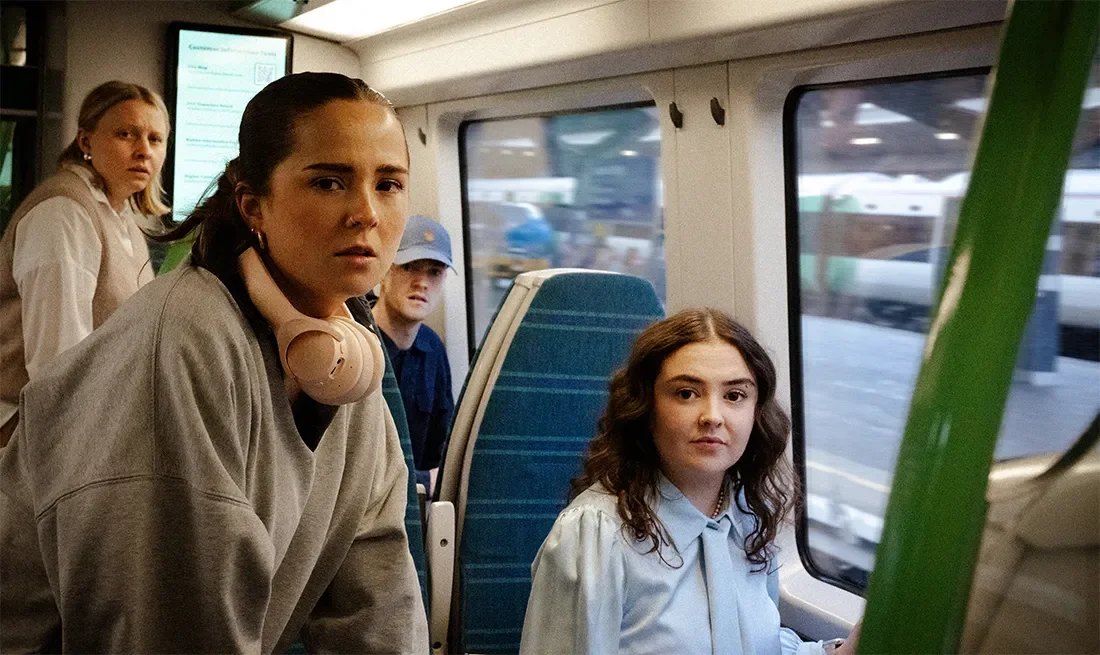
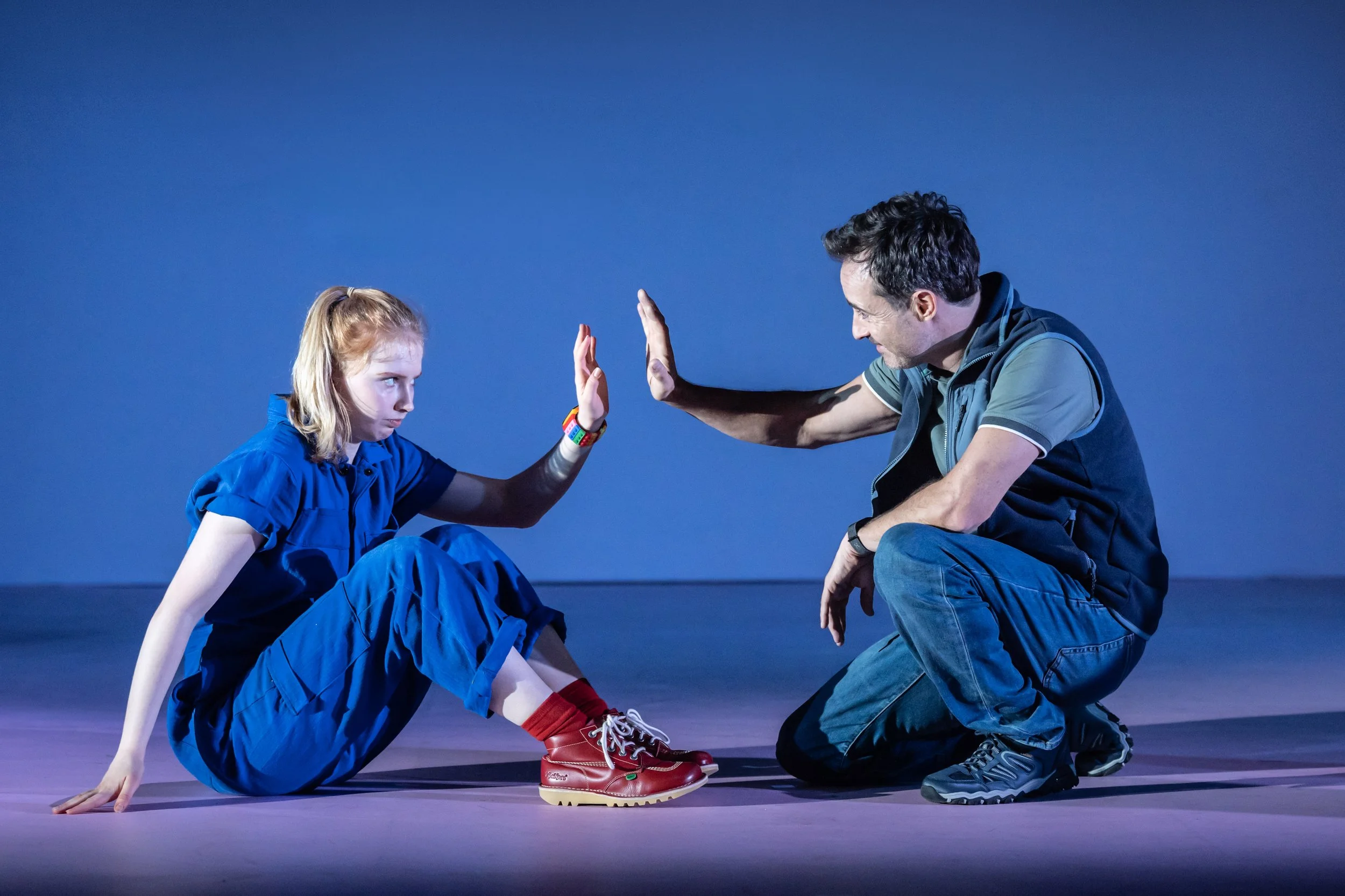
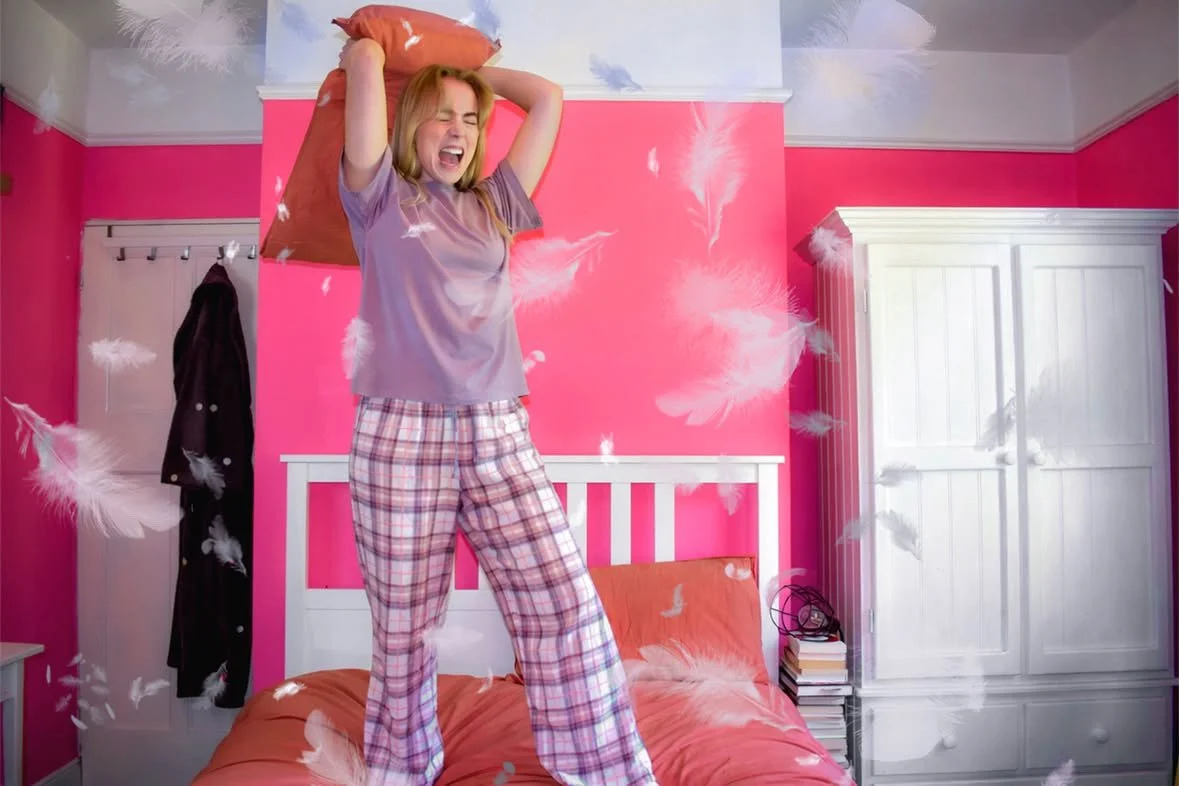
The First Year (of the Gaza Genocide in the Media) is a multimedia documentary-theatre performance developed in collaboration between BÉZNĂ Theatre, Shadow World Investigations and the International State Crime Initiative. The show sets out to expose the mechanics of reporting and how they influence perception, empathy and action.
The focus of the show’s inquiry is the United Kingdom’s media coverage of the events that took place in Palestine from October 2023 to October 2024. A timeline projected on the walls guides us chronologically from stage to stage, while also highlighting that the Palestinian genocide is set within the context of a long history of violence and apartheid that starts well before the 7th of October 2023. We are given some key geopolitical facts to show how long and deep the blood has been flowing. We are even given the chance to leave.
Side by side with the timeline indicating which day of the year we are focusing on, there are figures showing how many Palestinians and how many journalists have been martyred on that day, and how that contributes to the ever-rising total. The use of the word “martyred” is significant, as it is used to legitimise the dignity and honour of people who lost their lives while resisting Israeli occupation, regardless of their religious faith. The deliberate choice of the term “martyred” is a great example, from the very start of the show, of its unwavering commitment to highlight systemic oppressions and shift the narrative from passive victims to people part of a larger national struggle for freedom.
Back during my Masters, I wrote my dissertation around the topic of abjection and how language can be one of the most effective ways to sway public opinion. Language is one of the most recurring themes of The First Year, and the one I personally found the most illuminating. Very early in the show, the actors acknowledge that they will be performing lines written by something else - but also establish their agency in doing so. The parallel between actors and journalists runs through the show, suggesting that journalists should be accountable for what they write, that they are not neutral mouthpieces but hold personal responsibility in shaping public narratives.
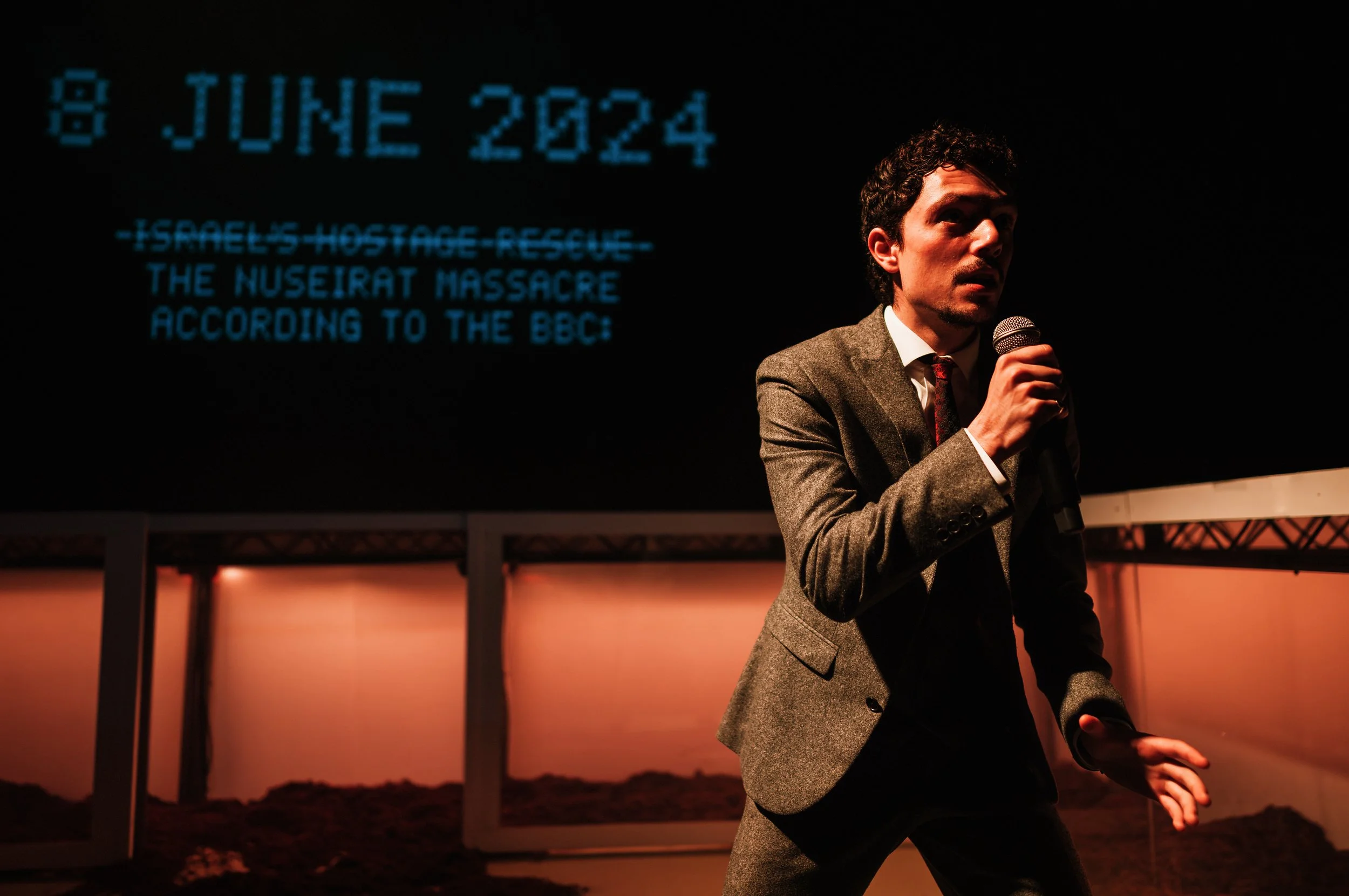
We are invited to reflect on how journalistic language can direct our empathy and disgust, and how these can be used to control public consensus to the point that even the most livestreamed genocide in history can become ground for negationism and propaganda. For instance, we are shown facts and figures about how many stories the BBC did for Israeli and Palestinian victims, and the tone of those stories, the words used, the framing. What emerges, unsurprisingly, is a glaring double standard, an overwhelming use of dehumanising language to describe Palestinians and Palestinians' deaths, and a deliberate channelling of seemingly spontaneous emotions as a form of control that sustains systems of abjection. Importantly, the show questions the agenda behind the BBC’s approach in reporting the Gaza genocide, and whether it can really claim to be impartial and independent when its funding is tied to the UK government and its Chair is appointed by the Prime Minister.
In problematising the reporting of the Gaza genocide, The First Year asks us to be more discerning, to question what we are presented with, to actively seek alternative points of view rather than accepting the easily accessible version of mainstream channels. To do this is not just a matter of being better informed, or having an intellectually higher standpoint; the stakes are higher. Narratives can shape the way we think, can weaponise our empathy, engagement and privilege. The show demands that we consider how news may directly influence our own political and moral understanding of global events under the guise of impartiality. Everything is in the language, in the storytelling.
Interspersed in Sînziana Cojocărescu’s script are the contributions of three Palestinian co-writers, which felt particularly significant within a show centering Palestinian voices. Ahmed Masoud’s piece was ridiculously poignant in showing how the media crafts and disseminates “perfect victims”. Even when deciding to give a platform and voice to Palestinian people, their contributions are carefully edited to fit a mould of what the West deems as an acceptable depiction of a person living through the genocide of their people. It is arguable that this strategy may be employed to try and counter narratives of abjection; figures like refugees and immigrants, when not portrayed and treated as criminals, must become, in contrast, examples of virtue and a symbol for human suffering. It is a subtler facet of silencing Palestinian voices, to control their image as victims and deny them the right “to be difficult and annoy everyone”. Masoud’s account of someone refusing to be constructed only as an heroic survivor, someone who reclaims their right to make a joke, is part of the more truthful, multifaceted representation of Palestinians ever-present in The First Year.
The production deals with a huge amount of material, and the team has done an impressive work in narrowing down the focus to a specific area of inquiry - ‘just’ one year, in the UK - and follow that rigorously. Still, there are so many things that must have been left out to fit the enormity of this topic within just 90 minutes. Criticising the process of editing what stories should be heard, while having to do a version of the same thing in the context of curating the show, must have been an infinite rabbit hole - so much that I was almost surprised this reflection didn’t find its way into the final show in the same way that other metatheatrical considerations did.
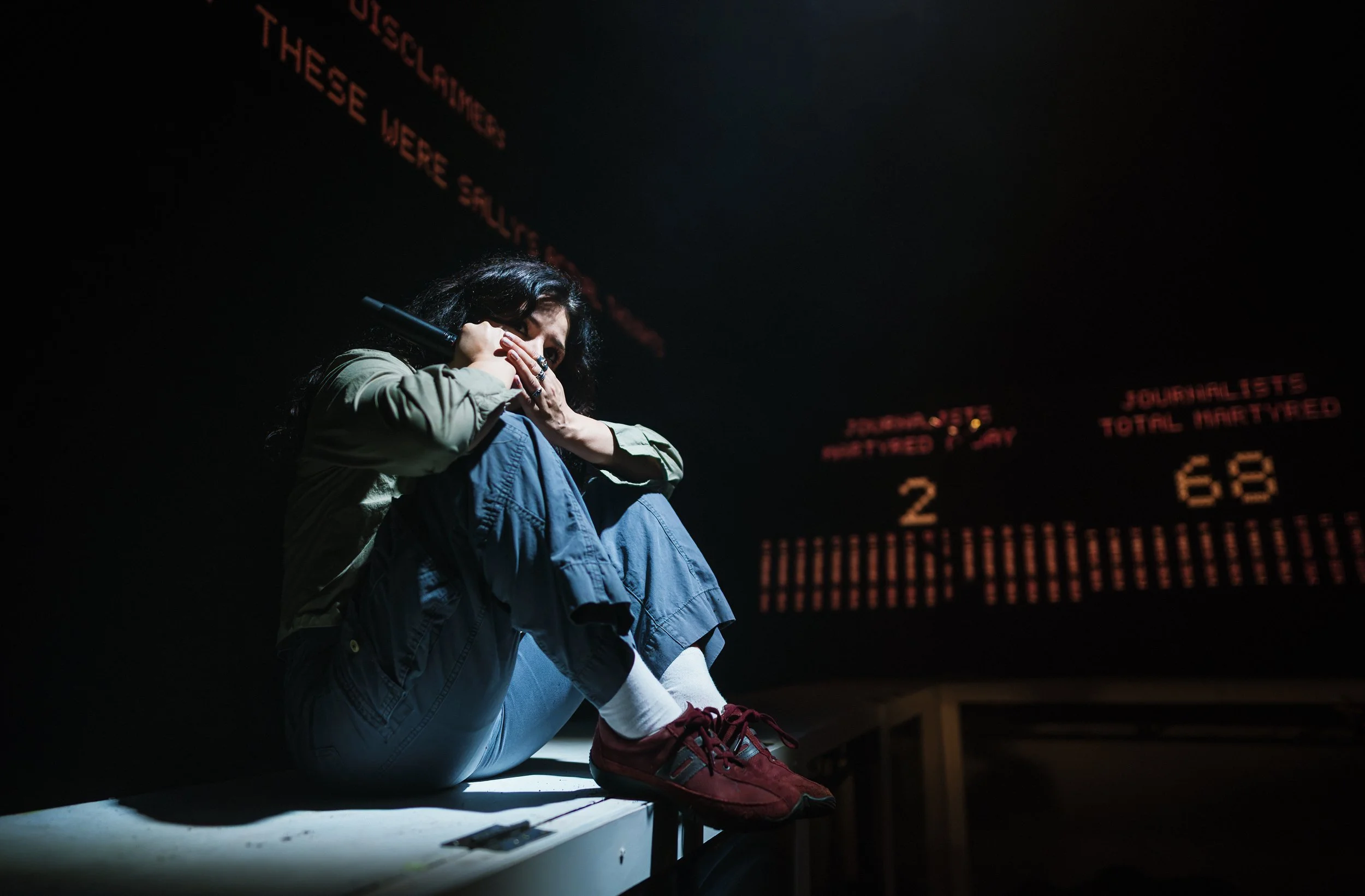
For all the striking work that lies in the creation and performance of The First Year, there are still elements of its execution that are not fully convincing. Some sections feel under-devised or under-rehearsed, while other technical blips - late cues, problems with subtitles, elements out of sync - unfortunately dim the intensity. The songs were sometimes organically embedded, while other times I struggled to make sense of their function within the show. The video design by Dan Light looked impressive, but I found it difficult to interact with it, not knowing when to direct my attention away from the actors and onto the projections and vice versa. Whenever I stopped to read the blocks of text, they slipped away before I could finish, and that’s a real pity, seeing how each fact in the show is meticulously researched. If there had been more engagement between what was happening on stage and the projection, both would have been stronger.
There is a lot on offer - from exercises in re-imagining the private perspective of very public messes; to a mathematical equation by co-writer Hannah Khalil that sets to calculate the value of Israeli lives compared to Palestinian ones; to a harrowing testimony from an eyewitness of the Nuseirat Massacre. Everything is in the narrative: who are the heros and who are the villains of the story, who is left out and who is allowed to speak. The “Vile Pig” segment by Anonymous questions our own pre-learnt bias when approaching these stories, reflecting on the “training” we undergo to avoid extremism and prioritise being measured over everything, even in the face of atrocities.
Despite a press night penalised by tech glitches, the multidisciplinary team behind the show has done ambitious, meticulous work brimming with moral integrity. The strongest sections are the ones that veer most towards journalism; the dramatisation of events is sometimes more successful, and other times not as strong. Nonetheless, I do believe theatre investigating abjection, as this show does, has a transformative power, as it encourages audiences to complicate dominant narratives about abject subjects and to produce alternative ones. That’s why The First Year (of the Gaza Genocide in the Media) is an essential watch.
The First Year (of the Gaza Genocide in the Media) is playing at New Diorama Theatre until the 10th of October.
Content Warnings: Haze, loud noises, flashing lights, extended blackouts, strong and hateful language, and graphic descriptions of extreme acts of mass violence.
★ ★ ★ ★
Written by Greta for Theatre and Tonic, September 2026.