The Cherry Orchard starring Kristin Scott Thomas Review
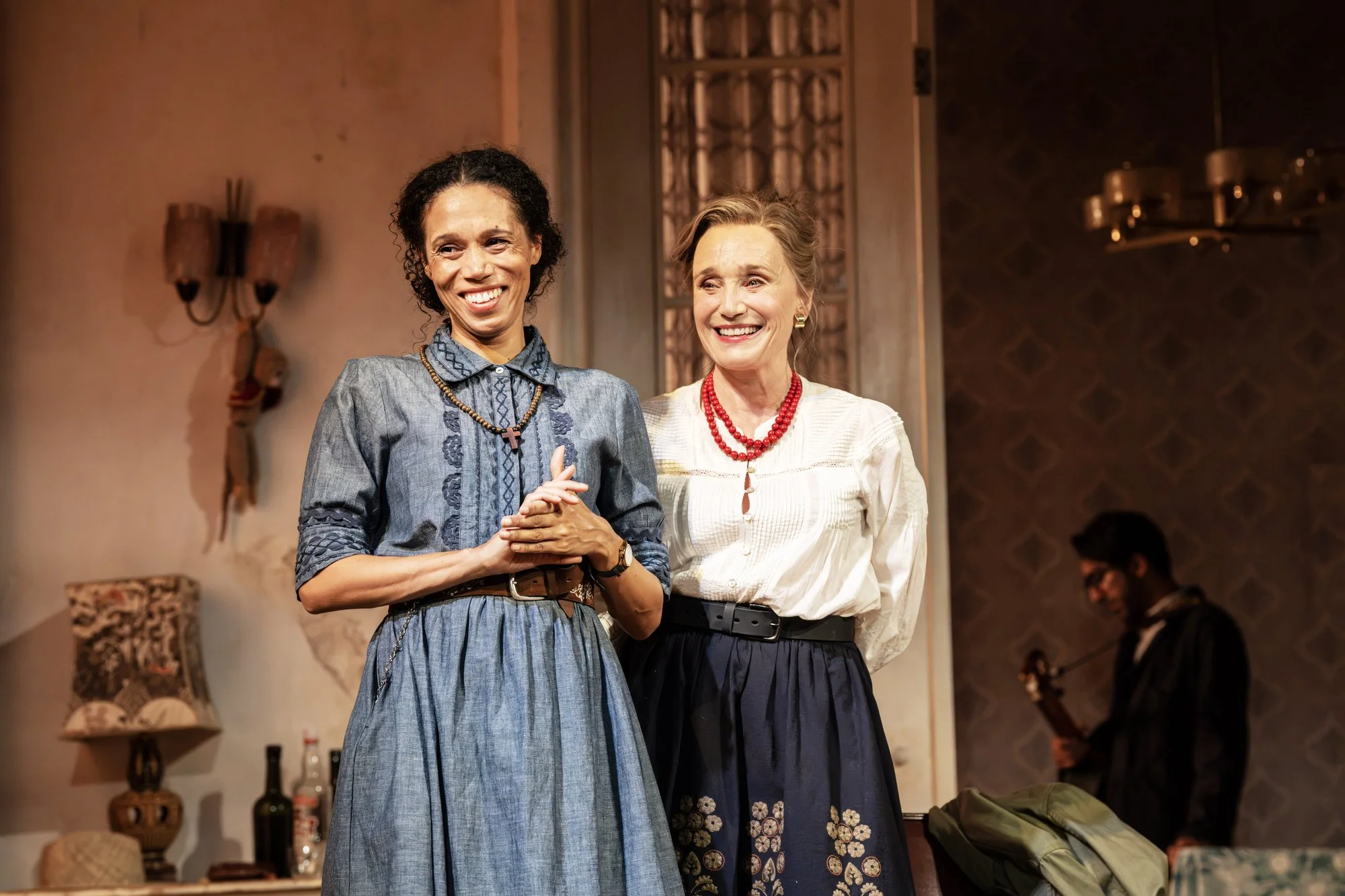
Vinette Robinson and Kristin Scott Thomas in The Cherry Orchard. Photo by Johan Persson.
Chekhov's final play, The Cherry Orchard, was famously described by the playwright himself as a comedy — an often humorous yet introspective examination of Russian society at the turn of the twentieth century, following the abolition of serfdom. Now playing at the Harold Pinter Theatre, Ian Rickson's production offers a largely traditional interpretation of the play, following a number of more contemporary reimaginings, yet is far from a dull or tired revival.
Following an aristocratic family centred on Ranevskaya and her ancestral home, we witness the rapid decline of their wealth and social standing. Reluctant to accept that the family is on the brink of bankruptcy, Ranevskaya remains determined to preserve her status and lifestyle, yet repeatedly refuses to entertain Lopakhin's practical suggestions for saving the estate.
Alongside the central characters, we see the emerging stories of those living and working within the household: young Dunyasha, desperate to escape the only world she has ever known; Yasha, whose experiences abroad have afforded him a sense of superiority, yet who knowingly leads Dunyasha on; and Ranevskaya's adopted daughter, Varya, who struggles to manage the household as its future becomes increasingly uncertain.
It's an interesting study of society rather than a conventional drama. Something is fascinating about watching a group of people grapple with the decline of a world they've always known, particularly when so much of their struggle stems from their own inability to accept change. Rickson brings together an excellent ensemble whose performances create a wonderfully cohesive, engaging production, balancing Chekhov's humour with the melancholy of its underlying themes.

The cast of The Cherry Orchard. Photo by Johan Persson.
Yet, despite thoroughly enjoying the production, I found myself surprisingly detached from most of the characters and their individual circumstances. Perhaps this is intentional, encouraging the audience to remain somewhat removed from the characters and instead observe the wider social structures at play. However, while the loss of the family's ancestral home is central to the narrative, the emotional stakes never quite heightened enough for me to feel particularly invested in their fate.
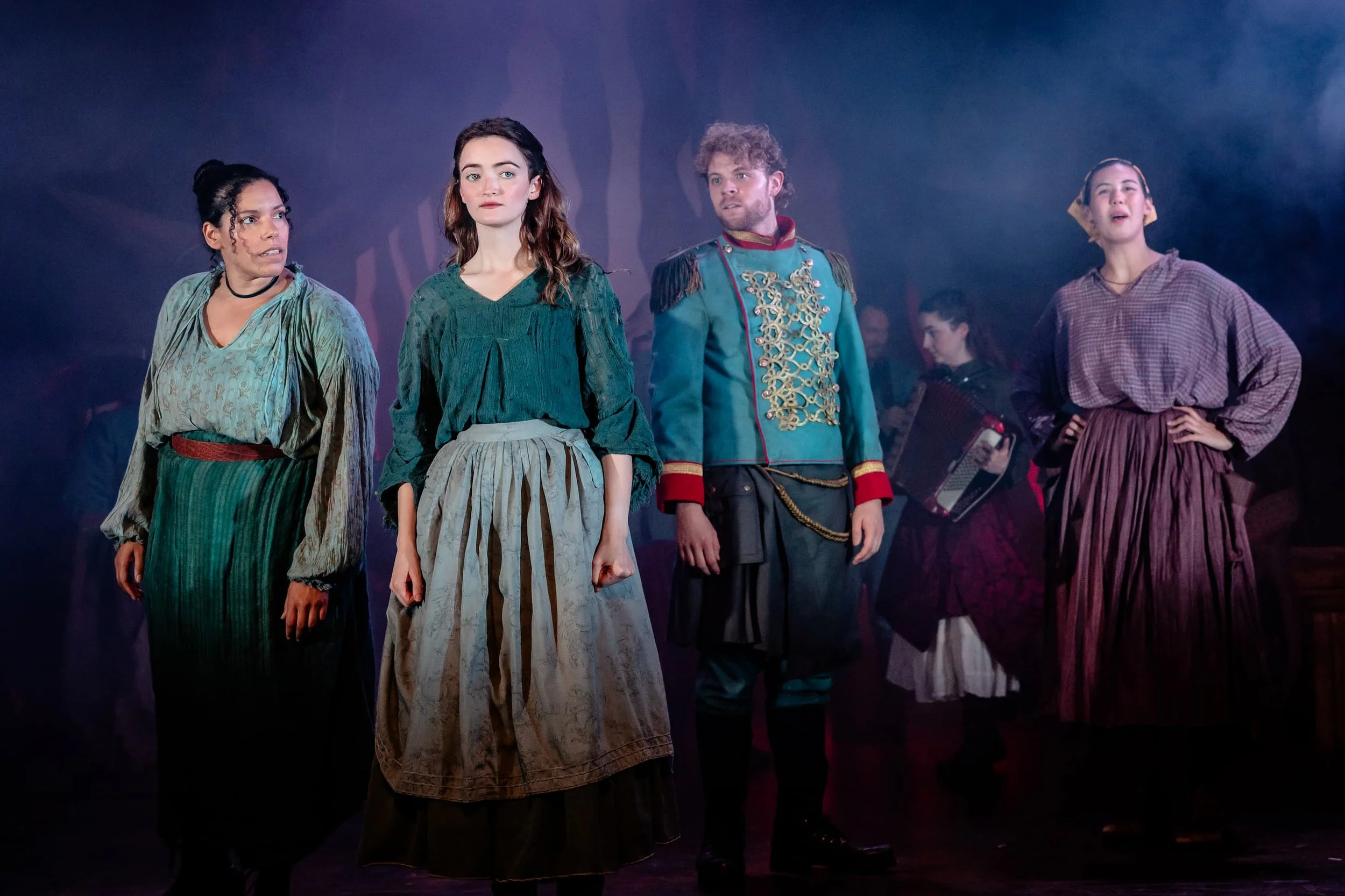
Perhaps this emotional detachment was heightened by the ambiguity of the play's historical setting. Initially, we assume it remains rooted in Chekhov's early twentieth-century Russia, yet the costuming seems to travel through time, lacking cohesion across both periods and characters. First, the household's loyal servant, wears traditional Russian attire, contrasting with fellow servant Yasha, whose knitted polo shirt and suit evoke the 1960s. Similarly, Anya, Ranevskaya's daughter, and Dunyasha, the maid, appear in distinctly contemporary fashions despite their differing social positions. Ranevskaya's own wardrobe also becomes increasingly modern as the play progresses, seemingly at odds with her resistance to change. While this blending of eras could suggest that the play's themes of class and social transition transcend time, I found it somewhat confusing. Chekhov's examination of class is so intrinsically tied to a particular moment in Russian history that blurring the historical setting risks diluting the significance of those relationships.
Kristin Scott Thomas is captivating as Ranevskaya, flitting between confidence and confusion as she grapples with her changing world, delivering a masterful portrayal of a deeply complex character. Stephen Mangan brings a compelling internal conflict to Lopakhin, torn between pride in his hard-earned success and the shame and resentment rooted in his family's past. Vinette Robinson performs with poise and emotion as Varya, seemingly caught between a past she cannot leave behind and a future she cannot quite reach, through little fault of her own. Megan Cusack creates a playfully naive Dunyasha, making her eventual realisation that she cannot escape her circumstances all the more heartbreaking. Together, the cast form an exceptional ensemble, bringing a natural chemistry and energy to the production.
I especially enjoyed Chloe Lamford's set and Bruno Poet's lighting, both working harmoniously to create a timeless space that is both beautiful and slowly deteriorating — a lovely metaphor for the play's central themes. Poet's lighting is particularly impressive; the use of the French doors on stage right allows the changing light of sunrise and sunset to illuminate the set as the story unfolds, beautifully mirroring moments of hope and anguish.
Rickson's direction remains faithful to the spirit of Chekhov's original, while embracing the comedic elements that can so easily be overshadowed by its more melancholic themes. Despite some ambiguity in its visual identity, the production is sleek, accomplished and thoroughly engaging, capturing your attention from the outset and holding it throughout. An impressive examination of a changing society and an excellent revival of a true classic.
★ ★★ ★
Written by Annie for Theatre and Tonic, October 2026.