The Banality of Evil at Arcola Theatre Review
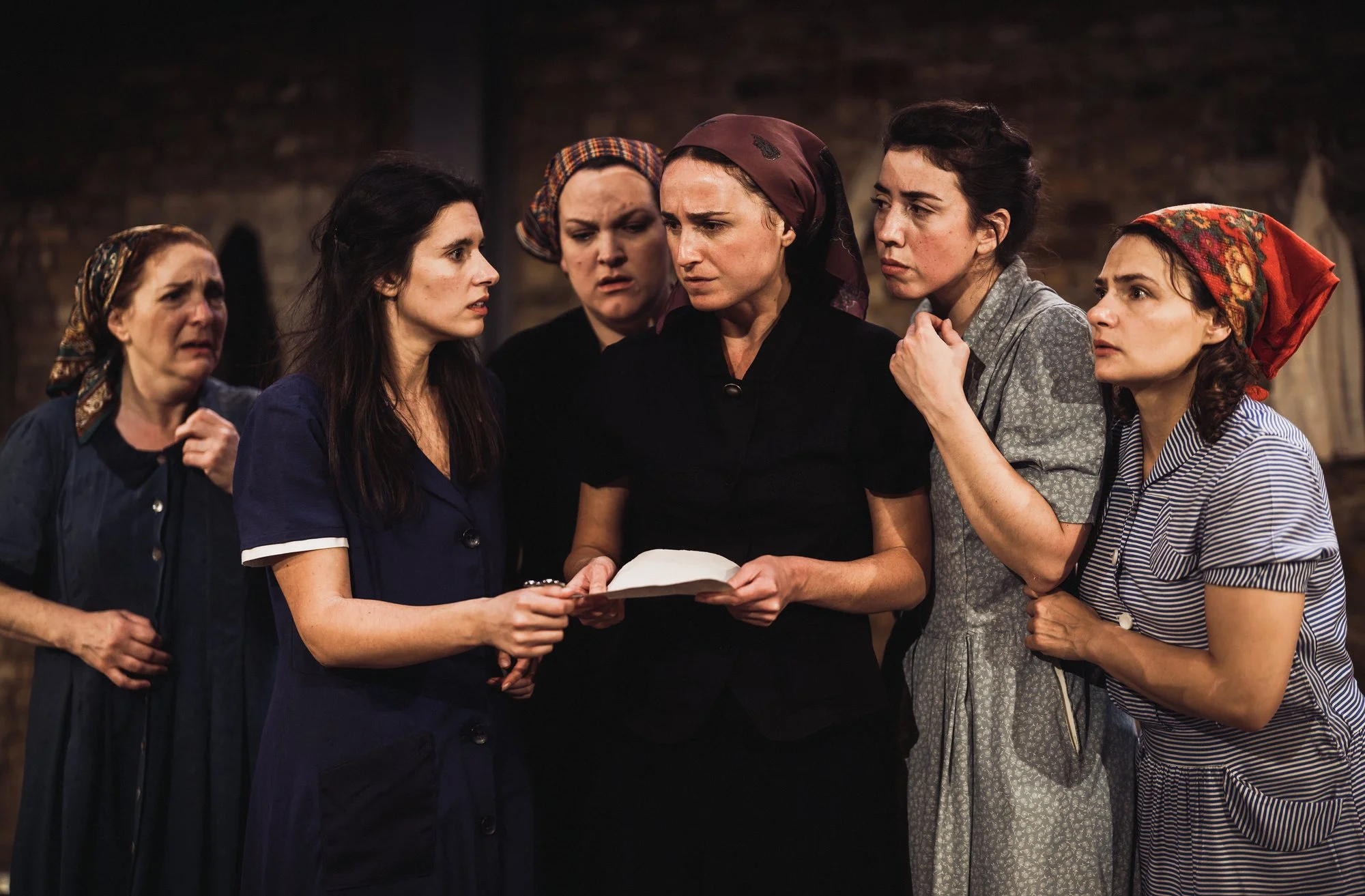
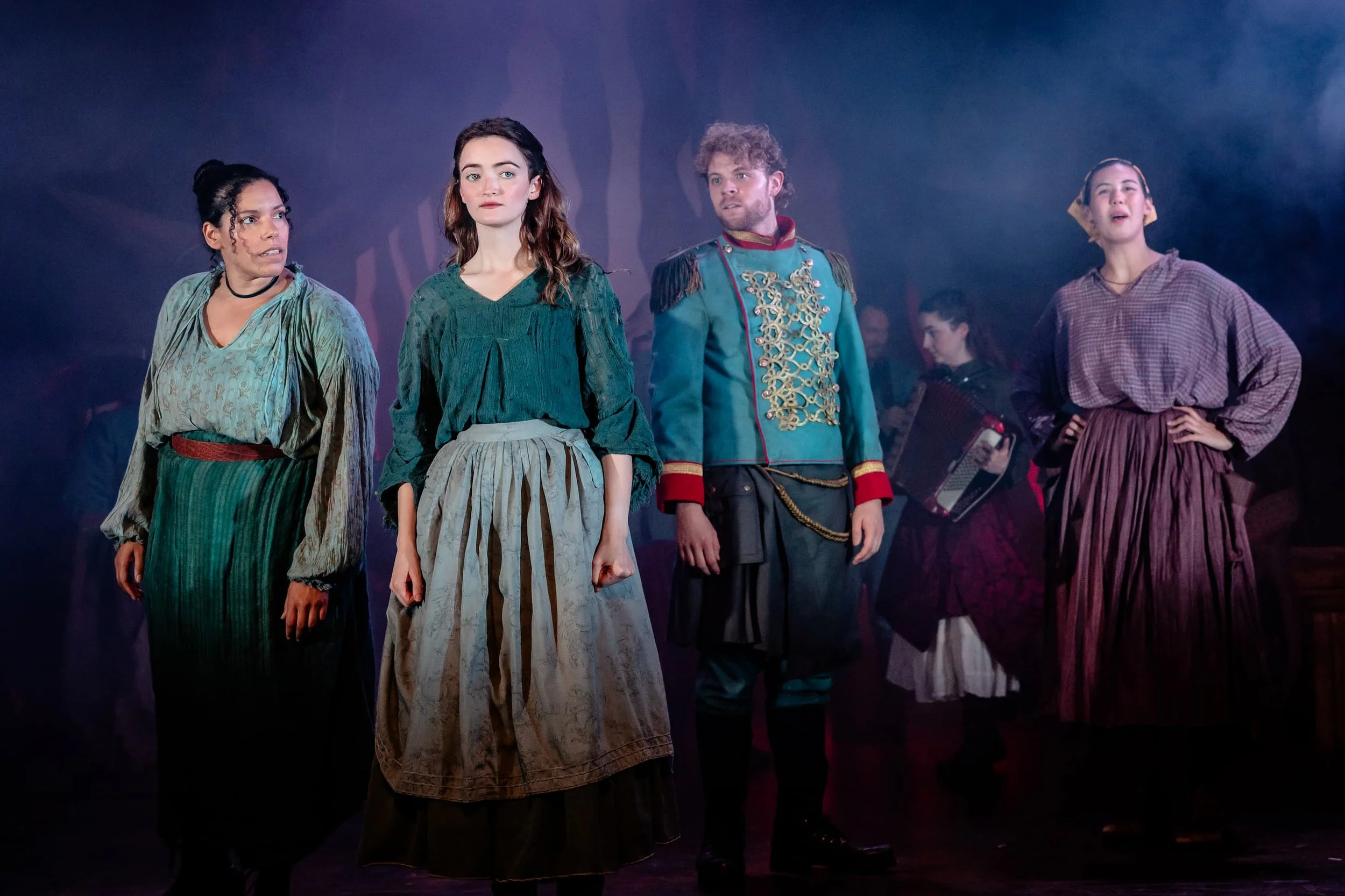
Helen Goldwyn, Ariella Barnett, Anja Fahlenkamp, Mai Weisz, Anna Eckhard, and Pat Dynowska in The Banality of Evil. Photo by Alex Brenner
Written and directed by Julia Pascal, The Banality of Evil is making its world premiere at Dalston’s Arcola Theatre. Blending musical numbers, lots of movement, both satirical and serious scenes, this is a show that tells the story of political theorist Hannah Arendt and her time in the lesser-known Camp Gurs, alongside thousands of other female prisoners.
We enter Studio 2 of the Arcola Theatre where we are met by a simple set, designed by Carmen Neat, of coat hangers, coats and metal buckets which are used as props throughout. We start the show in Paris, where we meet Hannah (Mai Weisz), artist Charlotte Salomon (Anna Eckhard) and schoolgirl Eva Daube (Ariella Barnett) as they dance onto the stage, glimmers of happiness before the horror proceeds. They find themselves arrested and transported to Camp Gurs, alongside many other German Jewish women who had sought asylum in France. Women are cramped into huts, starved and facing sexual assault. The camp Commander later set fire to documents, leaving gaps in history which remain patchy to this day. Pascal has rightfully described this as ‘a shameful part of French history’.

Mai Weisz, Helen Goldwyn, Ariella Barnett, Anja Fahlenkamp, and Anna Eckhard. Photo by Alex Brenner
On paper, The Banality of Evil should be ninety minutes of misery. We watch on as Agathe (Helen Goldwyn), previously a doctor, dies in the mud desperately trying to find a toilet, as Trude (Pat Dynowska) is raped and later faces expulsion from the group due to stealing food. Interwoven into these terrible moments are also moments of music, movement and dry comments from Arendt. The script is ambitious as it explores art, history and philosophy, bringing depth to the characters. The whole show is very high energy, with different cast members announcing the start of a new scene and the name of said scene. The scenes are punchy, engaging and bring together the women’s stories. They move quickly as we learn more about the women’s stories, political beliefs and fears.
The cast are all magnificent in their portrayals of the women. Weisz portrays a smart, strong-minded Arendt. This is in contrast to the character of Eva, a communist schoolgirl preferring simple answers. Anja Fahlenkamp plays an unnamed ensemble character who flits between tough roles seamlessly and with ease. Her operatic voice, intertwined with the rest of the casts’ vocals, is truly memorable.
It’s scarily uncomfortable to think that we are living through a time when political parties openly say that they would send migrants ‘back to where they came from’ if elected. Never mind what else is happening globally. People are still facing levels of persecution, not too unlike that explored in The Banality of Evil, which is frightening.
This is a play that gives voices to women who are at risk of being forgotten as time goes on. The Banality of Evil comes at a time when antisemitism and crimes against Jewish people and communities are at a high; it is important to ensure these stories are told, and that the conversations continue.
At the Arcola Theatre until 7th November 2026.
Content warnings: simulated sexual assault, reference to the Holocaust and genocide, and depictions of the horrors of war.
★★★★
Written by Bronagh for Theatre and Tonic, October 2026.