Jennifer Saunders in The Sea. Photo by Marc Brenner
Jennifer Saunders finds humanity amid Bond's theatrical contradictions
A man is lost to the sea. Elsewhere, three yards of fabric become a matter of extraordinary importance. Welcome to Edward Bond's The Sea, where tragedy and absurdity inhabit the same small coastal community, though not always comfortably.
First performed in 1973, Bond's play is an unruly mixture of social satire, farce and philosophical reflection, set against the rigid class structures of Edwardian England. Jonathan Munby's revival at Theatre Royal Bath embraces much of that eccentricity, delivering an evening of wonderfully inventive theatrical moments, some delicious performances and flashes of genuine poignancy. Yet I left feeling rather divided. There is much to admire here, but the play's individual parts are often more compelling than the whole.
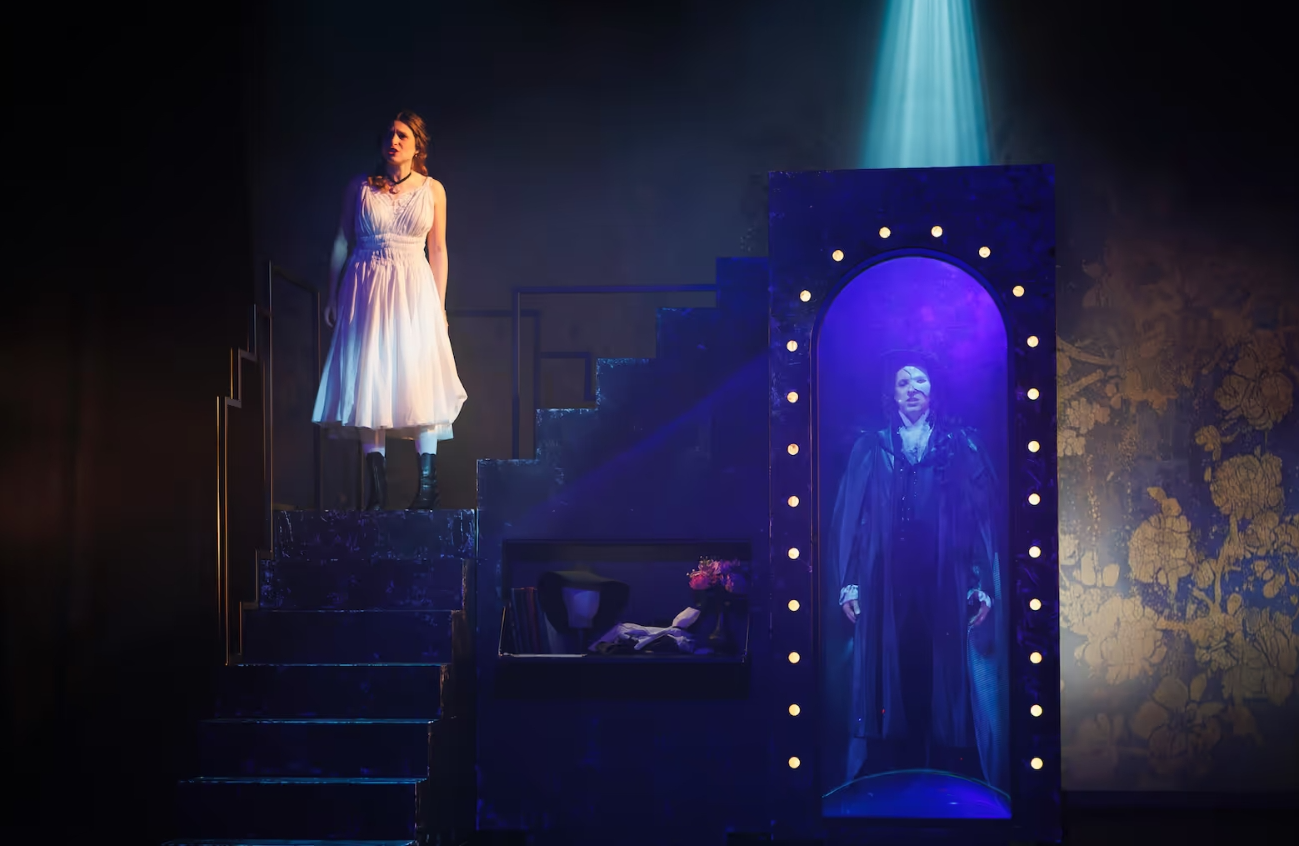
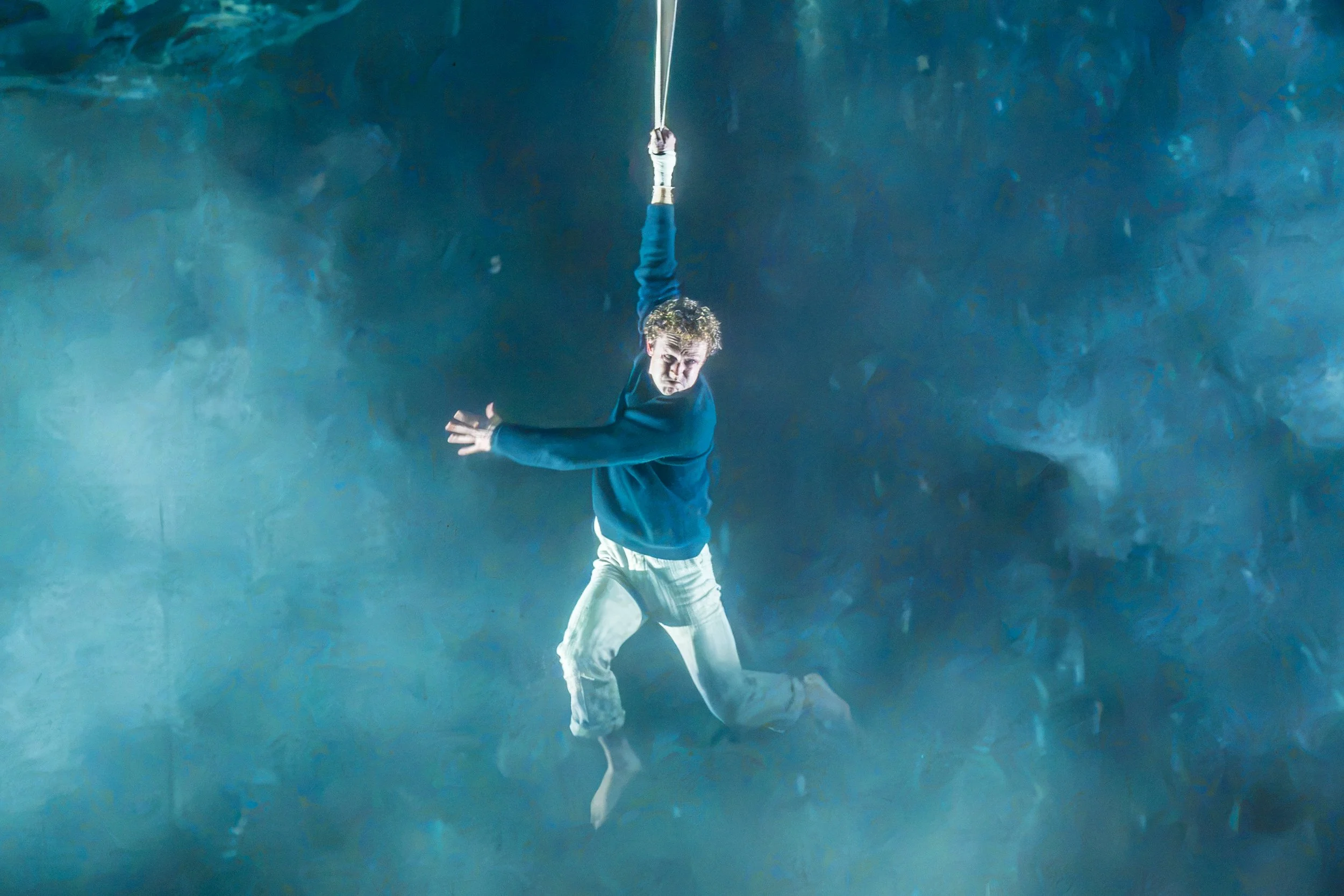
The opening is exceptional. Through a striking combination of scenic design, projection and lighting, the sea is established as something both beautiful and merciless. The physical staging of the drowning is particularly arresting, creating a sense of danger and helplessness without resorting to theatrical literalism. It's confident, imaginative stagecraft that immediately commands attention.
And then, almost defiantly, Bond takes us somewhere else entirely.

Daniel Rainford, Dominic Rowan, David Tarkenter & Joe Shire in The Sea. Photo by Marc Brenner
Jennifer Saunders is terrific as Mrs Rafi, the formidable social matriarch whose authority over the village appears as absolute as her conviction in her own importance. There's a delicious precision to her performance. She understands the absurdity of the character without ever appearing to play for it, allowing the comedy to emerge from Mrs Rafi's complete and unquestioning belief in herself. It is bold, gloriously characterful acting.
Lucy Briers, as Jessica Tilehouse, proves an equally enjoyable presence. Their exchanges are among the evening's great pleasures, a masterclass in comic timing, social discomfort and the particular cruelty of impeccable manners. Together, they generate an energy that the production occasionally struggles to sustain in their absence. I found myself looking forward to their return, and not simply because they're funny. Their performances give Bond's heightened world a theatrical confidence that makes even its most ridiculous behaviour feel entirely credible.
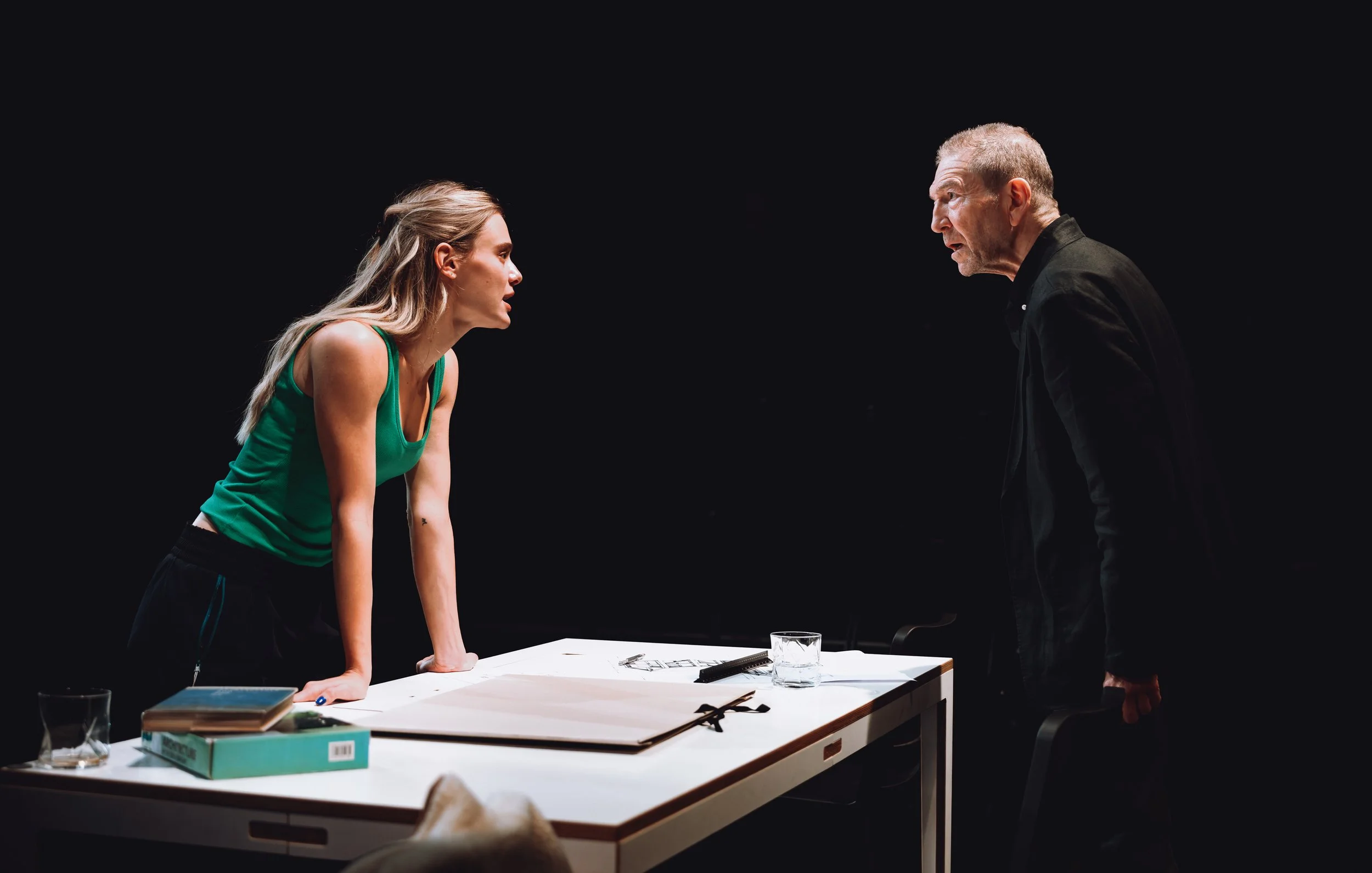
The dispute over three yards of fabric in Hatch's draper's shop is a particular delight. A seemingly trivial transaction becomes an increasingly absurd contest of social standing and personal dignity. Saunders is magnificent in her entitlement, while Dominic Rowan's Hatch grows ever more exasperated, the scene steadily tipping from comedy towards something altogether more uncomfortable. It's wonderfully juicy theatre, but its humour carries a sharp awareness of the power that wealth and position afford, and the humiliation they can inflict.
Rowan's increasingly paranoid Hatch is another of the production's successes. His descent into irrational suspicion offers some of Bond's most pointed commentary, particularly in his influence over the impressionable Hollarcut, played with considerable conviction by Daniel Rainford. There's something unsettling about the ease with which this young man becomes absorbed into another's distorted understanding of the world. Rainford captures that vulnerability well, finding humanity in a character who might otherwise be reduced to an instrument of the plot.
Elliot Goodhill in The Sea. Photo by Marc Brenner
These scenes are where The Sea feels most assured, allowing its social observations to emerge from the behaviour of its characters rather than the weight of its dialogue.
And those observations are strikingly contemporary.
Bond explores the way communities respond to fear, the authority we grant to those who may least deserve it, the cruelty of class divisions and our readiness to turn suspicion into certainty. Written more than fifty years ago and set considerably earlier, the play speaks to anxieties that feel entirely recognisable in 2026. Fear, once given permission to flourish, has a remarkable capacity to distort reason. Communities can find themselves united less by compassion than by the convenient invention of an enemy.
These are not exclusively Edwardian concerns. Nor, unfortunately, are they confined to the twentieth century. Yet for all the relevance of its ideas, I struggled with how consistently Bond brings them to the stage.
At times, The Sea feels like several different plays competing for our attention. The heightened comedy and bold character work are interrupted by passages of introspection, philosophical monologues and a more naturalistic dramatic language. The shifts can be abrupt, almost wilfully contradictory. There's nothing inherently wrong with that. Theatre needn't settle for a single register, and some of its most exciting work emerges from the collision of apparently incompatible forms.

Jennifer Saunders, Holly Godliman, Sydney Spencer & Lucy Briers in The Sea. Photo by Marc Brenner
But here, I wasn't always convinced the contrasts served the drama.
The energy generated by Saunders, Briers and Rowan occasionally dissipates as the play returns to its more contemplative passages. I found Sean Delaney's Willy Carson less persuasive within this theatrical landscape. His comparatively restrained, realistic approach might have provided a useful emotional anchor, particularly against the extravagance of the village characters. Instead, he sometimes felt lost in their presence, without the dramatic weight required to sustain the quieter sections.
Whether that comes from the performance itself, the direction or the demands of Bond's writing is difficult to separate. It certainly isn't a question of every character needing to match Mrs Rafi's theatrical excess. Quite the opposite. But restraint must still command a stage, and there were moments when the contrast left the drama feeling strangely empty.
Lloyd Hutchinson brings warmth to the reflective Evens, although I found some of the extended philosophical exchanges less engaging than the scenes that preceded them. Bond is clearly reaching for something beyond the immediate events of the village, confronting questions of existence, human behaviour and the possibility of a better world. The ambition is admirable. The dramatic expression of those ideas, however, sometimes feels laboured. I occasionally wanted the play to trust what it had already shown us.
And perhaps that's my central frustration. The Sea has something important to say, with a theatrical vocabulary capable of expressing it brilliantly, but the writing doesn't always find the most effective means of bringing those elements together. Its juxtaposition of farce and tragedy is undoubtedly intentional. Whether it consistently achieves the necessary dramatic cohesion is another question.
Then Saunders delivers a moment that rather wonderfully challenges my own criticism.

Sean Dealney & Lloyd Hutchinson in The Sea. Photo by Marc Brenner.
Her late soliloquy, touching on ageing, loneliness and the disappointments of human connection, is quietly devastating. Having spent much of the evening delighting in Mrs Rafi's formidable eccentricities, we suddenly glimpse the woman beneath the performance of social authority.
What makes the moment so powerful is that Saunders never abandons the character we've come to know. The familiar manner, vocal quality and theatrical precision remain, but the emotional register shifts almost imperceptibly. There's no obvious attempt to announce a serious moment, no wholesale transformation from comedy into tragedy. Instead, she allows vulnerability to emerge from within the character's established behaviour.
It is beautifully judged.
In that speech, Saunders accomplishes something I had been waiting for throughout much of the evening. She moves between the absurd and the deeply human without making either feel compromised. The laughter that has sustained us gives way to something unexpectedly tender, and the emotional effect is all the greater because of what has come before.
It is also a reminder of the depth in Bond's writing. Beneath the satire and philosophical ambition lies an acute understanding of human frailty, of the loneliness that can accompany ageing and the desperate ways people preserve their dignity. These are universal experiences, and Saunders gives them an affecting simplicity.
The play's eventual movement towards hope is similarly welcome. After so much suspicion, cruelty and absurdity, Bond leaves room for the possibility that humanity might yet find a better way forward. There is something rather generous in that conclusion, particularly given the darkness of the world that precedes it.
I wish the journey there had felt more assured.
There is no shortage of talent or theatrical imagination in this production. Munby's direction delivers some excellent moments, the visual design is frequently impressive, and its strongest performances are worth the visit alone. Saunders is outstanding, Briers a joy, and Rowan brings both menace and comic desperation to a character who embodies so much of the play's unease.
But I couldn't quite reconcile the theatrical experience as a whole. There were scenes I wanted to remain in longer and others I found myself willing towards their conclusion. At its best, The Sea is richly entertaining, intelligent and unexpectedly moving. At its least successful, its competing styles and philosophical ambitions seem to pull the drama in too many directions.
Perhaps there is something fitting about a play concerned with the contradictions of human behaviour being so contradictory itself. That doesn't entirely excuse its unevenness, but it certainly makes it difficult to dismiss.
What will stay with me is Saunders, moving so effortlessly from the gloriously ridiculous to the painfully recognisable. In a play that frequently struggles to reconcile its different voices, she understands exactly how they can belong to the same person.
The Sea plays at Theatre Royal Bath until 7th November 2026.
★ ★ ★ ★
Written by Ben for Theatre and Tonic, October 2026.