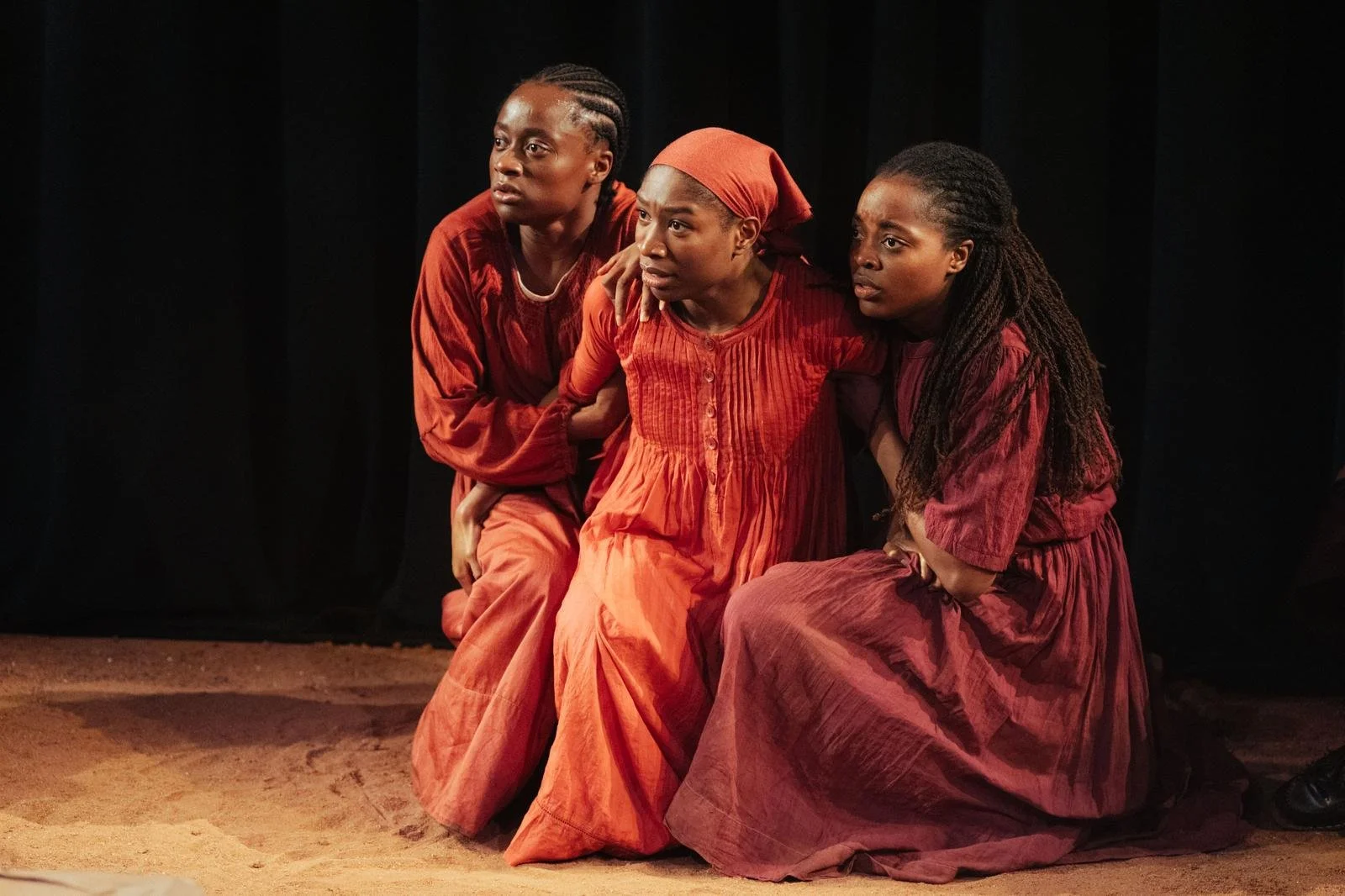
Girls production image. Photos by Helen Murray
On the night of 14 April 2014, Boko Haram abducted nearly 300 schoolgirls from a secondary school in Chibok, Nigeria. Written by Theresa Ikoko, Girls draws on this real-life event, but rather than simply bringing a news story to the stage, it creates a vivid and deeply human world of its own. Having won the Alfred Fagon Award in 2015 and the George Devine Award in 2016, the play is now being staged at the Maria Theatre at the Young Vic, directed by Ewa Dina. Sitting in this intimate space, I could feel the story unfolding with extraordinary vitality right before my eyes.
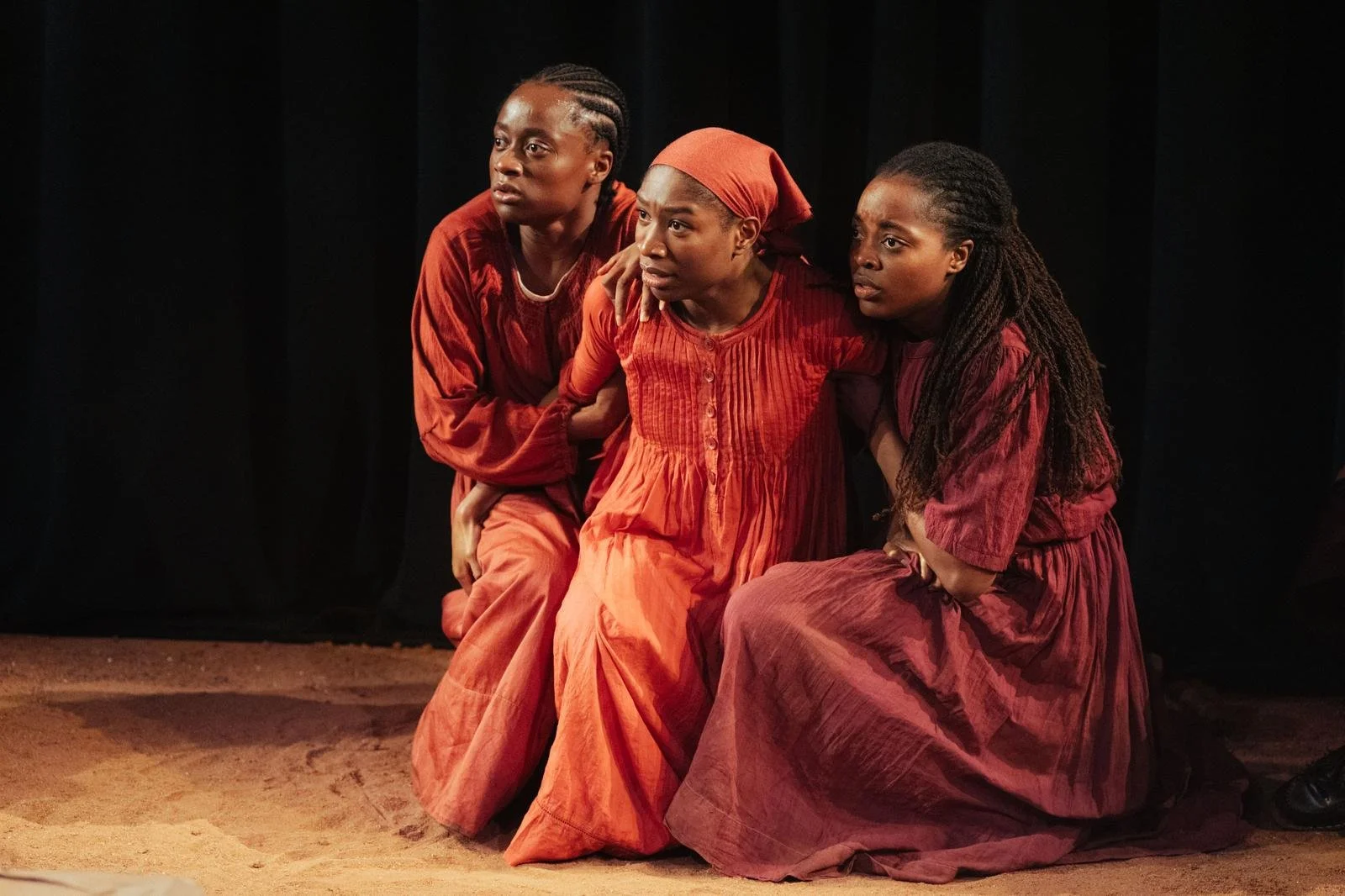
I had expected the play to be much darker in tone. While its subject matter was undeniably heavy, the play was far from being relentlessly sombre. Even while confined to the camp, the three girls continued to chat about celebrity gossip, sex and the little things of everyday life. They tapped out rhythms together, recited their own little rhymes, braided one another’s hair, fashioned props out of newspapers and mimicked celebrities and television programmes. Even when I had no idea what they were referencing, their deliberately exaggerated gestures and expressions were infectious.
Haleema, played by Tara Tijani, is outspoken and clear-eyed, with the courage and decisiveness to match. She teases the other two girls, yet instinctively looks after them, often taking it upon herself to decide what she believes is best for them. Ruhab, played by Sewa Zamba, is lively and preoccupied with her appearance. She adapts to her circumstances, making the most of whatever situation she finds herself in, while harbouring a deep longing for a sense of belonging. When she talks about how her partner treats her even better than the Queen, as though she were Beyoncé, I am suddenly struck by her innocence. Tisana, the youngest of the three, is brought to life by Hannah Akhalu, who captures her naivety, playfulness and unwavering faith with remarkable precision. She may seem indecisive at times, but she is also the one who would rather be beaten than renounce her Islamic faith. She continues to cling to the hope that all three girls will be rescued together and return home.
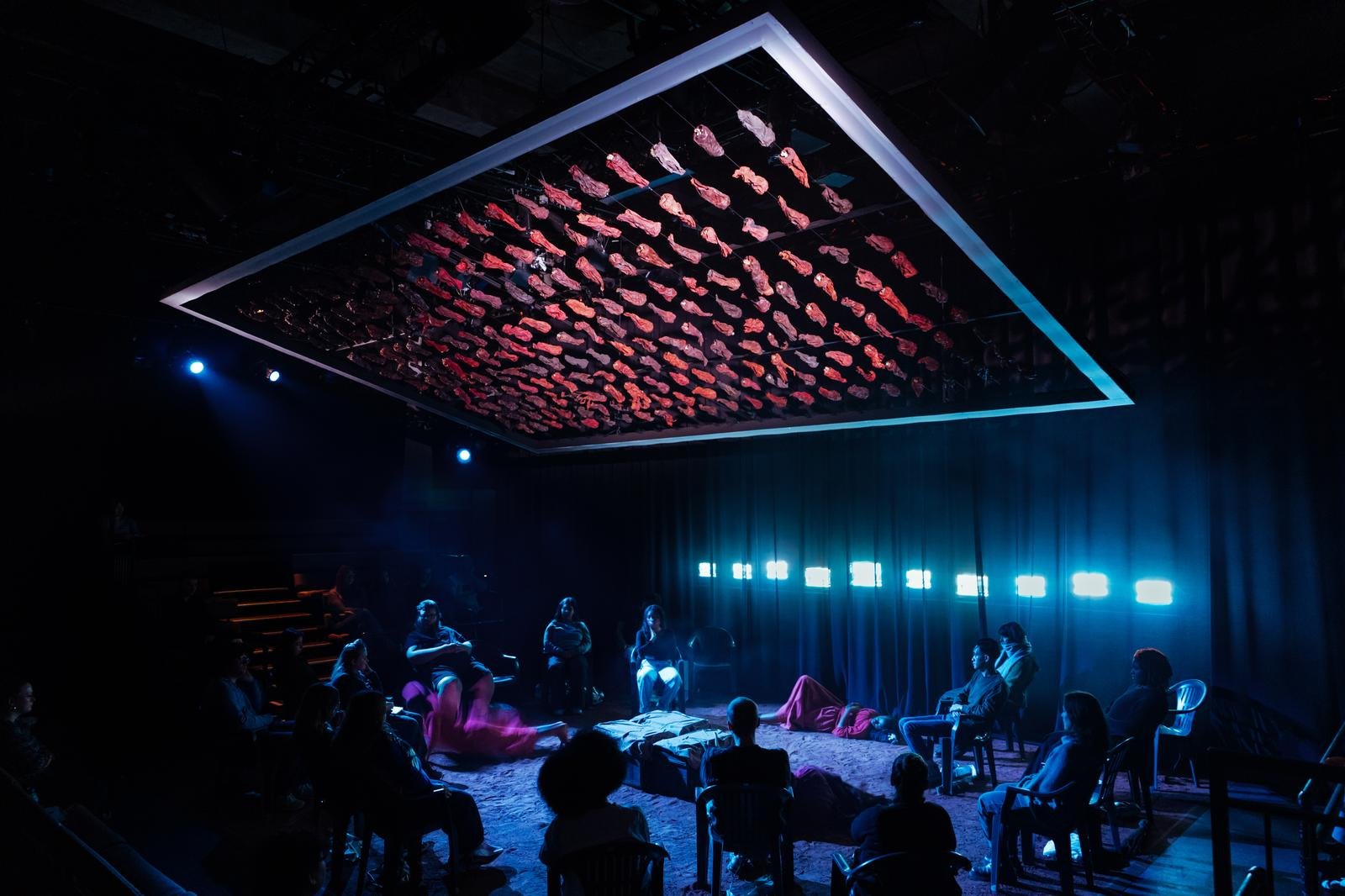
The play strikes a curious balance between everyday life's textures and the stage's heightened theatricality. The girls walk barefoot across the red Nigerian earth (set and costume design by Raphaé Memon), kicking up clouds of dust with every heavier step. They scoop water from a bucket to drink and peer into a broken mirror, while Ruhab insists on putting on her lipstick. The incessant buzz of mosquitoes seems to circle relentlessly around them (sound designer: Munotida Chinyanga), adding to their agitation. Meanwhile, whenever I look up, I see rows of dried hibiscus flowers suspended overhead, resembling crumpled scraps of blood-stained paper. They evoke the girls’ stolen youth, casting an uneasy pall over the space. At the back of the stage, a row of small television screens flickers to life from time to time, displaying text, news reports and fragmented images. When Tisana imagines her triumphant return home, the screens glow with an almost surreal golden light.
Everything in this story can shift in an instant. Warm, luminous lighting can suddenly give way to total darkness (lighting design by Elliot Griggs). One moment, I feel deeply unsettled; the next, I find myself unexpectedly laughing at the girls’ disarmingly candid humour. Then, just as suddenly, my smile freezes. Haleema and Ruhab slip out of their red dresses and into white so seamlessly that the transition barely registers. At first, I assume this signals their determination to survive. It is only towards the end that I finally understand what this transformation really means.
Although the narrative occasionally feels fragmented in its early stages, it becomes utterly absorbing once the girls are faced with the choices they must make. Their relationships are complex and deeply convincing. Subtle shifts in their moods and emotions draw them closer together, and each girl loves the others in her own way. They all have their flaws, yet each is equally endearing. In this play, the concerns of adolescence sit remarkably naturally alongside the struggle for survival. As I watch them endure hardship, sweat and tears, I find myself empathising with them almost effortlessly.
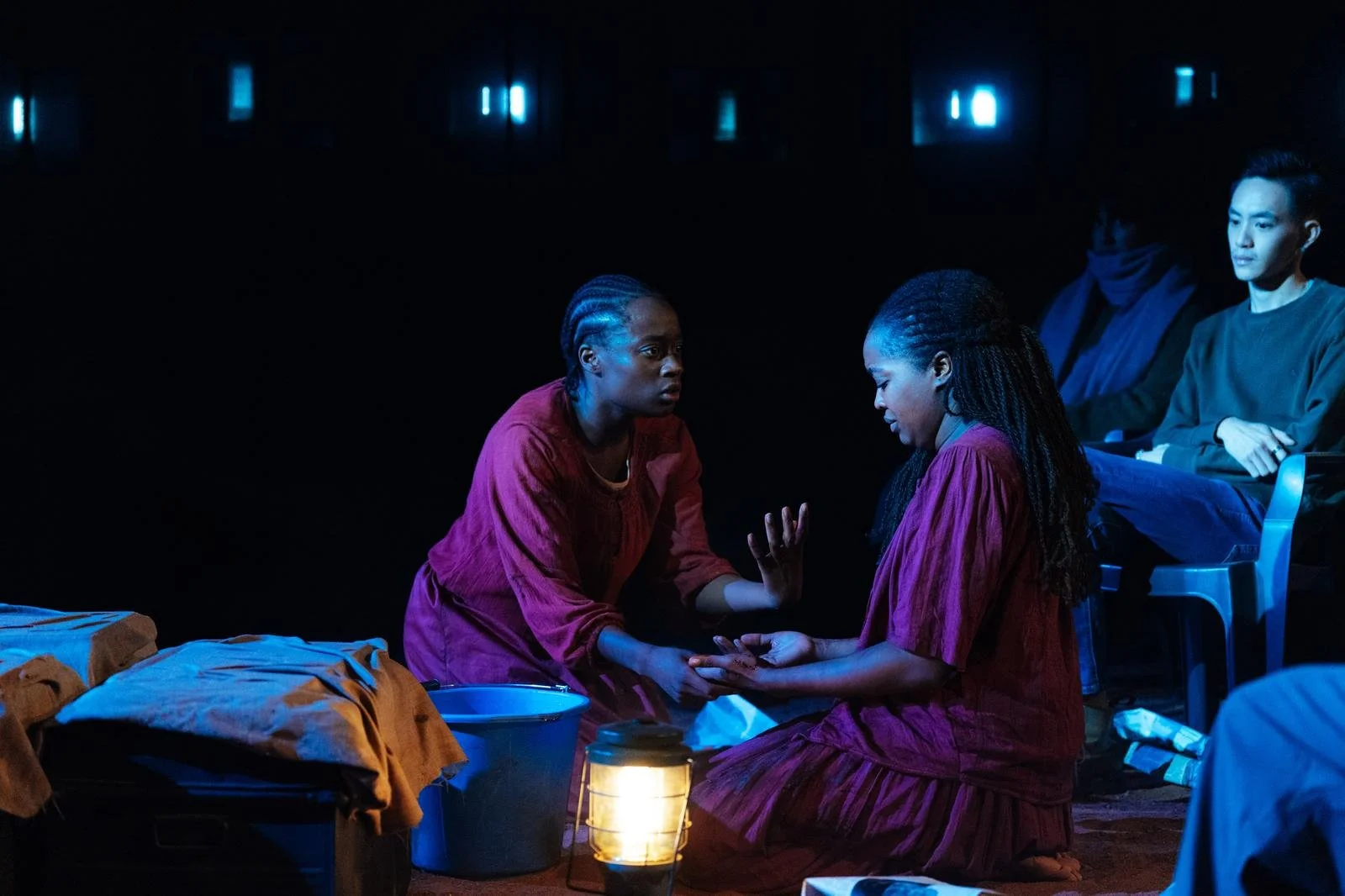
When Haleema opens the newspaper Ruhab hands her and discovers the long-awaited knife wrapped inside, her eyes widen. She gives the knife a little, almost childlike wave, then awkwardly blurts out that it is her favourite thing. I cannot help laughing, even as I find myself unexpectedly moved. Throughout the play, these three girls never seem to lose their vitality.
In an interview, Theresa Ikoko once expressed her hope that Girls would bridge the distance between distant worlds, bringing unfamiliar accents, climates and ways of life into our own, where they could collide, intermingle and leave a lasting impression. She and her collaborators have done exactly that.
Girls plays at Young Vic until 21st November 2026.
★ ★ ★ ★
Written by Ziwen for Theatre and Tonic, October 2026.