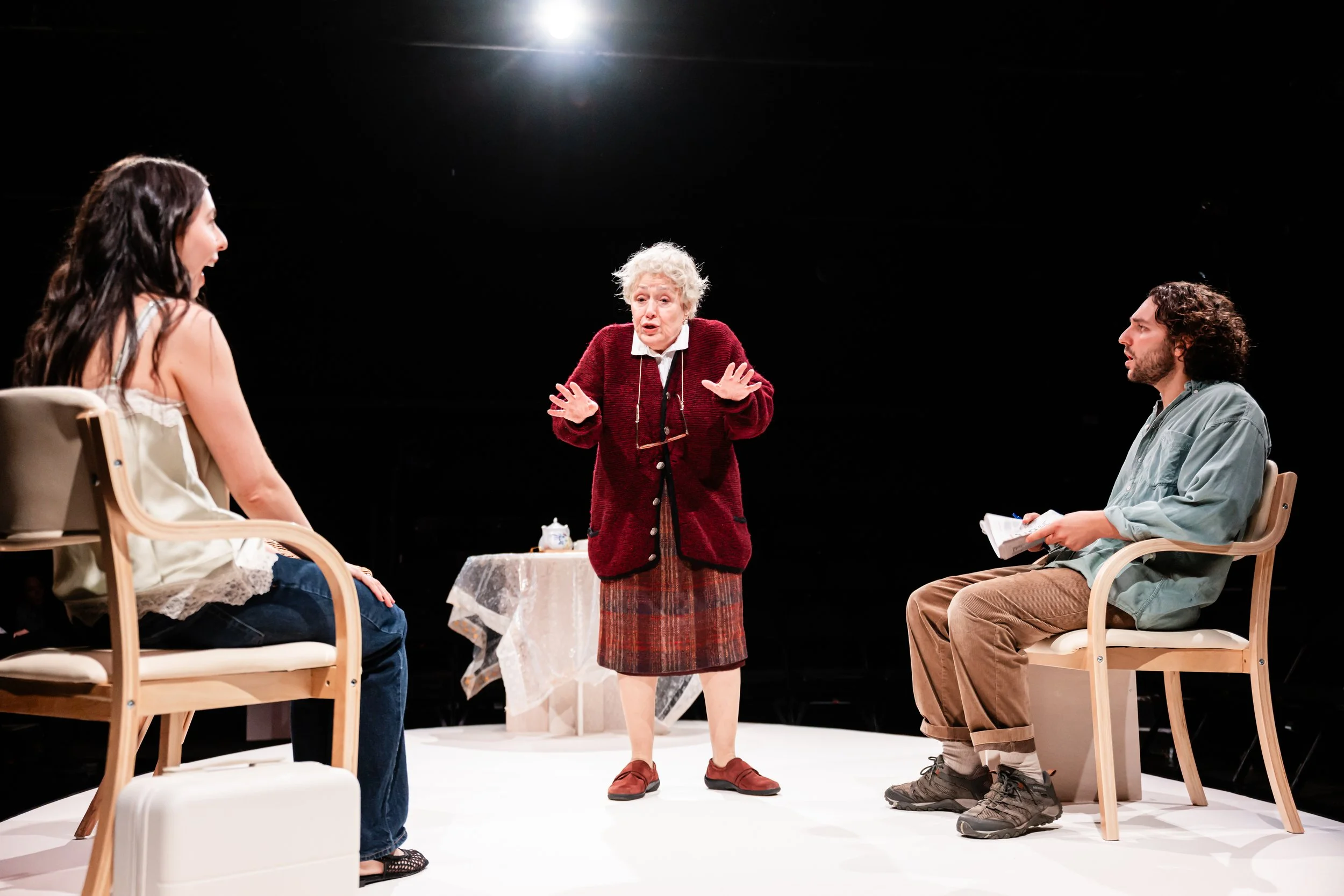
Keira Knightley and Luke Thompson in The Lives of Others. Photo by Pamela Raith
The title The Lives of Others will be familiar to many theatregoers and film lovers. The 2006 film, directed by Florian Henckel von Donnersmarck, won the Academy Award for Best Foreign Language Film at the 79th Academy Awards. Set in East Germany in 1984, it follows Wiesler, a Stasi officer assigned to monitor the lives of playwright Georg Dreyman and his girlfriend, Christa-Maria.
As Wiesler listens, day after day, to their conversations about love, artistic ambitions and personal struggles, he gradually becomes emotionally invested in their lives. He begins to question the regime he serves and eventually takes it upon himself to protect the couple in secret. Now adapted for the stage and directed by Robert Icke, with Keira Knightley, Stephen Dillane and Luke Thompson leading the cast, the production has arrived at the West End's Adelphi Theatre. What struck me most was the production's remarkably cinematic quality.
As Wiesler puts on his headphones, a crackling hiss fills the space (Sound Designer: Giles Thomas), and the lights come up on Georg and Christa-Maria's apartment (Set Designer: Hildegard Bechtler). While the living room remains fully exposed to the audience, the bedroom and bathroom are enclosed by semi-transparent screens, behind which the indistinct silhouettes of the occupants can occasionally be glimpsed. These spaces seem to offer a degree of privacy, yet they also evoke a cage enclosing the couple. As the story unfolds, the stage slowly revolves, revealing every corner of the apartment to the audience. Cameras are deployed not only in the interrogation and television studio scenes, but also at various other moments throughout the production. Live video (Video Designer: Tal Yarden) captures the characters' subtle shifts in expression, heightening the sense of voyeurism. The audience is not merely watching the characters; it becomes, in a sense, complicit in the very act of surveillance.
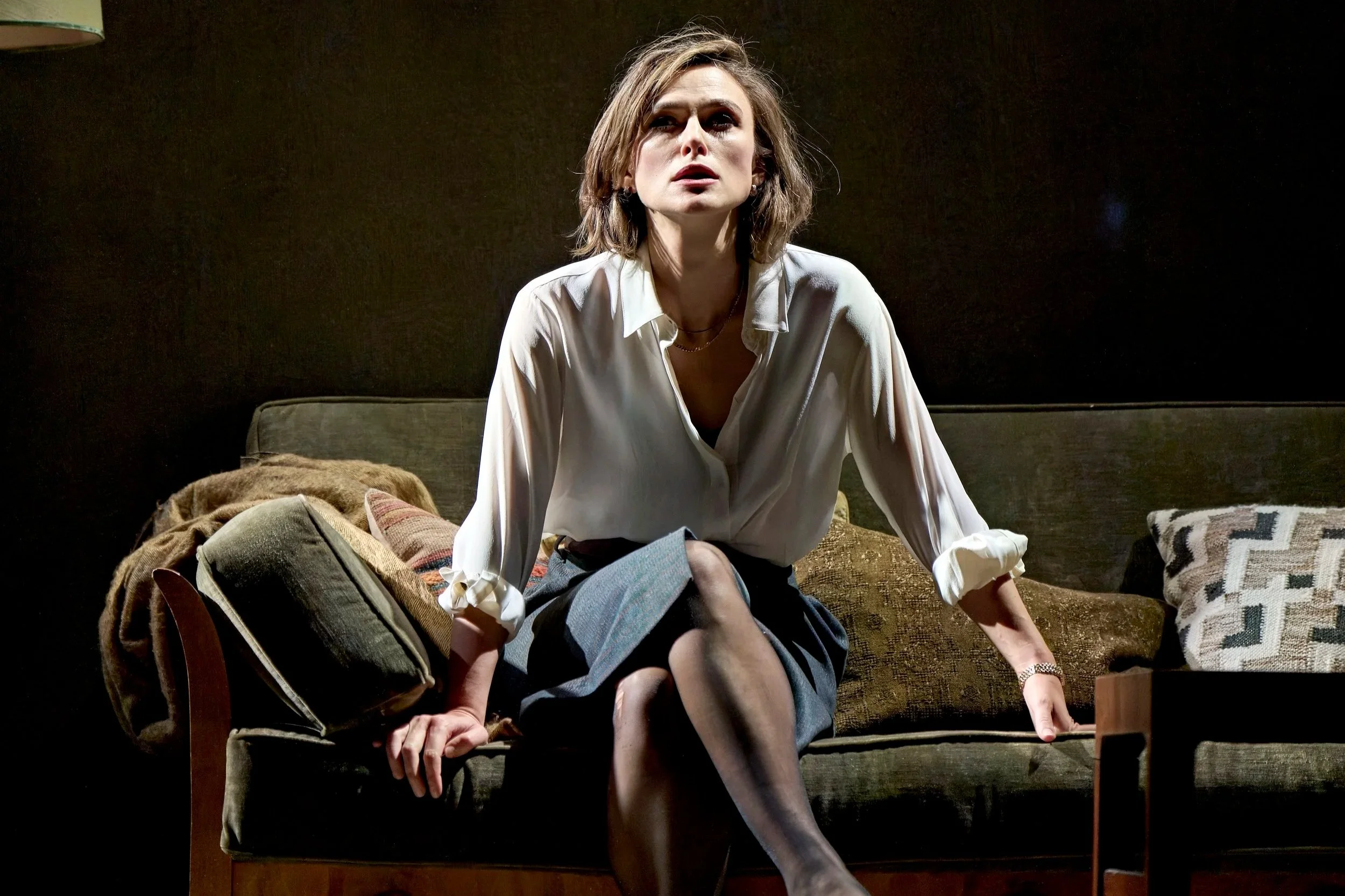
Keira Knightley in The Lives of Others. Photo by Manuel Harlan
Another striking feature of the production is its extensive use of black drapes, which descend from above and from both sides of the stage. Closing in from all directions, they progressively constrict the visible playing space until it is eventually swallowed by darkness, leaving the audience with nothing further to see. The drapes create an overwhelming sense of confinement throughout the production, regardless of the setting. Even the pub and Wiesler's own home feel claustrophobic. When the final tragedy unfolds, Georg's anguished cries are heard, but the audience is denied any further glimpse of what follows. What remains is a profound sense of oppression, loneliness and helplessness, compounded by the lingering shock of the scene's emotional intensity.
Knightley's Christa-Maria possesses a distinctly artistic temperament. She has genuine artistic ambitions, yet is even more afraid of losing her career and social standing. Confident and well aware of how to use her charm, she is nevertheless fragile and deeply conflicted. Thompson's Georg, meanwhile, is an idealist at heart. Generally affable and talkative, he can be less measured in his relationship with Christa-Maria, as his feelings occasionally get the better of his judgement. Their onstage chemistry, while evident, could perhaps be more convincing. Love is, after all, the central force behind Wiesler's transformation in this story. The more passionate and sincere their relationship feels, the more powerful the narrative's emotional impact becomes.
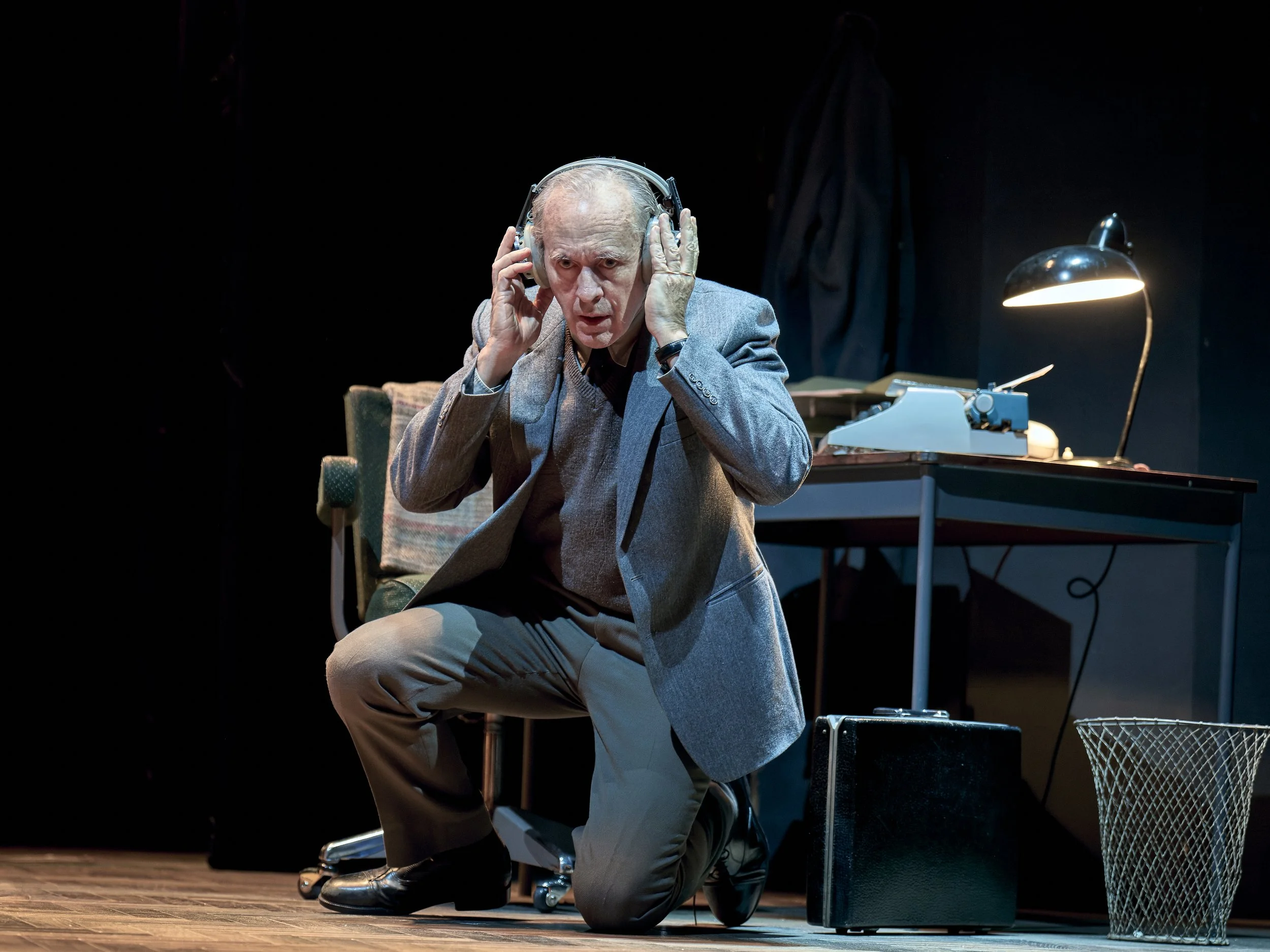
Stephen Dillane in The Lives of Others. Photo by Manuel Harlan
Wiesler is an especially challenging role to bring to the stage. The entire production revolves around his surveillance activities, which require him to remain on stage for much of the performance. It is rare to see a character whose primary function is simply to listen in silence. Making such a character feel like an organic part of the action is a considerable test of both directorial and acting skill. The inherently restrained nature of the role also leaves little room for overt or dramatic gestures. When what he hears amounts to little more than everyday conversation, even the smallest changes in facial expression and body language become difficult to calibrate. At times, his prolonged presence between Christa-Maria and Georg feels somewhat superfluous, even slightly disconnected from their interaction. Despite these challenges, Dillane gives a convincing portrayal of Wiesler's composure, discipline and restraint, while also conveying the gradual process through which he is emotionally affected and ultimately transformed.
The production also features a notably large ensemble. The sight of a group of people in work clothes entering the apartment to install listening devices is particularly striking. The crowded birthday party, the bustling television studio and the busy bookshop all benefit from the large number of performers on stage, lending these scenes a convincing sense of social realism that comes remarkably close to the cinematic original.
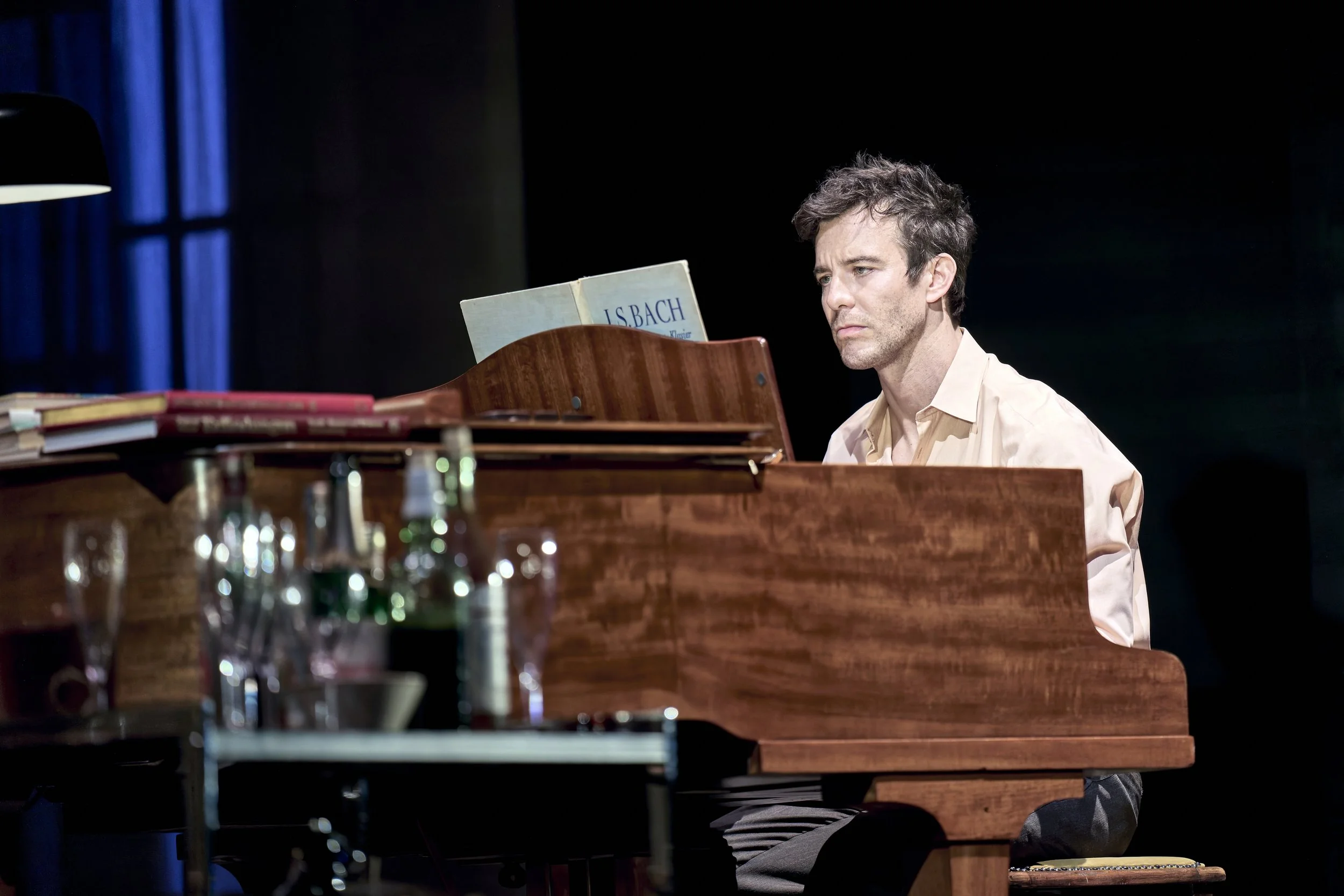
Luke Thompson in The Lives of Others. Photo by Manuel Harlan
The narrative structure and pacing are equally cinematic. Scenes sometimes consist of little more than two or three minutes of conversation before moving on to the next. This inevitably leaves the audience with limited opportunities to get to know the characters in greater depth. Jerska, in particular, is not given enough time to emerge as a fully developed character, which means that the sonata Georg later played in his memory never quite achieves its full emotional impact. Even with the principal characters, I found myself wishing for the occasional longer, more substantial conversation that would allow us to engage more deeply with their inner lives.
In The Lives of Others, a sense of oppression hangs over the characters almost constantly. Yet what makes the story truly unforgettable is the beauty of art and humanity, which not only survives under such circumstances but can also flourish with extraordinary force. When Wiesler, in his modest clothes and with his hair slightly unkempt, buys the book Georg has dedicated to him, I found myself smiling. Both the film and this stage adaptation, each in its own way, capture a poignant and bittersweet beauty that lingers long after the story has ended.
The Lives of Others plays at Adelphi Theatre until 9th January 2027.
★★★★
Written by Ziwen for Theatre and Tonic, October 2026.