The Urmetazoan at Hampstead Theatre Review

After seven years without seeing each other, sisters Alice and Abigail are reunited before Alice is about to leave Earth for space to continue her research. During their brief reunion, the old tensions between them, as well as the warmth that still exists beneath them, gradually come to the surface. Written by Alex Rugman and directed by Anna Ledwich, The Urmetazoan has made its debut at Hampstead Theatre. Within its 1 hour and 45 minute running time, and with a cast of just three actors, the production already reveals a complicated sisterly relationship that could be explored in considerably greater depth.
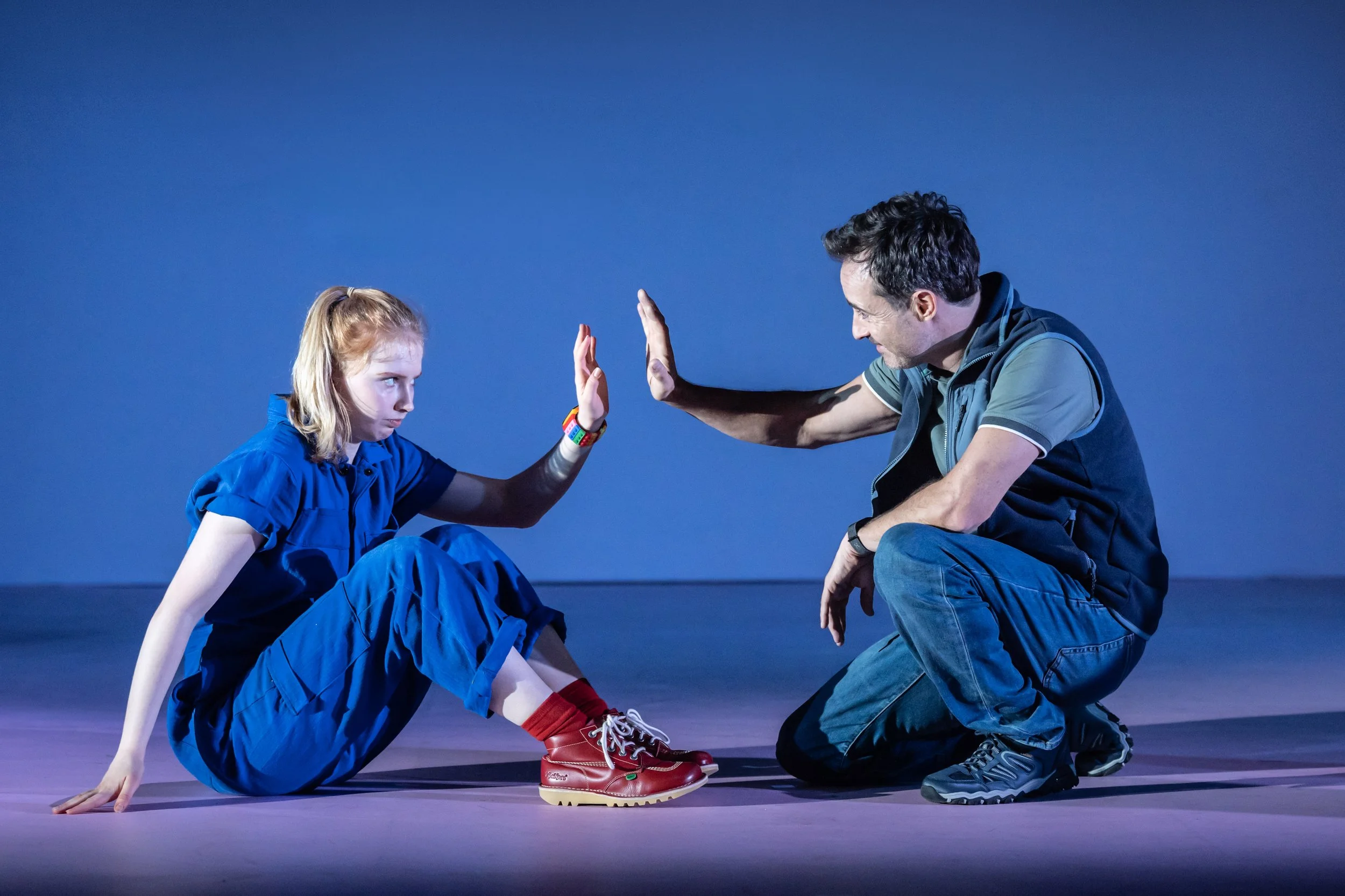
Dorothea Myer-Bennett and Meghan Treadway convey with great precision the sisters' contrasting personalities and the tangled emotions between them. Myer-Bennett's Alice is exceptionally intelligent and takes everything she does extremely seriously. She appears rational and strong, yet there are many moments when her fear and self-doubt become visible. One gets the sense that her seemingly impenetrable exterior may have been constructed around the image of the older sister she feels she ought to be. Treadway's Abigail is funny, bold and somewhat scatterbrained, seemingly unconcerned about almost everything. There is almost something of a little devil about her, making her both appealing and exasperating. Although each sister possesses qualities the other lacks, they both envy one another. Abigail's envy is often expressed in more excessive ways, whether she wants her sister's dress, "steals" her friend, or even finds herself somewhat uncontrollably attracted to her sister's former boyfriend.
Unfortunately, the script places certain limitations on the development of the sisters' relationship. The current version feels somewhat fragmented and lacks a clear sense of time, while the moments it chooses to present do not always feel like the most organic ones. Although there is clearly a deeply tangled and intriguing relationship between the sisters, the play seems to brush against all the important subjects without fully confronting them, leaving behind only ripples. The gaps in the narrative are also unable to achieve their full potential because of the limited amount of information provided.
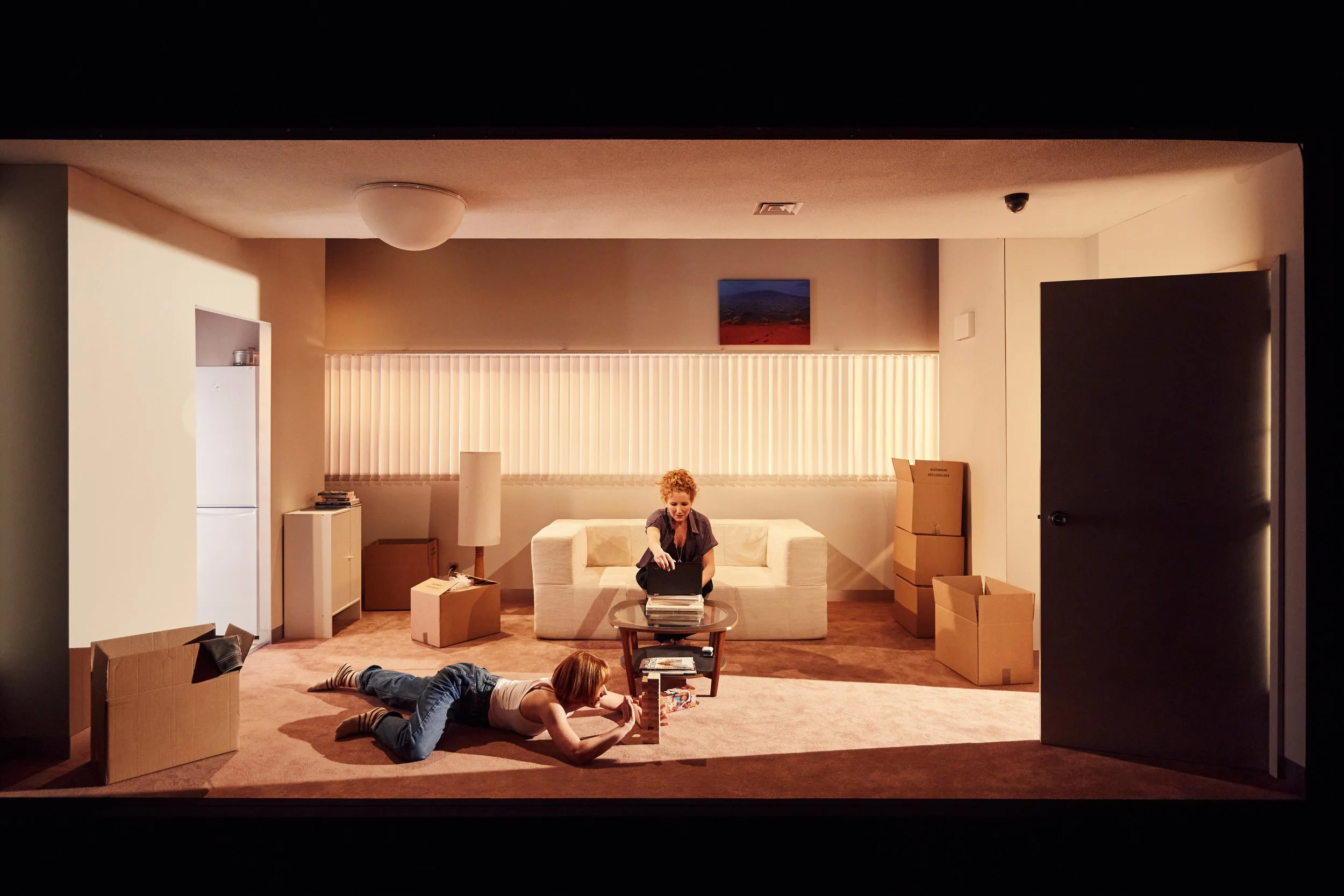
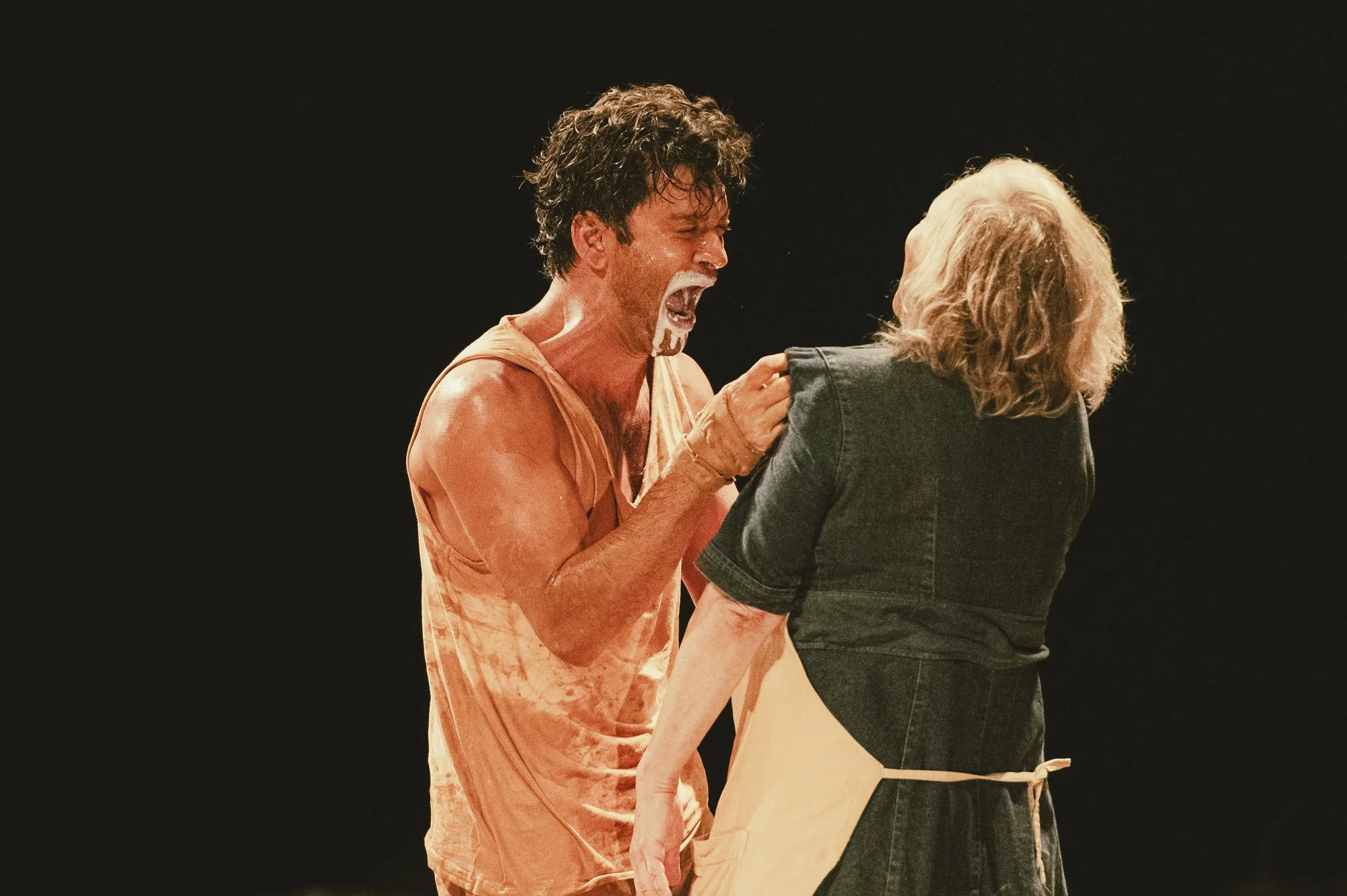
Some of the missing information has a particularly significant impact on the depth of the story. Even by the end, the audience still does not know why the sisters have not spoken to each other for seven years. There is also a strong sense throughout their conversations that both sisters are competing over how much they resemble their mother, each wanting to be the one who is more like her. Yet the play does not fully explore the mother herself or why her influence on both daughters runs so deep. Alice's former boyfriend Will, played by Ben Allen, has also yet to find the most convincing place within the play. The audience learns little beyond the fact that he works in the same field as Alice but withdrew from the mission. We know very little about Will's past with Alice, and the connection between them feels somewhat tenuous, making his presence feel closer to that of a plot device than a fully developed character.
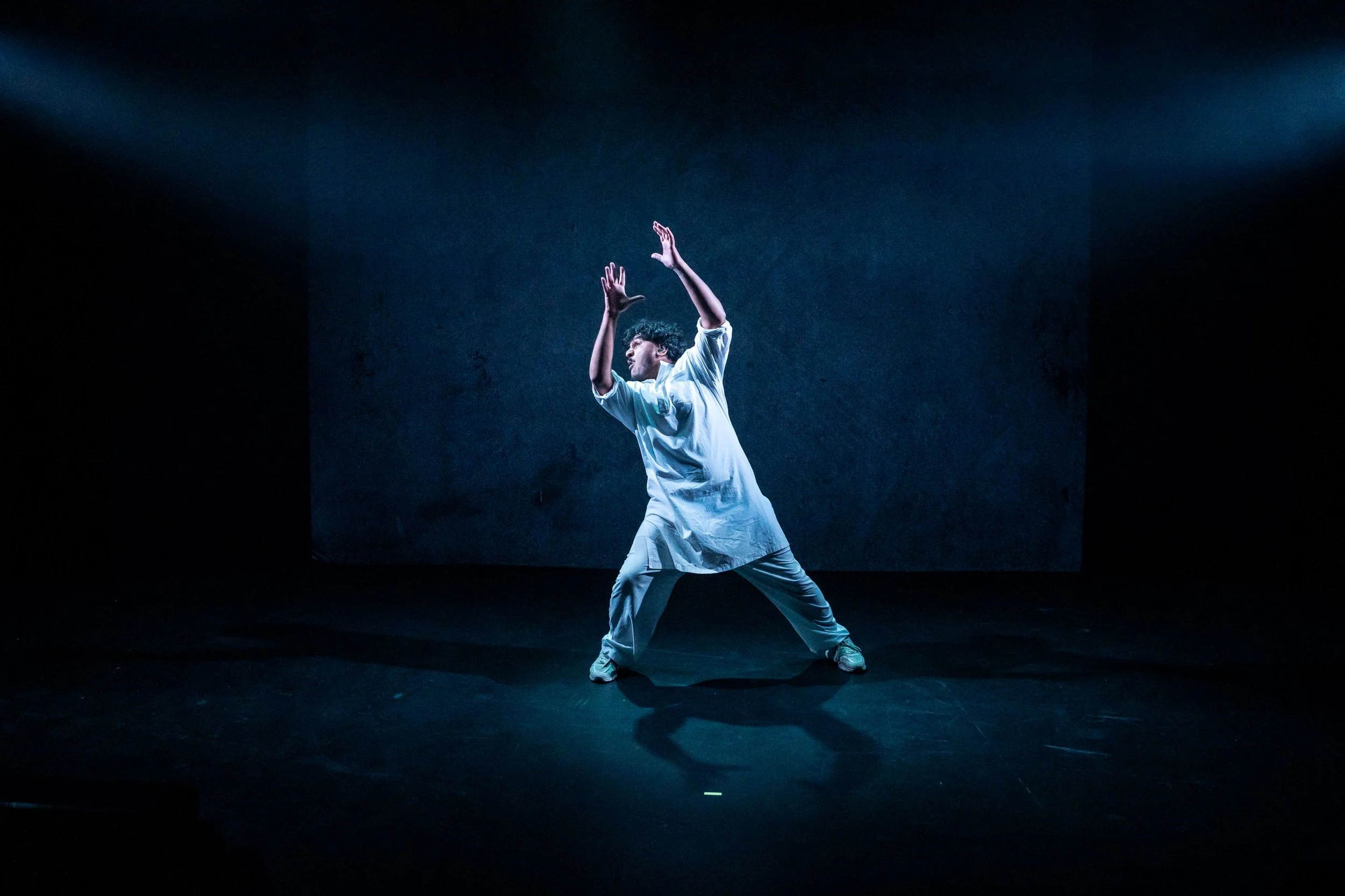
The lighting design (Jonathan Chan) demonstrates some interesting ideas. The light of car headlights filtering through the blinds is particularly convincing. The production also unusually asks its actors to perform in near darkness for almost two full scenes. For a short period, this lighting creates an immersive atmosphere and gives the audience a strong sense of being inside the world of the play. However, when the darkness is sustained for too long, the effect begins to work against the production. With the actors' facial expressions almost completely obscured, the audience can gradually become detached from the scene unfolding before them.
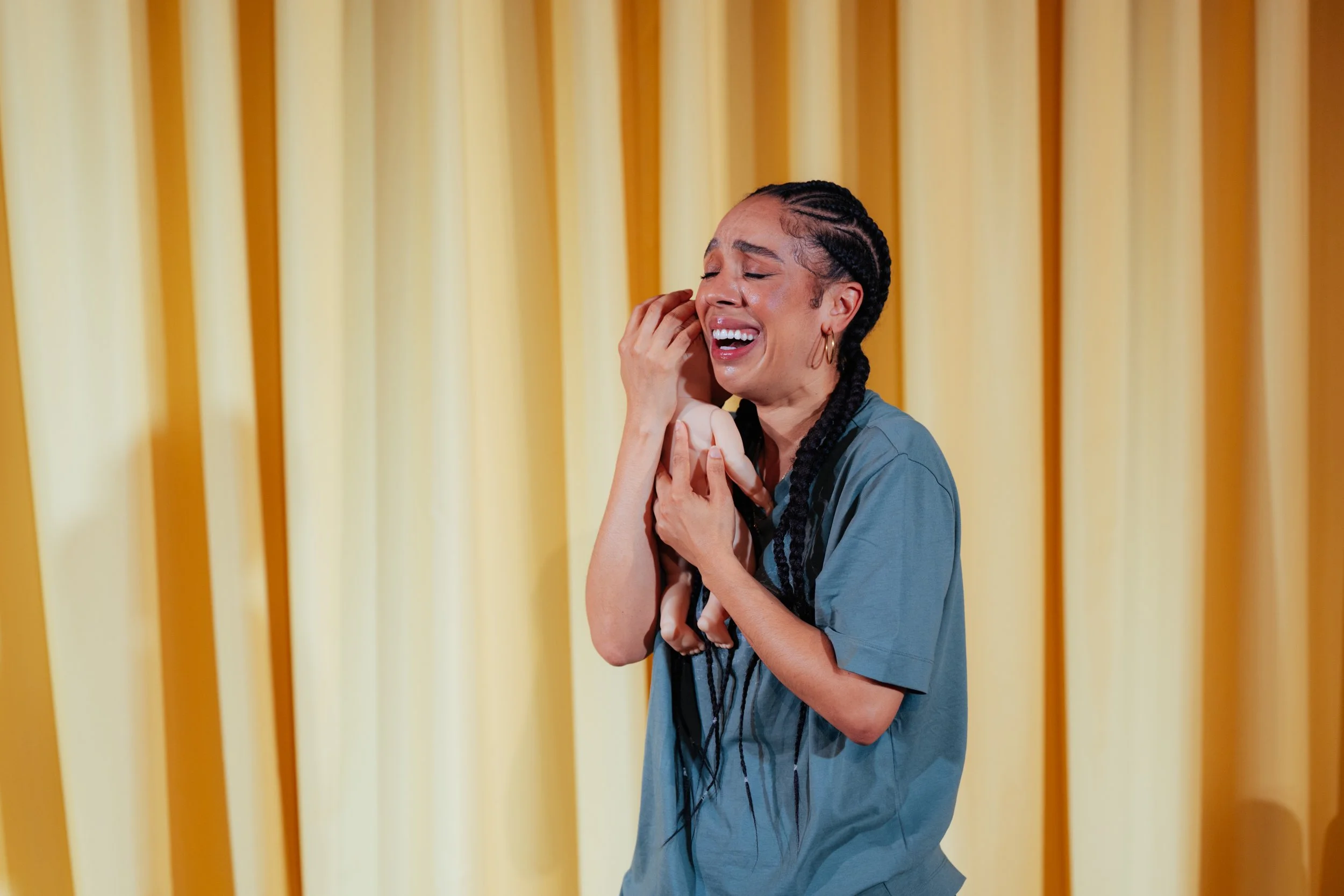
There are, of course, still many moments of genuine promise in the play. One is the sisters' familiar habits of interacting with each other, which remain visible beneath the distance between them. Another is the warm moment when they tell a story together, taking turns to contribute one word at a time. There is also the moment when Alice, while preparing to leave, calls her mobile network provider to cancel her phone subscription and suddenly realises that she does not want to go. And whether it is Alice shedding helpless tears while speaking to her sister on the other end of the phone, or Abigail comforting her sister only to have tears fall one by one onto the floor after Alice has left, these moments are deeply moving.
The Urmetazoan has already established a relationship between two sisters that is compelling to watch. If the characters were explored more deeply and the writing were less restrained in its use of language, the play could develop a stronger sense of lived reality. The complicated, twisted yet deeply warm bond between these two sisters could then be brought into much sharper focus, allowing more audiences to recognise something of themselves in it.
The Urmetazoan runs at Hampstead Theatre until 24th October 2026.
★ ★ ★
Written by Ziwen for Theatre and Tonic, September 2026.