A Midsummer Night’s Dream at Chichester Festival Theatre Review
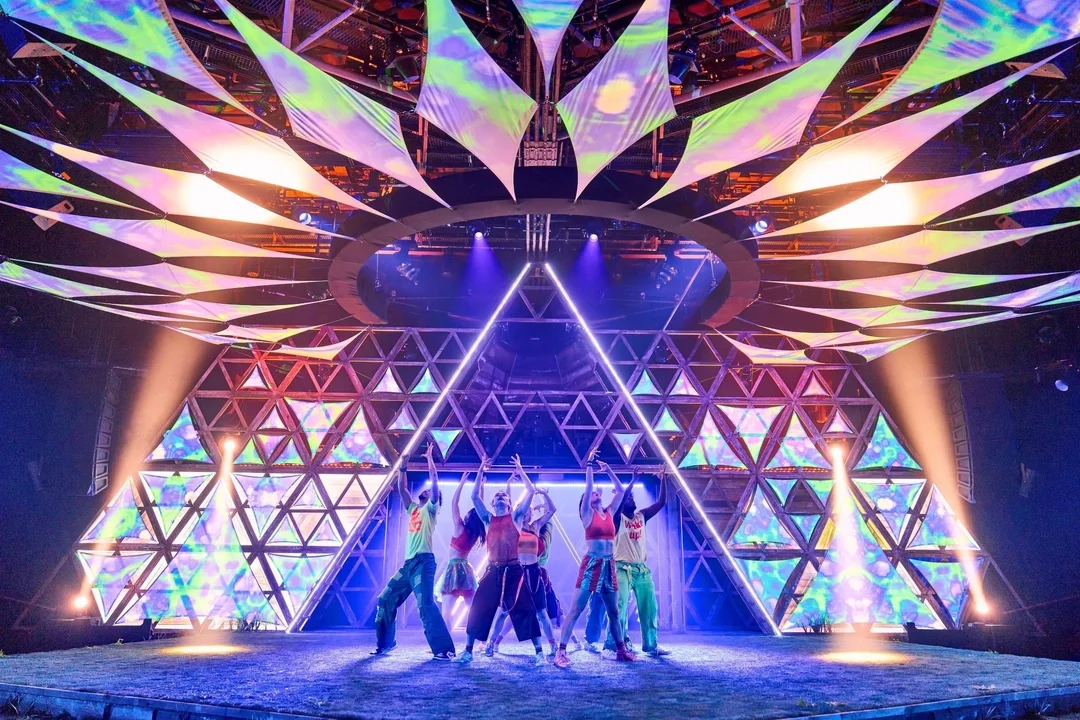
There is no better Shakespeare play to use when pitching the idea of setting the scene in 1990s rave culture than “A Midsummer Night’s Dream”, even more so when setting the mystical woodlands in the heart of Sussex: the South Downs. Chichester Festival Theatre have fantastically interwoven the politics, parties, and plights of this era of British history into The Bard’s comedy of conflict, romance, and magic. By injecting local references and settings into the Elizabethan play, residents of Sussex and beyond will find delight in the nods to the places and parties that CFT have cleverly interwoven into the piece, showing that Shakespeare can be adapted for and enjoyed by the masses.
Whilst normally set in Athens, CFT’s version of “A Midsummer Night’s Dream” sets its story in the theatre’s hometown of Chichester, where it presents the character of the Duke, Theseus (played by Tom Kanji), as an MP for the Conservative political party, and his wife Hippolyta (Celeste Dodwell) preparing to marry following the shutting down of raves across the county in 1994. A local group of Young Conservatives rehearse a play to celebrate the upcoming nuptials, not running as smoothly as they would like due to the overzealous nature of their newest member, Bottom (Munya Chawawa). But not everyone is happy with their love life, as four young lovers argue with their elders as to whom they want to be with. The lovers Hermia (Angela Sant’Albano) and Lysanda (Ellie Larkin) choose to defy society and run away together to the South Downs to escape Demetrius’ (Kieran Taylor-Ford) unwanted pursuit of Hermia, whilst Helena (Freya Parks) chases Demetrius in the hopes of winning his love for herself. The South Downs, however, are being used to host illegal raves by Oberon (David Sturzaker) and Titania (Eve Ponsonby), once the Fairy King and Queen in Shakespeare’s original story, but now bohemian party animals escaping the regime put in place by local government. Conflict ensues, and Oberon implores his impish right-hand man, Puck (Shane David-Joseph), to cause all sorts of mischief through the night: Titania is made to fall in love with a hideous creature, the lovers’ affections for one another are muddled and confused in an unfortunate mistake of identity, and an enthusiastic actor finds himself changed into something not quite human. Chichester Festival Theatre reimagines this classic in a way which is fast-paced, modernised, as well as nostalgic for those who lived through the parties of the 1990s. It combines the original fairy magic with the culture of psychedelics in the rave scene, and gives a firmer, sociopolitical reason for the main couples to escape from Athens (reimagined as Chichester and Sussex) and into the woods (now the South Downs).
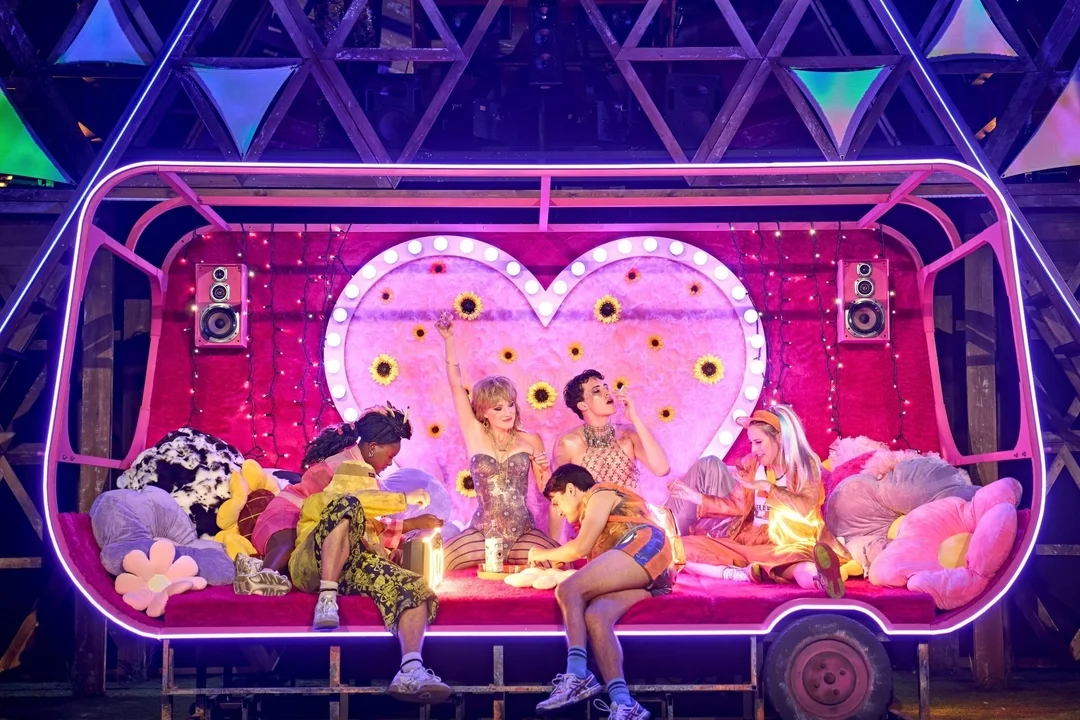
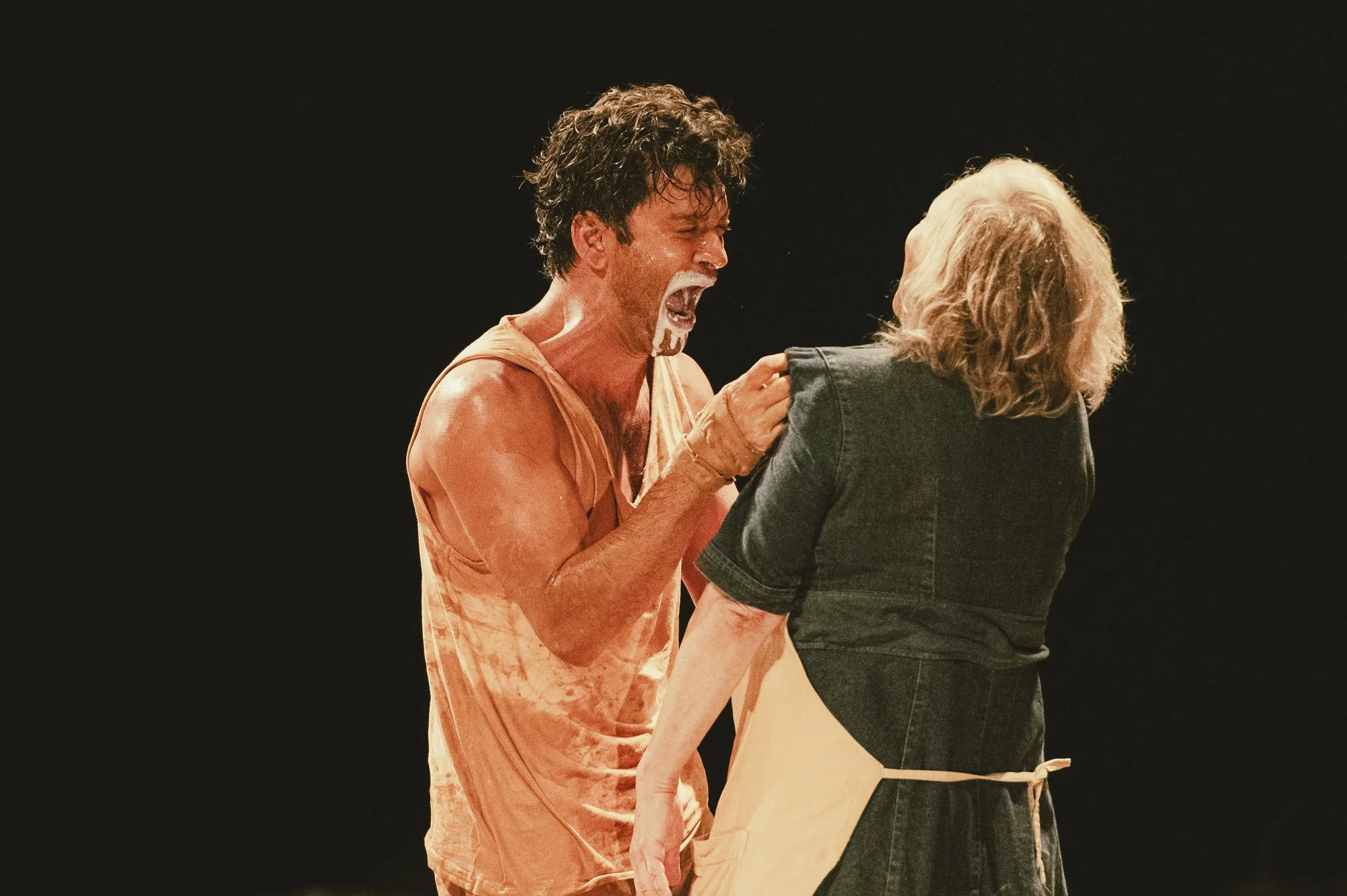
It is hard to pinpoint singular stand-outs in this production of “A Midsummer Night’s Dream”, as each group of actors fight to steal the scene as the play unfolds. Dodwell’s Hippolyta is a boozy, brash, Conservative wife who plays fabulously off of Kanji’s Thesus, even where their roles appear only to set and end the story; they make the most of their time on stage and are equally as fantastic as the other. The lovers quartet shine when together, especially when they engage i their lovers’ quarrel in Act Two; Taylor-Ford and Larkin bicker like children in a hilariously physical act to win Helena’s affection, whilst Sant’Albano and Parks throw themselves into their own passionate battle of jeers. There is a real chemistry between the four, in particular Sant’Albano and Larkin, who play a gender-twisted, sapphic Hermia and Lysanda (Lysander in the original text), bringing a whole new light to the reasons for wanting to escape the place they live to be free to love the one they want. Munya Chawawa’s Bottom has been the fronting for most of this production’s marketing, and the satirist (making his professional stage debut) steps into the role with a real eagerness to have the audience in the palm of his hand - and he does so with conviction. It was hard to look around and not see someone laughing at Chawawa’s delivery and physical comedy as Nick Bottom, particularly as the final ‘play within the play’ rolls around, which was an undoubted fan-favourite. His marvellous ability to act the fool is exactly what the character needs. David-Joseph’s Puck bridges the gap between audience and stage with
swagger and charm, and perfectly fits into the psychedelic, magical, tumultuous world Sturzaker and Ponsonby introduce amidst their initial altercation of jealousy. The cast were so strong, even characters such as sympathetic Young Conservative member, Flute (played by Kishore Walker), were memorable in ways I have never seen before in other productions of the same material. It is a testament to how well the cast all play off one another, but also how strong the direction of Justin Audibert and Hannah Joss was when crafting this stylised performance of the comedy.
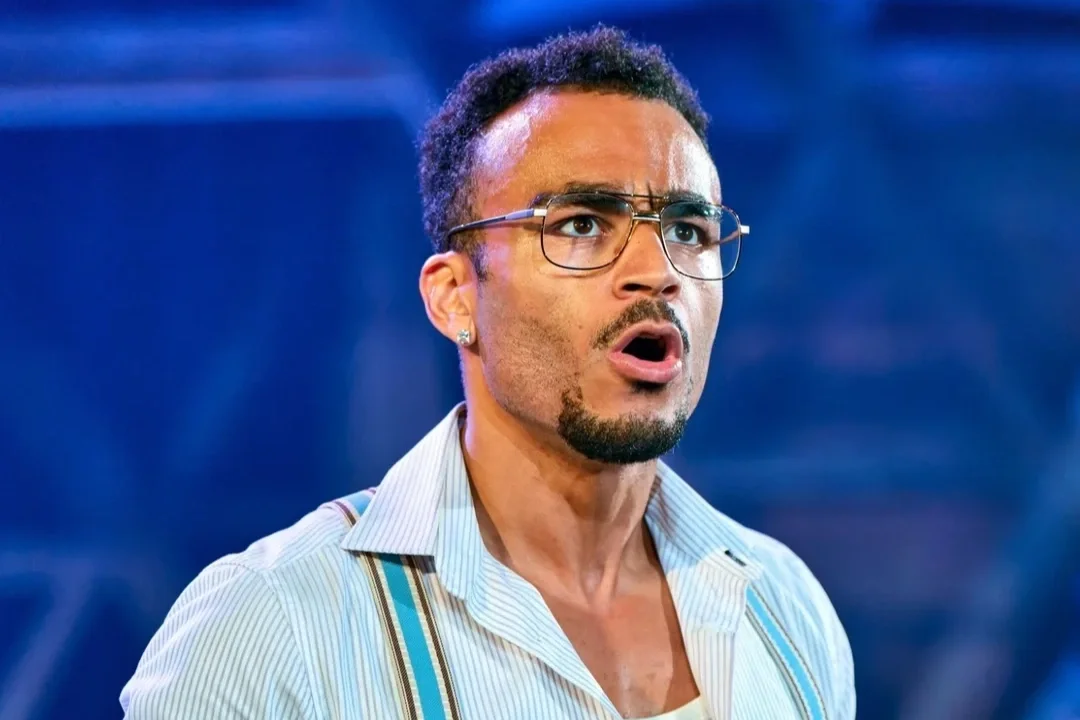
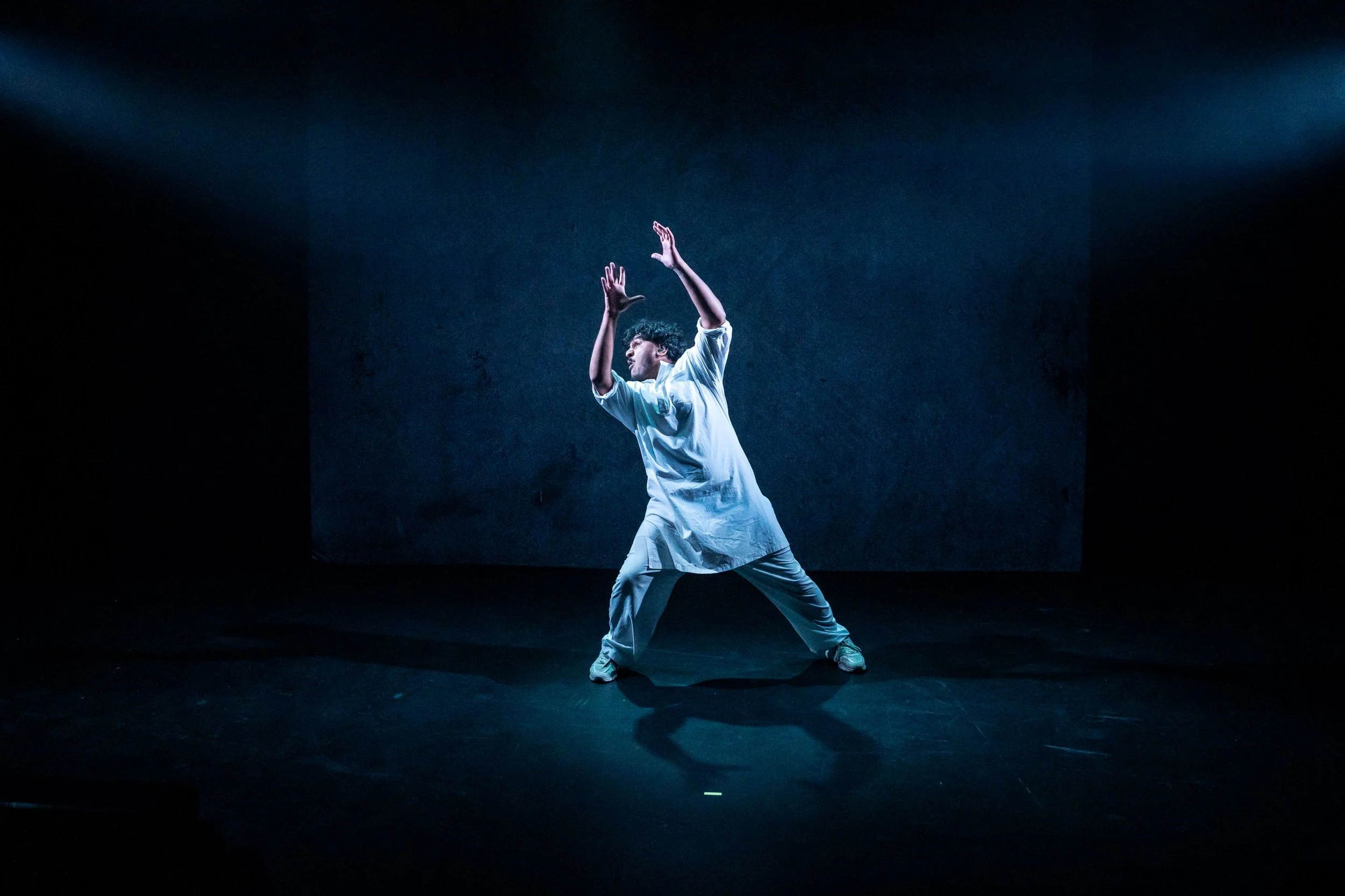
Most impressive, I believe, is the movement direction by Jade Hackett, backed by Fight and Intimacy Directors Bethan Clark and Robin Hellier, who make the stage feel so lived in. From dance to general movement, transitions to lifts, fight choreography to comedic mannerisms, the collaboration between directors feels like it comes together in perfect syzygy to create this world of the 1994 rave scene. Scene transitions were smooth and purposeful, everything having a place and purpose to serve the story; this was most prevalent in the inclusion of an ensemble of ‘ravers’, who perform as fairy-counterparts to set the scene of the illicit rave being hosted by the Fairy King and Queen, dancing in true 90s rave fashion to a mix of techno beats as well as dialogue. Costume design by Ryan Dawson Laight, lighting design by Elliot Griggs, and sound design and composition by Alexandra Faye Braithwaite also beautifully show the transition from the polished Conservative offices to the electronic landscape of the party held in the rolling hills of Sussex.
The idea of “A Midsummer Night’s Dream” encapsulating the culture of raves and the underground party scene is not a new one (previously seen in a 2002 American rom-com film), but every segment of CFT’s production feels fresh, vibrant, and approachable, with something in it for every generation, especially those who have never connected to Shakespeare before. Whilst The Bard’s story remains the same, small additions to the script and setting allow a new generation to understand and enjoy the work as it roots itself in a very real time and place (with special mention to the myriad of Sussex references locals may find themselves recognising as they are strewn throughout the dialogue). It is a punchy, techno delight to revel in for two and a half hours; loud and unapologetically so in sound and stylisation. It is a gloriously fun dream to the end of Chichester Festival Theatre’s 2026 season, with fantastic performances and direction all around. You would be an absolute fool to miss it.
A Midsummer Night’s Dream plays at Chichester Festival Theatre’s Festival Theatre until Saturday 17th October 2026.
★ ★ ★ ★ ★
Written by Rosie for Theatre and Tonic, September 2026.