Death of a Salesman at Liverpool Everyman Theatre Review
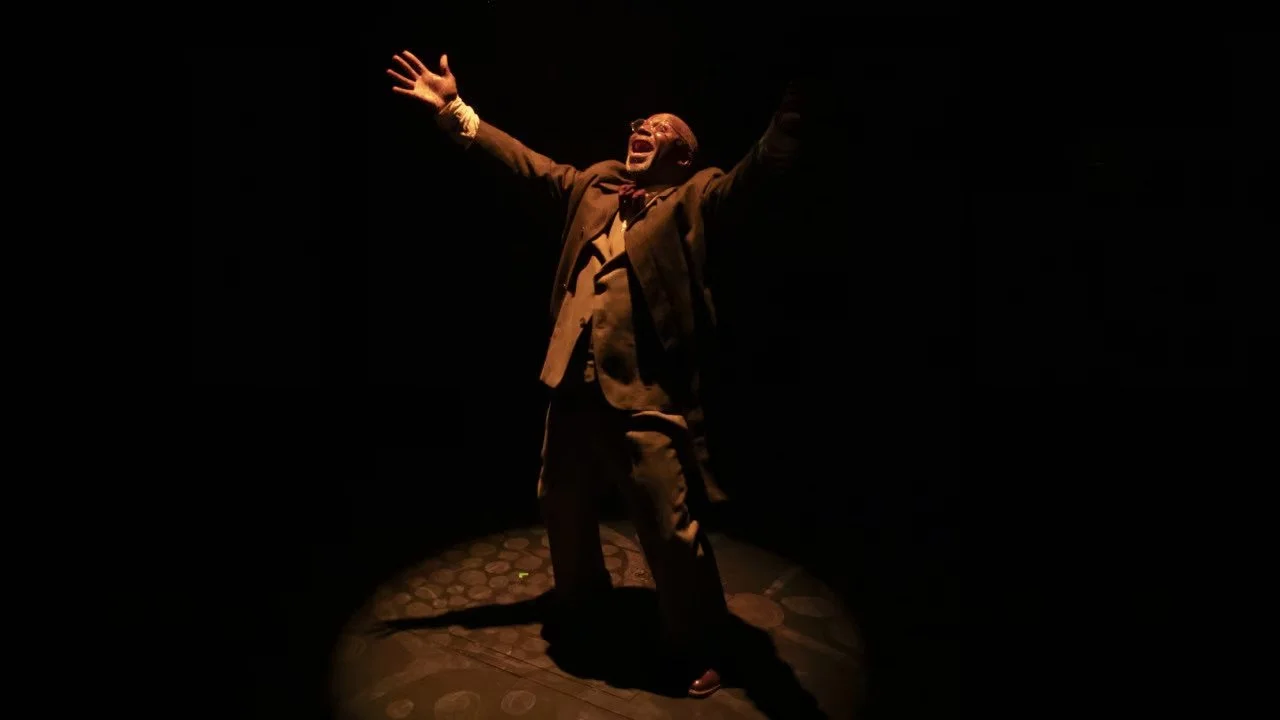
Cyril Nri in Death of a Salesman. Photo by Ali Wright.
Death of a Salesman premiered on Broadway in 1949, receiving a Tony Award, New York Drama Critics Circle Award and the Pulitzer Prize- the first play to win all three of these awards- and going on to be revived 5 times on a Broadway stage. Despite being one of the most famous plays of its time, and arguably the work playwright Arthur Miller is best known for, I actually wasn’t actually familiar with the story until coming to see Liverpool Everyman Theatre’s revival last night. I even understood the play to have a dull reputation, likely due to its appearance on many GCSE curriculams across the country- but since Miller’s All My Sons (1947) is one of my favourite plays, I thought this would be as good a time as any to get to know his most acclaimed work.
Once again, Death to the Salesman returns to the stage- full of light, music and lively energy- and I think it’s safe to say, extremely far from dull.
Like many of Miller’s works, Death of a Salesman is a classic American “problem play” and social critique. With the influence of his lived experience and struggle through the Great Depression evident, his characters struggle to chase or grasp the so-called ‘American Dream’- a phrase that makes frequent appearances in discussions surrounding Death of a Salesman in particular. While it seems like such an easy term to comprehend- I couldn’t help the realisation that I actually had never been told, and wasn’t able to define what it means. However, this might just be the point of the play that there really is no dream to inherit, only an idea of what “should be”.
Directed by Oliver Award-Nominated Tristan Fynn-Aidenu, this revival represents the ‘American Dream’ through the perspective of an immigrant family. Drawing from his own West African heritage and life experience, watching his father and stepfather work to achieve a similar dream here in the UK, this Willy Lomon (Cyril Nri) is clearly portrayed as a Nigerian immigrant- with his wife Linda (Emma Cater) portrayed as an Irish immigrant, as they live with their grown-up-sons Biff (Laurence Ubong) and Happy (Kieran Keball-Dwyer) in Brooklyn.
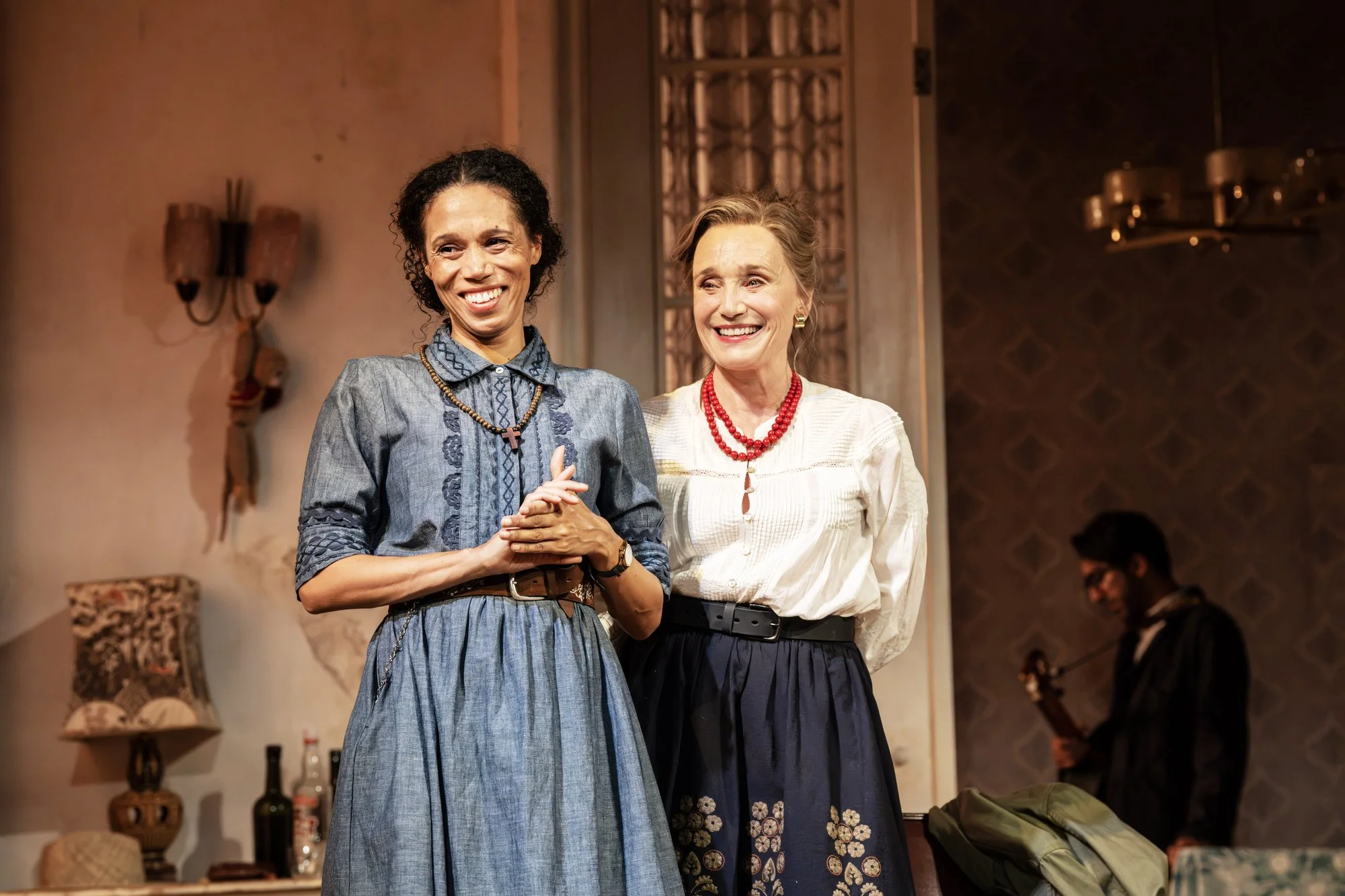
Set & Costume Designer Georgia Wilmot creates an extremely immersive family home for the Lomons- the details of the kitchen, bedrooms and garden on a thrust staging creates the same intimate sense that you’ve been invited as a guest their home for the evening- and can do nothing but watch uncomfortably as the relationships between the family are strained. It’s also cleverly moulded to Willy’s disorientation from both the 1950s and modern day- combining old-fashioned furniture and some technology that would’ve come later.
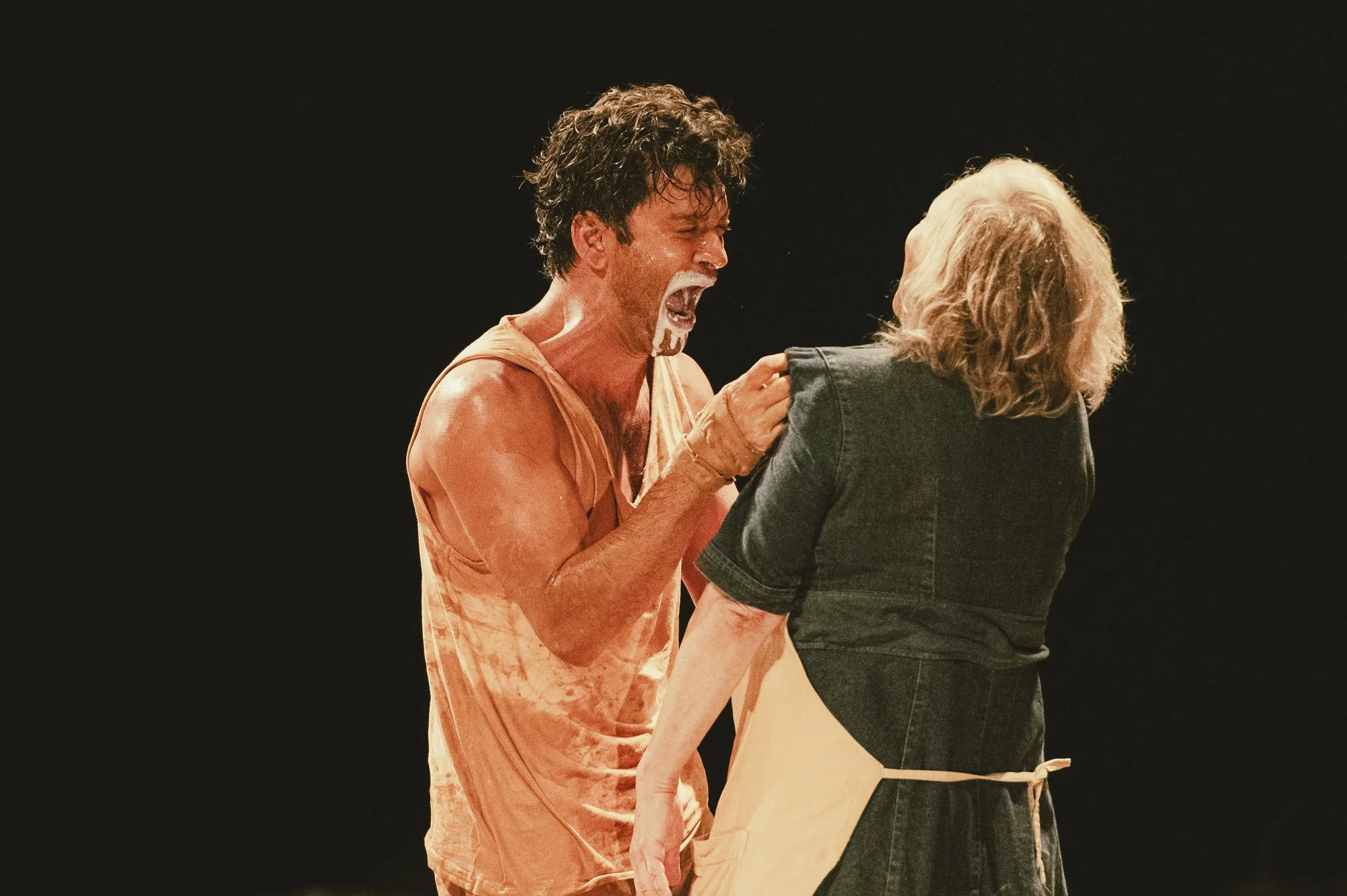
Disorientation is constant in Death of a Salesman- weaving the timeline between 24 hours of the “present” and the past few decades. The slow-motion-like choreography by Wendy Okoli, combined with flashing lights and the actors moving through the auditorium is dizzying, wild- and even frightening, forcing us into the frantic headspace of Willy Lomon.
The leading family offers emotional, dedicated, desperate and even playful performances- and with some understanding that the “American Dream” translates to a “picture-perfect family”, it’s undeniable that the struggle and strain of the Lomons is the true tragedy of this play.
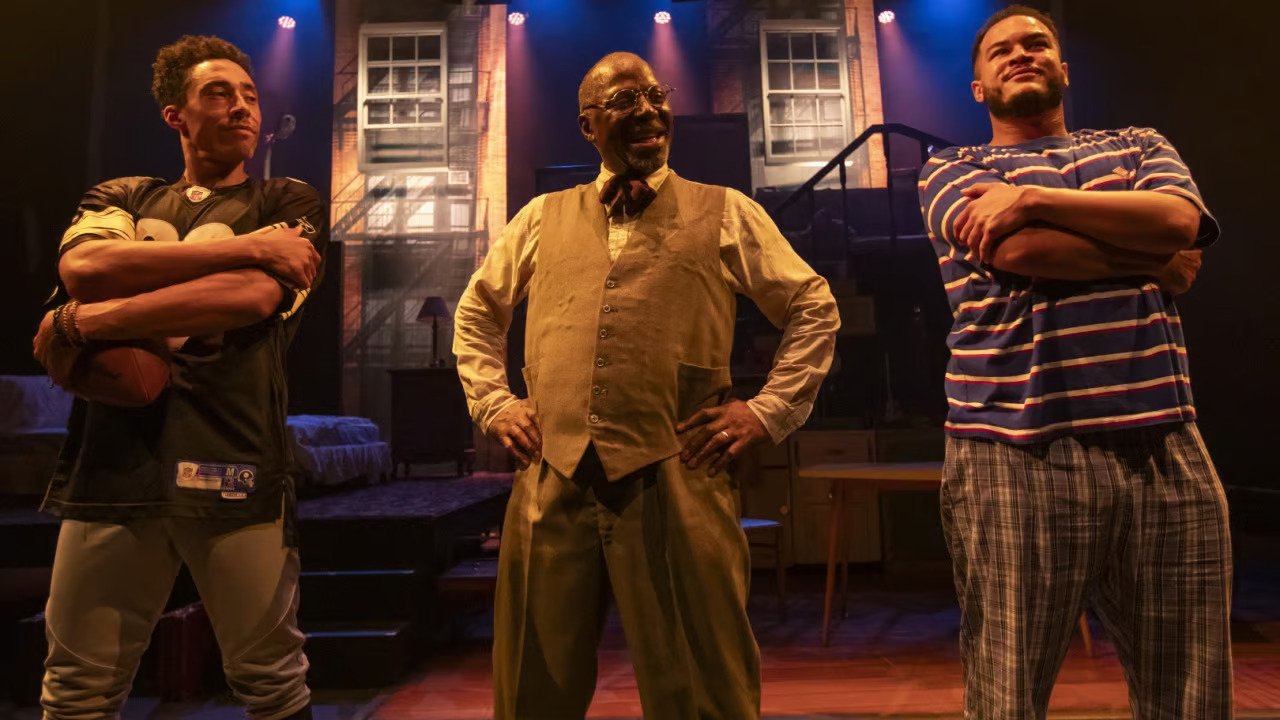
The smaller cast of 8 never allowed the stage to feel reused during its almost two-and-a-half-hour runtime, as all but Biff, Happy, Willy, and Uncle Ben (Tayo Aluko) covered multiple roles. The multi-roling was so seamless that between costumes and performance, I didn’t quite catch that I was watching an actor I’d already met in another scene- although I found it slightly laughable that Cater,as Miss Forsythe, flirts with the Lomon brothers in one scene, and returns to playing their mother in the next.
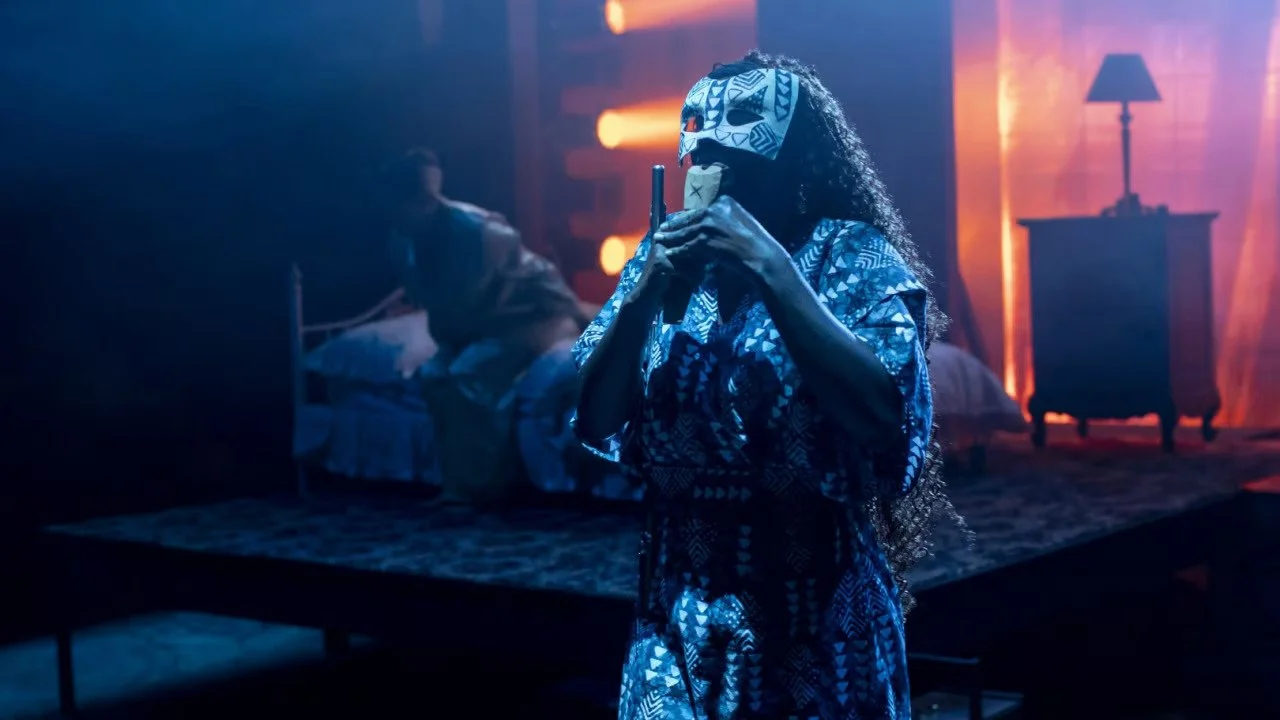
Adelaide Banks commanded the stage every time she stepped on it as The Woman. Her entrances demanded the performances begin- before the auditorium lights had dimmed, stomping and playing the flute- as if an omen of our Salesman’s impending death. By appearing as other roles throughout- Banks’s stage presence eerily suggests that Willy’s demise has always been present and watching his life and career. Another stand-out to me was Laurence Ubong as the desperate, unfulfilled Biff, arguably the tragic hero of the play. He is often blamed for not doing enough to be successful, but wants nothing more than to live with some truth- to be free to live and work as will fulfil him- not just dream as Willy does.
This particular performance was captioned, intended to increase accessibility to deaf, deafened and hard of hearing audience members- which, truthfully, I found myself glancing at more than I thought I would’ve needed, on the few occasions I felt the dialogue got lost between the music or effects.
This was also how I first grasped that the actors were occasionally using Igabo, a native language of Nigeria- a detail kindly specified to me by YEP (Young Everyman Playhouse) Trainee Assistant Director Shi-Janus Koroma. These translations were provided by Blessing Ogechukwu Patrick and are available to read on the Everyman website.
This Afro-scouse revival demonstrates why Death of a Salesman is such a relevant and moving piece, 77 years on. As Fynn-Aidenu’s first play outside of London, the piece feels like a celebration of the lives and talent within the community of Liverpool, particularly recognising the hard work of many immigrants making a living in their new country.
★ ★ ★ ★
Written by Seana for Theatre and Tonic, September 2026.