Waiting for Godot at Citizens Theatre, Glasgow Review

Written by David for Theatre & Tonic
Disclaimer: Gifted tickets in exchange for an honest review
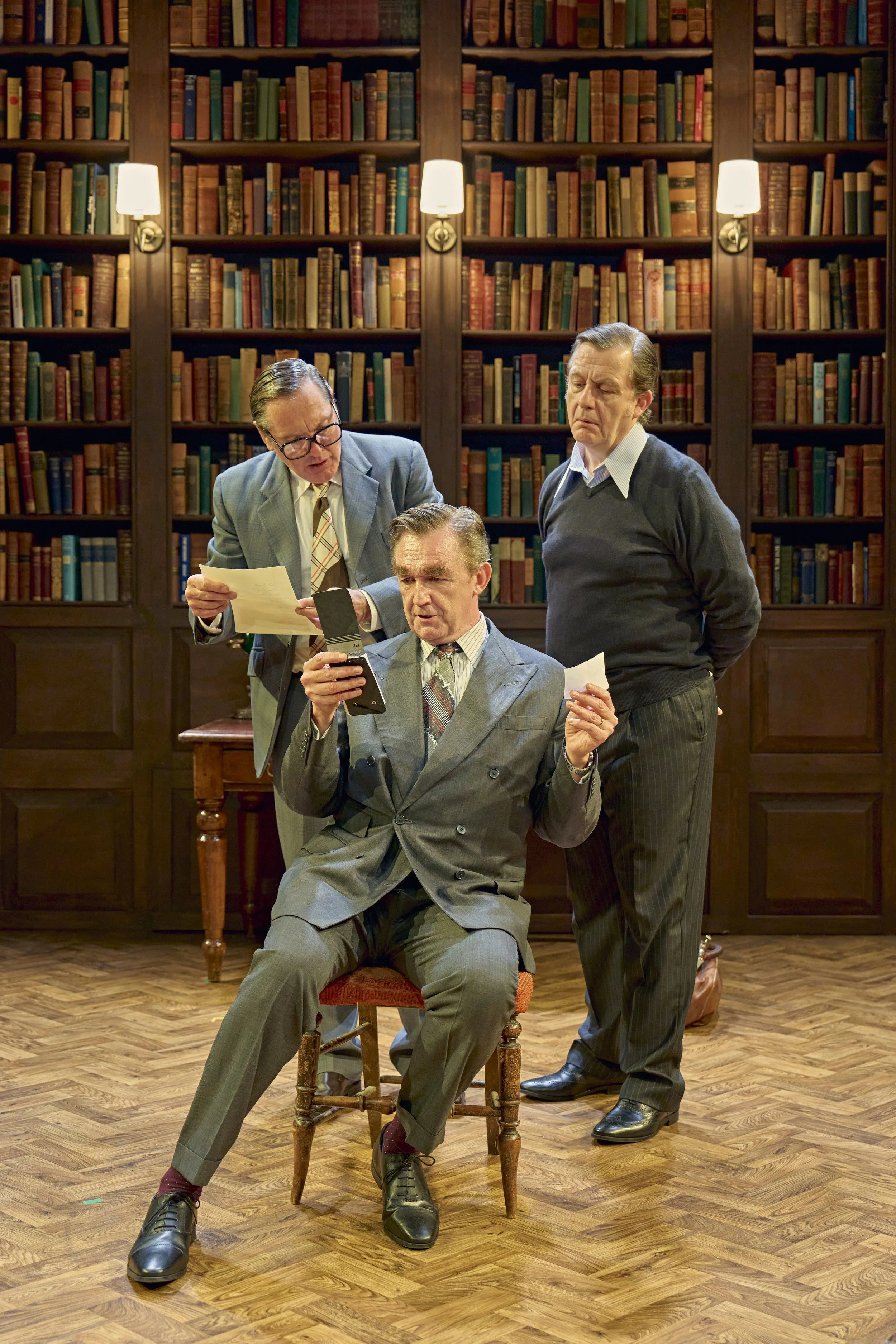
Samuel Beckett’s magnum opus Waiting for Godot, which centres on two despondent men waiting for a mysterious man called Godot to change their lives, originally started out in the French language as En attendant Godot; the Irish playwright felt that the French tongue conveyed his ideas better. Following its English-language premiere in 1955, the absurdist ‘tragicomedy’ has been no stranger to adaptation. Dominic Hill’s take at the Citz is guided by the quiet poignancy of male homosociality, gained from Matthew Kelly and George Costigan’s six decade friendship, but struggles to extract the melancholic underpinnings of the text.
The pairing of Kelly and Costigan is the production’s anchor; they’re a duo with an aptitude for tackling the two down-and-out characters. Their comic delivery is grounded in an organic understanding of each other and the oft forgotten individuality of their characters: Vladimir (Costigan), a controlling optimist and Estragon (Kelly), a stubborn adolescent type. With two septuagenarians as the leads, it's an inspiring duoship that embraces the play’s exploration of companionship; Vladimir’s exclamation of “embrace me” is all the more genuine. However, the vaudevillian tincture of Kelly and Costigan becomes slightly tiresome, losing the sense of desperation that glues the characters together.
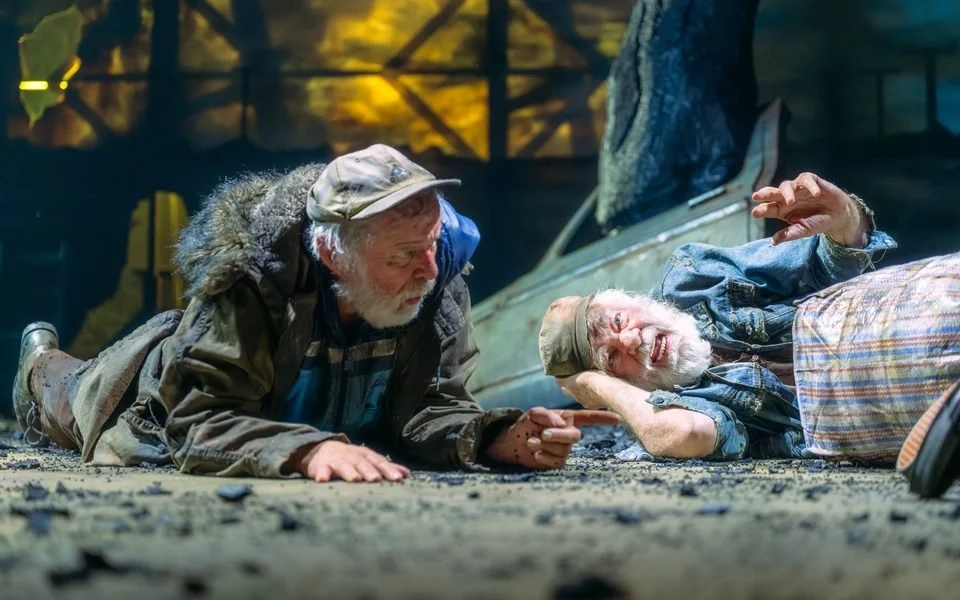
Hill’s direction is assured in its pacing, with a measured approach to the antiphonal dialogue. He ensures that there are due moments of silence, which feed into a quiet tension. Hill’s direction of the play’s alternate duo: Pozzo (Gbolahan Obisesan) and Lucky (Michael Hodgson) is also commendable; Obisesan’s Pozzo is more exuberant, making his sadistic hold over Lucky feel uncomfortably benevolent, whilst Hodgson’s gnarled physicality feeds into their distorted codependency.
The play’s subtitle, ‘a tragicomedy in two acts’ has little relevance in this production; humour seems to be its crux which, resulting in the audience’s endless laughter, shrouds the pitiful aspects. When Hill draws out its absurdist ruminations in an attempt to find a modern receptacle, it's misguided. In Act Two, when Vladimir asks “Why are we even here?” to the house lights being up, the audience becomes the collective ‘we’ in a vain Brechtian assertion of the text’s relevancy.
Jean Chan’s set cleverly executes the stasis of Vladimir and Estragon’s situation — the bizarre feature of a car door caught within the famous tree, alongside the ripped country road backdrop illustrate the painful stagnancy of time. Lizzie Powell’s exceptional lighting, with its yellow hopeful glimmers poking through the backdrop, pairs well in conveying the fallibility of optimism in the play.
Ultimately, Hill’s vision for the piece is erroneously fuelled by the real-life friendship between the play’s lead actors. The comedic, sometimes heartwarming action muffles the darker, nihilistic elements of the text. It’s an entertaining production which is, at times, gratifying but which really struggles to find the space between ‘tragi’ and ‘comedy’.
Plays until 14 March
★★★