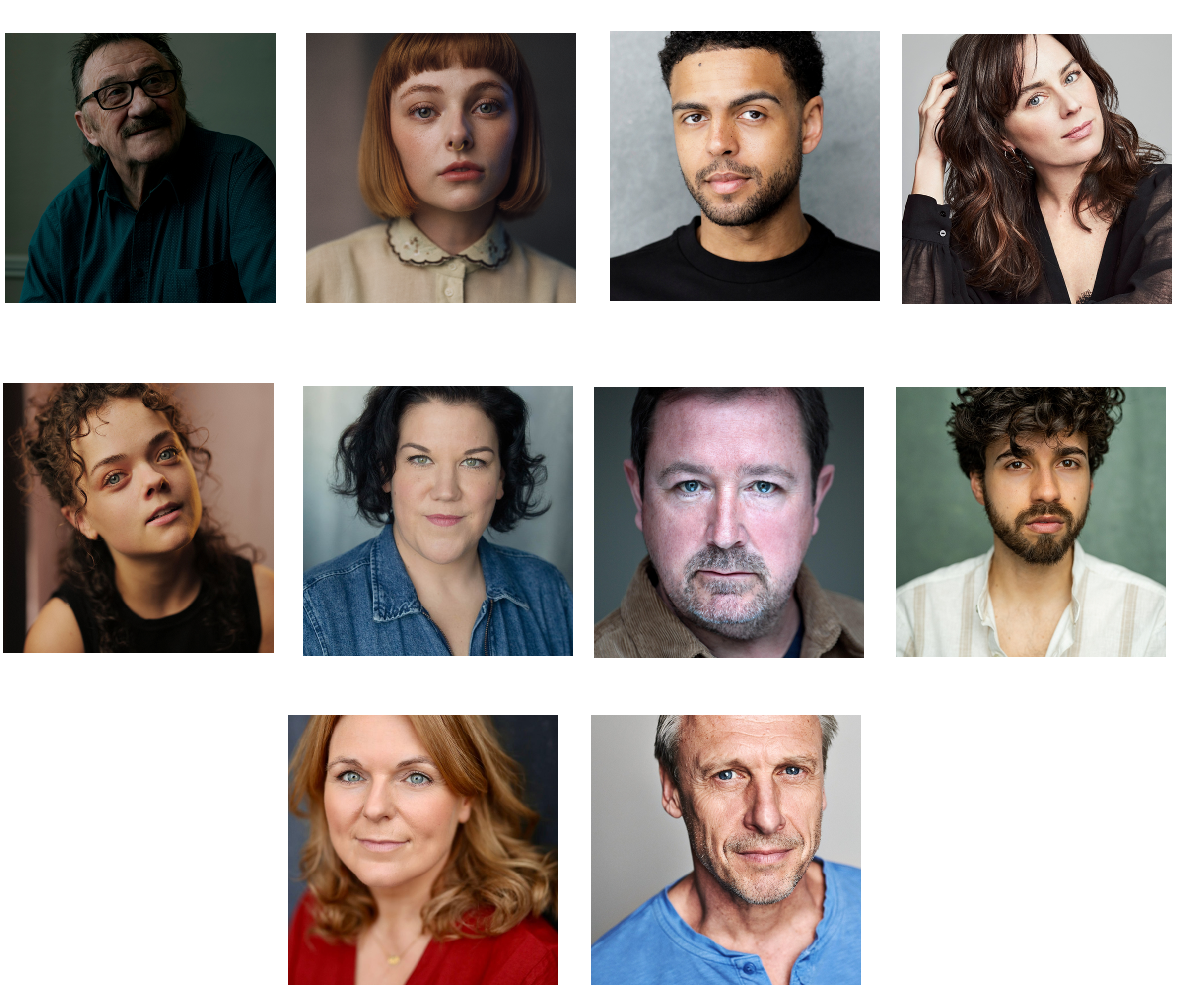
Conducted by Ziwen for Theatre and Tonic
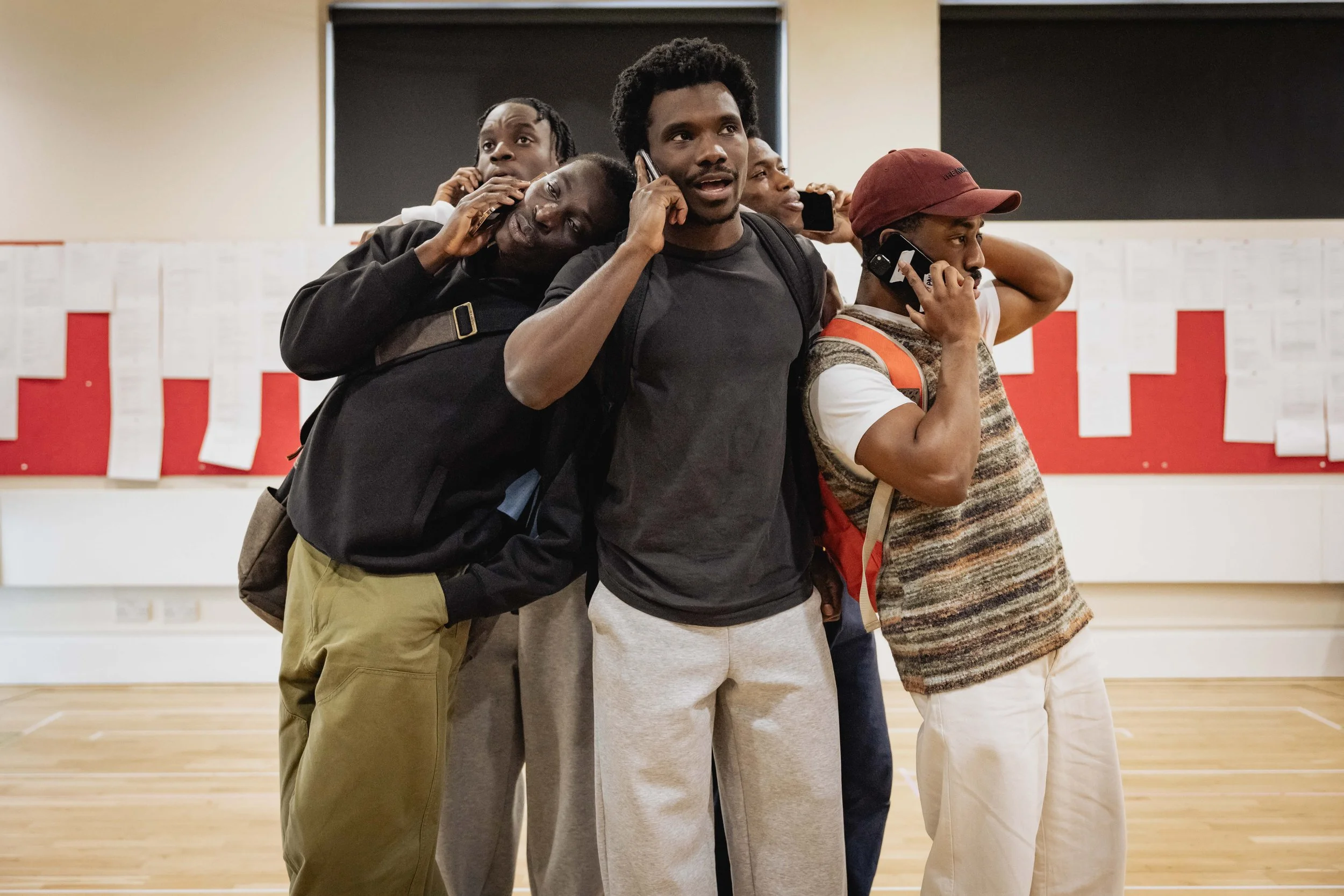
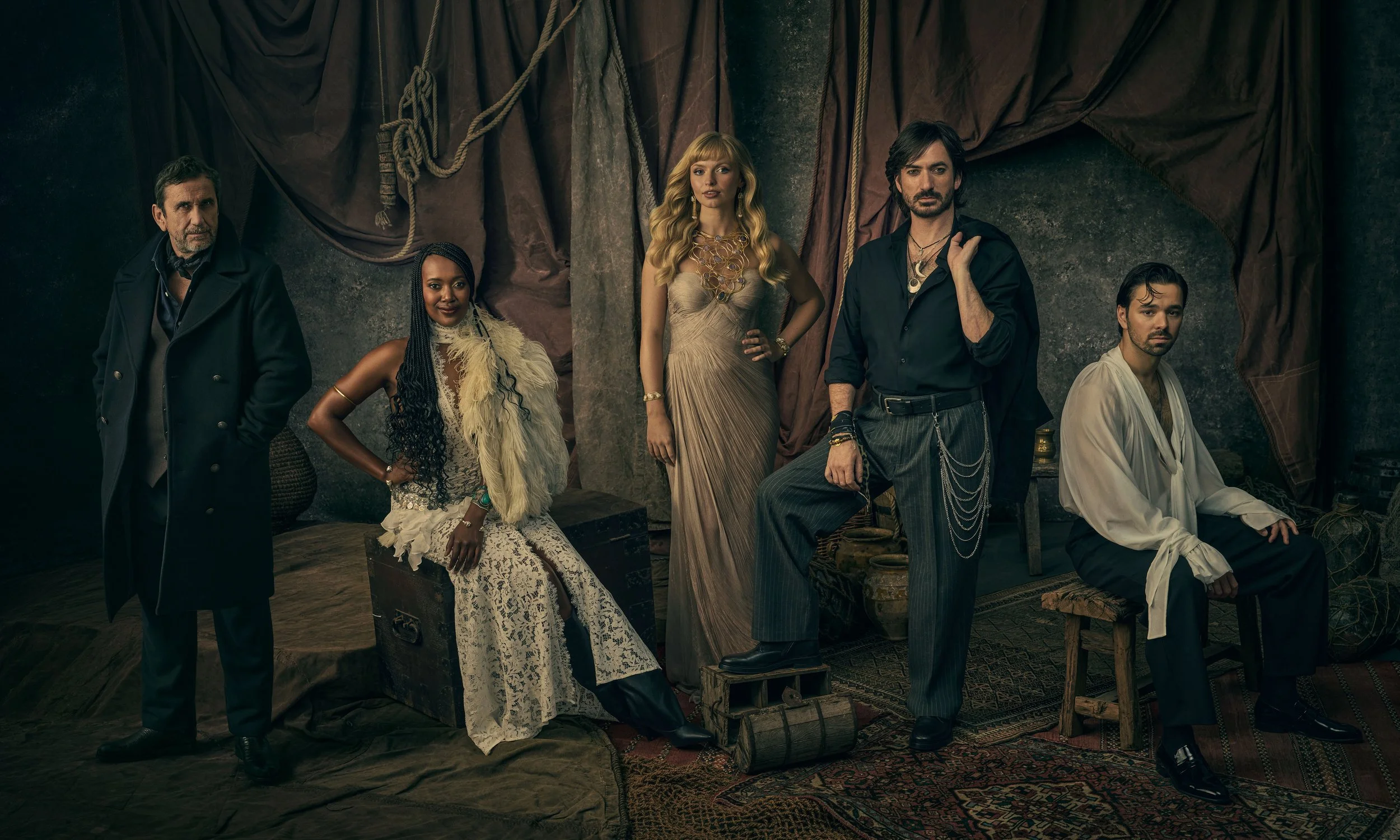
Many people are familiar with the Oscar-winning film Moonlight, and Choir Boy is another piece by the same writer. The play originally premiered in 2012, and after several runs, it was revived in Bristol in 2023. Now, it has made its way to London's Stratford East. Ahead of its opening, I had the privilege of being invited to a preview where I got to experience a snippet of the play alongside the song "I Couldn't Hear Nobody Pray". In a chat lasting just under 20 minutes with the cast (Terique Jarrett, Michael Ahomka-Lindsay, Daon Broni, Khalid Daley, Martin Turner, Rabi Kondé, and Freddie MacBruce), I could already feel the profound weight of the script and how deeply the actors had reflected on the story.
The story of Choir Boy is set at the Charles R. Drew Prep School for Boys, a prestigious Black all-boys boarding school with a 50-year history. The institution is dedicated to moulding its students into highly moral and articulate "Drew Men." The protagonist, Pharus, is a brilliantly talented, confident, and openly gay boy whose biggest dream is to lead the school's renowned gospel choir. However, during a crucial performance at the opening ceremony, he is subjected to whispered insults by his classmate Bobby while leading the song, causing him to falter. The entire play revolves around how Pharus navigates the balance between staying true to himself and abiding by the school's strict traditions. Beyond Pharus, every other character also carries their own unique story and struggles.
I was incredibly curious about the actors' initial reactions when they first read such a profound script, and that became my very first question for them.
Daon: “I think that the overriding feeling I got when I read the script was that I just understood the story, and I got the story and I got what the play was saying, and that really made me want to do it.”
Martin: “It's written in the most curious way, it's poetry, it's Shakespeare. I mean, it's extraordinary, don't you think? And it's malleable. Yeah. And Tarell has updated and changed it over the years from the first production back in 2009 every time it's done. It's wonderful to read.”
Michael: “I'll latch on that to the poetry of it. I remember thinking how when you're reading something and the voices are jumping into your head, and you can see the people that you're reading and their energy is so familiar. You understand them, you know who these people are, and the writing just flows in a way. You know, it's a gift when you're acting as well, because you know there's a lot of incredible words, it's wordy, but it really flows as a rhythm, which is exciting.”
Khalid: “It's so interesting because when this came about, I knew of the show because it came up on YouTube and I watched a lot of the clips and trailers from Broadway and something about it I was like it made me feel hungry I wanted to know more. And then when it came through as an audition, I remember I read the script so quick because it makes you hungry for more in regards to what happens with the characters and their journey, every single one. And then you think about the things they say and almost the other things that aren't on the page, so their home life, their families and what's happened before they then started at Charles R. Drew and what that means, because with it being an elite prep school, some of them are very much working class and it's that pressure of black excellence of an needing to maintain that in order to be something or have that percept, that outside perception of being someone, being a Drew man. The way Tarell writes, it’s so poetic and layered and it also is very nuanced. He throws in like cultural references the audiences either may get or they may not but when reading it in the script it's there, and you're like, oh my god he's filled that in like so casually but really skillfully.”
Rabi: “I was taken aback by the script. It's such a beautiful story written by like a person that I've been a fan of, Tarell McCraney, who wrote Moonlight and that's one of my favourite films ever. We love that film. His words are just so beautiful and intricate and purposeful and the way he's been able to weave these people and create these boys so vividly, they really jump out from the page. Yeah, it was kind of like, ‘wow, I need to be in this’.”
Freddie: “I mean, literally, same. It feels like nothing is wasted with Tarell 's writing. Moonlight is my favourite film of all time. And even as you start to read – I had read it before - but reading it again you start to see the parallels and character dynamics and character development and it just, I don't know, the opportunity to get involved in that kind of conversation and complexity was just really exciting and invigorating for me.”
Terique: “I think this play really does take me on a journey, but specifically, emotionally, I remember reading the first scene, I'm like, ‘oh, okay, this is not what I expected’. Then I'm laughing the next minute and then it's back to the dynamics and politics of this voice. So when I first read it, I just felt so all over the place. I was laughing, then torn, then upset, then laughing again. So, yeah, of all of the emotions.”
"It isn't just the story that is captivating; the way it is written is also quite unique.
Martin: “It's very challenging too. There’s a lot of dot, dot, dot.”
Michael: “A lot of dot dots because they're all very rhythmic thoughts. And I remember thinking as well that it was so deep, there were so many layers to this thing every time you thought that was the deepest it was going to go, it went further. I remember thinking that. And the stage directions are like little paragraphs. He sort of introduces something that a character is doing. And we're always having like a giggle sometimes because they're so deep. You know, he's asking for these like extremely nuanced, incredibly big - there's this moment when Junior steps into the spotlight and becomes a man. It's a baptism of song and water, he calls upon the ancestors, it's very grand in that way.”
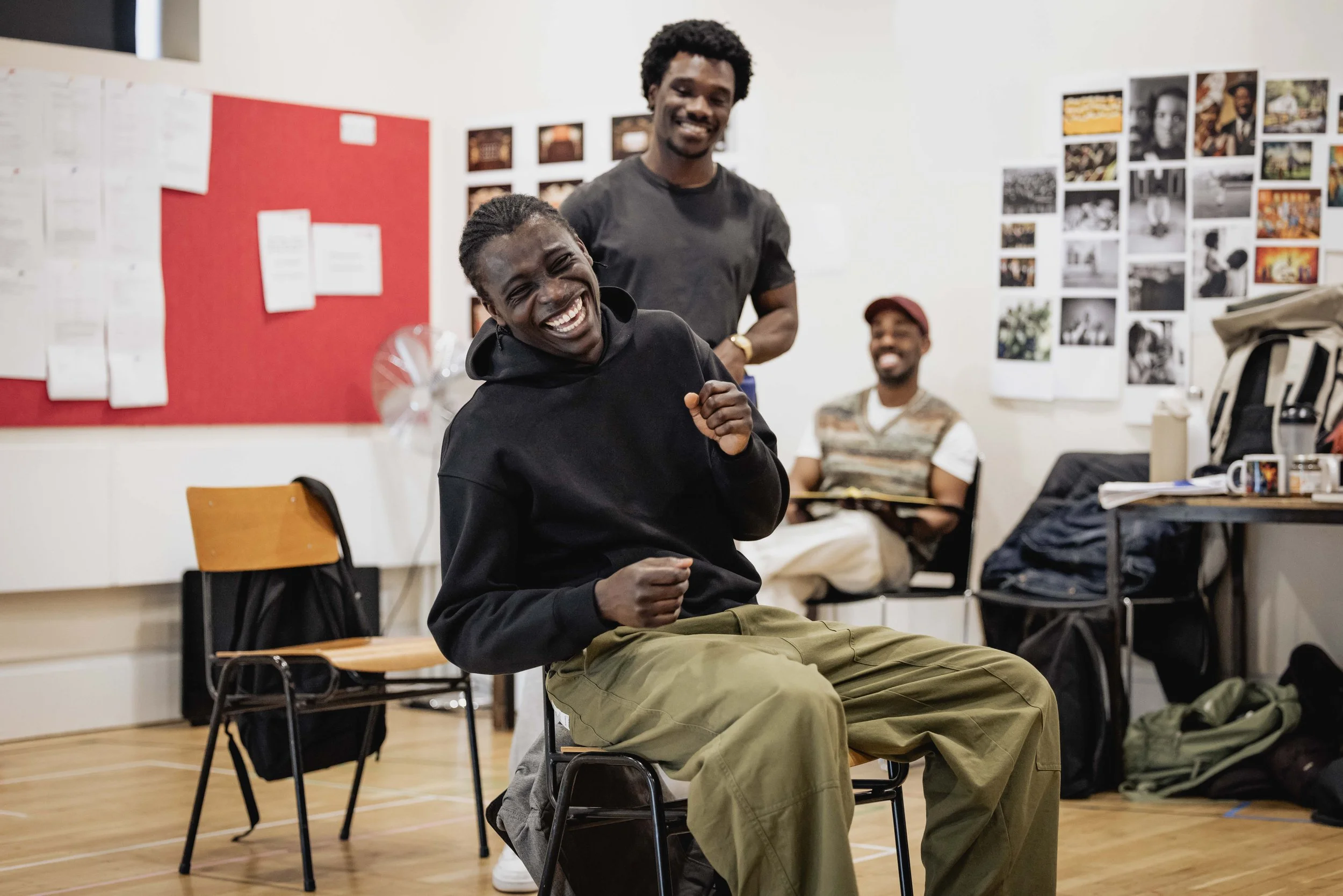
Khalid: “I feel as though it makes you realise how deep it is, how much you really have to dig, and how much you have to draw from in order to play it out.”
Given the heavy emotional weight of the play, I asked the actors if they need to adjust their mindset and get into a specific emotional state before the show to prepare for the two-hour journey ahead.
Terique: “It's not something I've thought about for this one yet. I think so far what's been keeping me going is the unity that we have as the five boys, but also as the rest of the cast and the wider team. We're doing our check-ins daily. But also I think singing and especially singing in harmony, that in itself is a unifying experience. And so I think that has been my way so far of regulating things, the unit that we've built.”
Freddie: “For me, the check-ins and the singing is what keeps up us together. And I think ironically, that's also what keeps the boys together and the play as well. I think without the singing, there's almost no healing between boys. It's like, no matter what happens, that's the place where they have to come together. So yeah, I think obviously we’ll find it when we get there. But like it feels like the music is going to be really grounding for us, yeah.”
Rabi: “Yes, so similarly the exact same thing, actually, like the music has been what's been so healing and nourishing. And the room as well, it's not every day you get to be in the room with predominantly black creative team and cast, and it feels so enriched and it feels like you're in a room for your aunties and uncles and cousins and that. So when you have that sort of vibe, when I'm leaving, I always feel nursed and joyful and excited to be back. It's like, ‘oh no, days off. I want to be back’. I think those moments are what take away the heaviness. The fact that the room is so light and so happy and so joyful. You don't really think about the heaviness. Like I don't think I even thought about that until we got that question. I was like ‘oh, how am I going to deal with that?’ And I feel like it's already kind of being dealt with.”
Just as music brings a healing energy to the cast, it is also a vital part of the play—you could even say it is the very soul of the production. When writing the script, McCraney deliberately chose to feature a cappella arrangements and traditional Black spirituals. When the boys are so suppressed by the strict school rules that they feel completely silenced, singing becomes their only way to claim 'freedom' and express themselves. I was very curious to know which song the cast members loved the most.
Freddie: “Mine at the moment - having only learned the songs for a week - at the moment is definitely the song that we sang today. I Couldn't Hear Nobody Pray. I just love the harmonies in it and it just makes me feel really warm and together, that's the one I listened to over and over again.”
Terique: “Mine changes all the time. At the moment is Motherless Child. But I'm also very excited to hear one of the pop songs that Bobby's going to sing. That's just very crazy. It's like a diversion from the spirituals and hymns.”
Rabi: “Favourite song? Really hard, man. I do have the ones that bang out, which is I Couldn't Hear Nobody Pray and Trust and Obey. But I'm going to be generic and say the cliché answer. I do love all the songs. I just have them all on repeat. You know when there is a good album? I'm like, no skips. It’s just bangers after bangers after bangers, yeah, so I think, I'm going to go for the generic all the songs.”
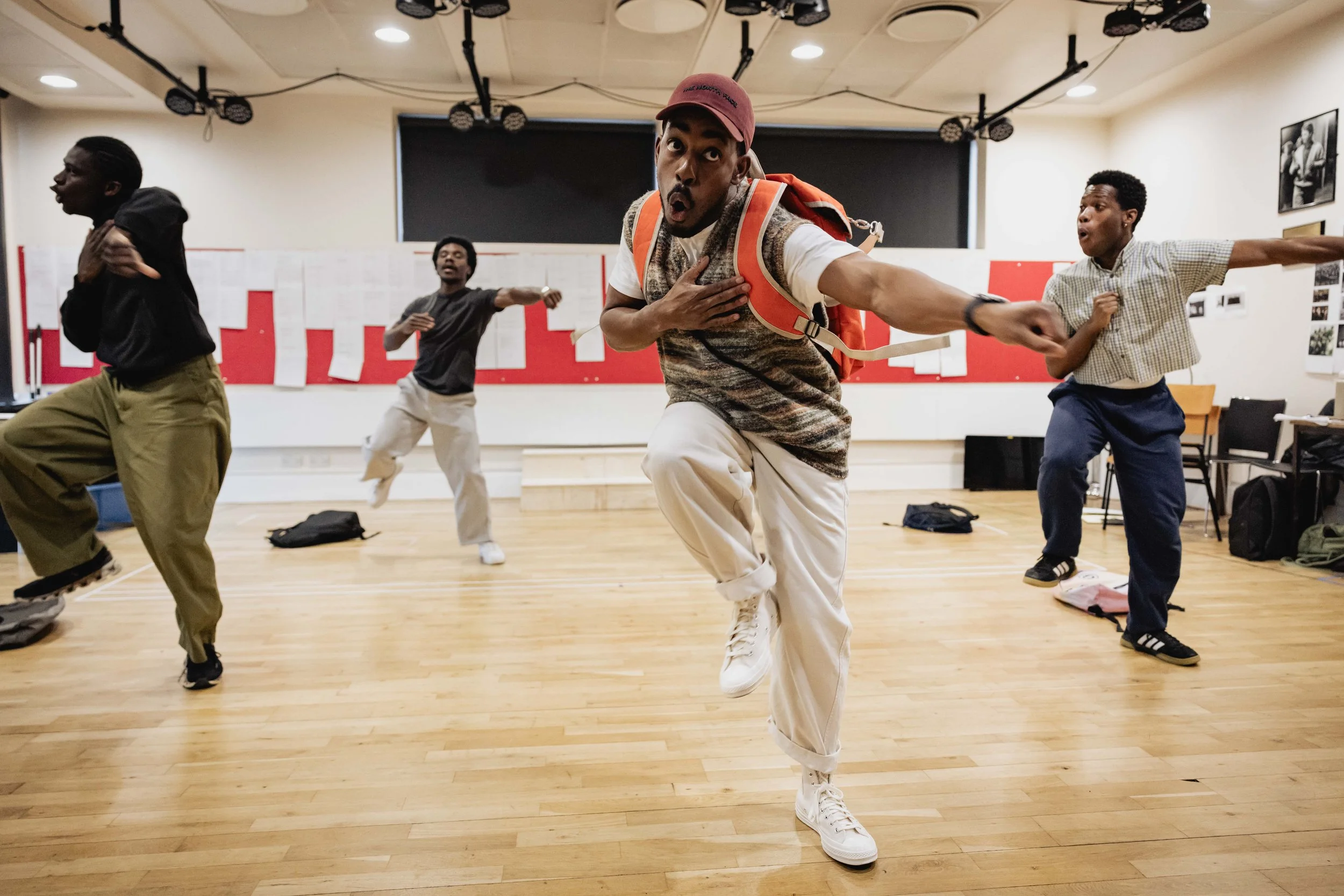

In this production, the bonds between the boys are also incredibly important. I asked several of the actors what they consider to be their character’s most important relationship.
Terique: “Oh, that's hard. I see how all of the characters are important to Pharus. Of the ones that we don't see, I think for Pharus, his most important relationship is with his grandmother. Of the characters that we do see, I think his most important relationship is with his roommate AJ. I think because AJ is the only one that we see that can really challenge him and make him stop on his path of whatever he's on and make him stop and think and then go forth.”
Freddie: “I think, it could be like all of them, you know? But for me, for AJ, it's definitely Pharus. It reminds me of Moonlight, there's so much beauty in the navigation of that relationship and those conversations, I think that is definitely the most important of what we've seen in the play.”
Rabi: “I was going to say two, then I was like, ‘oh, but there's one more’. But I do think the most important relationship that we see is between Bobby and Junior. Junior, that's his person, man. He is one of the few people that's sort of a safe space for him. You see Bobby carries so much on the inside. When you're young, you have so many emotions and you don't know how to deal with them, they can come out in quite volatile ways. But I think Junior's one of the few people that's able to kind of pull him up and stop him in his tracks slightly and also, he's able to kind of speak how he truly feels, you get different snippets of actually what's really going on and bugging him beneath with Junior.”
Several of the actors in this production of Choir Boy previously starred in the Bristol run. I asked them if they are bringing anything new to their performances this time around that wasn't there before.
Michael: “Yeah. Yeah, definitely, definitely. We always say that we're growing as well as time passes. So coming back to something, you know more about yourself, you know more about life, you've learned more. So you come back with new eyes with more hindsight, you know? And so, you have more perspective of what these boys are going through, you know, we're all men, we’ve been boys. So, you know, you're looking back on your life and thinking, ‘oh, I really get that’. Then three years later, you're like, ‘I get that even more because of what happened’. So it's exciting to be able to come back and find new ideas. It doesn't feel like we're just doing the same thing.”
Khalid: “It's so interesting like coming back to it. The first time when we did it, I didn't realise how much healing it was going to do for me and my teenage years. I didn't even think about that when reading the play until we started to act and do things. And I thought, ‘oh, okay, this is incredibly healing for myself’, to then approach things in my life differently and have a different perspective, an empathetic perspective with people because everyone's going through something at some point in their lives. So coming back to it now, it feels a lot of growth has happened, which is a blessing.”
Finally, as a fitting end to this piece, I'll leave you with the messages the actors wanted to share with their characters.
Freddie: “I think, AJ, I would say to him, ‘see what softness you can extend to yourself as well as the other people’.”
Rabi: “I'd say a lot. It's a movie, man. It would be like a whole deep two-hour conversation. But I think it's going to sound a bit cliche, but I think the first thing I'd probably say to him is it's okay. I think those words like are important for him to hear, I don't think he hears it enough, I don't think he's verbally been given the space to know that it is okay to show his softness. So I think I'd be like, ‘It's okay’, and just give him a big hug.”
Khalid: “I'd say, ‘Don't worry, you'll find your voice.’”
Martin: “I'd say ‘you've always been entitled. Yeah, get a grip’.”
Daon: “I think I would say to the headmaster, ‘You're okay, just the way you are’.”
Michael: “I think I would tell David just that he's enough.”
Terique: “Oh, I don't know. I think, Pharus, he’s gonna figure it out. I read Pharus, and I'm like, yeah, he's complicated and you've got your own personal complications, but that is high school, that's secondary school. and I'm just excited to see what Pharus would go on to do. So yeah, I'm like, ‘your journey, your call’.”
Through my conversations with them, I could already feel the sincere and moving energy that this production carries. I believe audiences who come to see the show live will be moved even more deeply.
Choir Boy plays at Stratford East until 25th April 2026.