Jeeves Takes Charge at Charing Cross Theatre Review
In my far away youth, I recall my best friend's dad sitting comfortably in the corner of his living room in Maida Vale, in his favourite armchair, holding a glass of whiskey, and exclaiming that he felt very “grantled”. I always wondered where this expression came from and whether it was the legitimate opposite of “disgruntled” or just a word that he made up to express his general satisfaction with life and of the moment.
I now know the answers to the question. In P.G. Wodehouse's ‘The Code of the Woosters ’, the author popularised the phrase asserting “I could see that, if not actually disgruntled, he was far from being gruntled”. So I am pleased to say that after a delightful evening at the Charing Cross theatre watching Sam Harrison as directed by Hugh Wooldridge, I left not only entertained but also informed!
This one-man tour de force first saw life some 40 plus years ago when Wooldridge joined forces with Edward Duke and his brother James and first adapted and directed ‘Jeeves Takes Charge’. Entrepreneurial Steven M Levy, who runs the Charing Cross Theatre, has now produced a revival of this show, and probably not before time. It is a master class in both performance and direction and set against an extremely attractive design buy Caite Hevner, with lighting by Tim Mitchell, of which more later.
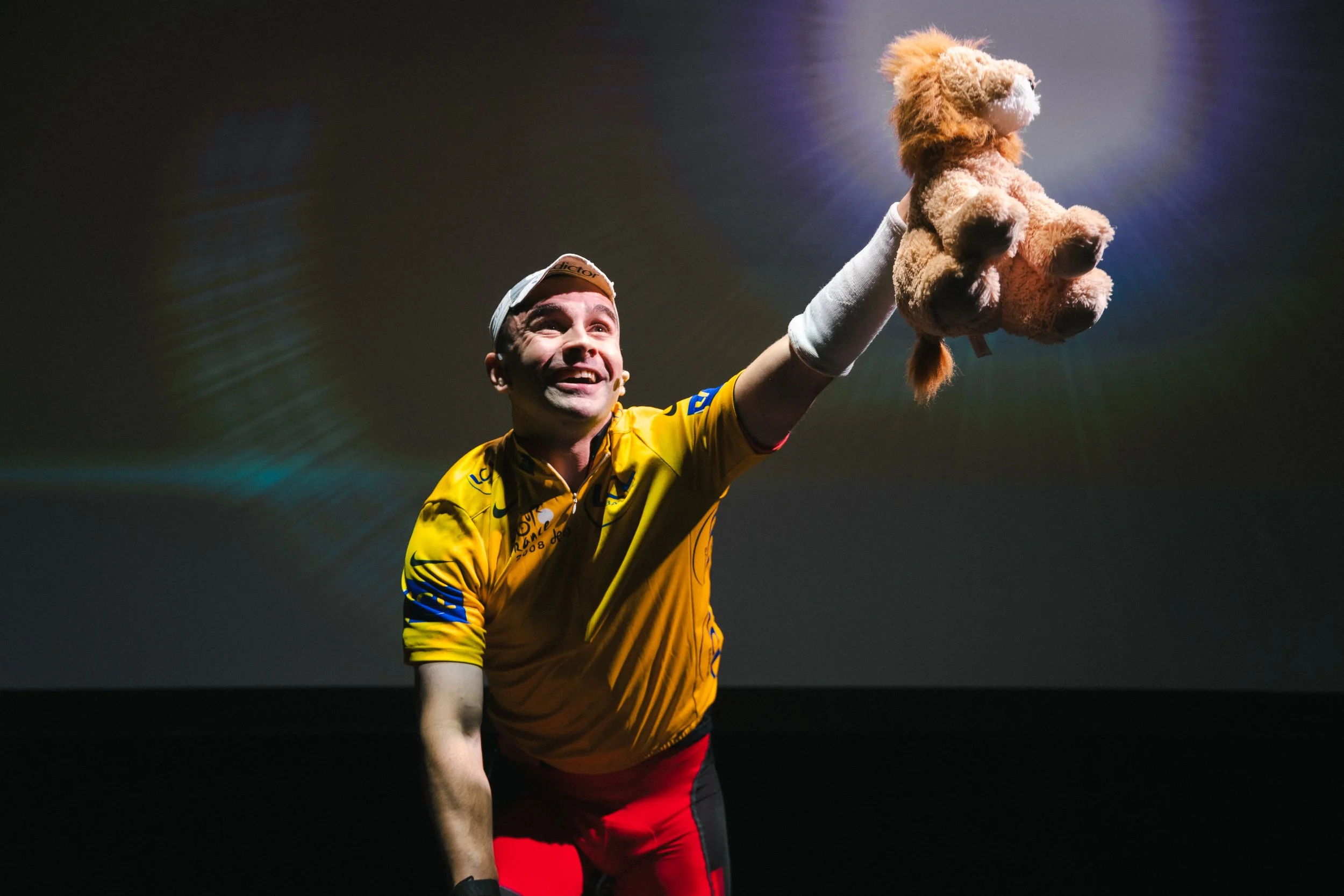
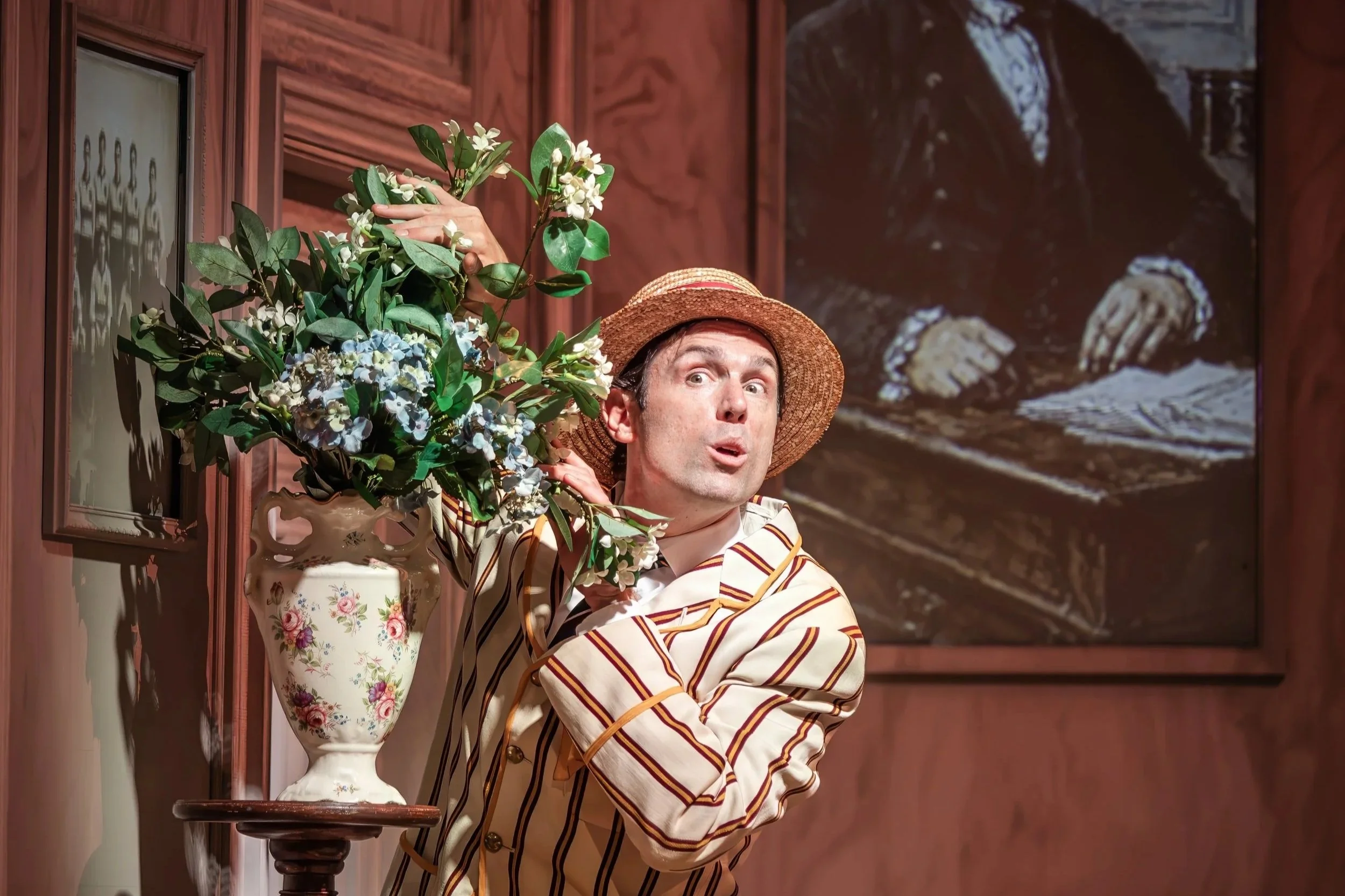
Before the interval Harrison comes on stage dressed simply in a white shirt and dark trousers but through His ability to characterise Wodehouse’s world and his own physical prowess in performance he brings to us some two dozen characters in episodic tales drawn from the authors stories, and with each character delineated with such distinct characterisation and charm so much so that the audience is prompted to ask “how on earth does he do that?” Harrison insinuates himself into both Wooster and Jeeves as the storytellers as well as impersonating a delicious array of characters including Uncle Willoughby, his one-time fiancée Florence Cray, Madeline Bassett, Gussie Fink- Nottle and a host of others.
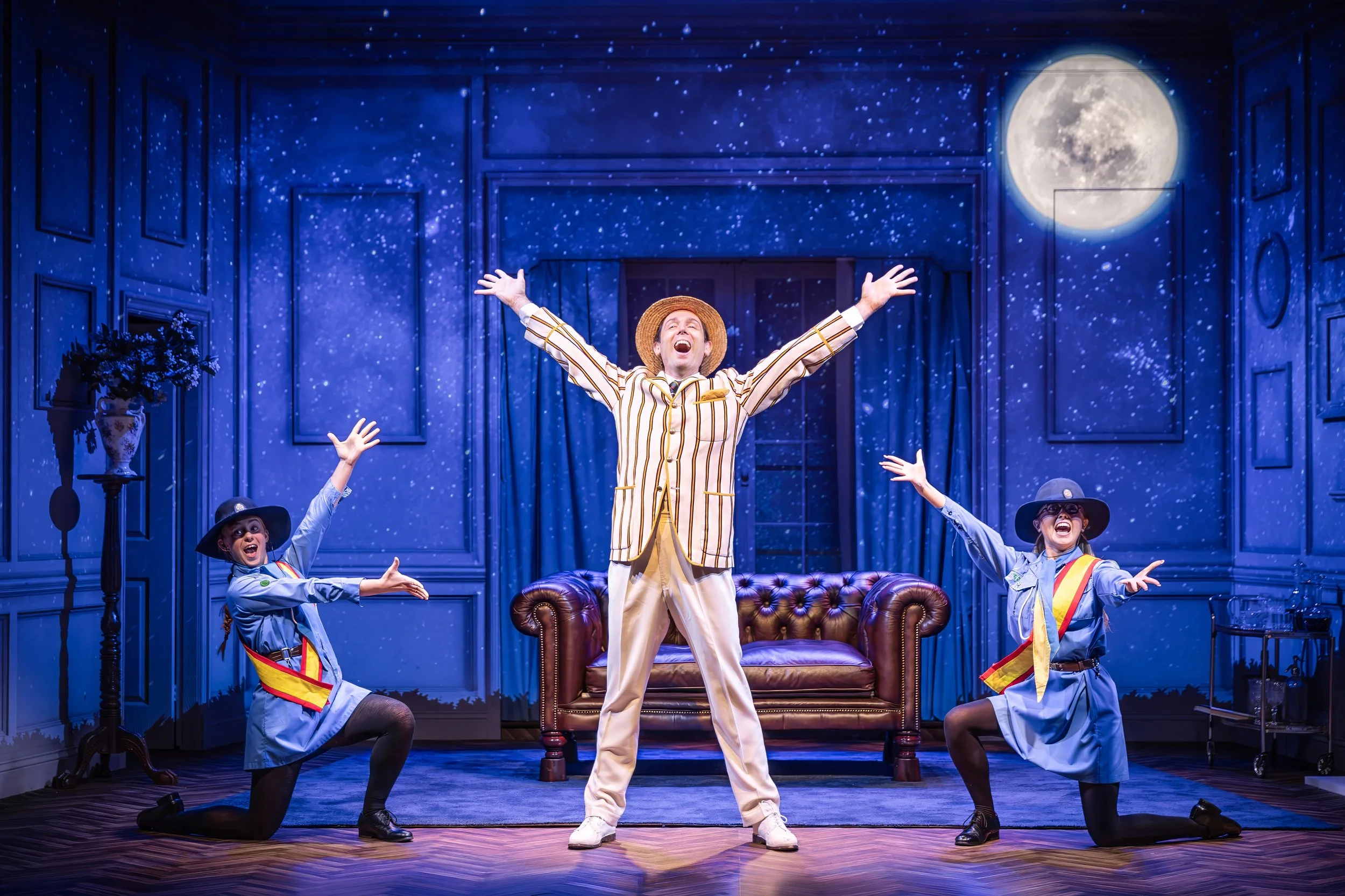
The show opens with Bertie Wooster, the inept, feather-headed young man of the 1920s leisure class who is financially dependent on his Uncle Willoughby, engaged to the snobbish Florence Cray. She forces him to read dull philosophy that baffles him, and at her urging he foolishly agrees to steal his uncle’s manuscript of raunchy reminiscences to prevent its publication. The sagacious Jeeves believes Florence is wrong for Bertie and takes steps to keep him from matrimony. After the interval, we are treated to the famously disastrous prize-giving ceremony, where a heavily intoxicated Gussie Fink-Nottle delivers a scandalous, wildly inappropriate speech to students, parents, and dignitaries. The finale finds Bertie under pressure from Aunt Dahlia to perform Jolson’s “Sonny Boy”, tell a story or two, and tap-dance at her garden fête; otherwise, he will be barred from the legendary dinners prepared by her chef, Anatole, at Brinkley Court. We are duly treated to all three, along with the surprise appearance of two tap-dancing Girl Guides.
These were but three of the stories presented for our entertainment. But now I want to say a word or two about the setting. The basic set represents a sitting room in Berkeley Square, Mayfair, Wooster’s apartment. There is a leather sofa in the centre of the stage. But by the use of brilliant videography and lighting, the three walls of the apartment and the window are turned into a multiplicity of other locations. It is a breathtaking design and certainly one of the cleverest and most attractive I have seen for an exceptionally long time.
Wooldridge's direction of Harrison is a work of art, and Harrison himself is a force of nature, throwing himself around the stage and on and off the sofa, as he presents characters in conversation with each other and, on occasion, to reflect his own joy or despondency at unexpected turns of event. This is an award-winning performance.
In short, I can tell you that with absolute certainty you will be in for a ‘top hole, smashing, wizard, evening’, which after two hours will leave you breathless and dizzy with joy at the performance you have just been privileged to witness.
Jeeves Takes Charge plays at Charing Cross Theatre until 06 September.
★★★★★
Written by Stephen Gilchrist for Theatre and Tonic, August 2026.