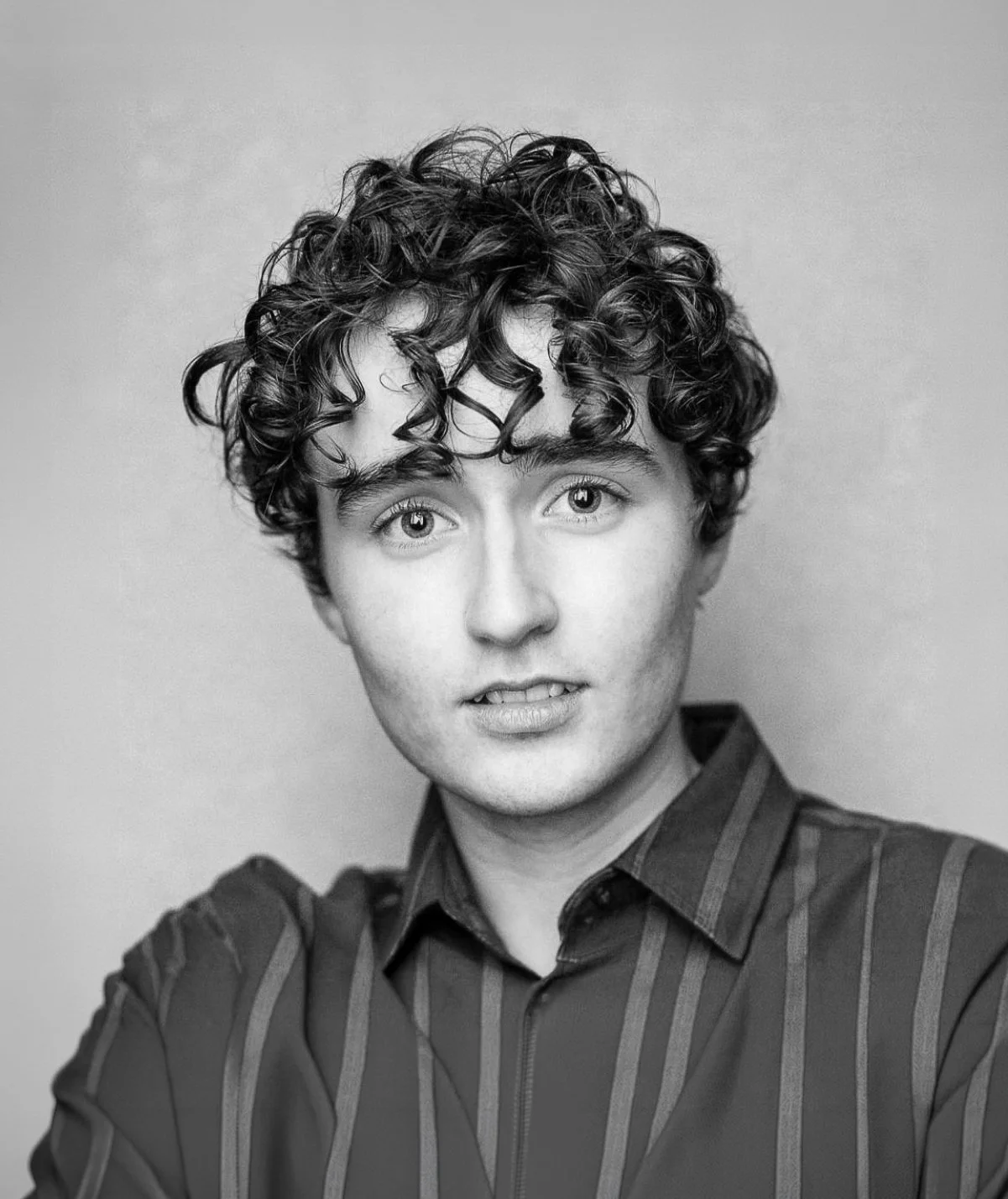
Interview with Serkan Avlik, The Boy at the Back of the Class
Conducted by Aimee for Theatre and Tonic
Based on the best-selling novel by Onjali Q. Rauf and described as a celebration of friendship, kindness and compassion, The Boy at the Back of the Class tours the UK this Spring. It follows the story of a group of children who plan to reunite their new classmate Ahmet with his family, after learning that he fled his war-torn country. In this interview we caught up with Serkan Avlik, who plays Ahmet in the production
To start with, have you always wanted to perform and what drives you to pursue this as a career?
As the cliche goes for many performers, I had acting instincts from childhood. I was the "entertainer" of the house and really enjoyed putting a smile on people's faces. However, growing up there was a big push for me to become a medically trained doctor. I knew for a fact that I did not want to study that. So the “closest” thing was becoming a psychologist. Despite really enjoying the science, I knew that no single job in the field would allow me to express myself as creatively as I needed to. Eventually, I took the courage to change paths and followed my childhood dream of acting.
For those who may not know the book, could you give us an insight as to what to expect from this story?
The story takes a child’s perspective to explore themes including friendship, identity and being a refugee in the UK. It highlights how children can in ways, be better than adults at being curious about others (in this instance, the boy at the back of the class), offering support and establishing genuine relationships. Parallel to this, we are also informed about the turmoil refugees face simply for existing in a space that certain groups of society claim to be theirs only.
The Boy at the Back of the Class is an adaptation of a children’s novel, what was your favourite book as a child?
It’s a tough one! Probably around the age of Ahmet (9 years old) or slightly younger, I was introduced to The Lion, the Witch and the Wardrobe (Narnia). The concept of mythical creatures was just mind-blowing! Forcing my memory, I recall the Horrible Histories series and Roald Dahl classics being escapist indulgences too.
This show is told from the perspective of a child, how as an adult do you prepare to tell this story in that mindset?
This has been a question on my mind since auditioning for the role. Whenever I find myself overthinking, I come back to a single word: innocence. Yes, children are smart. Yes, they can be very silly and cheeky. But I would argue that the biggest distinction between them and adults is that they have not been influenced so much by societal beliefs on identity. Children are unapologetically themselves with no grandiose agenda. So I hope to capture this in my portrayal of Ahmet.
The show touches on various topics, one being that everyone needs a place to call home. What reminds you of home?
Home for me is any space that offers unconditional love and support, allowing me to grow and become a better person. As life progresses, this principle will remain yet the physical location of "home" may well change. In this sense, a song, a person or just the feeling of safety can all be reminders for me on any given day, depending on the headspace I am in.
What initially drew you to the role of Ahmet and where have you found inspiration from when developing your performance?
Ahmet is very different to any character I have played in so many ways. His physicality, mindset and life experiences are some examples I can give. So being able to portray him has been a much-needed challenge! From a “bystander” viewpoint, the state of the world we are in (and have been in for a long while) has given me plenty of insight into what it takes to be a child refugee. Go online and you see families torn apart, children who have lost loved ones and refugees seeking help in countries they cannot speak the languages of. Whilst Ahmet is a symbol, his struggles are very real. Last, I have Kurdish heritage and so the language, traditions and belief systems I have been exposed to have commonalities with those of Ahmet. This, and the other points I have mentioned have all made it a personal responsibility for me to try and be a voice for children like Ahmet. As bold as this goal is, I am hoping I will achieve it to some degree.
The show touches on some serious topics. Why do you think it is important for children to see theatre productions such as this?
Children are exposed to endless topics online and during their day-to-day life. It is fair to say that not all of it is so beneficial for their understanding of the world. Productions such as this one are designed to be accessible and educational, allowing conversations to continue after the show at home. Given that third spaces need to be protected more than ever, what better way is there for children to understand what it means to be a refugee through a positive experience?
This play celebrates friendship, kindness and compassion. Are there any moments in this production that resonate with you personally?
I was born in the UK and faced a lot of discrimination. Irrespective of the social context, I was never truly accepted as “British” growing up. But then again, I was never fully welcomed as a Kurd either. This led to a lot of soul searching and questioning what it meant to just be a human. Fortunately, in my early adulthood I found my tribe, a group of friends who are all completely different (faith, race, upbringing etc). We have endless love for one another and use our differences as points of connection. Similarly, in the play we see a moment where Ahmet realises that he fully belongs. It is just beautiful.
The author of the book Onjali Q.Rauf is an incredible author and person. Have you had an opportunity to speak with her about Ahmet and has this impacted your portrayal of him?
Yes, absolutely! We spoke many times about Ahmet’s background and his evolution across the course of the story. This has helped (and is still helping) me find nuances in my performance whilst staying true to Ahmet’s voice. Through collaboration with the creative team, we have also discovered details that we could incorporate to bring forward his heritage slightly more - representation matters, perhaps even more so if your character is a refugee.
Finally, what do you hope that audiences take away from this production?
Keep asking questions. Do not be afraid of what is different. It is not bad and is just different. Stay hopeful!
The Boy at the Back of the Class plays at Rose Theatre, Kingston from 6 - 22 February before embarking on a UK tour.