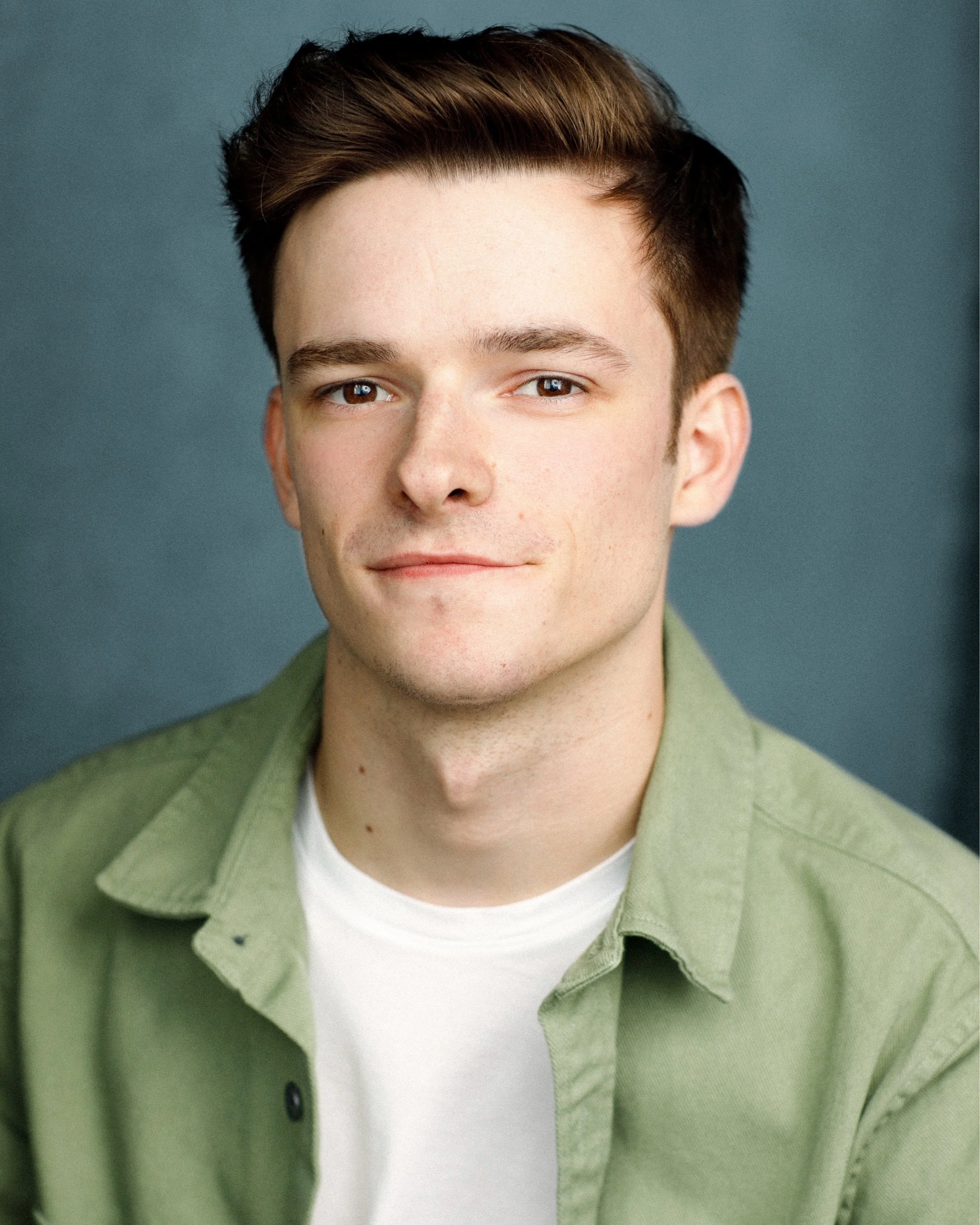
Interview with the cast of Unfortunate: The Untold Story of Ursula the Sea Witch
Conducted by Ziwen for Theatre and Tonic
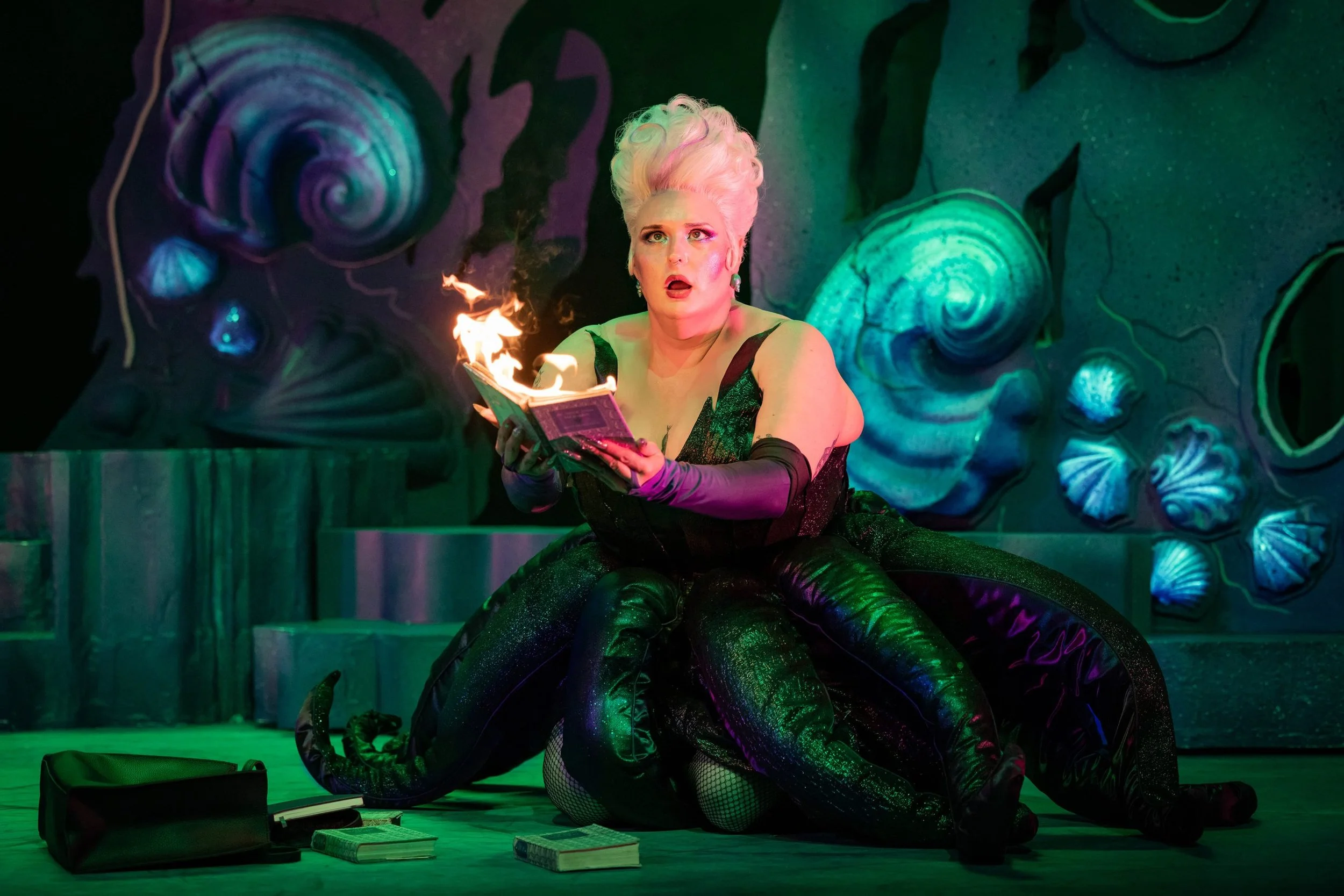
After premiering at the Edinburgh Festival Fringe in 2019, the musical Unfortunate: The Untold Story of Ursula the Sea Witch - which has received multiple five-star reviews - has been performed many times in cities including Edinburgh, London, and Manchester, and has now arrived at The Other Palace. As its title suggests, the show is a parody of the film The Little Mermaid. In this musical, the protagonist is no longer the Little Mermaid, but Ursula. Centered on her perspective, the show retells a story we never fully knew, using a joyful tone and a fresh angle. Over the seven years of its run, the production has undergone significant changes with some members remained throughout, while new performers joined along the way.
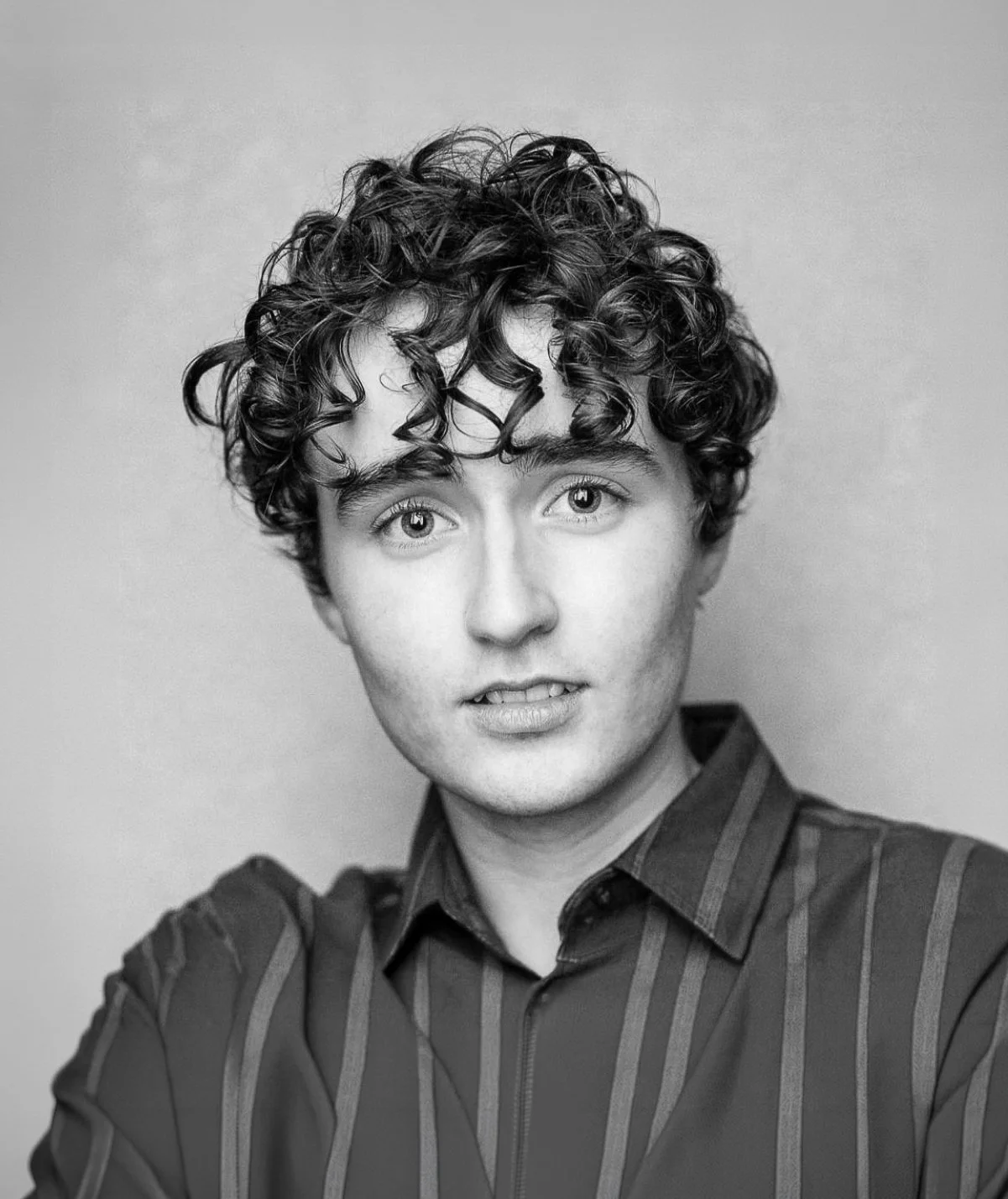
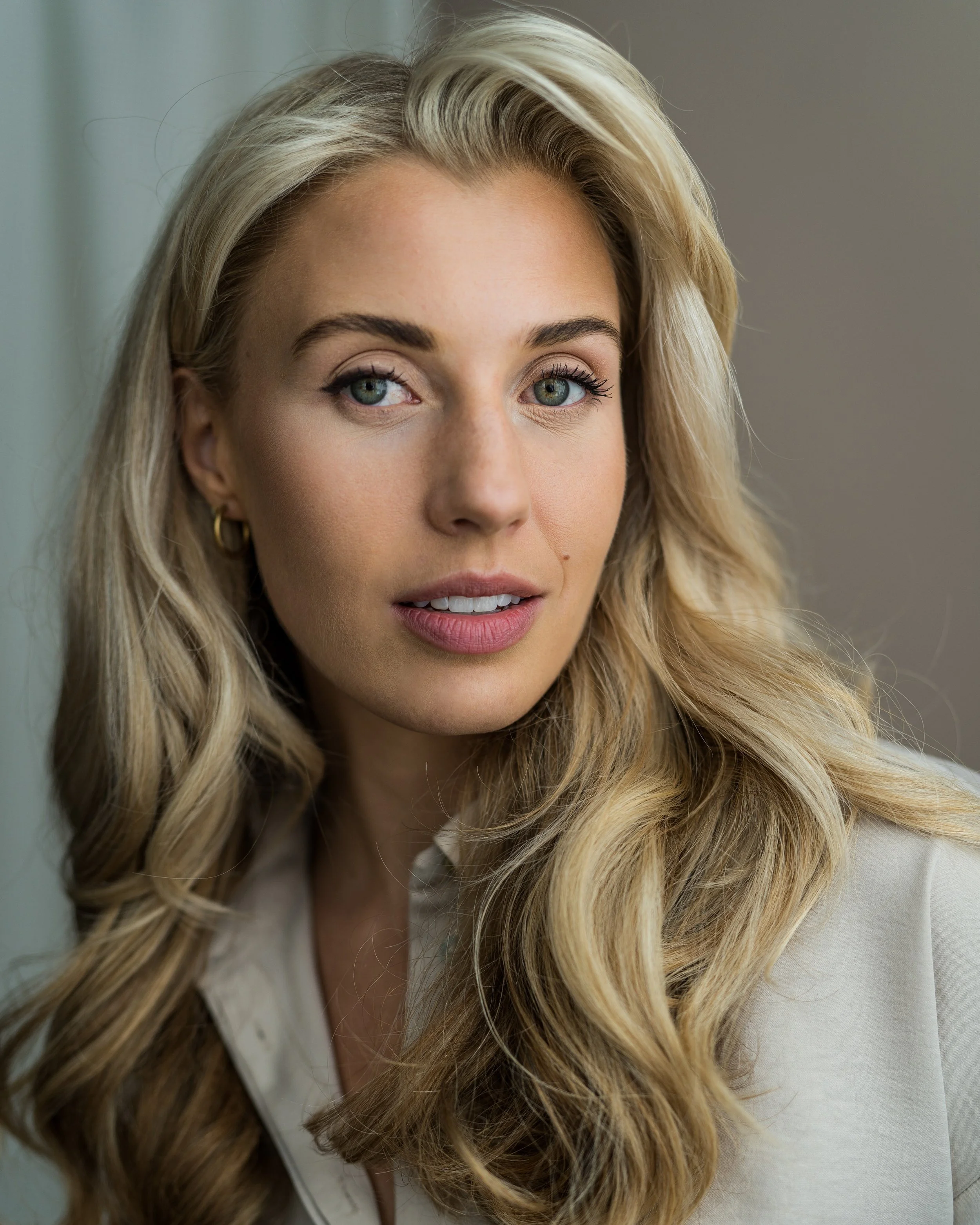
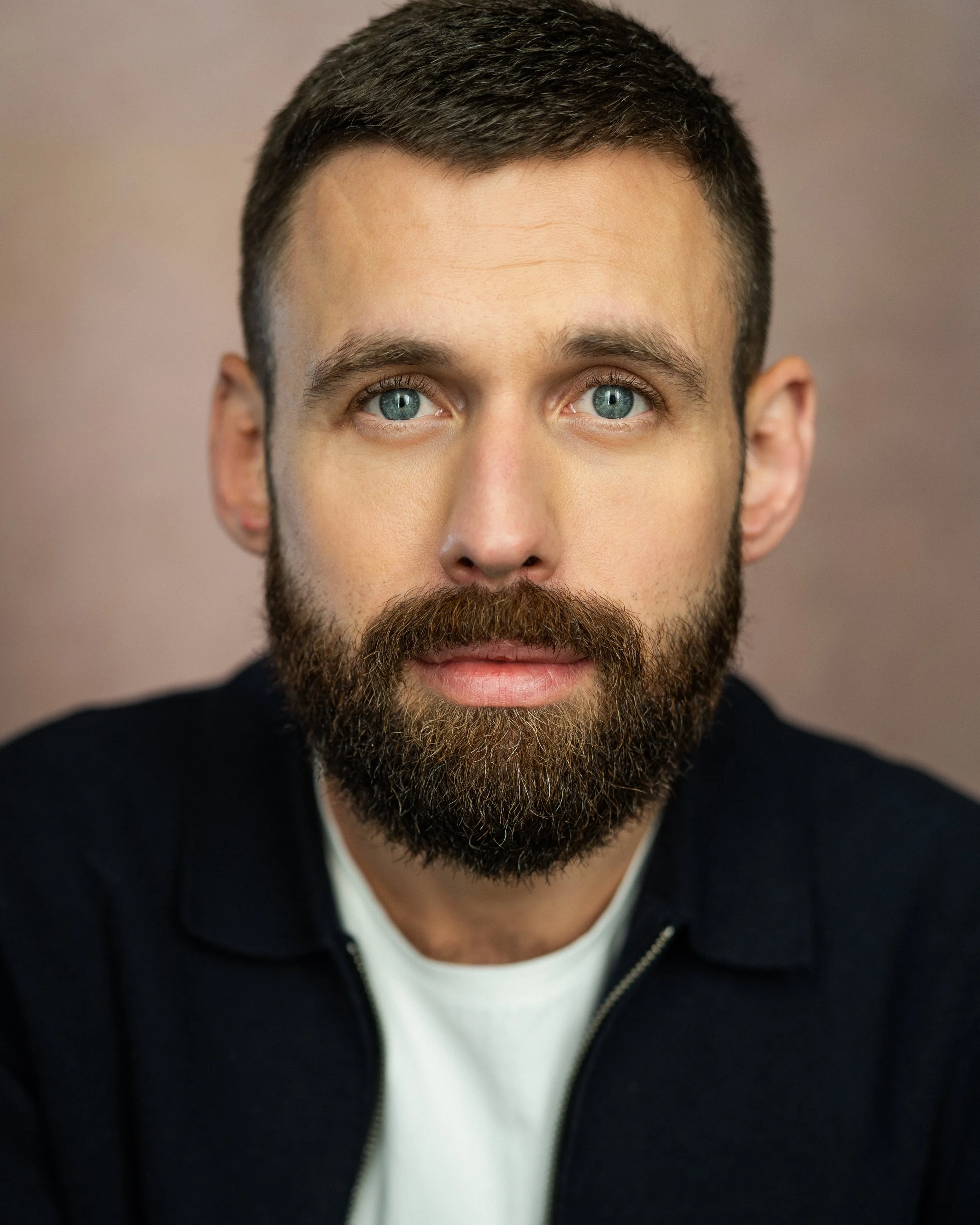
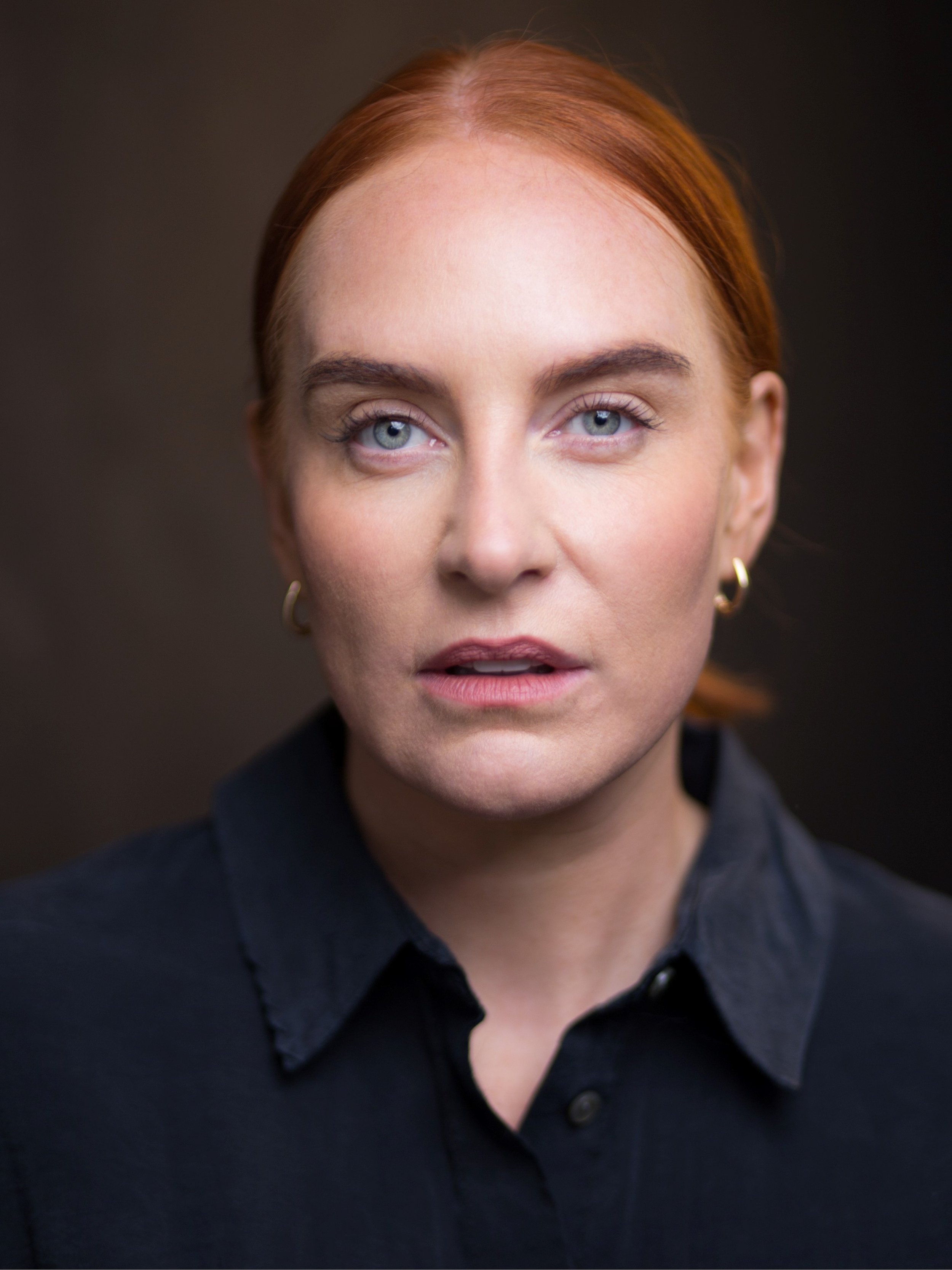
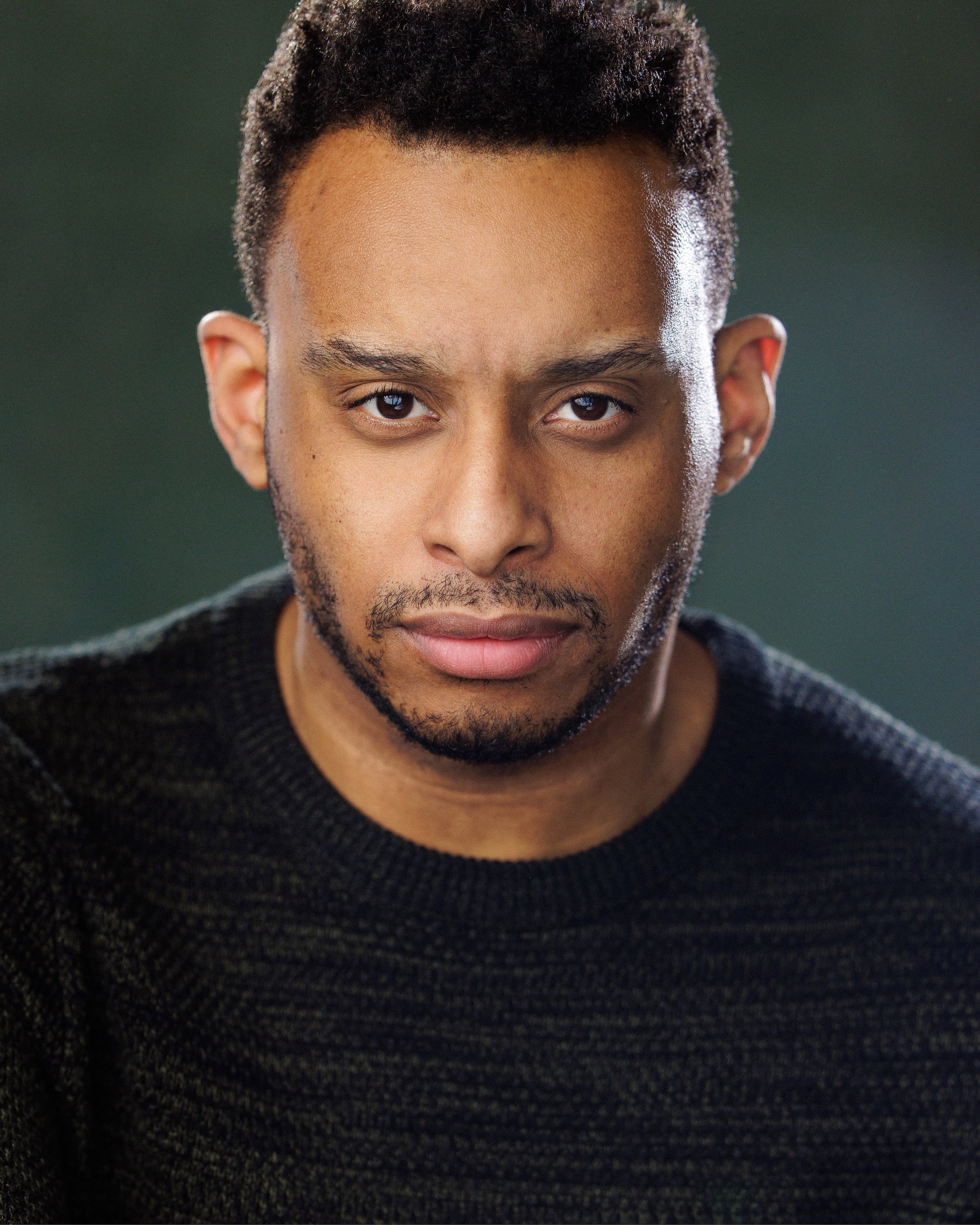
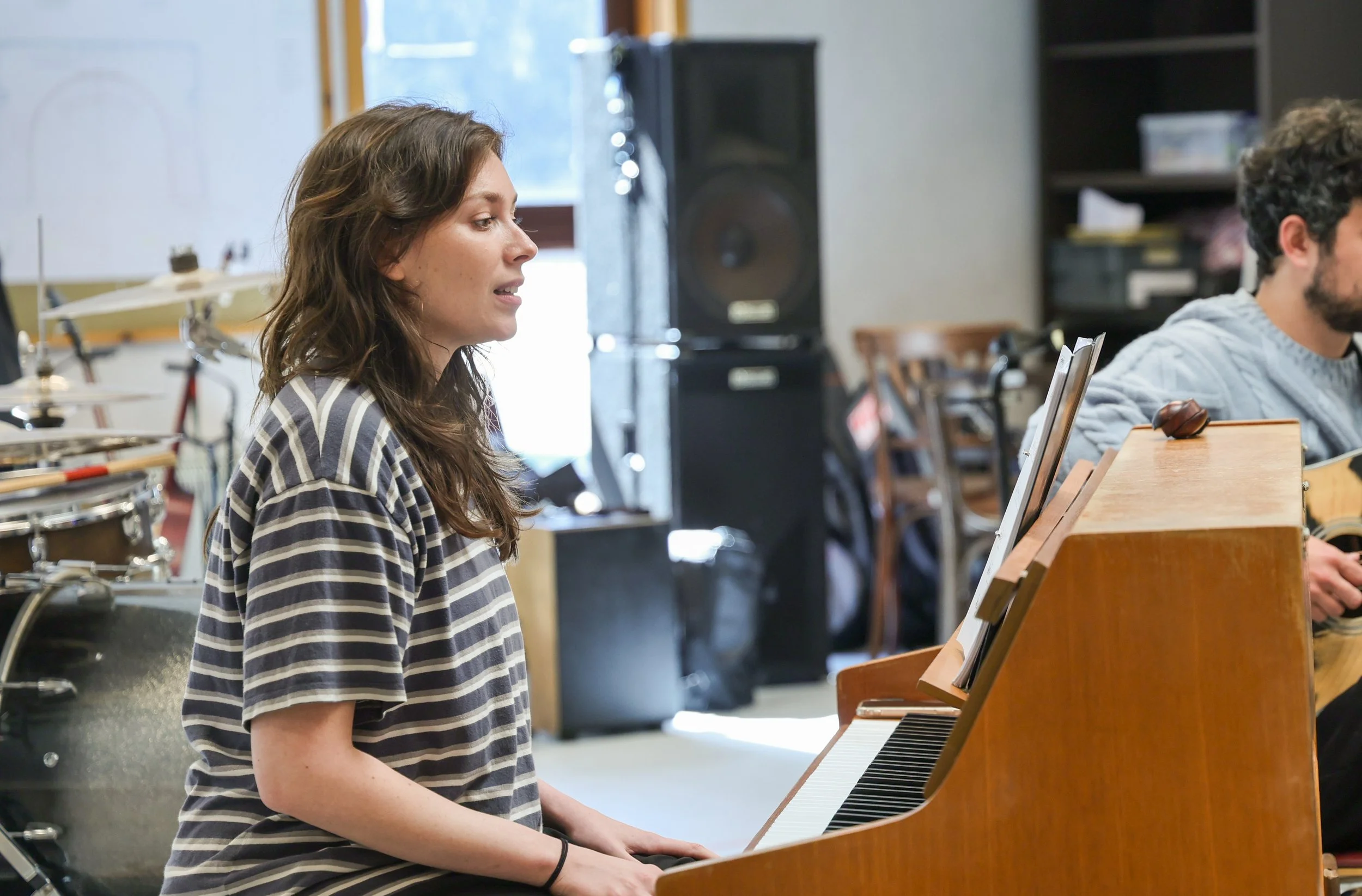
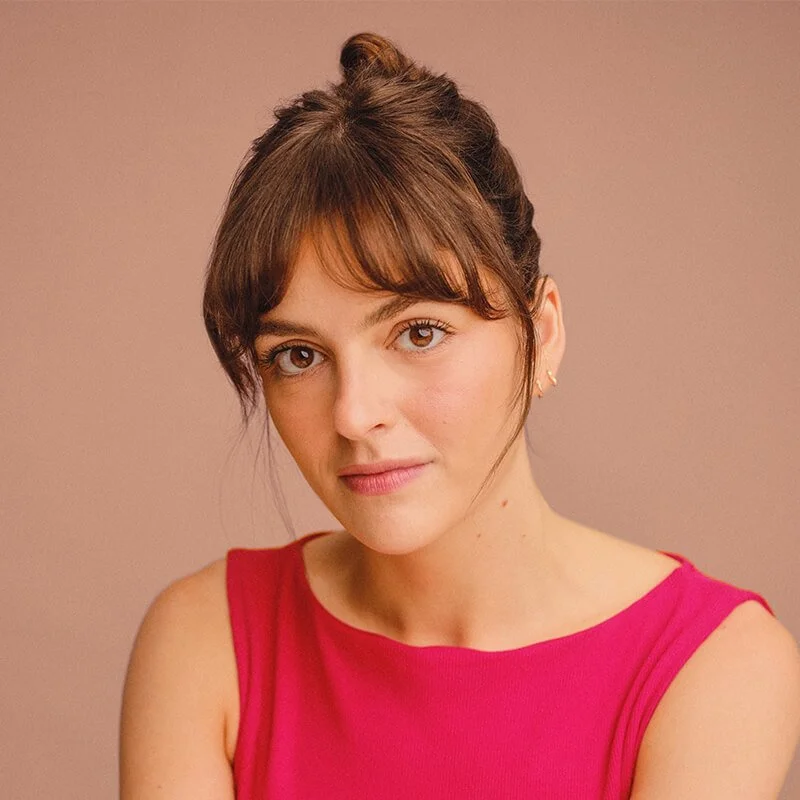
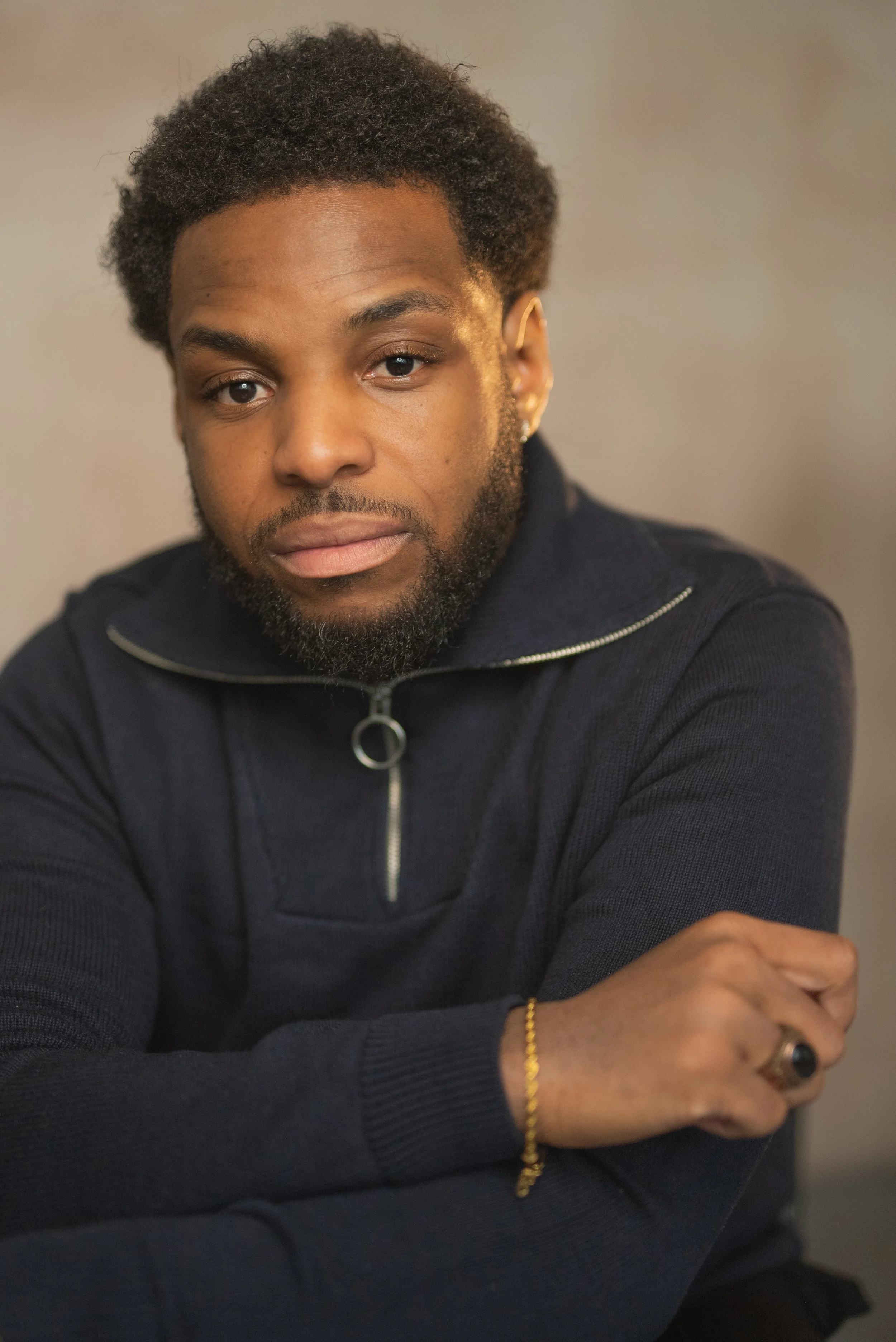
Before the production opened at The Other Palace, I was fortunate enough to be invited to preview three songs from the show - Don’t Believe What You’re Told, Suckin’ On You, and Unfortunate. In addition, conversations with co-writer Daniel Foxx and the entire cast - Sam Buttery, Allie Dart, Blair Robertson, James Spence, Julie Yammanee, Freya McMahon, Kelly Sweeney, and Jacob Whawell - were particularly engaging. According to those involved, after years of performances and refinement, this current version of Unfortunate: The Untold Story of Ursula the Sea Witch is the strongest it has ever been.
Regardless of the form a work takes, the moment when its initial inspiration appears is of great importance.
Daniel: “It was 2018, I think, when we started writing this. And I wrote it with Robyn Grant, who is also the director, and she wrote the lyrics in the book with me. And then we have Tim Gilvin, who is the composer. We've always loved Ursula. We love a villain. The villains are always the best characters in anything. And I think usually that is because they get to be the outsider, they get to wear what they like, they get to say what they like. And that is because they are not constrained by - like the heroes have to sort of be what society wants them to be, the villain doesn't, and therefore they're always the most fabulous characters. They're always pretty queer. They always look different to what you're sort of supposed to look like. And Ursula is kind of that above all. She's based on the drag queen divine. She's fat, beautiful, unapologetic about her body and her look and her hair and her whatever. And she's this like businesswoman. On so many levels, she is just like an icon and she doesn't get enough screen time. And we were like, ‘this bitch needs more screen time. She needs more songs. She needs more lines. She needs more scenes’. And so we gave her the villain origin story treatment.”
With the script completed, it then fell to the actors to bring the piece to the stage, and I asked the cast what drew them to the show.
Sam: “I'm drawn to the show because it's sent as a powerful woman who's gone edge, she's a villain, and she's an icon.”
Allie: “Ursula's probably my favourite Disney Diva. She doesn't get enough screen time. and I want to know more about her. This musical ticks all of those boxes. I love the soundtrack is like pop, punk, party soundtrack. So when you're watching it or in it, you can't help having a good time.”
Kelly: “The writing, the comedy is just so silly. There's nothing as silly, I think, in London as this. So reading the script for the first time I was like, ‘oh, this is going to be such a laugh’.”
Julie: “Even if someone doesn't get that joke, you're going to get the next joke and there's this ongoing joke.”
Freya: “I've always wanted to do Disney princess. I've got my red hair, like Ariel. I just I've always wanted to be part of a Disney thing, but my other side of my personality is I love camp, I love drag, I love silly things, so it's like two worlds and things I loved meshed together, it just felt perfect.”
While the musical is inspired by The Little Mermaid, it diverges from the film in many respects, including its portrayals of characters who also appear in the movie.
Allie: “So I think because we're a parody, we take the iconic things that makes them them, like their heart, even their creatureness. But then you've got to tip some of it on its head, with Sebastian, we've got rid of his accent, that's sort of the same with Ariel as well. But some of the stuff that we do in the show, we didn't even have to change. That was already in Disney's version of it. But when you really shine a light on it, you realise how ridiculous it is and how stupid it is.”
James: “I play a few characters in the show. One of them isn't in the film who is Triton's dad, and I think I've been given a lot of liberty to kind of make that my own. I've not felt the pressure of like, ‘this is Disney’. We do honour it for sure, but it's very different from the film. It's its own thing. It's a homage, but it's not a carbon copy of the film.”
When actors accept roles, they are often faced with characters who are either closer to their own personalities or entirely different from them. Curious about which kind of roles Sam prefers to play, I put the question to her, and this was her response.
Sam: “I suppose I like acting completely different. I feel like Ursula has parts of me in the sense that we both are like a bit brash and a bit out there. But I think, really, when I'm on my own or behind closed doors or whatever, I'm very quiet or introverted in some ways. I think everyone is. I think the sort of brash side of myself is authentic, but it's sort of a mask that I've used to get through the world. And I think that's why I fit playing those things so well. But really, I like playing away from myself because I go to the theatre for escapism. And I think ultimately, besides the applause and the adoration, I also like the escapism of being someone different. I've always been a fan of theatre. I think when I was at uni, I went to the stage door of the Palladium when I watched Sister Act and got my programme signed. I think I went like three times to get my programme signed and went to the actual show five times. So really I'm just a big fan. And getting to actually do the thing that I was a fan of is just the best thing ever. It's just a blessing. Like, can you believe it? This is my job, I love it.”
As Sam has also appeared in television series and films, I asked her about the differences between screen acting and stage performance.
Sam: “I think for TV and film acting, you don't get anywhere near as much feedback. Because everyone else is there doing their job, so they're not really considering your acting apart from the director, I suppose. And it just means that it's a lot less feedback and it's a lot quieter. Whereas on theatre, you can have that direct connection with the audience and I think that's why I do it really, aside from it's glam and I get applause. I do theatre because I really like connecting with people, and I really like seeing someone enjoying what you're doing. That's like the best thing for me.”
Whether it’s TV, film, or theatre, actors always need to dive deeply into their characters after reading the script. This was Sam’s thought process after her initial read.
Sam: “I suppose feel what my emotions are and work out what my motivation, work out when I'm setting it through. Like, ‘what do I feel here’? To me, the feelings behind stuff is the most important thing. And I think it's the thing that keeps me sane when I'm doing acting is that I've got an outlet for all of my feelings. I'm sort of that girl from Mean Girls that's like, ‘we've all get a lot of feelings’. And it gives me a channel to put all of.”
A positive rehearsal environment is also crucial to the development of a production, and the rehearsal space for this show was both inclusive and inspiring.
Kelly: “The room itself was a very encouraging room, cast and creative team are in there together. Even if we make a mistake, nothing is like ‘you've done bad’. There's a real connection of spiritual energy in there and everyone is like, ‘we just need to do the best for the show’, and that's so lovely.”
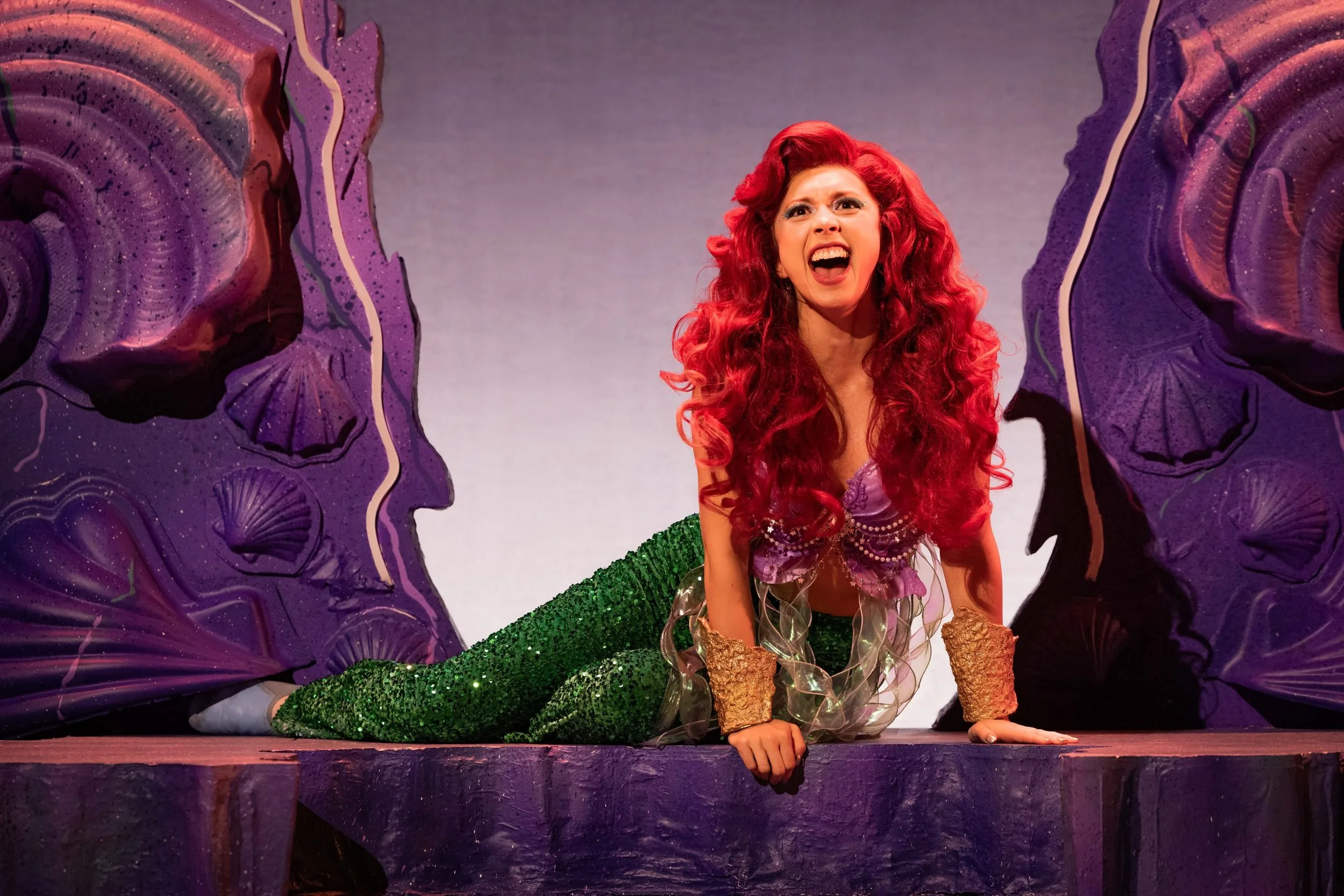
Jacob: “It's been really fun to be able to bring a bit of our own personalities to the show, rather than just learning exactly ‘you stand here, you do this’. We've been able to change some bits and make it more us really.”
Freya: “I just don't think I've ever laughed so much in my life. So it was just a good old camp time, wasn't it?”
Every production has moments that stand out as personal favorites, and I asked the cast which scenes they enjoyed the most.
Allie: “Mine is probably a spoiler. King Neptune’s song in the show is my favourite song. And what he does just before the song is he commits a horrible act and frames Ursula for something. And I'm not going to go into details because I think you should all come see it. But that is one of my favourite parts of the show, because that's when you really know that the audience are on side with every little character that's dotted in, they are so in it with us.”
Julie: “I can say where I laughed the hardest. When eel dies - that's not a secret, really, but it's what Ursula says after that. And I laughed so loud and people turned around and I was like, ‘oh’, but that was probably the bit that I gagged on.”
Blair: “The only time I've been close to corpsing it's been with James, and I had to turn upstage and look away, because he's done something I haven't expected him to do.”
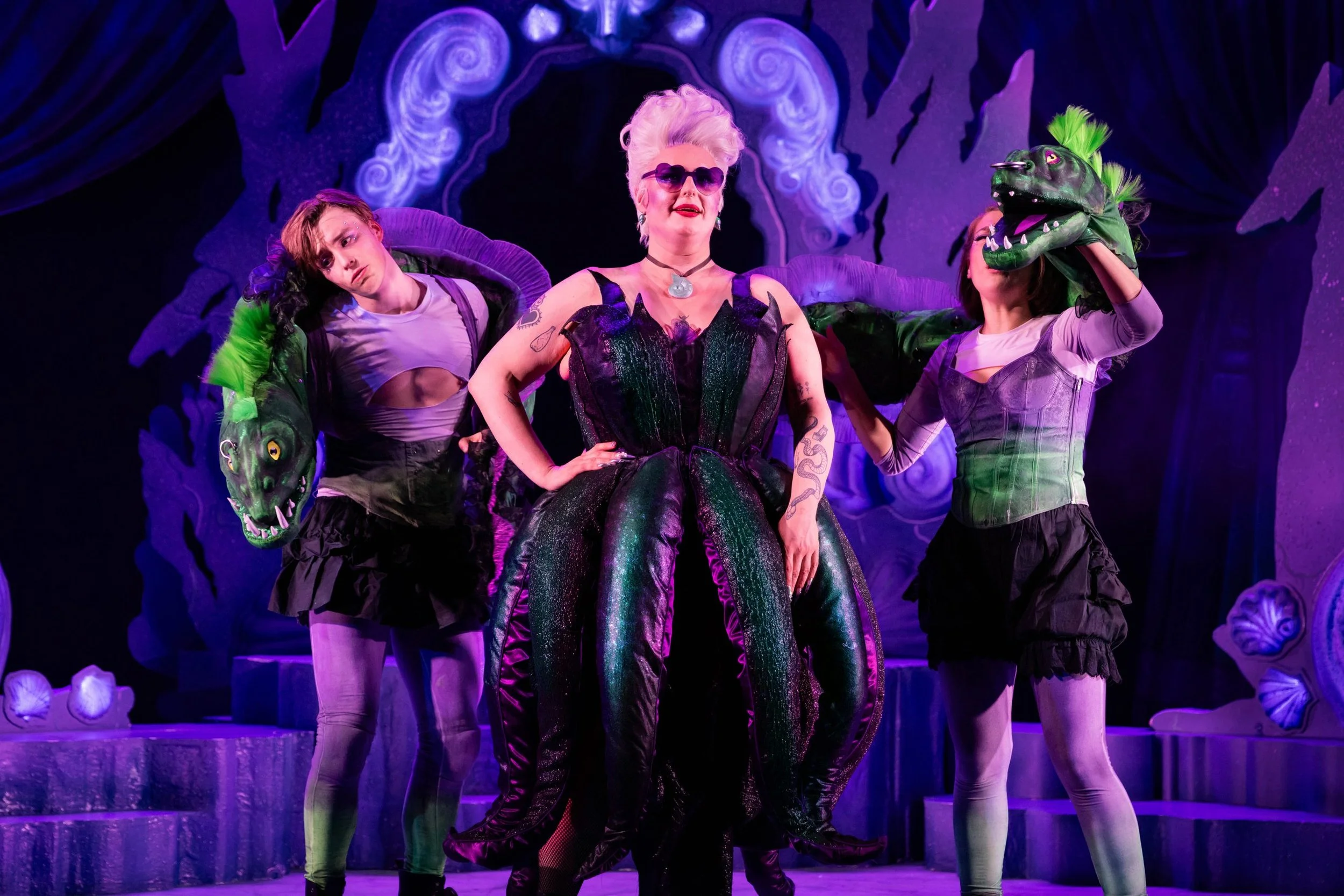
James: “Every scene with Blair. We're trying really hard to be professional and not laugh on stage because we just get each other. One of my favourite bits - and in rehearsals as well – is watching Suckin’ on You. It's got that 80s-like beat to it and they both sound amazing and there's a lot of tension in the air. You can cut the waters with a knife. There's so much sexual tension.”
Freya: “My favourite thing to do is when I'm playing that witch. As soon as it ends every night, I get sad. I used to sit on the back of the truck and like, ‘Oh, I'm done.’ But I think my favourite moment is also to watch is the Suckin’ on You choreography. I just think it's outrageous.”
Kelly: “Also, special shouts out to My Little Flute, which is a song that James does as Prince Eric. It is so silly and so funny and every time I hear it, I'm just like, ‘oh, I love this bit’.”
Jacob: “And in terms of performing, I really enjoyed We Didn't Make It to Disney. This is one of the only moments in the show where all the cast apart from Ursula are on stage together, all playing characters that aren't their normal parts. And you meet all the fish that live in the deep water. I love doing that there. Just being able to look around and see everyone interacting with their puppet.”
In this show, the majority of the cast portray multiple roles. I spoke with the three actors who play the most characters about the key points of performing several parts.
Jacob: “Being able to think about what is it that you want that character to read as, what's the main thing you want to think when you come on stage as that character, what distinguishes that from someone else? Especially when you're changing a lot, if it's not clear for you, it's not going to be clear for the audience. Sometimes during the show, James and Allie need to change character in 15 seconds, knowing that they have to be someone completely different.”
Freya: “Give the character different walks, different accents. For me, when you've got the 15 seconds and you are changing the whole time, you don't really have time to centre. Just knowing one word in that accent or that walk straight away would make you feel, ‘oh, yeah, I'm here’.”
Kelly: “And having fun with each character as well, finding the joy and the fun and the nuance in each of them is so much fun to learn, and I think that will help us switch around.”
Undoubtedly, this is a work steeped in comedy, and in such a production, maintaining the balance between humor and authenticity is crucial.
Daniel: “I think we we're always comedy first. Robyn is very funny. I do stand-up comedy. We come to it with as many jokes as possible. We've always wanted to make sure theatre and musicals are like laughter first and not like theatre laughter where people go cackling but barely laughing, people crying with laughter. We try and heavily weight it, so it's like really tipping over into the comedy side. And then I think if you love the characters, the sincere stuff comes naturally because you just naturally find those moments amongst the laughter. And comedy and heart sit very nicely together.”
Sam: “That's where I find the joy of it, to be honest, that we can be really funny and be really off the cuff. But then when it requires, we can be really real. And I think as an actor it's really fun to be able to get to play all those different things. And ultimately, the line between being funny and being sad is very thin anyway.”
Blair: “Play the truth as much as possible, and let the audience find things funny. The characters find this thing - this is this is their real life, they take it so seriously, that's where the humour comes. So instead of trying to, ‘I've got to make this bit funny now’, and I personally felt I'd never had to do it, I let the writing do the talking.”
Jacob: “Myself and Kelly went to watch the team do the show in Manchester. And we sat for most of the show, laughing out loud, but there is also a message of acceptance. You can see different points of Ursula’s life. When she was younger, she was struggling to feel accepted. And you see her like rise to power in her own personality. I think that brings kind of the authentic side.”
Kelly: “Yeah, and that's led really well by Sam. She plays the heart of the show. Leads for all of us around her as the rest of the team to follow suit.”
Allie: “Timing is everything in comedy. That's what everybody says. I personally love like the science of comedy. When you get a script and you can sort of like, split it apart and really see that this plus and this will equal this. Do you know what I mean? Like, you make it into an equation almost, and then if you just tweak little things, you'll get a bigger laugh, you get a slower laugh, you'll get a pause and then a laugh. All of it is so juicy and scientific. And comedy is often the best way to address those more taboo issues or hard- hitting things that people are a bit awkward talking about and stuff like that. I think in this show, that really lends itself to like the stuff that we're saying, you know, there's loads of messages in there from environmental issues, like Save the Mermaids, all of that. But then also the body positivity is such a massive part of this show, like everyone should feel good about themselves and not want to change that for anyone else. And but the comedy allows us to go ‘wink, wink’.”
Julie: “It's like a rom-com for today, maybe.”
Since the show was first born, it has experienced many changes, some of them even quite painful.
Daniel: “It's really changed because we've done a few kinds of iterations of it, like different productions of it. The weird one is songs that were so central to the first show, by this point, they are gone and we've rewritten new things that have come in because you just get so intimately acquainted with the show that you're like, ‘oh, I know what it needs now. It needs this song from this character. It needs a bit of Chappell Roan in there. It needs a little bit of Gaga back in there’. We've rewritten the opening number, which was the first thing we ever wrote. It was really good. I'm still a big fan of it and it's been in every production for the last five years, but it's only in this newest production. We've changed it. We've scrapped it, written a new one, because it serves the show better. There are also some songs that have been like compressed into one that were two, new characters have been added. We've made it much gayer. It's even gayer than it was when it first started. Obviously, there's the crazy French chef in The Little Mermaid film and we thought, ‘what if she was a fabulous lesbian and also a woman’? She wasn't in the original production and now she's like quite a focal character with her own song and a very central part in the plot. And that's just from kind of sitting with the show and going, ‘that energy is needed and this storyline is needed’. I think the more you do a show and the more you get to know your audience, you see what people are connecting with and you realise, ‘oh, more of that, more of the stuff that makes people feel seen and celebrated’.”
Allie: “It's really grown from the beginning. It's been seven years I've been doing the show and every single time it gets bigger and better. New songs and new characters have come every iteration that we do. This is my favourite version of the show. It's like every favourite bit from every different version that we've done has come together in this version. You see Ursula and Triton in high school, you get a lot of that like Atlantica High world, which I think is really fun. People want to go and see that area that you don't see in the film, basically. And you get to see King Neptune as one of my favourite characters. He's so out there and mental. But yeah, every time we do another version of the show, it grows and grows. So if you've seen it before, come and see it again, it's different.”
In the end, there is no better way to conclude than with Freya’s words.
Freya: “After reading the script something that stands out for me, it's just how silly it is with so much heart at the same time as we were saying before. It stands out because I think you're not only going to leave laughing, but you're also going to leave feeling empowered. Because we're watching a character that is so othered sometimes, and she doesn't change. And also, you see different characters have different endings that are just valid because that's what they want. You know, there's not one way to be, which I think is great.”
In the midst of our hectic lives, the existence of works like this is very important, and I hope that all who step into the The Other Palace can experience its uplifting energy.
Unfortunate: The Untold Story of Ursula the Sea Witch plays at The Other Palace until 5th April 2026.